
The Auto+ program has already used up 71% of its funds: manufacturers fear that the end of subsidies will leave electric cars without support for months.
20/10/2026 15:00
Updated to
20/10/2026 15:00
The next government will need to decide whether to maintain subsidies for purchasing electric vehicles in Spain, an issue that concerns manufacturers particularly given the possibility that 2027 could begin without any government incentives. General elections scheduled for November 29th complicate the approval of new financial measures and threaten to leave the market without support for several months, as it still relies on such aid to boost vehicle registrations.
The electoral call, formalized through Royal Decree 806/2026, comes at a time when the Auto+ program still has budget to handle new applications, although its funding for the upcoming fiscal year is not guaranteed. According to Cinco Días, industry sources believe that negotiations to form a government and the subsequent preparation of budgets could delay the introduction of new incentives until well into 2027.
The sector fears running out of subsidies for most of 2027
The political calendar now represents the main concern for brands, which are even considering the possibility of losing the entire first half of next year without an operational support program. The same newspaper reports that government sources acknowledge the difficulties in maintaining these incentives due to the lack of an approved budget allocation, a situation that leaves any new calls for applications pending the decisions of the executive branch resulting from the elections.
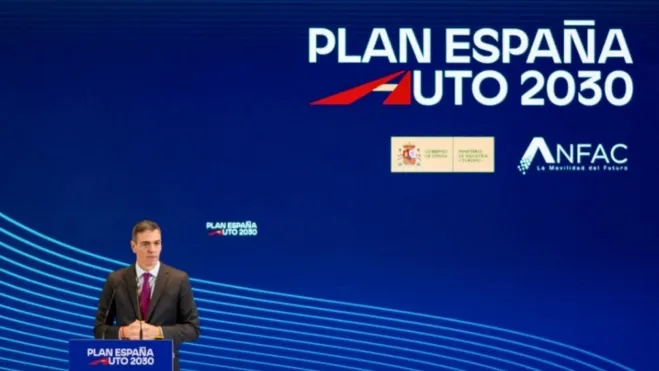
This uncertainty stands in contrast to the goals of Plan España Auto 2030, which was developed alongside the industry to promote vehicle electrification in the coming years. Although the regulations of Programa Auto+ set a validity period until December 2030, the subsidies depend on calls for applications and credit availability, so the existence of the program does not automatically guarantee funds for new purchases in January 2027.
The lack of continuity has also highlighted differences among industry representatives, as dealership associations Faconauto and Ganvam are calling for a vehicle fleet renewal program that would provide subsidies for certain internal combustion vehicles as well, an option that does not have the support of manufacturers. In any case, previous interruptions in subsidies did not prevent some buyers from continuing their purchases in anticipation that new incentives would eventually be approved.
Over 280 million requested, with room left until December
Despite warnings about the coming year, the progress of Auto+ in 2026 has been more moderate than initially anticipated by the industry. Data published by Cinco Días shows that as of October 16, individual applications totaled 258.77 million euros out of the 350 million allocated, while businesses and self-employed individuals requested approximately 25 million euros out of the 50 million available, bringing the temporarily committed budget to around 71% of the total.
These figures indicate that around 116 million euros remain available across both programs, of which slightly over 91 million are for individual buyers. The situation differs from that of Moves III, which required an extraordinary expansion of 400 million euros to meet pending requests, whereas the current system centralizes subsidy management at the Ministry of Industry and Tourism and retains unrequested funds just over two months before closure.
Official calls for applications allow submissions until 2:00 p.m. on December 31, 2026, as long as funds are available, with grants that can reach up to 4,500 euros for cars and 5,000 euros for vans that meet the requirements. The specific amount depends on factors such as the vehicle and its battery’s price, propulsion technology, and place of manufacture, with these criteria also intended to support European production.
Therefore, the immediate situation does not necessarily indicate an exhaustion of current resources, but rather a possible interruption in subsidies when the fiscal year ends. The formation of a new government and the availability of funding will determine when another call for bids might be approved, while manufacturers demand stability to prevent uncertainty over incentives from affecting purchasing decisions in the first months of 2027.