
The new Rivian looks like a Golf 1 and is targeting Europe at a price of 35,000 euros.
Rivian has been making its presence felt in the electric vehicle market for several years, but so far it has done so with models that are too large for most European buyers. The R1T and R1S were used to introduce the brand, while the R2 represents the first step toward a much broader market. But the truly interesting part is yet to come, with an even smaller model that could change things significantly.
This is the Rivian R3, a compact SUV with a very distinctive design that inevitably reminds one of some of the great icons in automotive history. Its launch is still far off, but Rivian’s strategy is becoming increasingly clear: using smaller models to reduce costs and gradually reach the mass market.
A Smaller and More Accessible Rivian
The R2 will remain the entry point to Rivian for now, but the American company is already working on the next model. The R3 will occupy a lower position in the lineup and, in theory, will feature one of the key elements Rivian needs to grow: a significantly lower price.
RJ Scaringe, Rivian’s founder and CEO, recently confirmed that the R3 will be considerably cheaper than the R2. And that’s not all—this executive also mentioned that after the R3, the R4 will follow, further lowering the barrier to entry into the lineup.
This makes the R3 an especially important piece for the brand’s future. Rivian began its commercial journey with the R1T and R1S, two large and expensive models, but now it needs to increase sales volume with products that can reach many more buyers. The R2 already represents this strategic shift, and the R3 will take it even further.
In addition, the project has a significant advantage for Rivian: the R3 will share much of its technical foundation with the R2. The company introduced both models as part of a new generation of products featuring an architecture designed to adapt to different sizes and configurations.
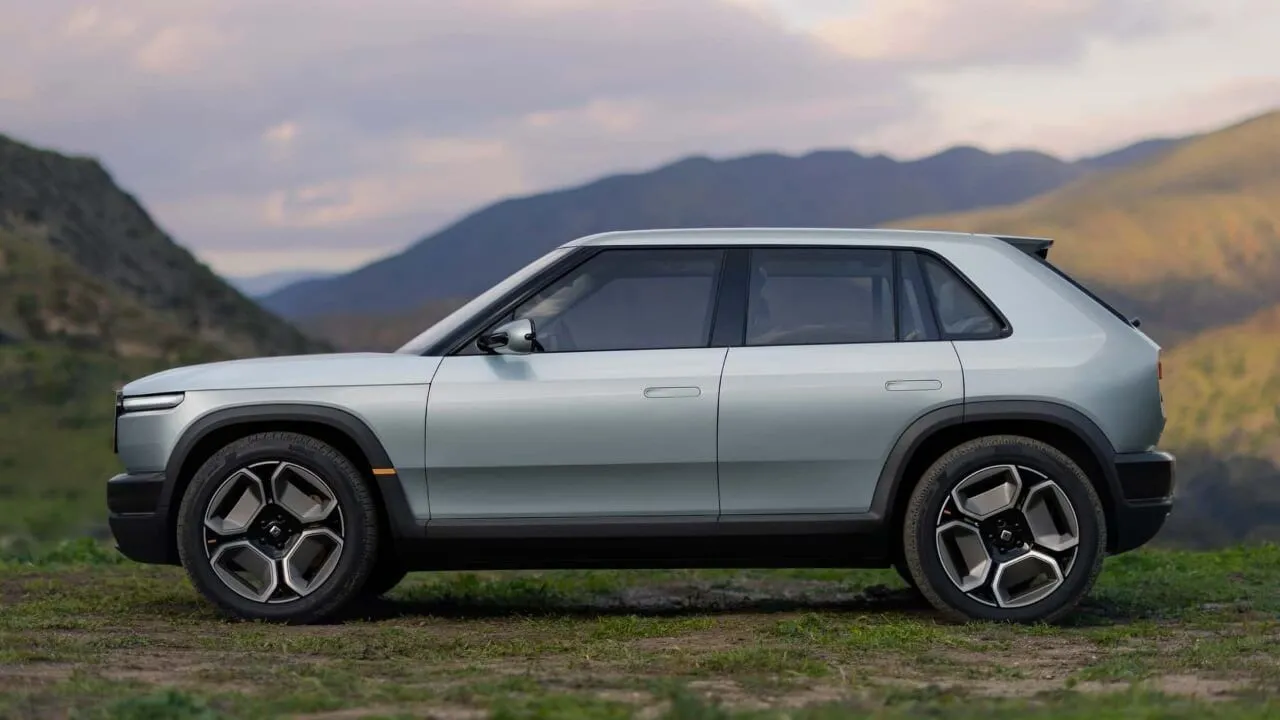
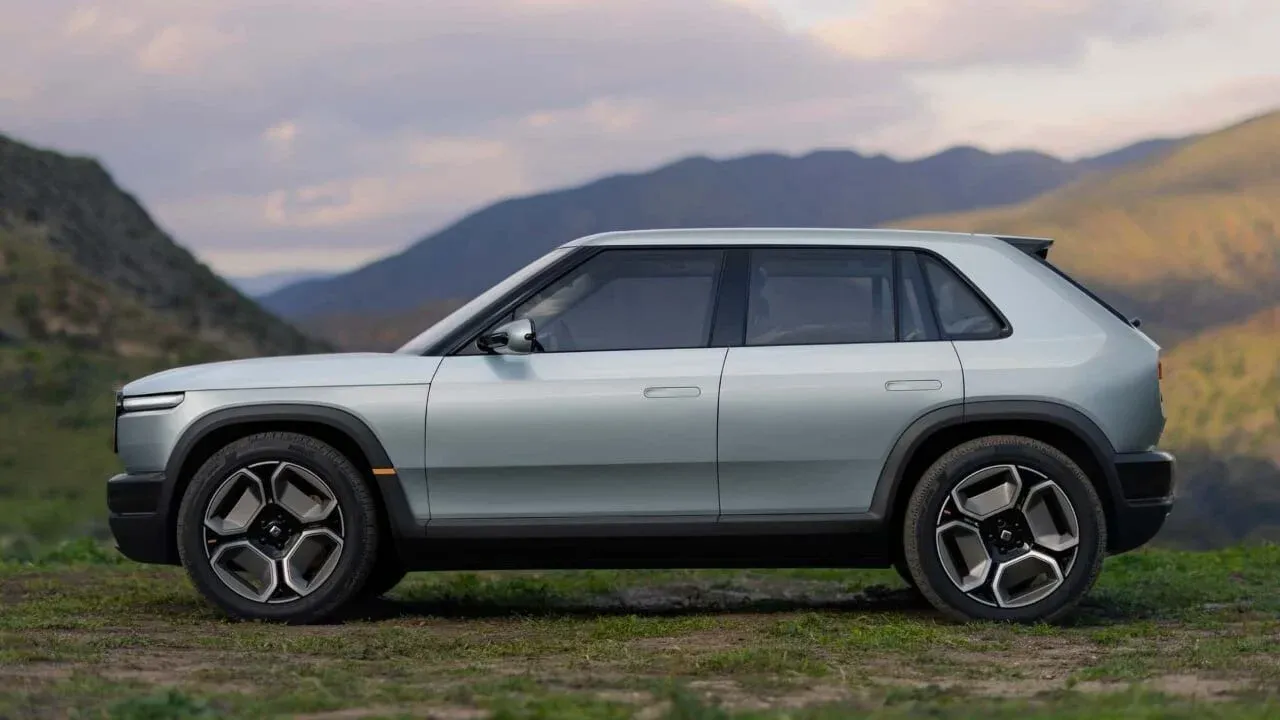
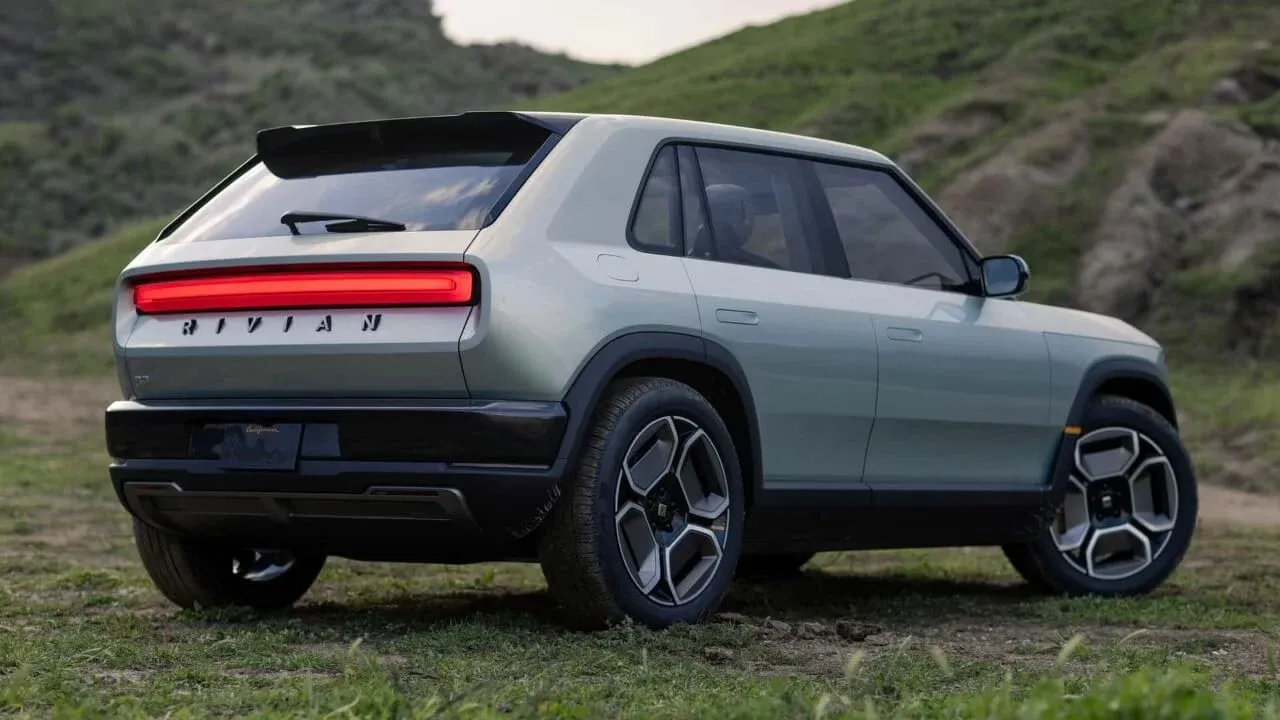
In terms of design, the R3 features a compact and relatively square body shape with clean surfaces, large wheelbases, and Rivian’s signature lighting clusters. Its profile is particularly striking as it resembles the first generation of Volkswagen Golf, though reinterpreted in an SUV format with the American brand’s own design language.
Rivian has not yet announced the final production dimensions, so it’s unnecessary to provide specific measurements as if they were definitive. What is clear is that it will be significantly smaller than the larger R1S and R1T models and will fall below the R2 in terms of size within the lineup.
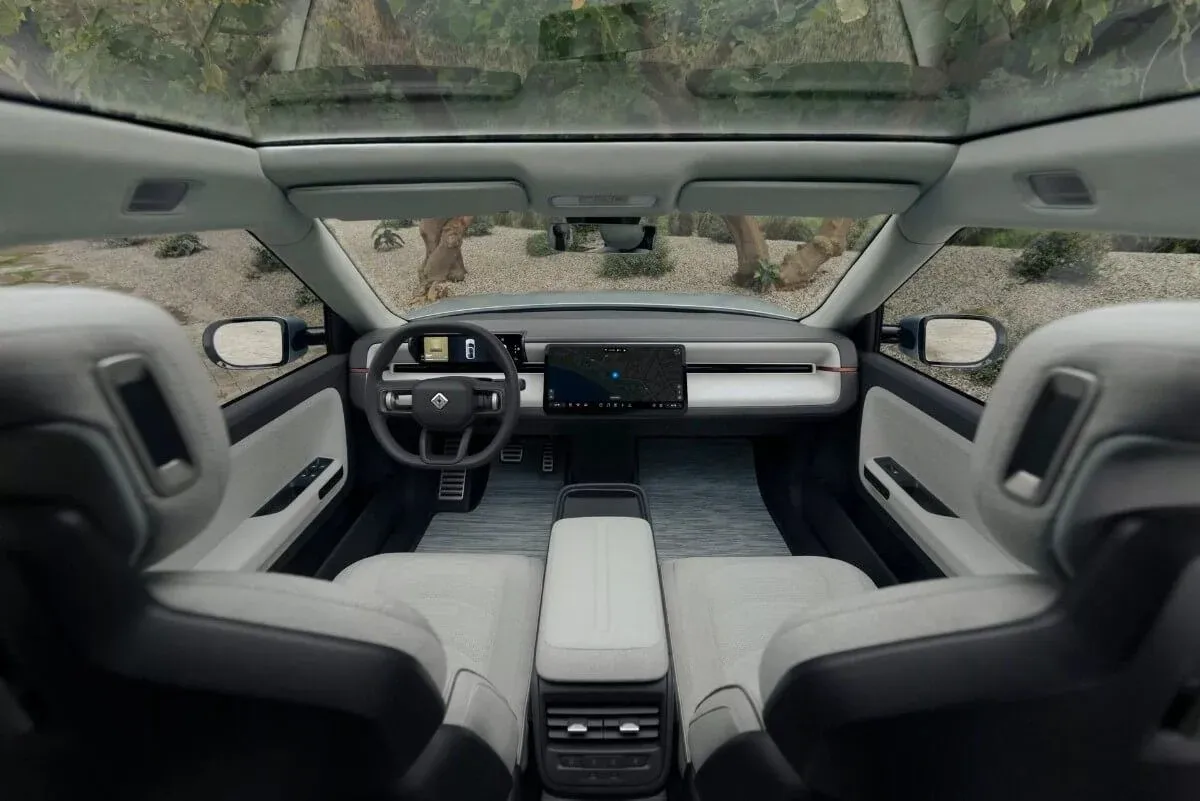
The company has not yet revealed all the details of its interior design. The prototype shown suggests a minimalist and tech-driven cabin layout designed to make the most of the vehicle’s exterior dimensions. As with other Rivian models, a large part of the driving experience will also depend on the multimedia system and the software developments the brand is working on internally.
Regarding the mechanical aspects, Rivian announced at the model’s unveiling that the R3 would come in one-, two-, and three-motor versions, along with two battery sizes. The most sporty variant will be the R3X, a performance-focused version that uses three motors and offers significantly superior capabilities compared to the standard versions.
Rivian has stated that the versions with larger batteries will have a range of over 480 kilometers. For the R3X, the company claimed acceleration from 0 to 60 miles per hour in less than three seconds, which is approximately 96 km/h. The exact figure for 0 to 100 km/h will depend on the production configuration that eventually makes it to market.
The availability of two battery sizes will allow Rivian to cover a wider range of prices and driving ranges. This is precisely one of the key factors in enabling the R3 to function as an entry-level model without sacrificing higher-performance versions, something the brand is already doing with the R2.
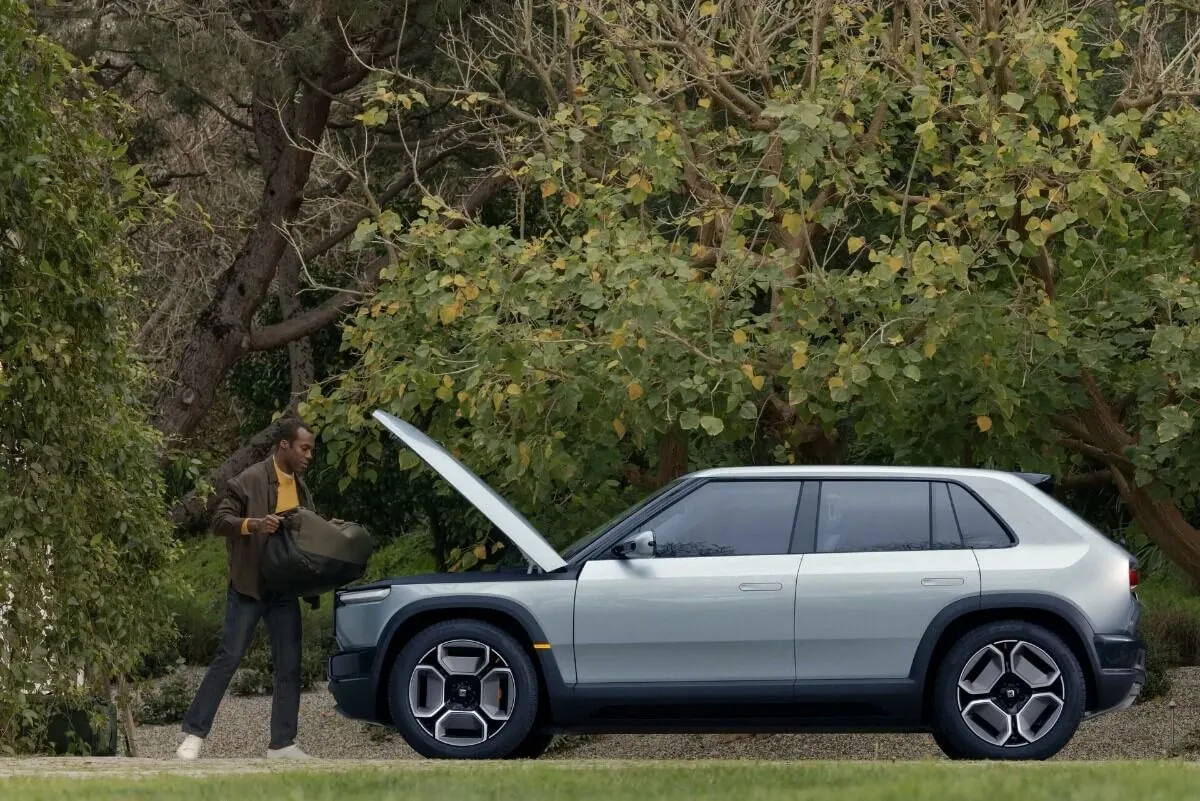
Another important point here is that Rivian isn’t designing the R3 solely for the United States. The company’s promotional materials outline a future international rollout for the R2, R3, and R3X, while Rivian’s own European website already features the R3 and reflects the brand’s intention to enter the European market.
The production of the R3 is planned at Rivian’s future factory in Georgia. The latest reports suggest that production will begin around 2028, so there is still time before it hits European roads.
Price will undoubtedly be one of the major questions. Rivian has not yet announced an official price for the R3, let alone for Europe. Scaringe has confirmed it will be significantly lower than the R2 and previously estimated its price in the mid-to-high 30,000 dollar range.
The most recent estimates suggest an initial price of around 35,000 euros. This figure is, of course, not officially confirmed yet, but it indicates the price range the R3 is likely to fall within.
If Rivian manages to maintain that focus when the model hits the market, the R3 will likely be one of the key products in the company’s expansion strategy. Not only because it will be smaller, but also because it will enable Rivian to bring its distinctive design and technology to an electric vehicle category with a much larger customer base.
And the roadmap doesn’t stop there. The next step is the R4, which, according to Rivian’s CEO, will have a lower price point than the R3. The company is thus aiming to build a range that goes far beyond the larger R1 models, allowing Rivian to gradually compete in segments where it previously had little presence.