
The new Peugeot 308 will undergo a radical transformation to compete with the SUV boom.
The classic “all-around” compact cars are dying out. Replaced in large part by B-SUVs and C-SUVs, these vehicle types have seen their sales plummet sharply in recent years. With only exceptions like the Toyota Corolla or Volkswagen Golf still holding on with difficulty, most of their competitors in the European market have given up.
A few days ago, we reported that the next-generation Ford Focus and Opel Astra might shift to a crossover format, a move already made by models such as the Citroën C4 and Renault Mégane. Apparently, Peugeot is also considering transforming the 308 for its fourth generation, though it will be a somewhat different approach compared to its rivals.
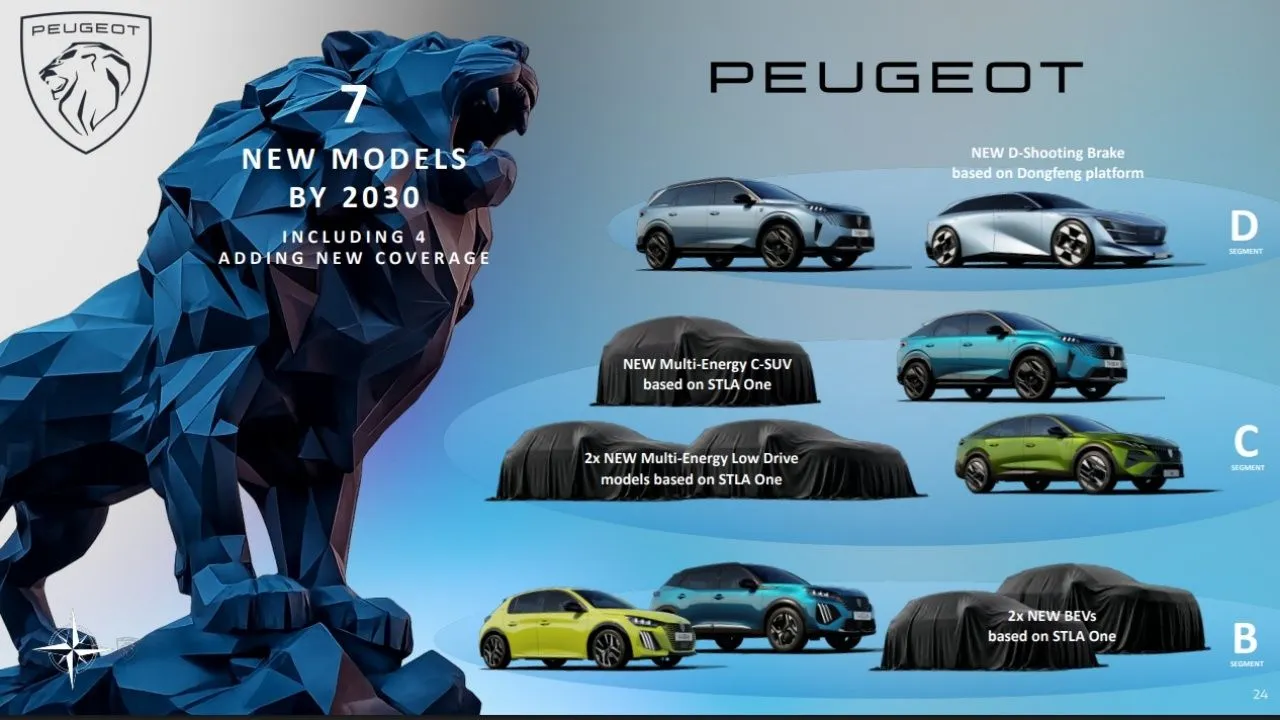
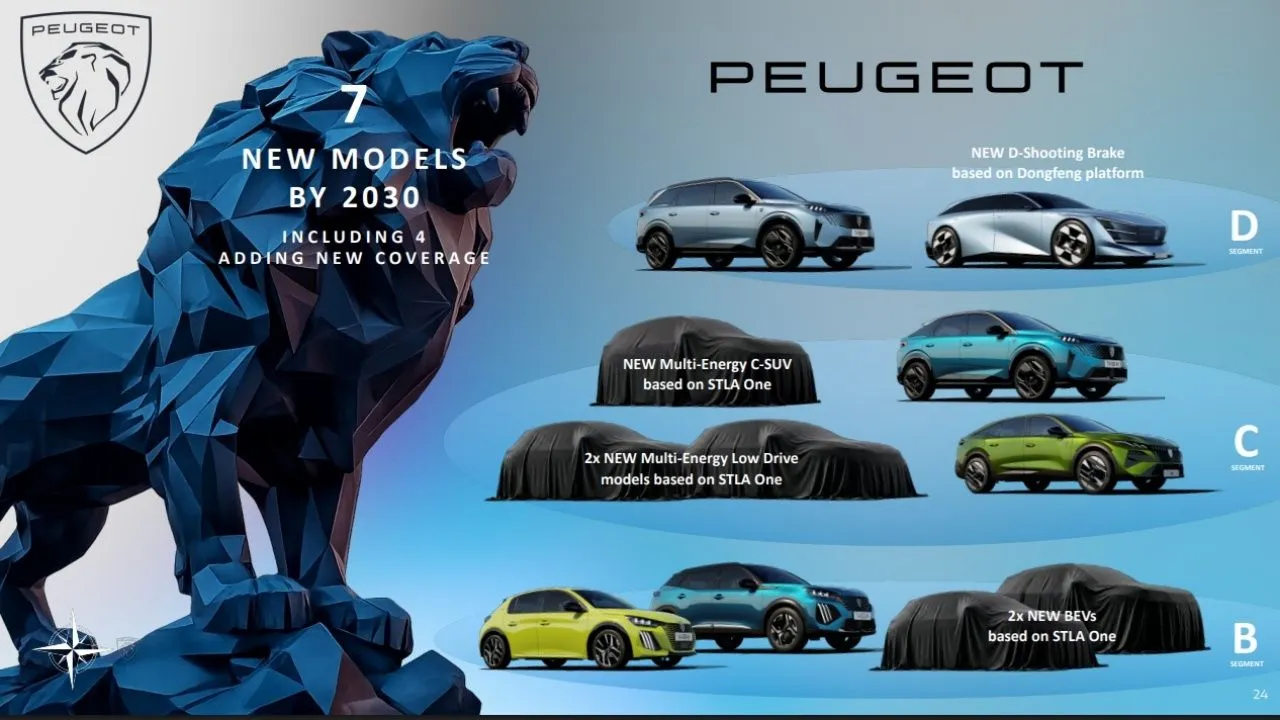
As part of Stellantis’ FaSTLAne 2030 plan, Peugeot is preparing a complete overhaul of its lineup in the C-segment. The current 3008 and 408 will be joined by two hatchback models to replace the 308 and 308 SW, along with an additional SUV (since the 3008 has a ‘coupé’ profile, the new model could be a traditional SUV).
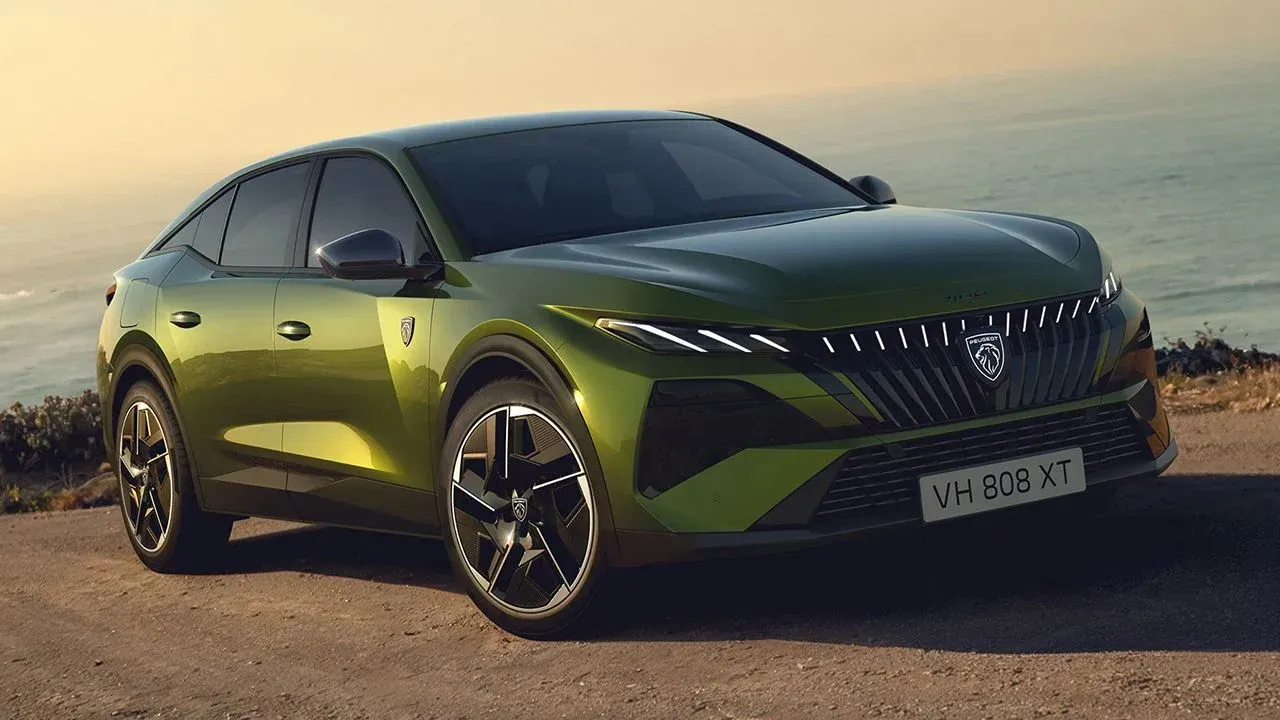
According to the British publication Auto Express, the next 308 would essentially be a miniature version of the 408: a fastback approximately 4.4 meters long with some crossover features (notably, a height higher than that of a standard compact car, but not as high as an SUV). The family-oriented SW version will retain a more traditional silhouette, though it will also have a higher body height.
The new Peugeot 308 will be based on the STLA One platform
The updated Peugeot 308 will be built on the multi-energy STLA One platform, meaning it will likely come in hybrid and all-electric versions. The electric variants, still sold under the E-308 name, will benefit significantly from the better aerodynamics of the fastback design compared to a traditional hatchback.
STLA One is known to be compatible with 800-volt architectures, so the E-308 is likely to offer excellent charging times within its class. Range is also expected to improve significantly over the current model, with the most powerful versions likely exceeding 600 km WLTP.
"We will replace all three models in the future, and I confirm that we will explore other options besides renewing the 308, 308 SW, and 408," said Alain Favey, Peugeot’s CEO, a few weeks ago. "We are looking for other alternatives that can help expand the presence of these vehicles in the market. We have green light to develop three new C-segment models, so what’s the best way to do that? Should we go in different directions? It takes time to innovate and test them to ensure we’re not on the wrong path."
Source | Auto Express