
The cheapest Nissan Leaf costs 3,900 euros: with a new battery, it can achieve a range of up to 500 km.
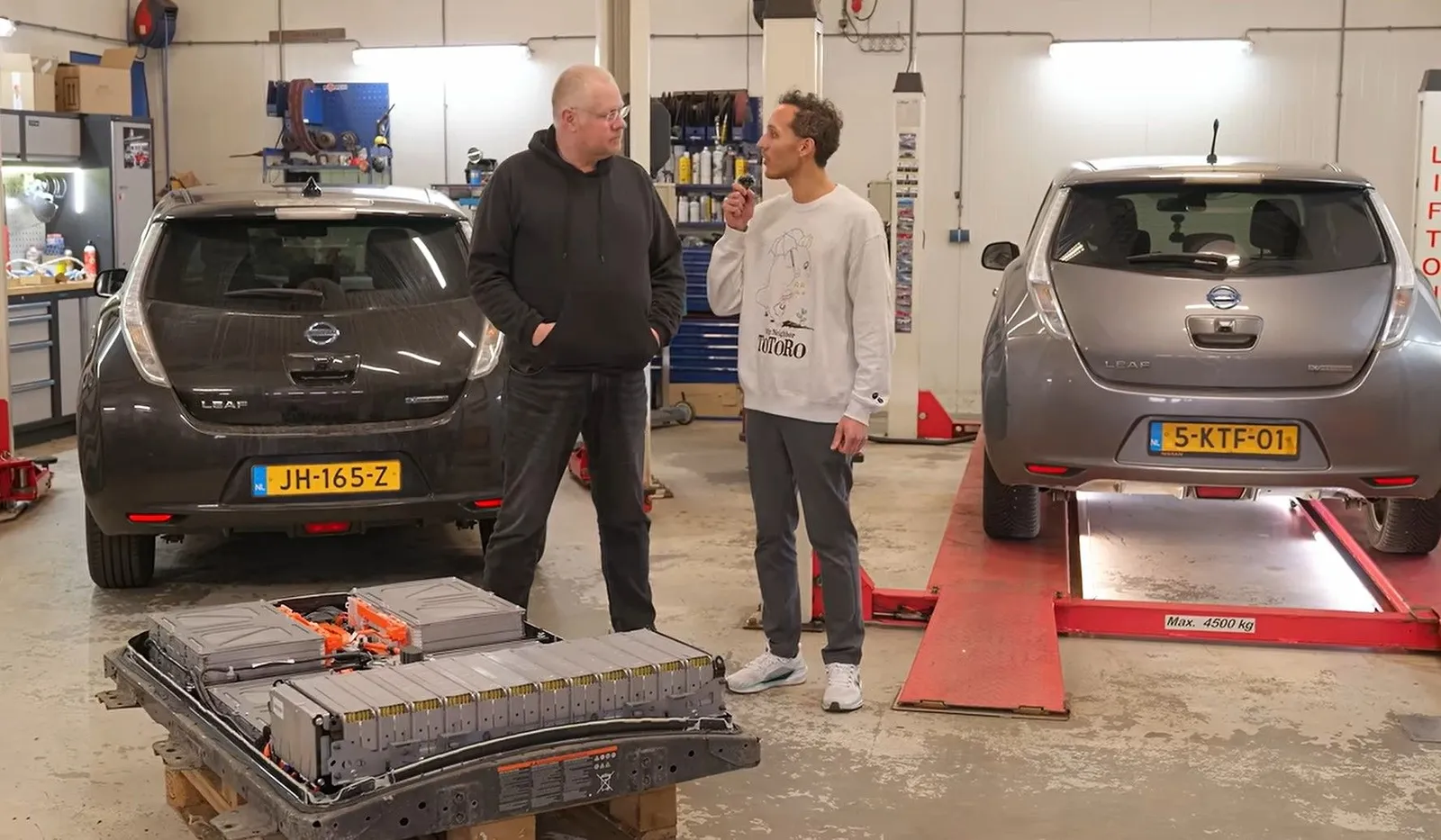
There are electric cars that seem doomed to end their days in urban commutes or in scrap yards, simply because their batteries have lost much of their capacity. The first-generation Nissan Leaf is one of the clearest examples. However, battery degradation does not mean the end of the car’s life at all, as it can be fitted with a new battery.
This is exactly what the owner of a 2016 Nissan Leaf did, deciding not to get rid of his car after its original 30 kWh battery became severely degraded. Instead of looking for another vehicle, he installed a 62 kWh battery manufactured by the Chinese company VIVNE, and the results after six months are truly impressive: over 400 kilometers of real-world range. And this isn’t even the largest battery produced by this Asian brand.
The story is even more interesting because the Leaf used in the test wasn’t exactly new. The original battery was nearly ten years old, and under cold conditions while on the road, the owner explains that it could sometimes only cover about 60 kilometers before needing to be recharged. The car still functioned, but the degradation had turned the Leaf into something akin to an electric bicycle.
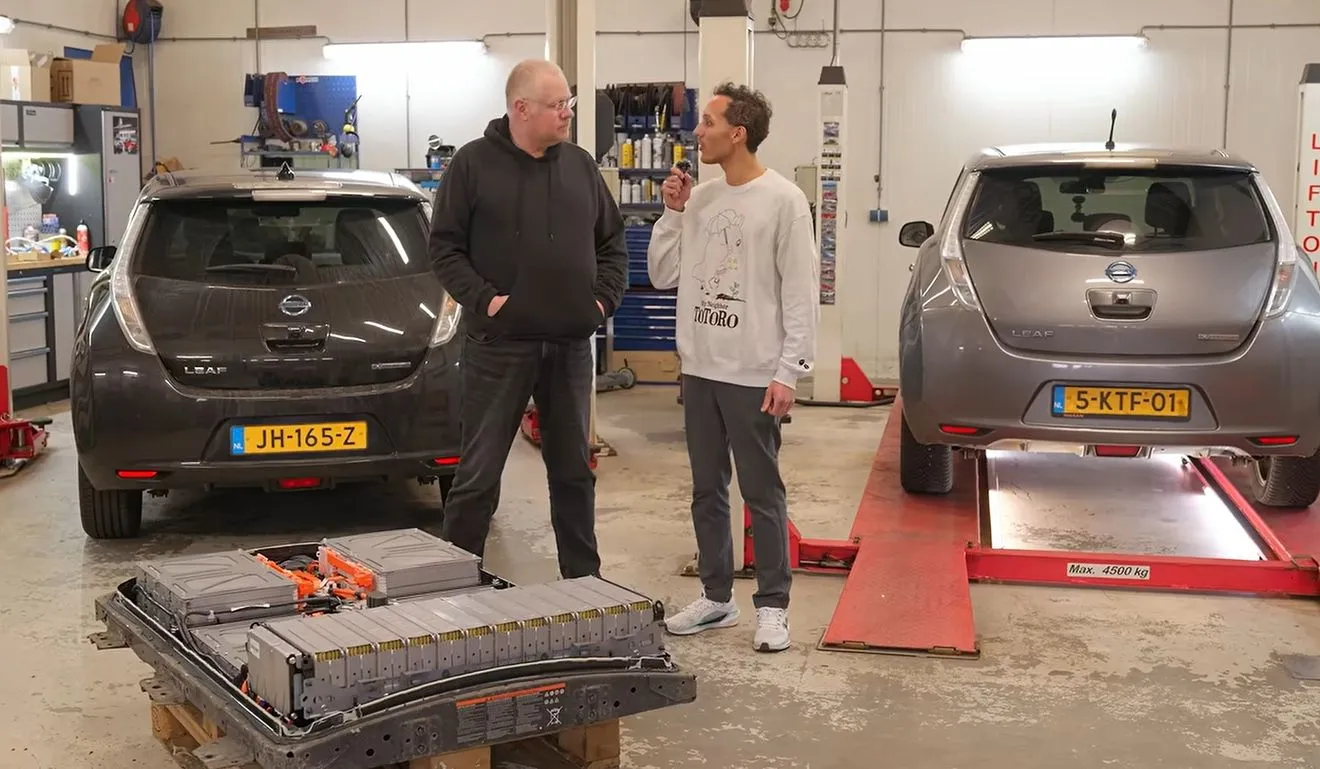
The issue with early Nissan Leaf models is well known. Those initial batteries lacked an active thermal management system, and their chemistry was not very advanced, so the heat generated during operation and charging dissipated passively through the battery casing itself. Various studies have also documented the high capacity loss observed in some 30 kWh batteries, especially during the first few years.
And here’s the key point: when a battery loses capacity, it doesn’t necessarily mean the rest of the car has reached the end of its life. The engine, electronics, chassis, interior, or suspension can continue to function for many years. The problem is that replacing the battery with an equivalent one isn’t always a simple or cost-effective solution, whereas in this case they opted to install a battery that practically doubles the original capacity.
The process isn’t simply lifting the car and connecting a cable. First, the 12-volt battery must be disconnected, along with the high-voltage service connector. Next, the lower guards are removed, various connectors are disconnected, and the old 30 kWh battery pack is taken out. This is an operation that requires appropriate tools and knowledge of high-voltage systems, so it’s not something that can be done casually in a garage.
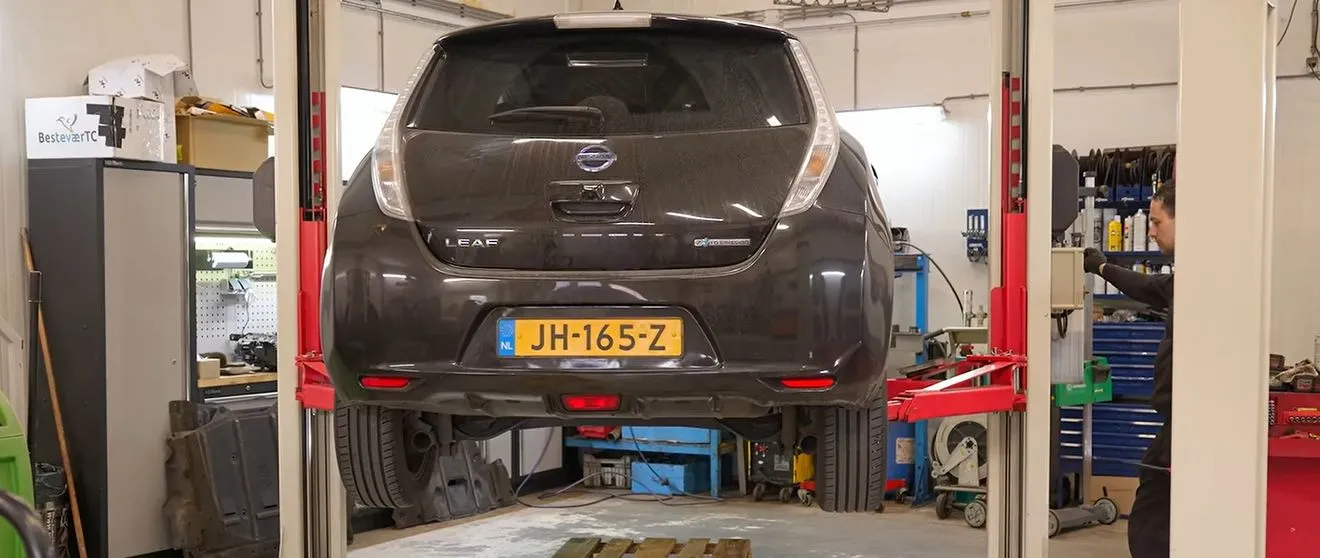
Once the original battery is removed, it’s time to install the new VIVNE battery pack. The 62 kWh battery is taller than the original, so the manufacturer provides longer spacers and screws to ensure it’s properly installed without altering the car’s main structure. The company currently offers various options for the Leaf with capacities of 40, 50, 62, and even 68 kWh, claiming ranges of up to 430 and 500 kilometers respectively, though actual figures depend on temperature, driving conditions, and road surface.
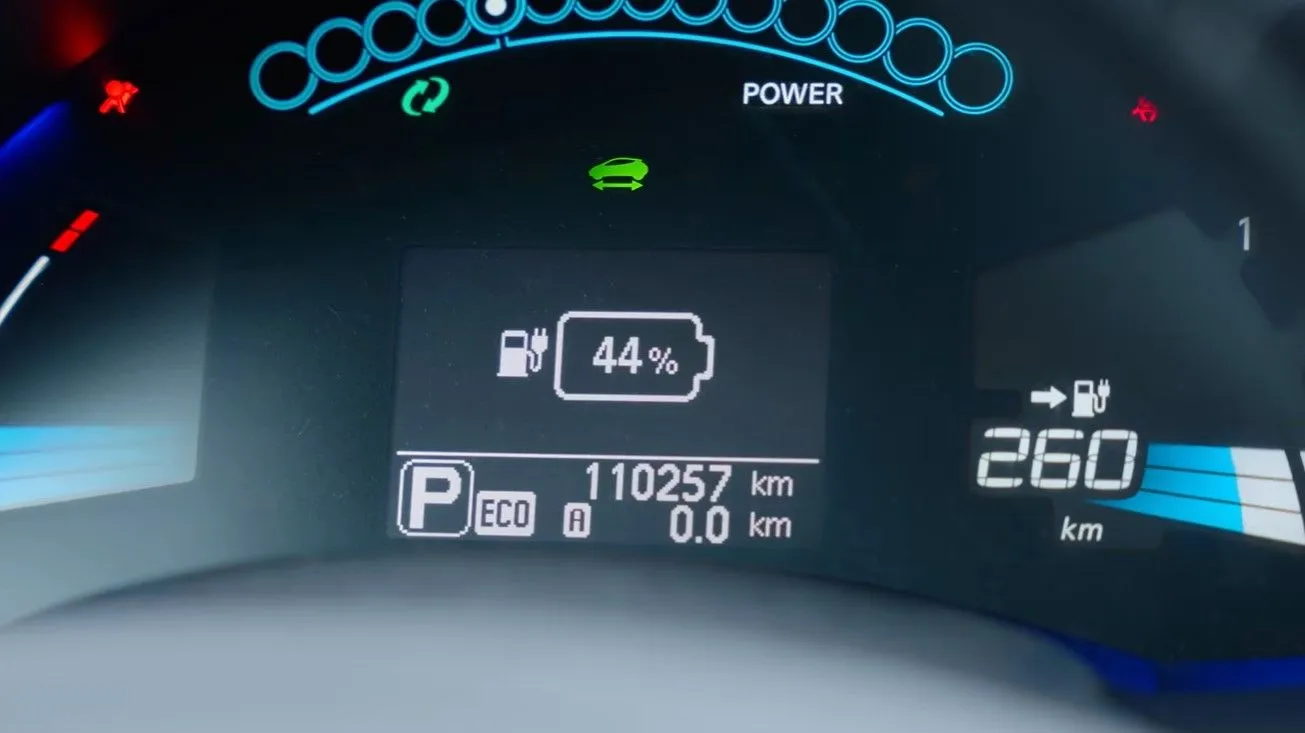
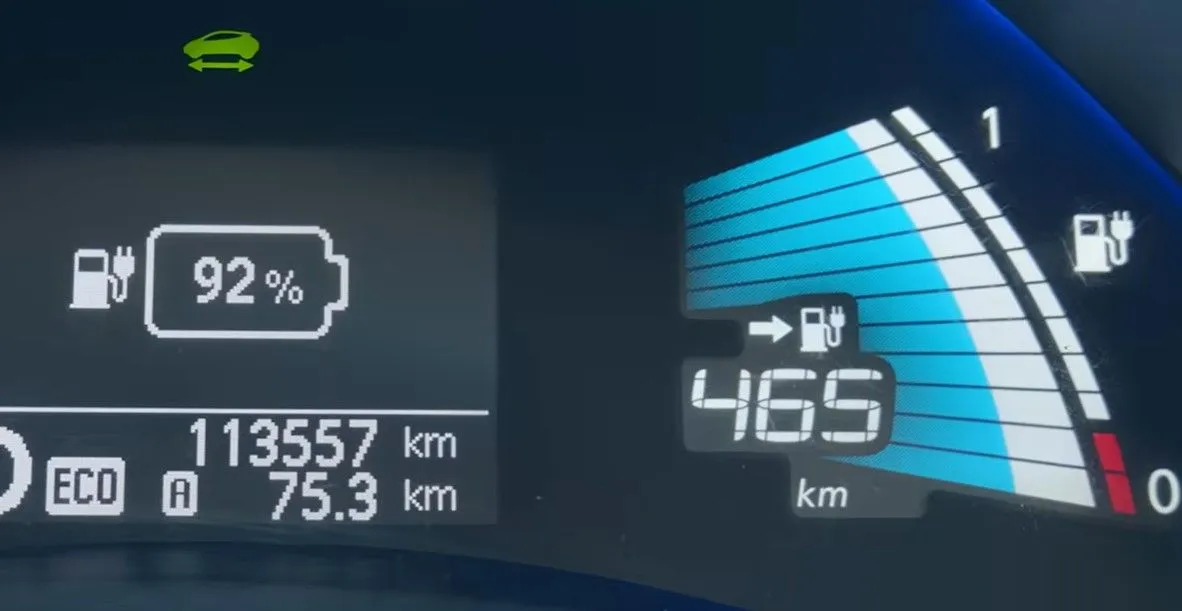
In the specific case of this Leaf, the improvement was remarkable from the very first moment. With the new battery installed, the car’s dashboard showed 260 kilometers of range when the charge level was only at 44%. Obviously, this figure is an estimate provided by the vehicle itself and should not be confused with an official certification, but it gives an idea of the difference compared to the car that had just arrived at the workshop.
The truly interesting part came later. Six months after that, the owner claims to achieve over 400 kilometers of real-world range with the new battery. This isn’t a figure calculated by computer or a promise from the manufacturer, but rather experience gained from several months of use.
There’s another interesting detail in this whole process. The old 30 kWh battery didn’t end up in the trash. Since it still has sufficient capacity for stationary applications, the owner decided to give it a second life as an energy storage system for a home, with the option of using it alongside their solar installation. This is precisely one of the possible paths for electric vehicle batteries when they’re no longer suitable for powering a vehicle.
The real bargain might be finding a cheap Leaf and replacing its battery.
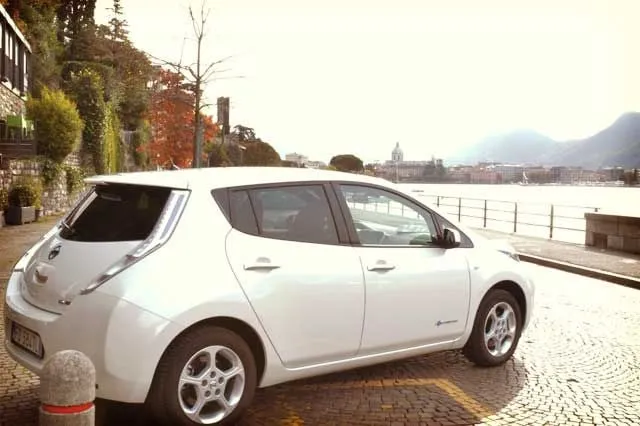
This is where the story becomes particularly interesting for Spain. The first-generation Nissan Leaf has become one of the cheapest used electric cars on the market, and the image you attached gives an idea of just how much its prices have dropped.
The listings show units starting at 3,900 euros, specifically a 2014 Leaf with 192,521 kilometers. We also find 2012 models for 4,200 euros, a 2014 Leaf for 4,500 euros, another 2016 model for 5,500 euros with 185,000 kilometers, and several 2014 and 2015 models priced between 5,900 and 5,990 euros. These are listing prices, which are usually negotiable, so we might be able to get a unit for even less money.
The combination is interesting. A used Leaf for around 4,000–5,000 euros plus a modern 62 kWh battery could turn into an electric car with a range that was only available in much more expensive models just a few years ago. Of course, the calculations need to be done carefully.
VIVNE currently sells batteries for the Leaf ZE0, AZE0, and ZE1 models, offering both complete packs and individual modules. The company also explains that the battery management system must be adapted to the vehicle, and in some cases it uses a refurbished original management unit. The company further warns that it does not guarantee full compatibility with all versions and configurations of the Leaf, so there is no point in buying a car first and then hoping that any battery will be compatible.
The price is also not exactly that of a used battery. On a specialized forum, a European owner recently shared a price of around 7,276 euros for a 62 kWh VIVNE battery with shipping to Germany.
Therefore, a project based on a Leaf costing 3,900 euros, plus a 62 kWh battery, installation, possible import taxes, and other expenses, could easily result in a bill exceeding 10,000 euros plus labor costs. Yet still, a car with 400 km of actual range and the option to reuse the original battery makes it a very worthwhile consideration. Moreover, we could opt for a lower-capacity pack, which are cheaper.
There are other factors to consider, which surely also have solutions in the modification market, and that is the issue of fast charging. As we recall, the Leaf comes equipped with a CHAdeMO port. This format is phasing out in the market and greatly limits travel distances.
Nevertheless, this experiment raises a question that could become very important in the coming years. What if electric cars didn’t have to be retired when their batteries start to degrade? If companies emerge capable of producing compatible battery packs with greater capacity than the original ones at reasonable prices, many used electric cars could have a second life instead of ending up prematurely in the scrap market.
The Nissan Leaf case is particularly interesting because there are already a huge number of units with many years of use and a relatively simple mechanics. A Leaf that can be found today for less than 5,000 euros may seem unattractive if it still has a severely degraded battery. But the situation changes significantly when there’s an option to replace that battery with one of 40, 50, or 62 kWh capacity.
After all, despite the poor quality of the original battery and Nissan’s shameful treatment of its early customers, the Leaf was a great electric car—and 15 years later it still is, but only if you manage to replace its battery with a newer one.