
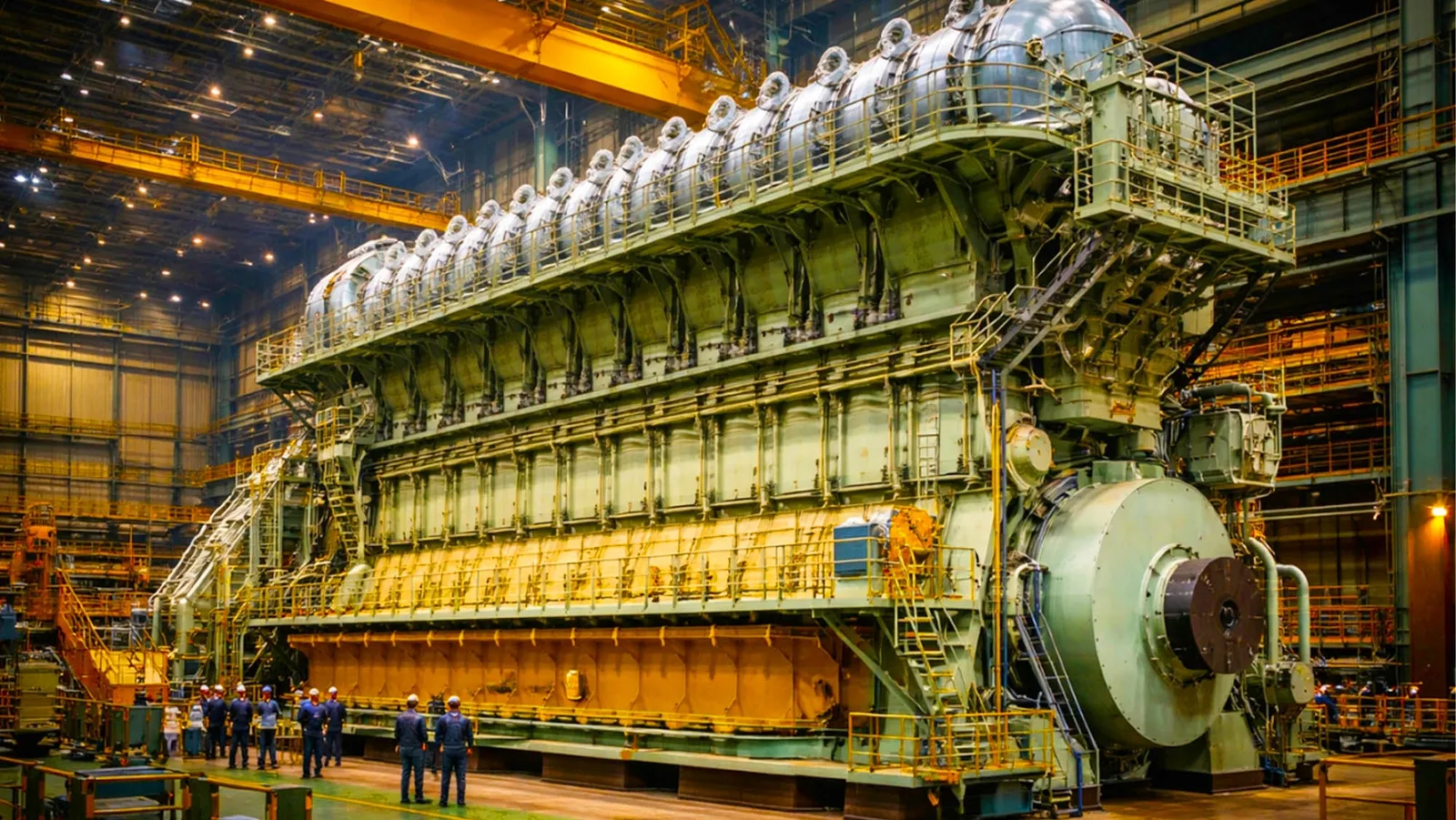
The world’s most powerful engine is 27 meters long, weighs 2,300,000 kg, and generates 108,000 horsepower: staggering figures that consume 14 tons of diesel per hour.
02/10/2026 15:00
Updated to
02/10/2026 15:00
In the world of maritime transportation, there are engines whose specifications exceed any known benchmarks in the automotive industry. The Wärtsilä RT-flex96C is the most extreme example: a diesel engine designed for large merchant ships that generates 108,000 horsepower, delivers 7.6 million Nm of torque, and consumes up to 14 tons of fuel per hour.
Manufactured by the Finnish company Wärtsilä, which specializes in energy and maritime solutions, this engine is designed to power some of the largest ships in the world, such as large container ships or oil tankers that operate continuously on intercontinental routes.
Huge Numbers in a Giant Engine for Large Ships
The engine powers ships like the Emma Maersk, a 397-meter-long vessel in service since 2006, capable of reaching nearly 50 km/h even when fully loaded.
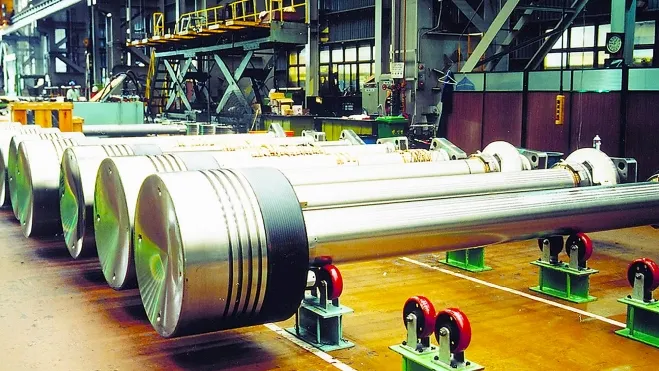
The dimensions of the RT-flex96C explain its performance. The engine assembly is 27 meters long, 13.5 meters tall, and weighs approximately 2,300 tons. Its architecture consists of 14 inline cylinders with a total displacement of 25,480 liters, meaning each cylinder displaces about 1,820 liters.
It is a two-stroke turbo diesel engine that operates at an extremely low speed of just 102 revolutions per minute, a characteristic typical of large marine propulsion systems designed to deliver massive torque at low RPMs.
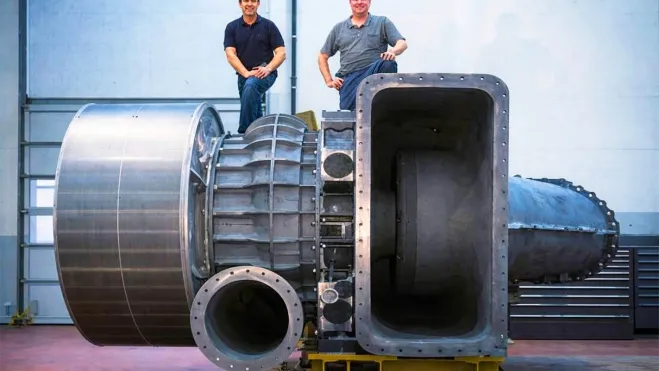
Among its technical solutions are the common-rail injection system and the use of heavy fuel oil, which is introduced mixed with oil. Additionally, it features a crosshead system with bearings that separates the lubrication of the combustion area from that of the crankshaft, preventing combustion residues from contaminating the main mechanical components.
The fuel consumption is consistent with its size. At full load, the engine burns 3.8 liters of fuel per second, which equals almost 14 tons per hour. At lower speeds, this figure can be reduced by approximately half.
Despite its size and energy consumption, the RT-flex96C stands out for its efficiency. Its thermal efficiency exceeds 50%, a very high figure when compared to car engines, which typically range around 30% for gasoline engines and nearly 40% for diesel engines. In practical terms, this means that more than half of the fuel’s energy is converted into useful motion.
The environmental impact, however, is also significant. The emissions from these engines are extremely high, to the point where a small number of large ships can generate pollution levels comparable to those from the world’s entire fleet of cars.
The construction of each unit is a long and costly process. Assembly can take anywhere from several months to a year, and the final price may exceed 20 million euros, not to mention the high maintenance costs associated with machinery of this scale.
The figures for the RT-flex96C are even more impressive when compared to those in the automotive industry. Neither the most powerful engines in car history, nor today’s hypercars, and not even the large experimental propulsion systems of the past come close to its power level.
At a time when electrification dominates the debate in road transportation, this mechanical giant reminds us that global trade still relies on industrial-scale combustion engines. And it is here that the Wärtsilä RT-flex96C sets a record that is hard to match: a machine the size of a building capable of powering on its own one of the pillars of the global economy.
