
Zeekr’s best SUV is now even better, with a range of 802 km, a 10-minute charging time, and a price of 29,990 €.
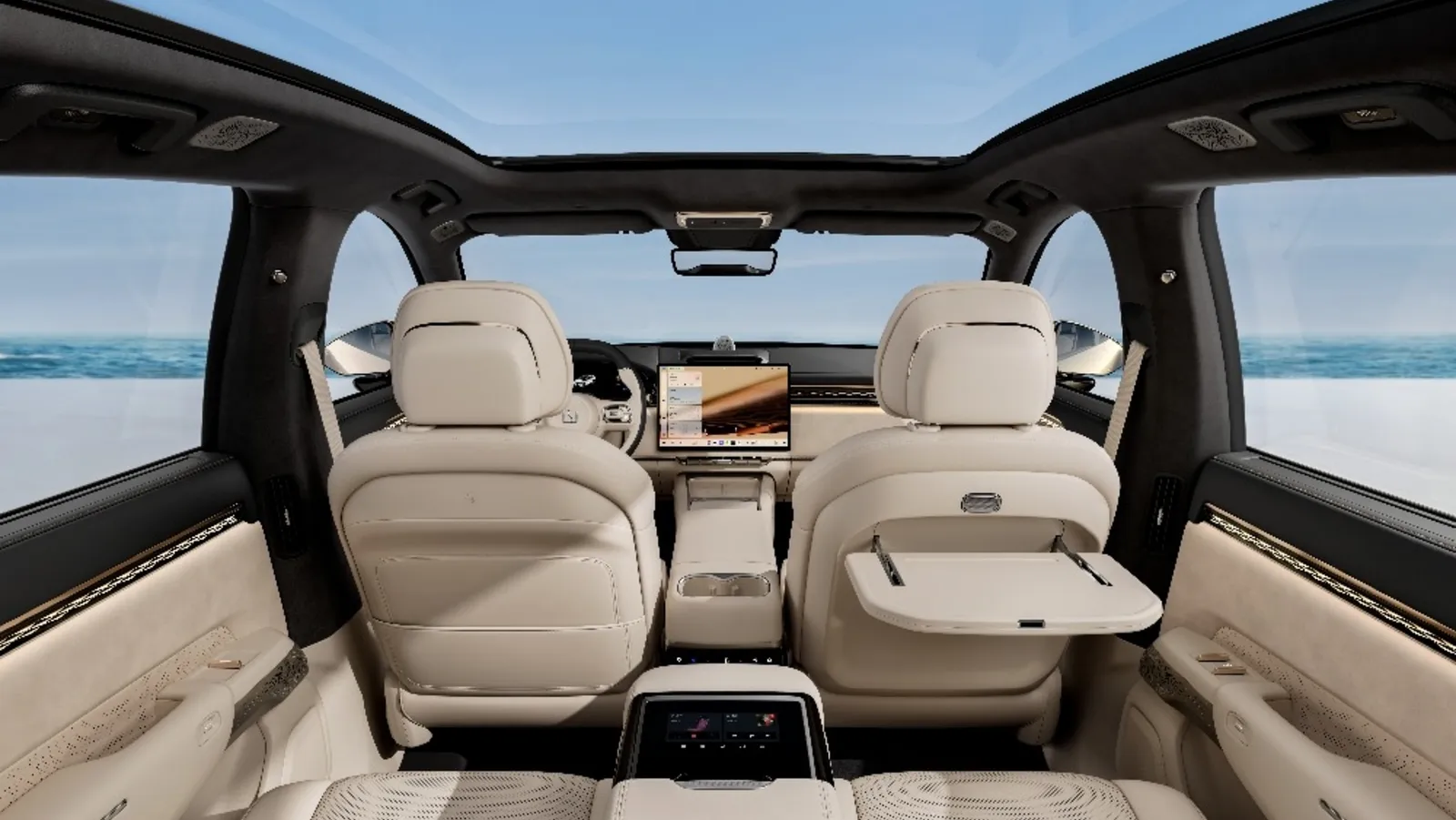
More battery, higher voltage, and the same price. That’s the pitch for the 7X 2027, the new version of Geely’s premium brand Zeekr’s best-selling D-segment electric SUV. Pre-orders opened in China this Thursday at a starting price of 229,800 yuan, around 29,900 euros, the same as the current model, with an official launch expected before the end of the year. It will arrive in Europe next year.
This update is significant for the brand. From January to September, the 7X saw 86,806 deliveries, accounting for 30% of all Zeekr sales, with September setting a record of 12,041 units. Additionally, the Zeekr 7X is already available in Spain, though with the older engine, and this upgrade focuses on what matters most in an electric vehicle: the battery and charging.
A new battery to fill the gap
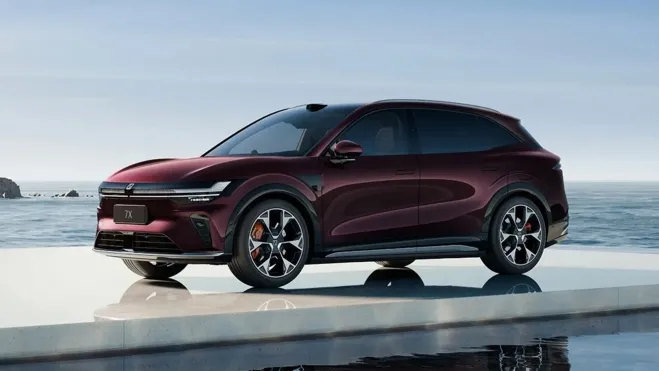
The major new feature is a 85 kWh lithium iron phosphate (LFP) battery developed by Geely itself, which sits between the 75 kWh LFP battery and the 103 kWh ternary lithium (NCM) battery supplied by CATL using its Qilin technology. This results in three versions of the range: Max, with rear-wheel drive and a 75 kWh battery; Max+, also rear-wheel drive, standard with an 85 kWh battery or available with a 103 kWh battery; and Ultra, with all-wheel drive and a 103 kWh battery.
Range figures, measured using the Chinese CLTC cycle which is much more optimistic than the European WLTP standard, range from 620 to 802 kilometers. The Max version has a range of 620 kilometers, the Max+ reaches 680 kilometers with the new battery and 802 kilometers with the larger battery, while the Ultra achieves 715 kilometers. The 7X is Zeekr’s equivalent to the BMW iX3 or Volvo EX60.
900 Volts and a Coffee Break
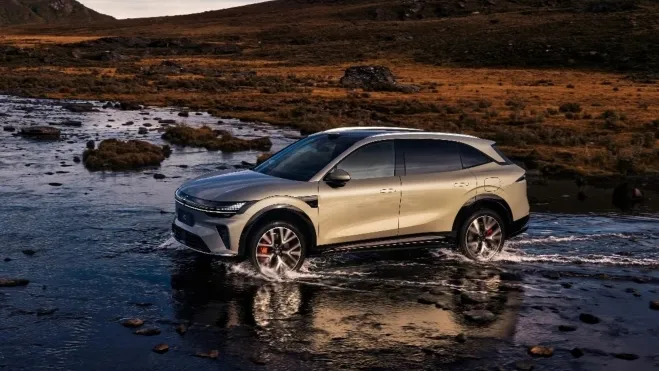
The entire lineup now features a 900-volt electrical system that covers the engine, electronics, and thermal management, which explains its charging figures: the 75 and 85 kWh batteries support a 5.5C charging rate, reaching 80% from 10% in 10.5 minutes, while the 103 kWh battery reaches 6C and does so in 10 minutes. In other words, it takes as long as it does to drink a coffee, assuming the charger is up to par. For a long time, the 7X has held the charging record in Europe, achieving a maximum power output of 480 kW.
Up to 795 Horsepower and Adaptive Suspension
According to official data, the Max and Max+ versions feature a single rear engine producing 503 horsepower, enabling them to accelerate from 0 to 100 kilometers per hour in 5.4 seconds (5.1 seconds with a 103 kWh battery) and reach a top speed of 240 kilometers per hour. The Ultra adds a front engine, bringing the total power to 795 horsepower, with a 0 to 100 km/h acceleration time of 2.98 seconds and a maximum speed of 255 kilometers per hour.
The chassis combines a double wishbone setup in the front with a five-link multibrace design in the rear. All versions now come standard with electronically controlled dampers (CCD) that continuously adjust their stiffness, while the Ultra adds air suspension. A system that maintains vehicle stability in the event of a tire blowout is also standard, capable of functioning even at 240 kilometers per hour, and the body uses high-strength steel with a strength of up to 2,000 MPa.
More Silence and Better Seats
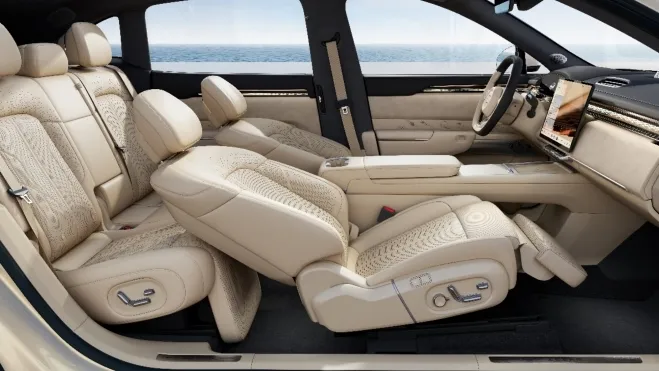
Inside, Zeekr has focused on insulation and comfort. It features 125 noise reduction measures, including active road noise cancellation (RNC) and acoustic double glazing, while the zero-gravity front seats offer 12-point massage. In the back, the seat back can recline up to 134 degrees and the seat cushion can move 215 millimeters. Externally, it is available in only two colors: gold and red.
In Spain, the Zeekr 7X will be available for purchase starting in May 2026, along with the family-oriented Zeekr 7GT, using the same mechanical setup as the previous version: 800-volt architecture, 75 or 100 kWh batteries, and 421 or 646 horsepower engines. Its price starts at 52,500 euros, about 22,600 euros more than the price in China, but it is much cheaper than its competitors, including the Tesla Model Y.