
The Kia EV2 shows why you can’t rely on maximum charging power: the small battery charges almost as fast as the large one.
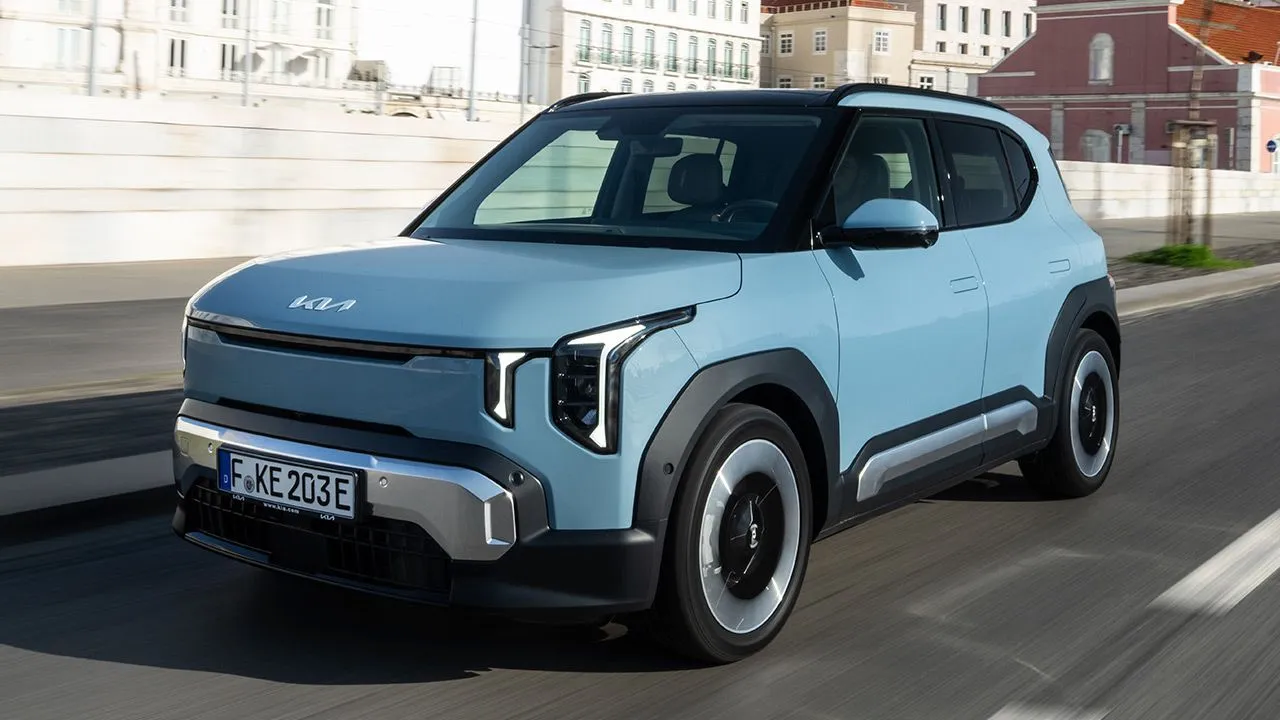
The Kia EV2 is a good example of why the maximum charging power listed in the specifications shouldn’t be the only factor we consider when comparing electric cars. On paper, the model with a smaller battery has an advantage: it claims a maximum power of 118 kW, compared to around 112 kW for the version with a larger battery. The conclusion seems simple: if it has more power, it will need less time to charge. But that’s not the case.
The key lies in the charging curve. Reaching a certain power level for a few moments may look great in the specifications, but what’s truly important when using a fast charger is how long the car can maintain a high power level. In this case, the Kia EV2 with the smaller battery achieves a very impressive peak, but the larger battery version makes much better use of the charging session.
The result is quite interesting. The Kia EV2 with a 42.2 kWh battery takes about 29 minutes to go from 10% to 80%, while the one equipped with a 61 kWh battery requires around 30 minutes. There is barely a minute’s difference between the two, even though the second battery has approximately 45% higher capacity. Kia officially confirms these 29 and 30 minute times for both battery capacities.
This completely changes the way we interpret the power figures. The smaller version can boast a peak power of 118 kW, but this figure isn’t maintained throughout the entire charge process. Power decreases as the charge level increases, so what’s truly interesting is the average power achieved over the whole charging session.
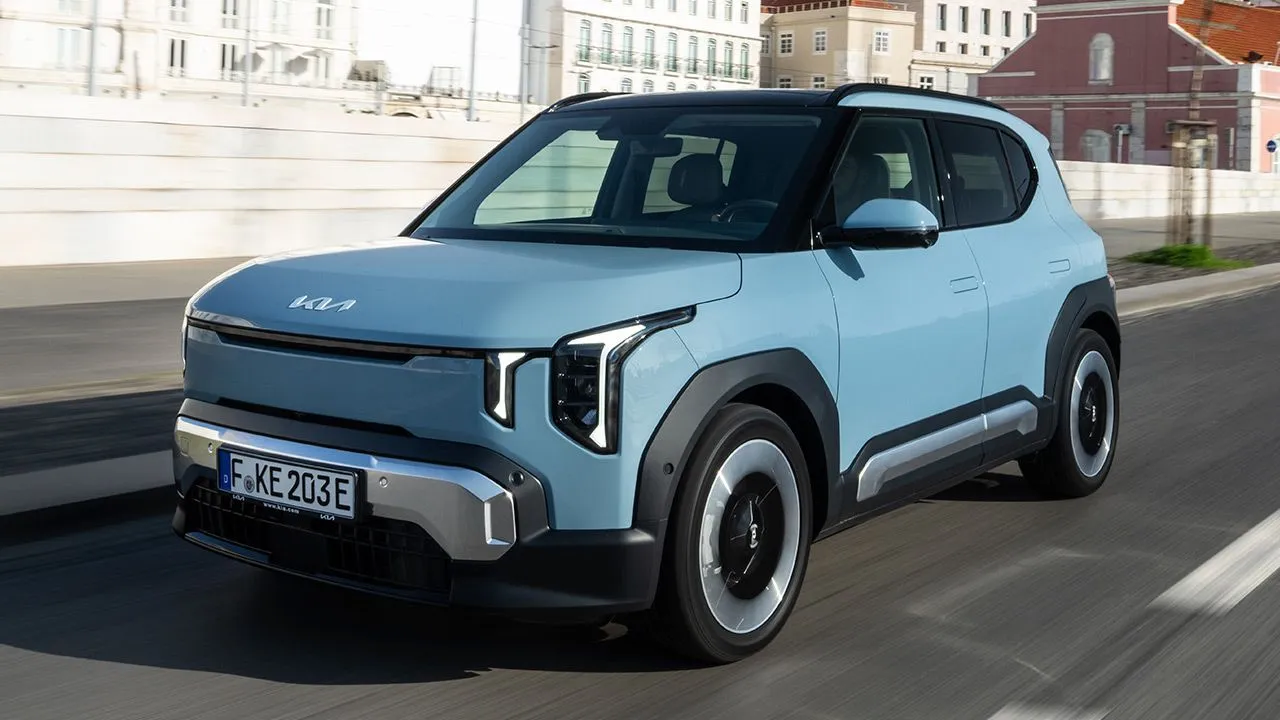
According to the comparison data published by French journalist Pierre Desjardins, the average power is approximately 61 kW for the smaller battery and 85 kW for the larger one. This is a significant difference that explains how it’s possible for a vehicle with lower maximum power to deliver much more energy in practically the same amount of time.
And here lies one of the key factors that is often overlooked when discussing electric cars. It’s not enough to ask how many kilowatts of charge a car can deliver in a few seconds. We need to look at the entire charging curve, as it determines how long we will actually be connected to the charger during a trip.
In the case of the Kia EV2, the difference becomes even more apparent when we convert the recovered energy into range in kilometers. During a charging stop of about 29-30 minutes, the 42.2 kWh version can recover around 216 km, while the 61 kWh version reaches approximately 307 km. In other words, by adding just one more minute to the charging stop, the larger battery allows for an additional 91 km of range.
Kia currently offers the Kia EV2 with a 42.2 kWh battery, providing up to 317 km of range, while the 61 kWh version achieves up to 453 km. These figures are based on the WLTP cycle and may vary depending on the trim level and tires. The manufacturer specifies, for example, up to 308 km with 18-inch tires and up to 317 km with 16-inch tires on the lower-capacity version.
The difference between the two versions also has another significant consequence. Considering the range regained during a charging session, the larger battery is clearly more efficient at making use of each minute connected to power. Theoretically, maintaining a similar average efficiency, the Kia EV2 with 61 kWh would need about 21 minutes to regain the same 216 km that the smaller version achieves in around 29 minutes.
Thus, the situation is quite paradoxical: the Kia EV2 that claims higher charging power isn’t necessarily the one that allows for the greatest range recovery during a quick stop. The peak power may be higher, but what ultimately matters is how long it remains at a high-power level and how much energy it can deliver to the battery.