
Geely’s product chief, Zack Zhang, highlights the E2 and Renault 5 as “our greatest competitive advantage.”
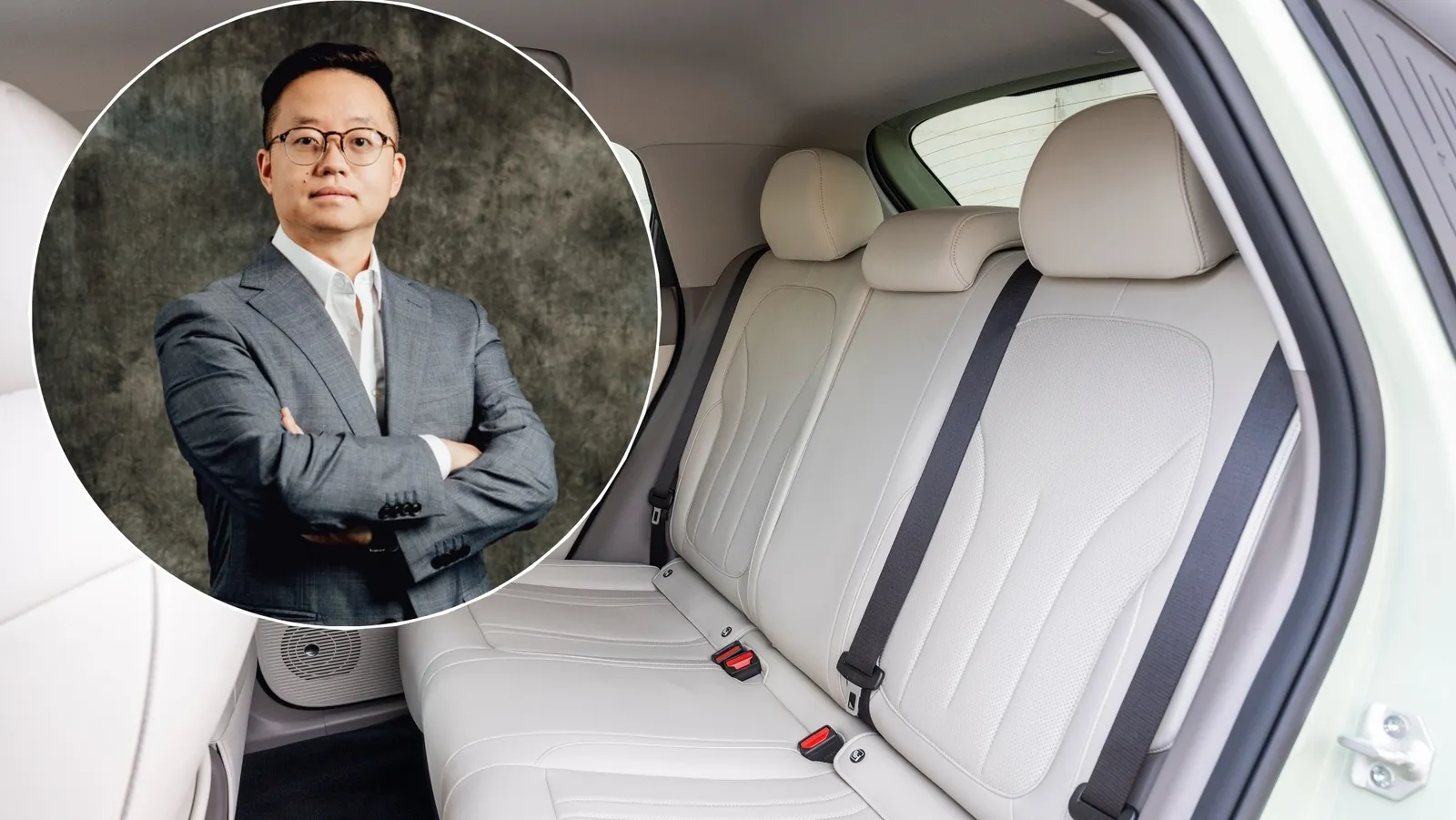
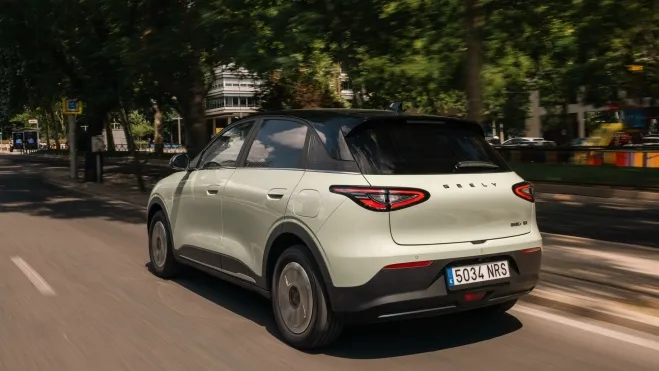
Geely Auto is entering the European small electric car market with the E2, a model that has already proven its commercial success in China. There it is sold under the name Xingyuan, with a starting price of 64,800 yuan, which is approximately 8,424 euros at current exchange rates. This volume is enough for it to become China’s best-selling electric car and the world’s most popular SUV by 2025. We have already tested and thoroughly analyzed it.
With that commercial backing, Geely now enters Spain and Europe at a competitive entry price of 19,990 euros, which is lower than that of its main rivals: the Renault 5 starting at 26,290 euros, the Volkswagen ID. Polo starting at 24,995 euros, and the BYD Dolphin Surf starting at 23,490 euros. It is the French model it must beat. The Renault 5 has become a best-seller across the continent, in part thanks to its iconic design. However, Geely believes it has an advantage up its sleeve.
Space: the card Geely wants to play against the Renault 5
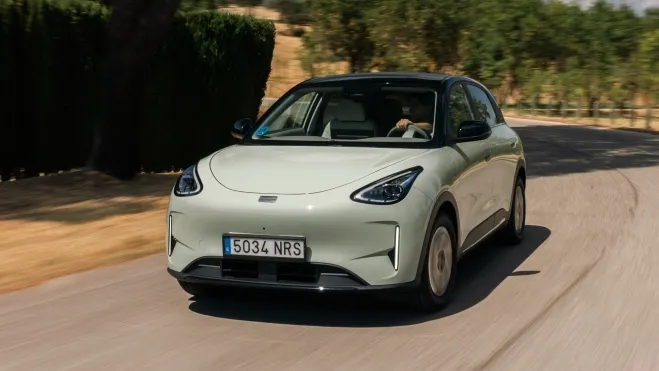
According to Geely’s product manager, Zack Zhang, interior space is the main competitive advantage of the E2 over the Renault 5. “I think space is our biggest competitive edge,” he said. The Renault 5 is very stylish, but no one can claim it’s spacious. At 4,135 millimeters in length, the E2 is 213 millimeters longer than the Renault 5 and 82 millimeters longer than the VW ID. Polo. Its wheelbase of 2,645 millimeters is 105 millimeters longer than that of the Renault and 53 millimeters longer than that of the Volkswagen. Geely also highlights another differentiating feature: rear-wheel drive, whereas its mentioned electric competitors use front-wheel drive.
Over 7,200 hours of development focused on Europe
To adapt the car to European requirements for maneuverability and comfort, Geely’s engineers in Germany and Sweden invested over 7,200 hours in development, according to the company itself. The vehicle underwent approximately 720,000 kilometers of testing at eight different test centers. In the first seven months of the year, Geely sold 17,283 vehicles in Europe, up from 1,316 units in the same period last year, and recorded more than 3,500 inquiries from interested customers during just the first month of E2 reservations.
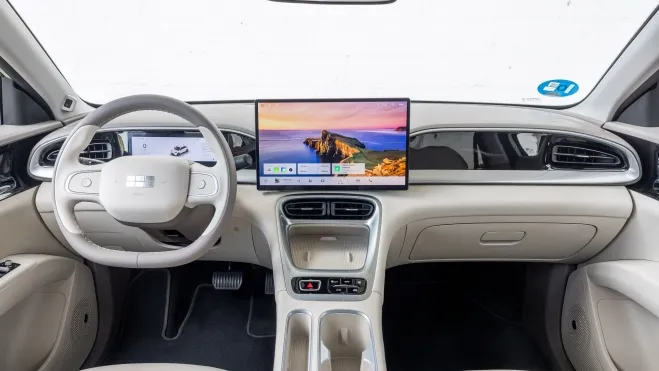
In Spain, the E2 is available in three variants. The Pro version, priced at 19,990 euros, features a 35.4 kWh battery paired with an electric motor of 60 kW (82 hp), achieving a WLTP range of 252 kilometers. The Max version, costing 23,780 euros, comes with a 47.1 kWh battery, 85 kW (116 hp) of power, a range of 345 kilometers, and a DC charging capacity of up to 80 kW. The Ultra version, priced at 26,280 euros, adds 16-inch lightweight alloy wheels, an electric rear door, ambient lighting, and a 540-degree camera.
Sales targets and tariffs despite everything
Geely Auto has set a goal of selling 5,000 cars in Germany alone this year and aims to expand its dealership network from 35 to over 60. Globally, the company plans to export one million vehicles this year, with around 400,000 units expected to be shipped from China to Europe, half of them going to Eastern Europe. Despite the 28.8% countervailing tariff imposed by the EU on electric vehicles manufactured in China, Zhang remains confident that the E2 will be profitable.
According to Zhang, Geely develops and manufactures in-house the key components for its electric and plug-in hybrid vehicles, including the battery, electric motor, and electronic control unit. On the success of the E2 in China, Zhang noted that a low entry price alone is not enough: “More needs to be offered,” he said, citing safety, driving performance, and available space as equally crucial factors.