
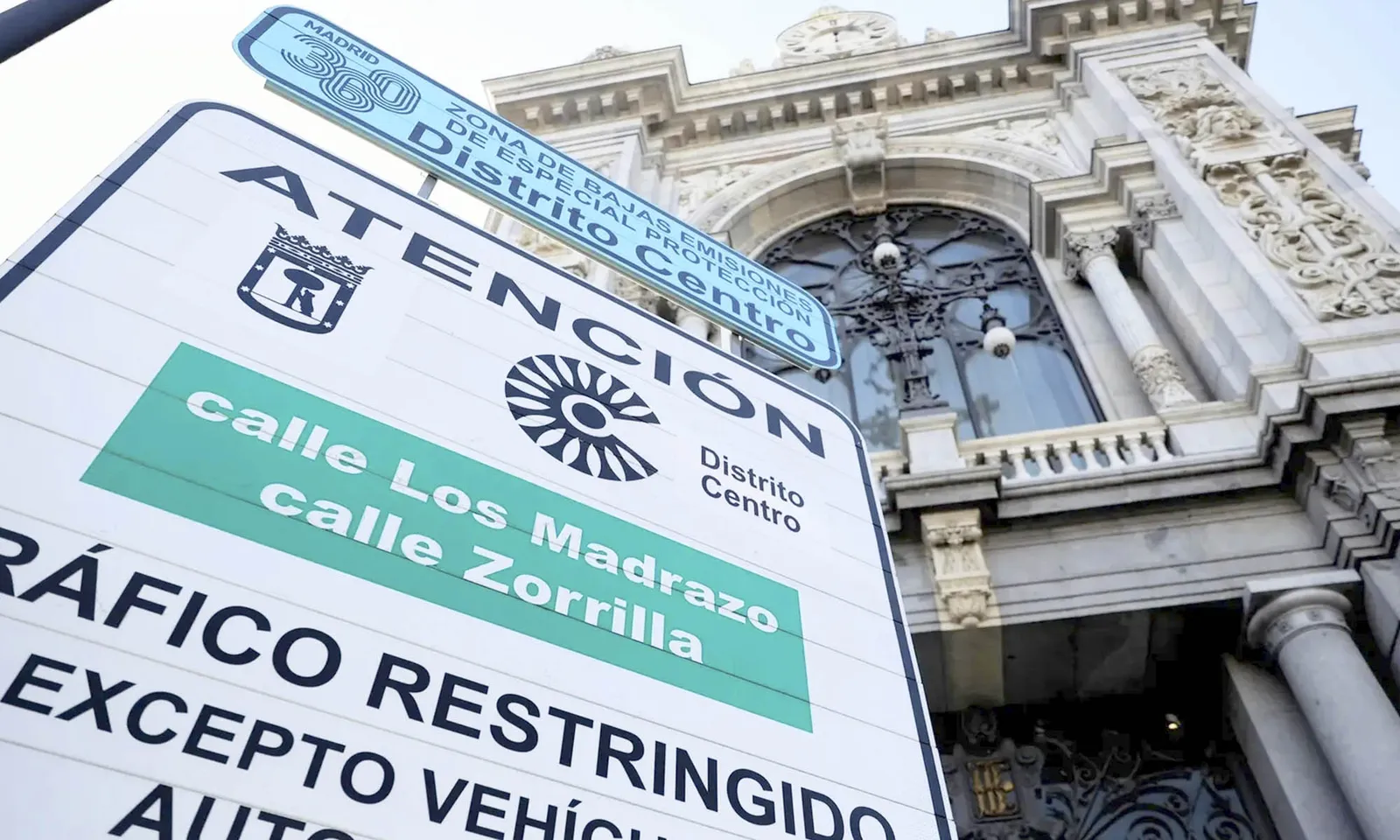
The government is ending the exemption rules in low-emission zones: municipalities will no longer be able to avoid fines.
04/11/2026 19:00
Updated to
04/11/2026 19:00
The differences in traffic restrictions imposed by Spanish cities could be significantly reduced with the latest decision by the government. Until now, some municipalities had chosen to allow the passage of virtually any vehicle within their Low Emission Zones (ZBE), while others maintained adaptation periods without penalties. This situation will change with the regulatory reform approved on November 3 by the Council of Ministers, which tightens municipal obligations.
The goal is to ensure that these areas have a real impact on traffic from the most polluting vehicles. To achieve this, municipalities will need to prove that their restrictions are effective and that violations are punished with appropriate fines. The measure also aims to prevent the creation of zones in areas where traffic was already restricted, a practice that has allowed compliance with regulations formally without making significant changes to mobility.
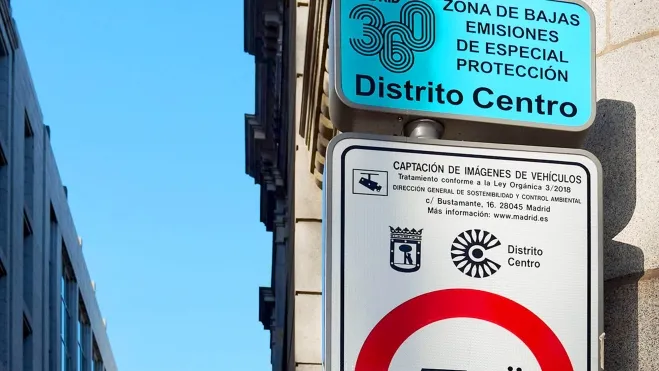
Municipalities will need to prove their ZBEs work
The new regulation introduces changes to Royal Decree 1052/2022, which details the obligations outlined in the 2021 Climate Change Law. Among the main requirements is the elimination of transitional periods that indefinitely delay the imposition of sanctions. Additionally, municipalities must prove the enforcement of access, traffic, and parking restrictions, as well as the operation of the systems responsible for monitoring compliance with them.
This decision particularly affects cities that had implemented advisory restrictions. For example, Vigo advocated for a model without financial penalties, while Ciudad Real proposed allowing access to all vehicles regardless of their environmental classification. Madrid has also approved exceptions for certain cars without environmental markings registered in the capital, whereas Valladolid’s ZBE was overturned by the Superior Court of Justice of Castilla and León.
According to information published by the Ministry for Ecological Transition, the reform also aims to strengthen the legal certainty for municipalities and facilitate the evaluation of results in each area. This information can be used as a reference for certain public funding instruments aimed at improving urban transportation and reducing emissions.
A pending obligation since 2023 affecting more than 150 cities
The implementation of ZBEs is significantly behind the original schedule. Legislation required municipalities with more than 50,000 inhabitants to have these areas in place by the end of 2022, a requirement that applies to 151 Spanish towns. However, progress has been uneven, with some cities still working on their regulations while others have resorted to moratoriums or exceptions to delay the restrictions.
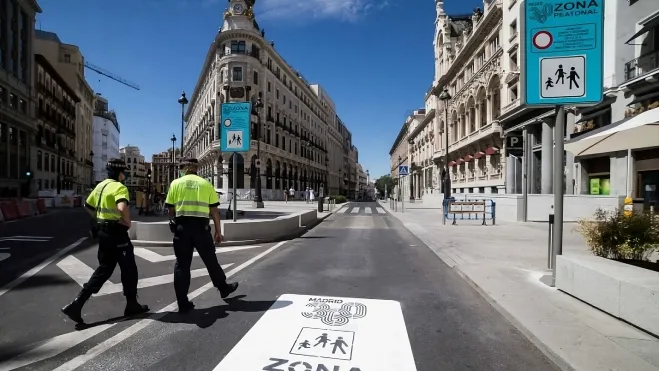
The regulatory change also applies to island territories and municipalities with more than 20,000 inhabitants that exceed legal limits for air pollution. However, each local administration will still have the authority to determine the boundaries of its ZBE and the specific traffic conditions, as long as state requirements are met and the restrictions correspond to the vehicle emission levels.
After its approval by the Council of Ministers, the publication of the amendment in the Official State Gazette is pending to determine its final wording and effective date. The reform does not impose a general ban on all cars without an environmental label, but it requires that any applicable municipal restrictions be enforced effectively and come with an operational sanctions regime.