
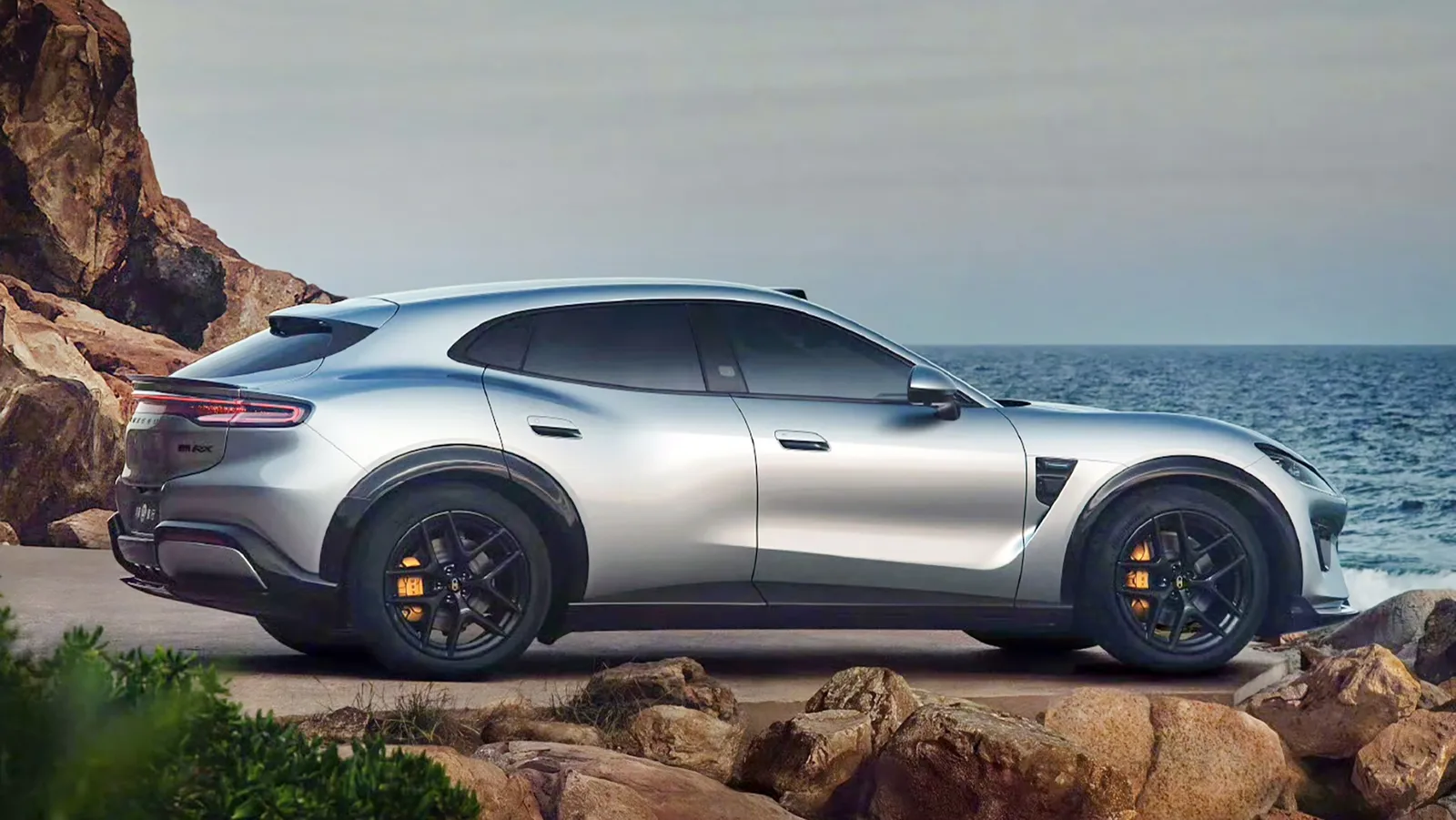
Huawei and Chery's 'Chinese Ferrari', with 594 horsepower and 852 km of electric range, is priced at 35,100€.
22/09/2026 13:30
Updated to
22/09/2026 13:30
Huawei and Chery have almost finalized one of their most important electric vehicle launches of the year. The new Luxeed RX will be officially unveiled in China on September 28th, following the opening of pre-orders in August. It will become the fourth model in the Luxeed lineup, joining the S7, R7, and V9.
The launch date isn’t the only update. Just a day before announcing it, Luxeed opted for a smaller 81 kWh battery, which allows the pre-order price to drop from the previous 299,800 yuan (39,020 euros) to 269,800 yuan (35,100 euros). This represents a reduction of about 10%, with the final prices for the entire lineup to be revealed during the launch event.
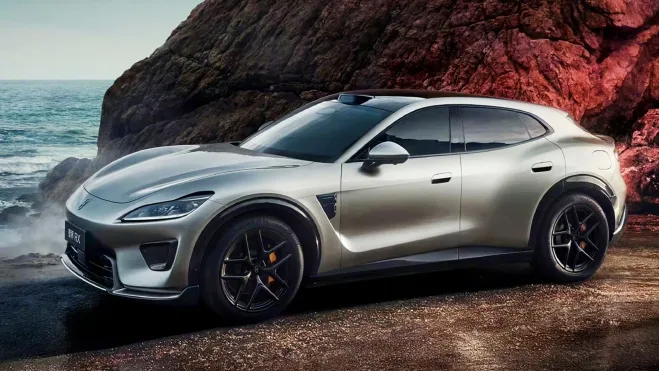
A massive electric SUV with up to 852 km of range
The RX is a sizable electric SUV coupe. It measures 5,020 mm in length, 2,007 mm in width, and 1,585 mm in height, with a wheelbase of exactly 3,000 mm. Its design also features a quite distinctive European touch, having been created by Werner Gruber, a former Ferrari designer who worked on projects like the LaFerrari and FXX-K. The chassis, meanwhile, was refined by Tobias Moers, former CEO of Aston Martin.
It is built on Huawei’s Tuling platform and features the new generation of electric motors from the Chinese tech company. There will be rear-wheel-drive versions with 377 HP, as well as all-wheel-drive options that combine two motors to achieve around 594 HP. Huawei claims its new propulsion system can reach rotational speeds of up to 21,000 rpm.
The initially announced versions used a battery of around 100 kWh integrated into Huawei’s Giant Whale platform and could achieve up to 852 km of certified range according to China’s CLTC cycle. Now, the 81 kWh option mentioned above is added for those customers who don’t need such a large capacity. According to a Luxeed official, 70% of those who had reserved an RX already own another vehicle, so the company believes a smaller battery can fully meet their daily commuting and weekend travel needs.
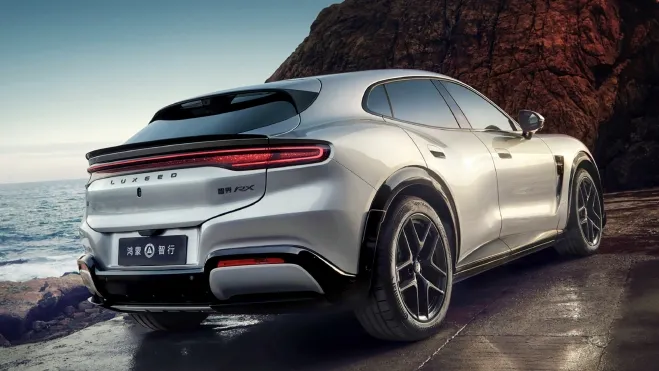
Four LiDARs and technology ready for Level 3 autonomous driving
Huawei has also made driving assistance systems one of the key selling points of the RX. The SUV can be equipped with four LiDAR sensors and a total of 38 perception sensors. Among them is an 896-channel imaging LiDAR along with three other solid-state LiDAR sensors, a configuration that remains relatively uncommon even among high-end Chinese electric vehicles.
The higher trims also feature an architecture designed for level 3 autonomous driving. This includes redundant systems for power supply, processing, communication, steering, and braking. However, this does not mean the RX will offer level 3 autonomous driving from launch, as the official information explicitly leaves this unconfirmed.
The interior features a 16.1-inch central screen and a 26-inch head-up display. It also includes smart enveloping seats with 98 pressure sensors and a massive 1.8 square meter electric sunroof. With such a robust technological setup and nearly comparable dimensions, the Xiaomi YU7 emerges as one of its most direct competitors in China. The latter currently starts at 233,500 yuan, while the new Luxeed begins at 269,800 yuan.
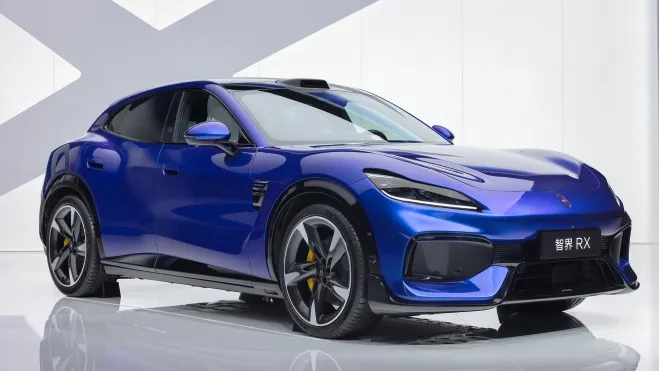
On September 28th, we will finally learn its final prices and the complete lineup of the range. On the same day, Huawei will also take advantage of the HIMA event to open pre-orders for the Stelato V8, its new luxury minivan developed in partnership with BAIC.