
The 7,000 euro solar car that recharges while parked: up to 55 km free per day
I have to admit that I have a slight obsession with solar cars. It’s a dream shared by many of us, one we’ve been waiting for and pursuing for years, with projects coming and going without achieving success. The problem is that, so far, almost all of them have run into the same reality: conventional cars require too much energy, the available surface for installing solar cells is too small, and above all, the costs are extremely high.
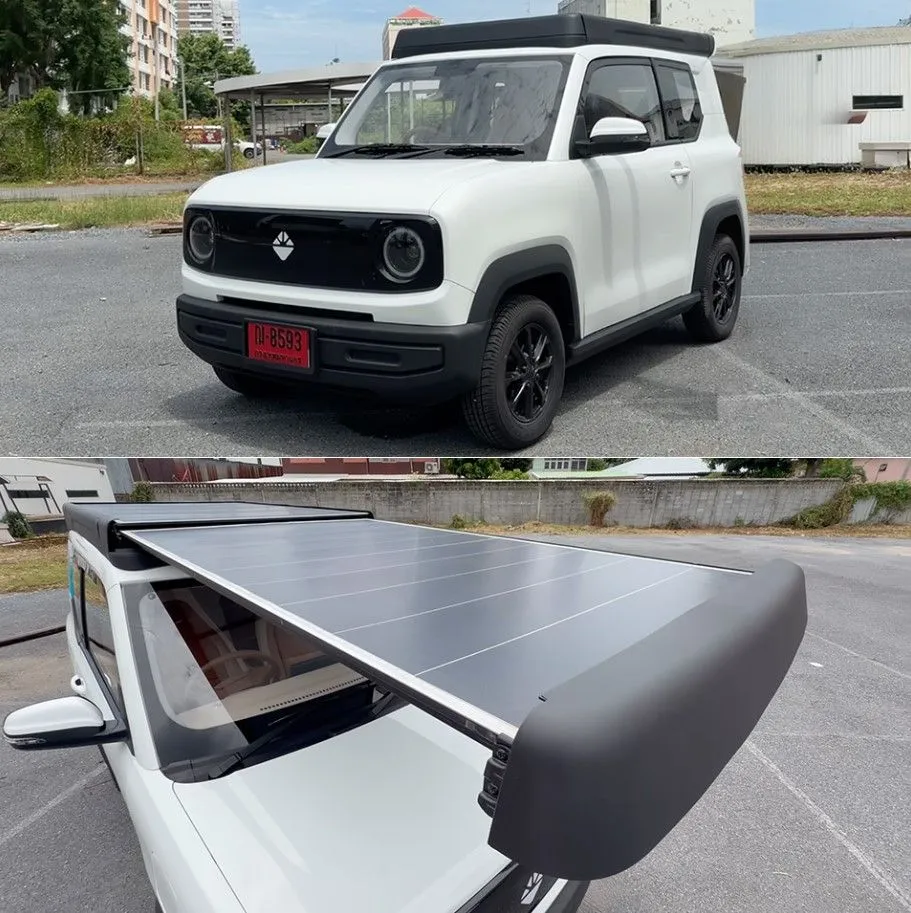
While we wait for advancements from projects like BYD’s or Toyota’s, an alternative—though certainly different—is coming from China. It’s the Solarky sunV. Rather than trying to convert a conventional car into a solar vehicle, the Chinese company designed this small electric car from scratch, featuring a battery capacity of just 10.2 kWh and a solar roof that can be deployed while parked. Its price is around 7,000 euros at current exchange rates, and it’s already available in markets such as Thailand, Indonesia, and Tanzania.
The idea makes much more sense once you understand its intended purpose. It’s not meant to be a car for traveling hundreds of kilometers on highways, but rather an alternative to mopeds or small urban cars. In such situations, the car can sit parked outdoors for several hours under intense sunlight, which is precisely the environment where its solar system makes the most sense.
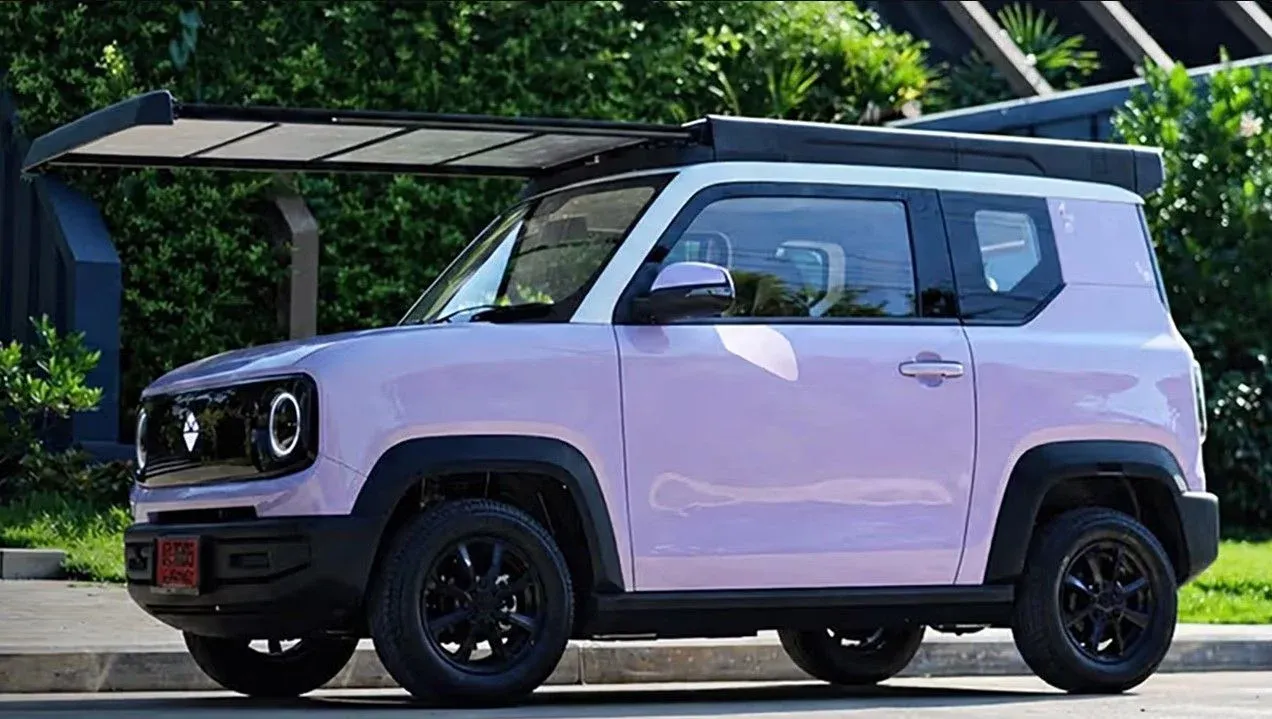
The most eye-catching feature is on the roof. The Solarky sunV includes a solar panel covering about 1.6 square meters, which can be expanded to 3.2 square meters when the car is parked. This significantly increases the area exposed to sunlight without requiring a permanently large roof. The system can add up to 50-55 kilometers of extra range on a very sunny day, while in cloudy conditions it may provide around 30-40 kilometers of additional range.
And this is likely the key to the entire project. The Solarky sunV doesn’t need to generate enough electricity to continuously power a large car; it only needs to recover the energy it consumes during urban driving. If the owner drives a few kilometers to work, shop, or explore the city and then leaves the car in the sun for several hours, the roof can recover some of that energy while it’s parked.
A car weighing just 660 kg to make solar energy viable
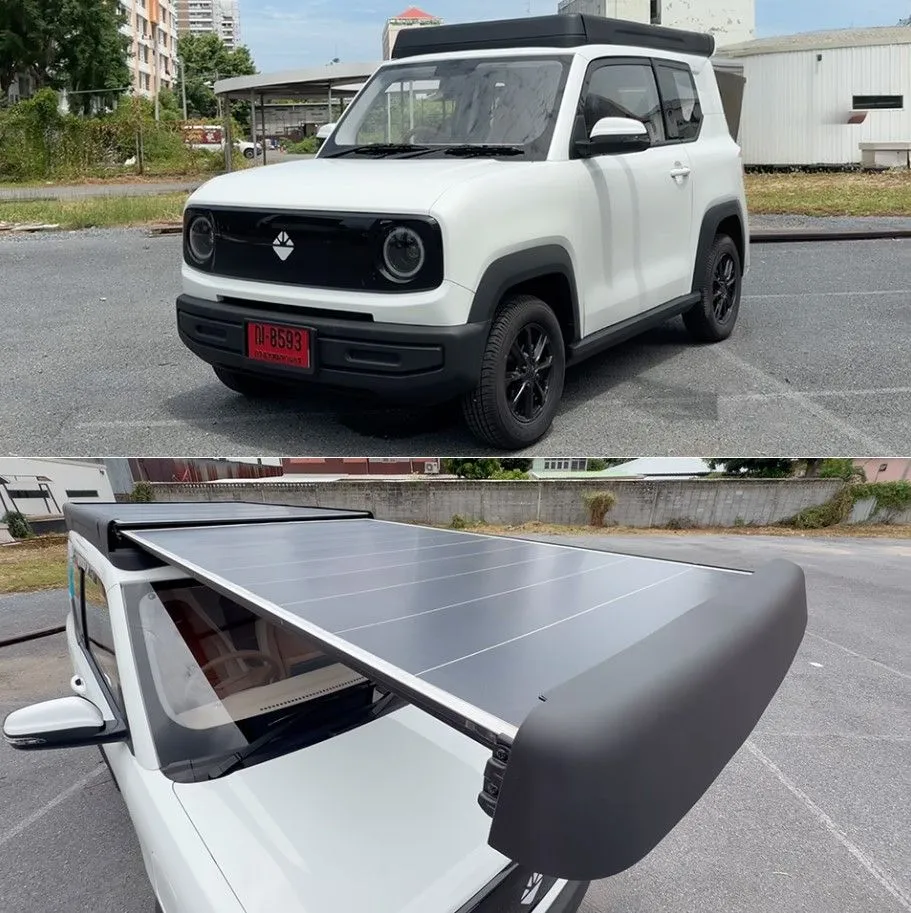
The other major secret of the Solarky sunV lies not on the roof but beneath it. The vehicle weighs approximately 660 kg, an exceptionally low figure for a four-seater car with air conditioning. To achieve this, Solarky uses an aluminum frame and exterior panels made of composite material instead of a conventional steel body.
The result is a car that is 3.15 meters long, 1.49 meters wide, and 1.70 meters high, with a wheelbase of 2.07 meters. It also has a ground clearance of around 190 millimeters, which could be advantageous in markets where roads and urban streets have conditions quite different from those in Europe. Its design vaguely resembles a small SUV, though its dimensions clearly place it in the category of urban cars.
The mechanical setup is also extremely simple. The Solarky sunV is equipped with a 15 kW rear electric motor, equivalent to around 20 horsepower, producing 85 Nm of torque. The top speed is limited to 80 km/h, making it clear that its natural environment is city streets rather than highways. In the test conducted in Bangkok, the vehicle managed to navigate urban traffic fairly well, though the tester noted that the suspension and sound insulation could use significant improvement.
The battery has a capacity of only 10.2 kWh and uses lithium-iron phosphate chemistry. With this, Solarky claims around 151 kilometers of range under the old NEDC cycle. This figure should be interpreted with caution, but it is quite impressive given the small size of the battery and, especially, the car’s weight.
The explanation is simple: moving 660 kg requires much less energy than moving a conventional car weighing 1,500 or 2,000 kg. This efficiency allows a relatively small solar installation to have a much greater impact. With the roof deployed and good weather conditions, the brand claims it can generate enough energy for about 50 kilometers of daily driving. In the video shot in Bangkok, figures of around 30-40 kilometers were also recorded even with some cloud cover.
The daily operation can therefore be very different from that of a conventional electric car. The driver can leave home, drive a few kilometers, park for several hours, and let the car recharge. Then they return home and repeat the process the next day. In an urban setting with plenty of sunlight and short distances, the need to connect it to the grid can be greatly reduced or even disappear for long periods.
That doesn’t mean the Solarky sunV is a car that never needs to be charged. It can be recharged using alternating current and lacks a fast charging system for direct current. However, with a battery capacity of just 10.2 kWh, the need to use an external charger is much lower than that of a conventional electric car when daily usage is limited.
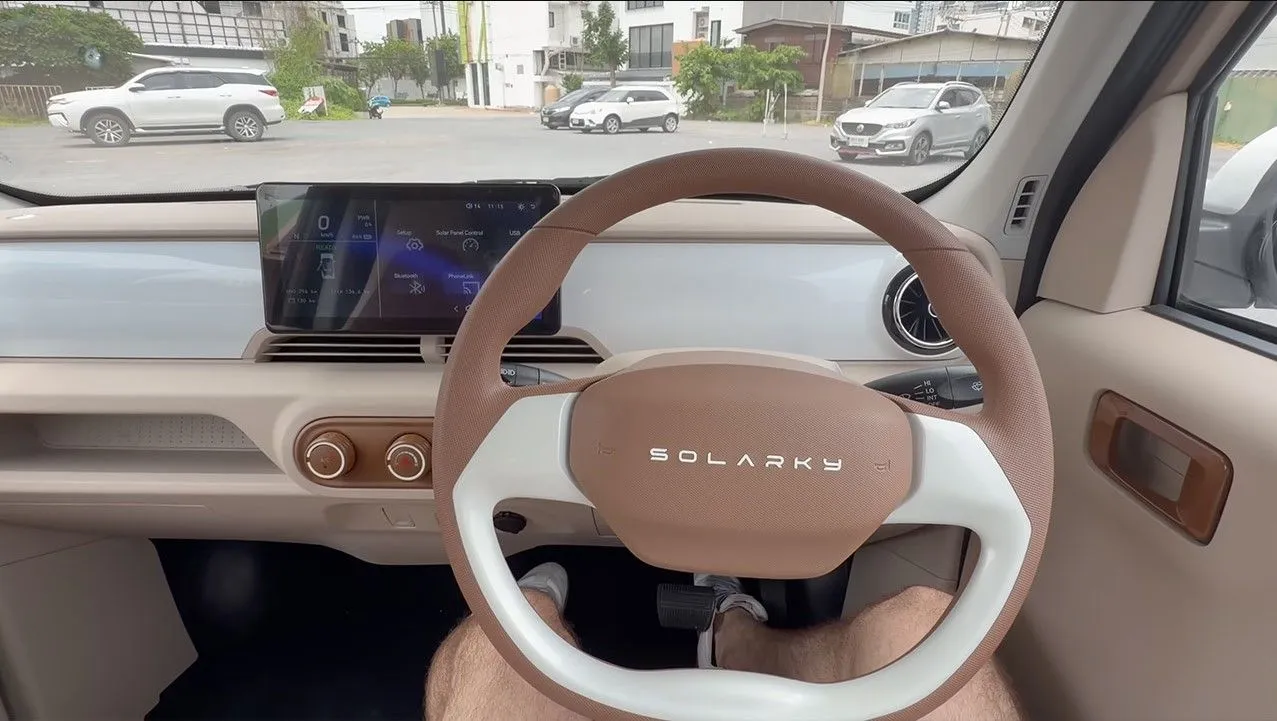
The interior follows the same philosophy. There’s no endless list of features, but it does have everything necessary to use it as a regular car. It includes air conditioning, which is especially important in Thailand’s climate, power windows, and a central screen with Apple CarPlay integration. It also features cameras and sensors in the rear area to assist with parking maneuvers.
The cabin can accommodate up to four adults, though the rear seats are quite tight and have a simple design. It is not intended to compete with European SUVs in terms of material quality, insulation, or comfort. In fact, during testing, it was criticized for some plastics having an inexpensive appearance and the car being noisy while in motion. But that is probably an inevitable consequence of pushing weight and cost reduction to such an extreme level.
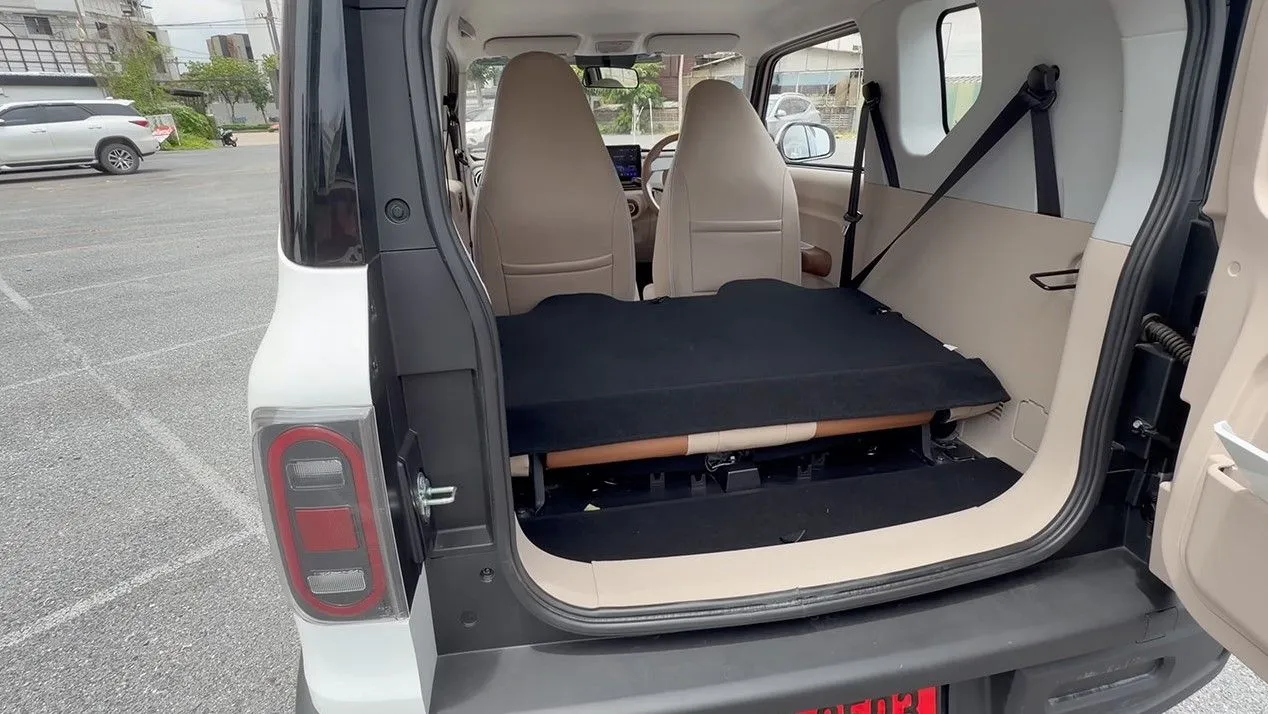
It is also quite interesting due to its cargo capacity. With the rear seats in use, the trunk offers around 70-80 liters, but it can reach approximately 800 liters when the seats are folded down. The side-opening rear door further facilitates access to the cargo area, allowing the sunV to be used not only as a passenger car but also as a small vehicle for business and local trips.
The En Marcha also doesn’t aim to deceive anyone. The assisted steering makes maneuvering easier, and the acceleration is sufficient for navigating urban traffic, but its dynamic performance is far from being its main selling point. The Everything Electric APAC tester finds the suspension a bit stiff and noisy, with handling that is merely adequate for city driving. And that’s exactly the key: it doesn’t try to be an all-rounder, but rather solve a very specific problem at the lowest possible cost.
Solarky has already brought the sunV to various markets in Southeast Asia and Africa. It is sold in Indonesia through a partnership with MAB and has also reached Tanzania, while Thailand was one of its earliest markets. The company is further seeking to expand its international presence, especially in countries with abundant sunlight, short urban commutes, and less developed charging infrastructure.
And this is where the little Solarky sunV becomes particularly interesting. It doesn’t prove that all electric cars must have solar panels, nor that conventional solar cars are about to replace current models. What it shows is something much simpler: if you drastically reduce weight, use a small battery, and design the car for specific urban use, solar energy can stop being just a decorative element and become a real help.
The Solarky sunV isn’t perfect, nor does it aim to be. Its handling is simple, its equipment is basic, and its performance is very limited. But it offers an uncommon combination of price, low weight, a small battery, and solar power that can work in very specific locations. And in a market where there’s growing talk of large electric cars and huge batteries, it’s refreshing that someone has chosen to do the exact opposite.