
Renault’s CEO acknowledges the significant advantage of Chinese manufacturers: “Their cost levels are beyond our reach from Europe.”
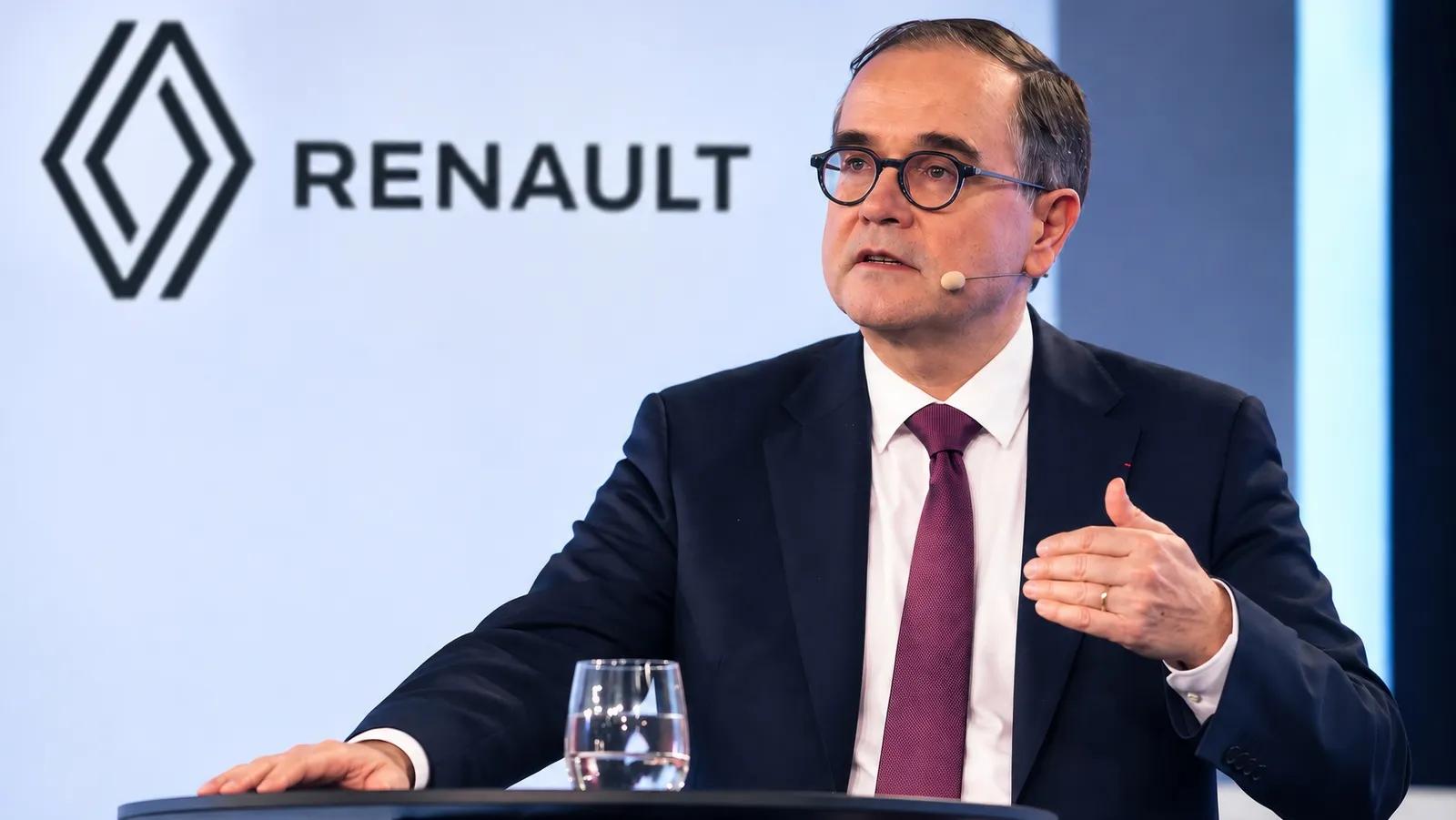
Europe has been trying for years to find a way to compete with Chinese automobile manufacturers. Technology, development speed, and especially costs have become some of the key battlegrounds in an industry undergoing rapid transformation. Now, it is Renault Group’s own CEO, François Provost, who has identified one of the main differences.
The top executive at the French automaker believes Renault has the technology needed to develop its own vehicles. The problem arises when it comes to money. “Chinese manufacturers are very aggressive, and we cannot match those cost levels from Europe,” Provost said in an interview published in Germany.

For this reason, Renault is already making industrial decisions based on this reality, with one of the most notable developments taking place thousands of kilometers from Europe. In Brazil, the French manufacturer has strengthened its ties with Geely to the point of using the Chinese group’s platforms to develop future Renault models.
Renault has the technology, but China has another advantage
The relationship between Renault and Geely is not new. The two companies collaborate on various projects and are partners, among other things, in Horse Powertrain, a company specializing in combustion and hybrid propulsion systems. But what is happening in Brazil takes this collaboration to the next level.
Geely utilizes Renault’s industrial capacity and business structure there, while the French manufacturer gains access to the Chinese group’s platforms to develop new vehicles. Renault and Geely have also announced a new investment cycle of 319 million euros in Brazil, raising the total planned investment between 2025 and 2027 to 899 million euros.
The inevitable question is why a manufacturer like Renault needs to turn to a Chinese platform when it has its own technologies. Provost explains it quite directly: “We have no problem with technology. The issue is cost.”
That is precisely where one of Renault’s major advantages in its partnership with Geely lies. According to its CEO, working on the Chinese manufacturer’s competitive platform allows for faster development and increased production volumes.
The strategy makes even more sense considering how the Brazilian market is changing. Chinese manufacturers have rapidly expanded their presence there, and Renault acknowledges it entered the electrification race in this country a bit late. Over the past few years, the group’s focus has mainly been on regaining competitiveness and strengthening its position in Europe.
It now wants to accelerate its expansion outside the Old Continent, and Brazil has become a key part of that strategy. Renault and Geely announced this week a new investment to produce electrified vehicles at the Ayrton Senna industrial complex in Curitiba, using precisely the GEA architecture from the Chinese group.
In Europe, Renault sets limits on Geely
Provost draws a clear distinction between what Renault is willing to do outside Europe and its strategy within the European market. When directly asked about the possibility of future Renault vehicles sold in Europe using a Geely platform, the CEO confirmed that there is no such project at present.
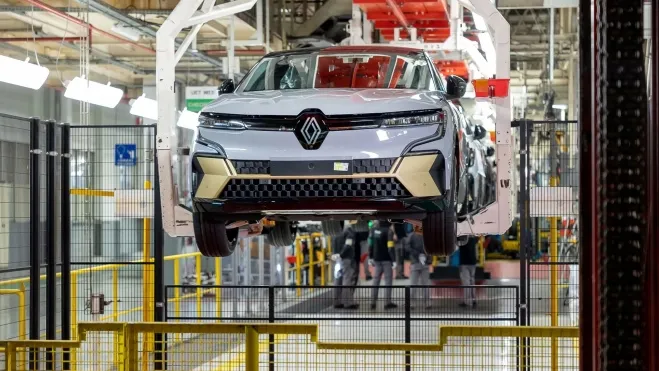
Renault wants to maintain its technological independence in Europe. Provost asserts that the company can execute its strategy without relying on other manufacturers and explains that when establishing European collaborations, it aims to do so using its own technologies.
However, the situation changes outside Europe. There, Renault is willing to be more flexible if using technology from a partner allows it to develop vehicles more quickly and, most importantly, achieve costs that would be difficult to attain relying solely on European structures.
The Brazilian case is probably one of the clearest examples. Renault gains access to Geely’s competitive platform, while the Chinese manufacturer can benefit from an industrial and commercial infrastructure built by the French brand in that country over more than three decades.
This doesn’t mean Renault has given up on developing competitive cars from Europe. In fact, the company is trying to bring some of the rapid development pace typical of Chinese manufacturers to its new projects. The new electric Twingo, developed over approximately two years with input from Renault’s development center in China, is one of the examples the company uses to illustrate this.
But Provost’s words reveal one of the major challenges facing the European industry. The battle with Chinese manufacturers isn’t fought only over range, batteries, software, or power. It’s also waged over something much more fundamental: how much it costs to develop and manufacture each car.