
Ford’s CEO admits that some of its electric cars are not profitable in Europe and talks about Valencia: “I don’t want to go into details.”
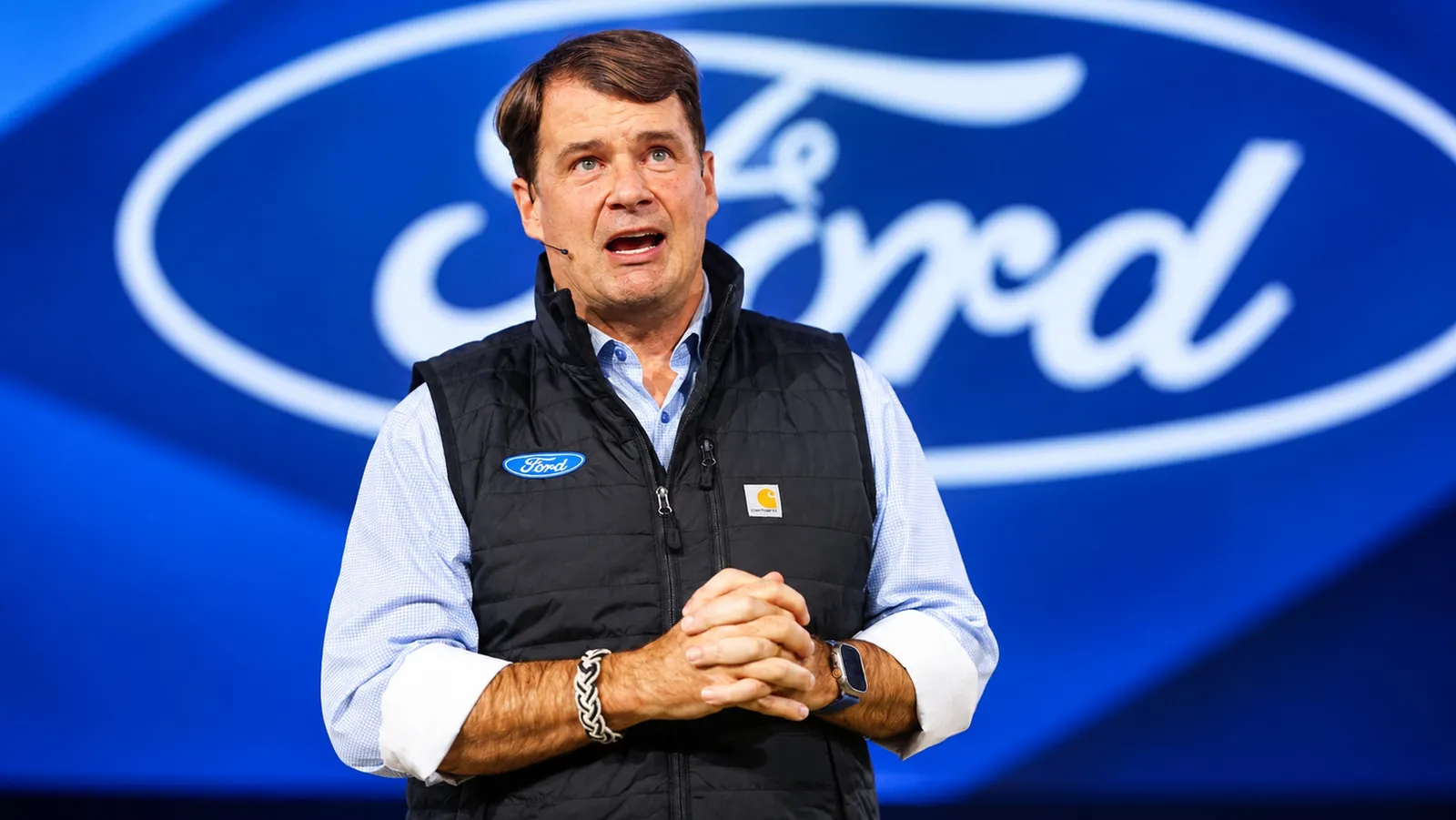
Ford CEO Jim Farley has acknowledged the challenges faced by the American automaker in making certain electric vehicles profitable in Europe. During the presentation of the company’s third-quarter 2026 financial results, he defended industrial partnerships with Renault and Geely as part of his strategy to improve margins, reduce required investments, and make better use of its factories’ production capacity.
The statements are of particular significance for Spain because Farley explicitly mentioned the facilities in Valencia, Romania, and Turkey when asked about the company’s industrial plans. Although he confirmed that Ford is still exploring new opportunities for these sites, he avoided specifying the decisions under consideration, at a time when the Almussafes plant in Valencia is preparing for a new phase marked by its partnership with Chinese manufacturer Geely.
Ford’s top executive also admitted that pressure on profits affects not only electric cars. The company’s European commercial vehicle business is facing difficulties, though Ford claims to have a plan to improve its results starting next year. These statements contrast with the overall performance of the group, which managed to increase its adjusted operating profit in the third quarter.

Ford acknowledges challenges with its electric cars in Europe
During the conference with analysts, one of the participants asked about the high production capacity available in Europe, the increasing competition from Chinese manufacturers, and whether Ford might need to take additional steps to adjust its manufacturing facilities.
In his response, the CEO explained that the situation in Europe is different from other markets due, among other reasons, to regulatory requirements for electric vehicles and the existing excess production capacity. Faced with this scenario, Farley expressed confidence that Ford has an appropriate strategy to improve the profitability of its sedans through its partnerships with Renault and Geely.
The executive explained that these partnerships require relatively modest capital investments and enable more competitive cost levels. Their goal is to use these advantages to modify the manufacturer’s electric vehicle lineup and replace products that currently do not deliver the desired economic results.
Specifically, Farley noted that these agreements will allow Ford to “replace unprofitable electric cars with others that offer much better profit prospects.” This is one of the most significant statements in his speech, as it openly acknowledges that part of the company’s current European electric strategy needs to be revised to achieve its financial goals.
Pressure also affects Ford Pro, the company’s commercial vehicles and business services division. Farley admitted that there is significant negative pressure on profits in this business segment in Europe, especially amid the shift of vans toward electrification. However, he said the company is preparing a promising solution for 2027, though he did not provide enough details to identify new models or production decisions.
Ford’s CEO avoids specifying industrial opportunities in Valencia
The most significant comment for the Spanish industry came when the analyst asked whether partnerships with Geely, Renault, and Volkswagen would be enough to adjust Ford’s European manufacturing capacity. This issue directly affected the future of its production facilities and the utilization of plants that needed to be adapted to the automaker’s new strategy.
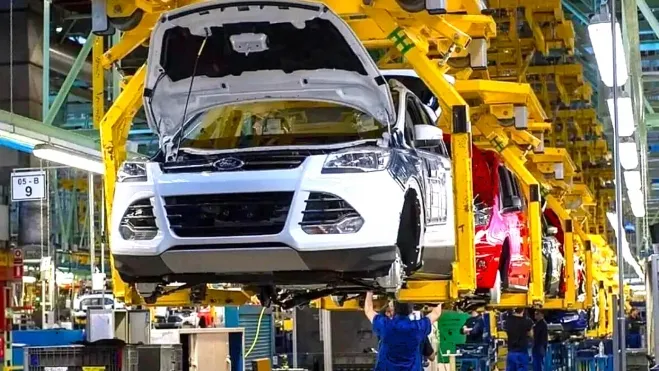
Farley avoided anticipating decisions and said, “At this moment I don’t want to go into details, other than that we are working on opportunities in Valencia, Romania, and Turkey.” He then emphasized that Ford remains fully committed to building a profitable business in Europe and assured that the company has been working on an ambitious plan for several years.
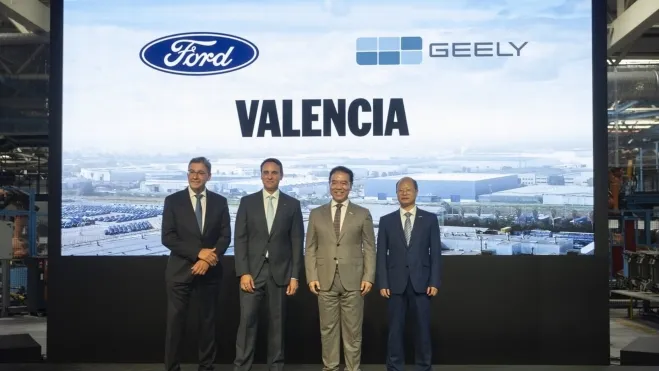
The mention of Valencia holds special significance following the agreement reached on July 23 between Ford and Geely to create a joint venture related to the Almussafes plant. Approved unconditionally by Chinese authorities, this deal involves Ford holding a 66% stake and the Asian manufacturer holding a 34%, with the aim of sharing industrial resources and enhancing the competitiveness of vehicles produced in Spain.
According to the plans officially announced by both companies, the new joint venture is set to begin operations in the first half of 2027. Its strategy includes manufacturing five models at the facilities in Valencia: the current Ford Kuga, a new multi-energy crossover from Ford, a compact SUV from the Bronco family, and two electric SUVs from Geely. The arrival of these new vehicles is expected starting in 2028.
This partnership will allow for better utilization of the capacity at Almussafes, sharing production volumes between the two manufacturers, and reducing costs per unit. For Ford, it also represents a way to expand its European lineup without having to bear all the necessary investments on its own to develop new models and technologies.
However, Farley did not announce any new vehicles for Valencia, additional investments, or specific changes to the workforce during the conference. His reference to industrial opportunities should be understood within a strategy that is still evolving, and the manufacturer has not yet provided further details on it.
Ford improves its global profits
The performance of Ford’s European business contrasts with the overall results reported by the company. In the third quarter of 2026, the firm recorded revenues of $49.5 billion, approximately 2% lower than in the same period the previous year. Despite this decline in sales, its adjusted operating profit reached $2.7 billion, representing a 3% year-on-year increase.
The company also generated $4.7 billion in adjusted free cash flow during the quarter and raised the lower end of its forecast for adjusted operating profit for the full year 2026. Ford expects to close the year with a result between $10.5 billion and $11.0 billion, driven by the strength of some of its most profitable vehicles and growth in its services and financing businesses.
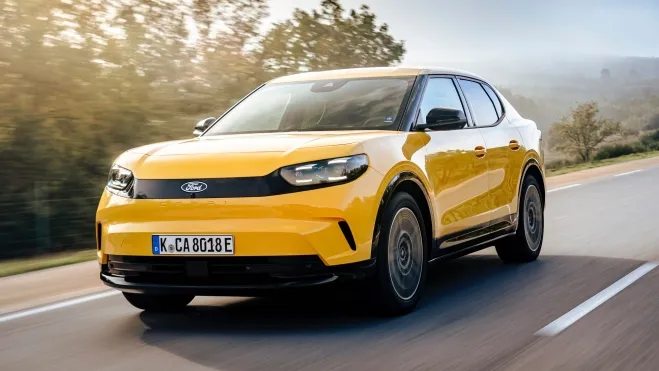
Farley believes that one of the keys to improving future results will be reducing the investment needed to develop new cars and focusing resources on products that can be sold with sufficient profit margins. In Europe, this means reviewing the electric vehicle strategy, leveraging partnerships with other manufacturers, and adjusting production capacity to meet actual market demand.
In this context, collaboration with Geely assumes strategic importance for Almussafes. The Chinese group brings technological expertise and the possibility of sharing platforms and components, while Ford has a well-established manufacturing facility and a European sales network. Both companies are confident that this combination will enable the development of more competitive vehicles and strengthen the industrial operations at the Spanish plant.
The American company insists its goal is not to leave Europe, but to transform its presence on the continent in order to restore profitability. Jim Farley’s statements confirm that Valencia is part of this process, though they also leave one question open: what new industrial decisions might Ford make to finalize its European strategy in the coming years.