
Audi’s CEO stepped onto the stage with Trump during an election rally and announced a $4,000,000,000 investment and 4,500 jobs in the U.S.
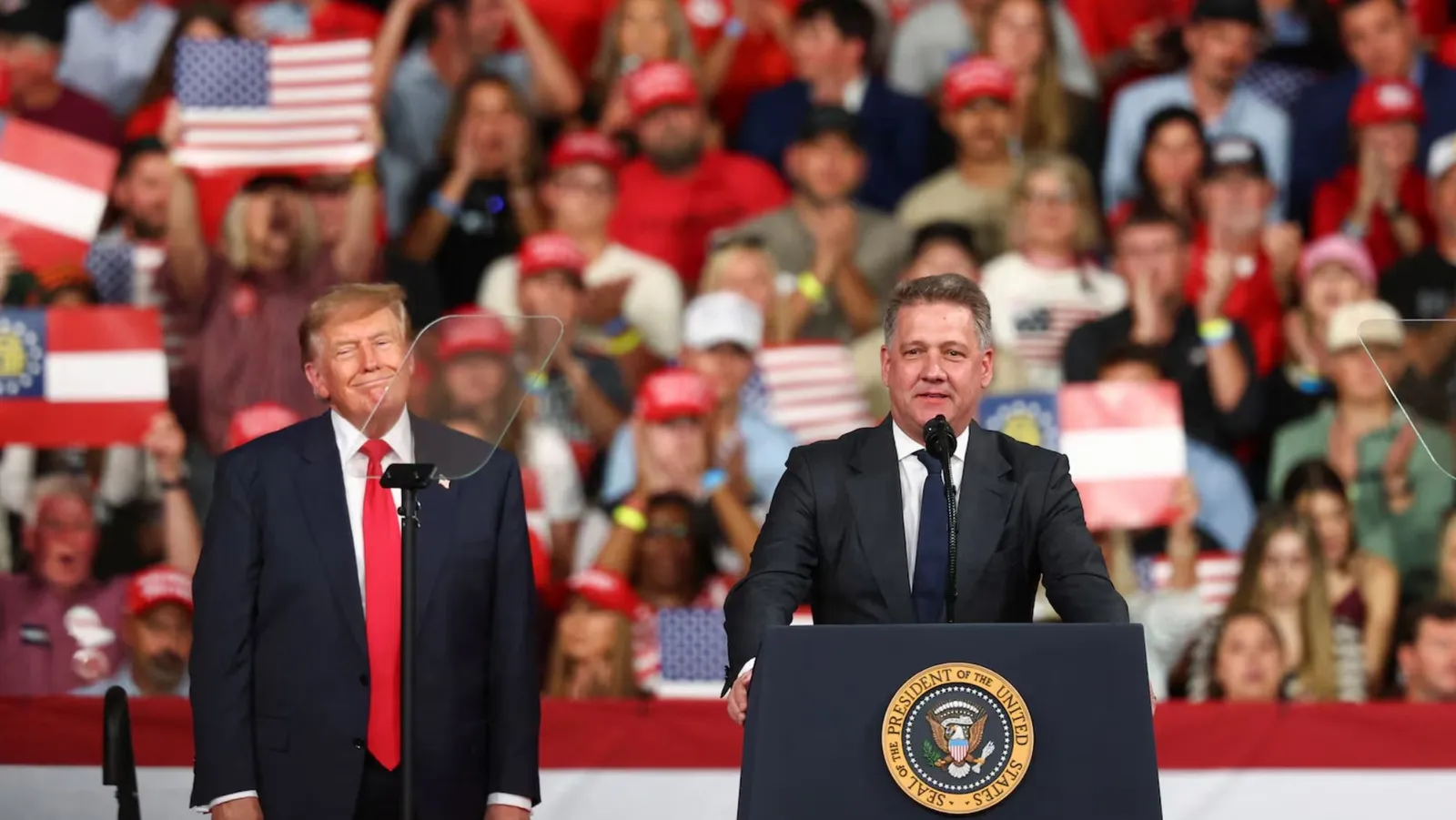
Audi’s CEO, Gernot Döllner, became the focus of one of the most notable images over the weekend after appearing alongside U.S. President Donald Trump at a campaign rally in Perry, Georgia. The reason was the announcement of an investment of approximately $4 billion, or around 3.5 billion euros, to build the German brand’s first factory on American soil.
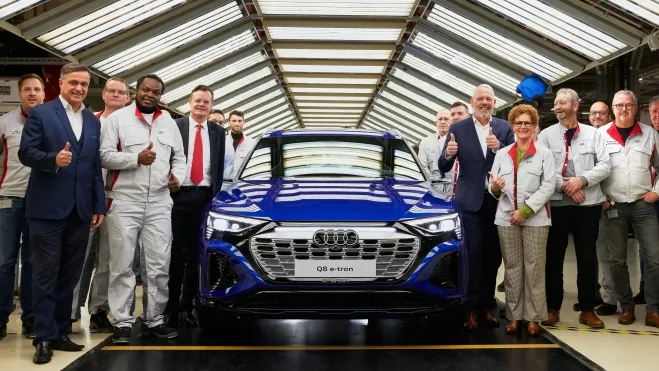
The future facility will represent a significant step in the manufacturer’s international expansion strategy, as part of the Volkswagen Group. According to the announced plans, the plant will have the capacity to produce up to 200,000 vehicles annually and will create approximately 4,500 jobs. The company aims to strengthen its presence in one of the most important markets for premium brands and reduce its reliance on imports.
However, the presence of Audi’s top executive at a Trump campaign event held just days before the U.S. legislative elections on November 3 has sparked controversy in Germany. Workers’ representatives from the Volkswagen Group question why a company executive would attend such an event while Germany’s automotive industry faces significant job cuts.
A factory producing 200,000 cars per year to conquer the United States
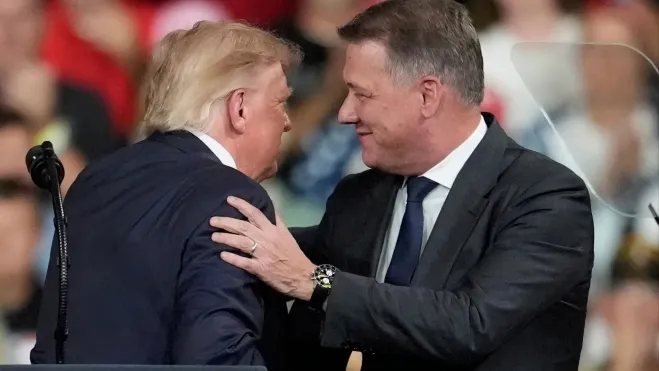
The announcement was made during an election event in Georgia, where Trump presented Audi’s investment as an example of his policy to attract industrial activity to the United States. During his speech, the U.S. president highlighted the production capacity of the future facility and linked the decision to his tariff strategy. Gernot Döllner took the stage and confirmed Audi’s commitment to the North American market. The executive explained that the company plans to manufacture there some of its larger, premium SUVs, a category that is particularly important for luxury vehicle sales in the United States.
The planned investment amounts to around $4 billion and will take place at the so-called Middle Georgia Megasite, a large industrial complex located in central Georgia. According to an official state government statement, Audi intends to begin land preparation work in 2027 and start main construction in 2028, with the goal of achieving full production by 2031.
The plant will have a maximum capacity of 200,000 cars per year and create approximately 4,500 direct jobs. Its design will focus on manufacturing premium SUVs, though the manufacturer has not yet confirmed the final lineup of models or their various propulsion systems.

Audi’s top executive justified the move due to the growth potential in the United States. During the presentation, he argued that the factory will bring production closer to American consumers and enhance the company’s international competitiveness. “We have much greater ambitions for Audi in America, and Georgia will play a central role in making them a reality,” said Döllner, according to statements cited in Governor Brian Kemp’s official release.
The decision also has an economic explanation. Until now, Audi has relied on imports to supply the U.S. market, a situation that increases its exposure to tariffs imposed on cars manufactured outside the country. Building its own factory would allow it to reduce some of this dependence and compete under different conditions with BMW and Mercedes-Benz, two German rivals that already have large production facilities in the United States.
Audi’s association with Trump sparks criticism in Germany
While the construction of the factory represents a significant business opportunity for Audi, Döllner’s appearance at the election event has triggered strong reactions among German workers’ representatives. The criticism focuses not only on the American investment but also on the executive’s decision to publicly participate in a campaign event.
Christiane Benner, president of Germany’s IG Metall union, described Audi’s CEO’s involvement as “extremely shameful, politically unacceptable, and unworthy of the company and, above all, its workers,” according to an official statement released by the union organization on Monday, October 26.
Benner believes the executive has violated Audi’s own internal rules, which establish the principle of political neutrality and restrict the public participation of its representatives in events related to electoral candidates during the three months prior to an election.
The controversy arises at a particularly sensitive time for Volkswagen. The German automaker is undergoing a profound restructuring process, marked by cost cuts and negotiations over the future of its manufacturing facilities in Germany.
Daniela Cavallo, president of Volkswagen Group’s works council, has also criticized Döllner’s presence at the rally. While acknowledging that a U.S. factory makes business sense, she questions why the executive participated in a political campaign event.
A multi-million dollar investment still awaiting approval
Despite the impact of the announcement, construction of the new U.S. factory still lacks all necessary corporate approvals. The final decision must go through Volkswagen’s supervisory board, which also includes worker representatives.
IG Metall itself has recalled this, insisting that the future of German facilities must be considered before approving an investment of such scale outside Europe. The union demands guarantees for jobs and a clear industrial strategy for the factories the group maintains in Germany.
The Georgian government, on its part, believes Audi’s arrival will represent one of the largest industrial projects in the region recently. In addition to the 4,500 direct jobs expected, authorities hope the facility will boost activity among suppliers, auxiliary companies, and specialized training centers.
The project also includes vocational training programs to prepare future workers, through collaboration between Audi and educational institutions and government agencies. The goal is to have qualified staff ready when the factory begins production in the early 2030s.
This operation illustrates the changes underway in the global automotive industry. While European manufacturers face growing challenges in maintaining their industrial competitiveness, the United States is seeking to attract new investments through a combination of economic incentives and trade measures.
For Audi, the future facility represents an opportunity to expand its presence in the U.S. market and reduce costs associated with importing vehicles. However, the announcement made alongside Donald Trump has added a political dimension to this business decision, which still must overcome significant internal procedures before it can become a reality.