
Calcium aims to dethrone lithium: this new battery already exceeds 1,000 cycles

In recent years, sodium batteries have begun to gain prominence as one of the most promising alternatives to reduce reliance on lithium batteries. But they are not the only ones. Calcium is also emerging as a potential substitute for energy storage, and a new study by researchers from the Hong Kong University of Science and Technology and Shanghai Jiao Tong University has just made a particularly interesting breakthrough.
The main challenge with calcium batteries until now has been ensuring that calcium ions can move sufficiently easily through the battery. Another significant difficulty added to this was maintaining stable performance after many charge and discharge cycles. The new research addresses these two issues by developing a new type of quasi-solid electrolyte.
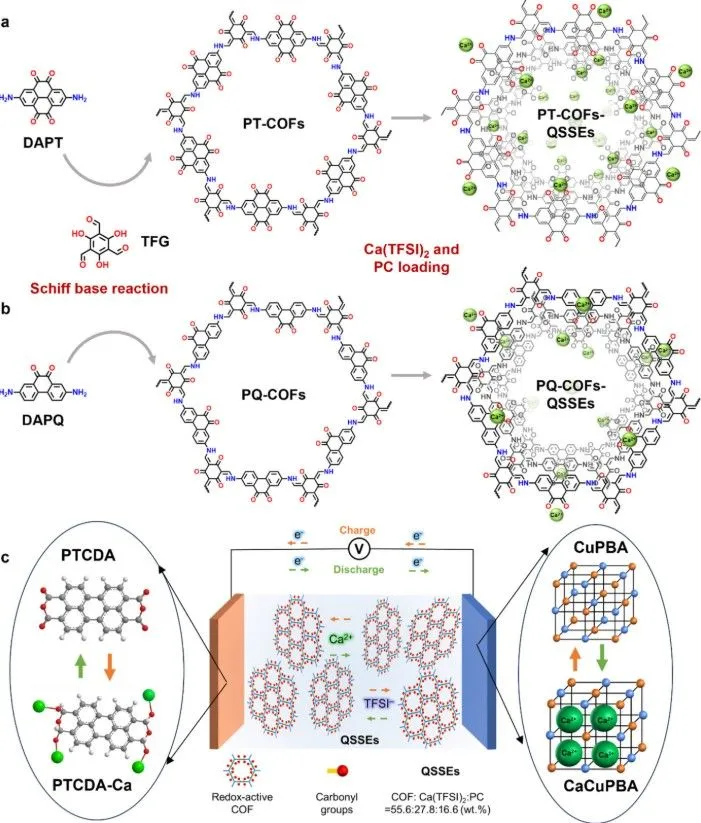
The key lies in materials known as redox-active covalent organic frameworks, which possess a porous structure rich in carbonyl groups. Simply put, the researchers have created an internal network that facilitates the movement of calcium ions within the battery. It is precisely this movement that has so far severely limited the development of this technology.
The results obtained in the laboratory are quite remarkable. The fully developed cell by the team achieved a reversible specific capacity of 155.9 mAh/g, while retaining over 74.6% of its capacity after 1,000 charge and discharge cycles under high current conditions. For a technology still in the research phase, this represents an important achievement.
The work was carried out jointly by researchers from the Hong Kong University of Science and Technology and Shanghai Jiao Tong University, and it was published in the scientific journal Advanced Science. The study was initially released in November 2025 and later included in the 2026 volume of the publication.
Calcium aims to become a real alternative for batteries

The interest in calcium is not accidental. It is an element that is very abundant on Earth and much more readily available than lithium, which opens the door to creating storage systems using raw materials that may be easier to obtain. According to information published by the university itself, calcium is far more abundant on Earth than lithium, one of the reasons behind the growing interest in this technology.
In addition, calcium batteries possess certain electrochemical properties that make them particularly promising for energy storage. The issue is that while it’s easy to find an abundant material, it’s a completely different challenge to develop a battery that can compete with current lithium batteries in terms of performance, durability, and cost.
That’s where the new electrolyte developed by the researchers comes in. The structures used create internal channels that allow for much more efficient transport of calcium ions. In tests conducted at room temperature, an ionic conductivity of 0.46 mS/cm and a calcium transfer number of 0.532 were achieved.
The truly important aspect is that this progress goes beyond a single test of materials. The team managed to assemble a complete calcium battery cell and observe its performance over hundreds of cycles. Maintaining more than 74.6% of capacity after 1,000 cycles represents a significant advancement over some of the major challenges that have so far hindered this technology.
This by no means means we will see electric cars with calcium batteries any time soon. There are still many steps to take before these laboratory results can be translated into a commercial battery, especially regarding aspects such as energy density, power, performance at different temperatures, large-scale manufacturing, cost, and durability under real-world conditions.
But the result does show that calcium batteries are beginning to overcome some of the fundamental obstacles they faced. This could be particularly interesting in applications where the cost and availability of raw materials are crucial, from stationary storage related to renewable energy to potentially electric cars in the future.
In fact, the Hong Kong University of Science and Technology itself is focusing on applications ranging from renewable energy storage systems to electric vehicles. The goal is not to replace lithium batteries tomorrow, but to show that there are alternative paths capable of delivering performance high enough to justify further research.
And this is probably the most interesting part. The race to find the battery of the future isn’t limited to a single technology. Sodium, calcium, solid-electrolyte batteries, and other solutions are all advancing simultaneously. Some will end up playing a significant role in electric vehicles, while others may find their place in electricity storage.
For now, the calcium battery developed by these researchers is merely a laboratory prototype. But the success in combining a quasi-solid electrolyte capable of facilitating the movement of calcium ions with a lifespan of 1,000 cycles shows that this chemistry can no longer be considered merely a theoretical alternative. Calcium is now seriously making its presence known as a candidate for next-generation batteries.
Source | Advanced
Key points
Researchers from Hong Kong and Shanghai have developed a new calcium battery.
It uses a quasi-solid electrolyte based on covalent organic structures.
The new structure facilitates the movement of calcium ions.
The cell achieved a reversible specific capacity of 155.9 mAh/g.
It retained over 74.6% of its capacity after 1,000 cycles.
Calcium is much more abundant than lithium and could reduce reliance on more limited raw materials.
It is still an experimental technology, and there are significant challenges before it can be used in electric cars.
Stationary storage and renewable energy could be some of its first applications.