
Oil prices exceed $105, and Spain once again looks on anxiously at gasoline costs
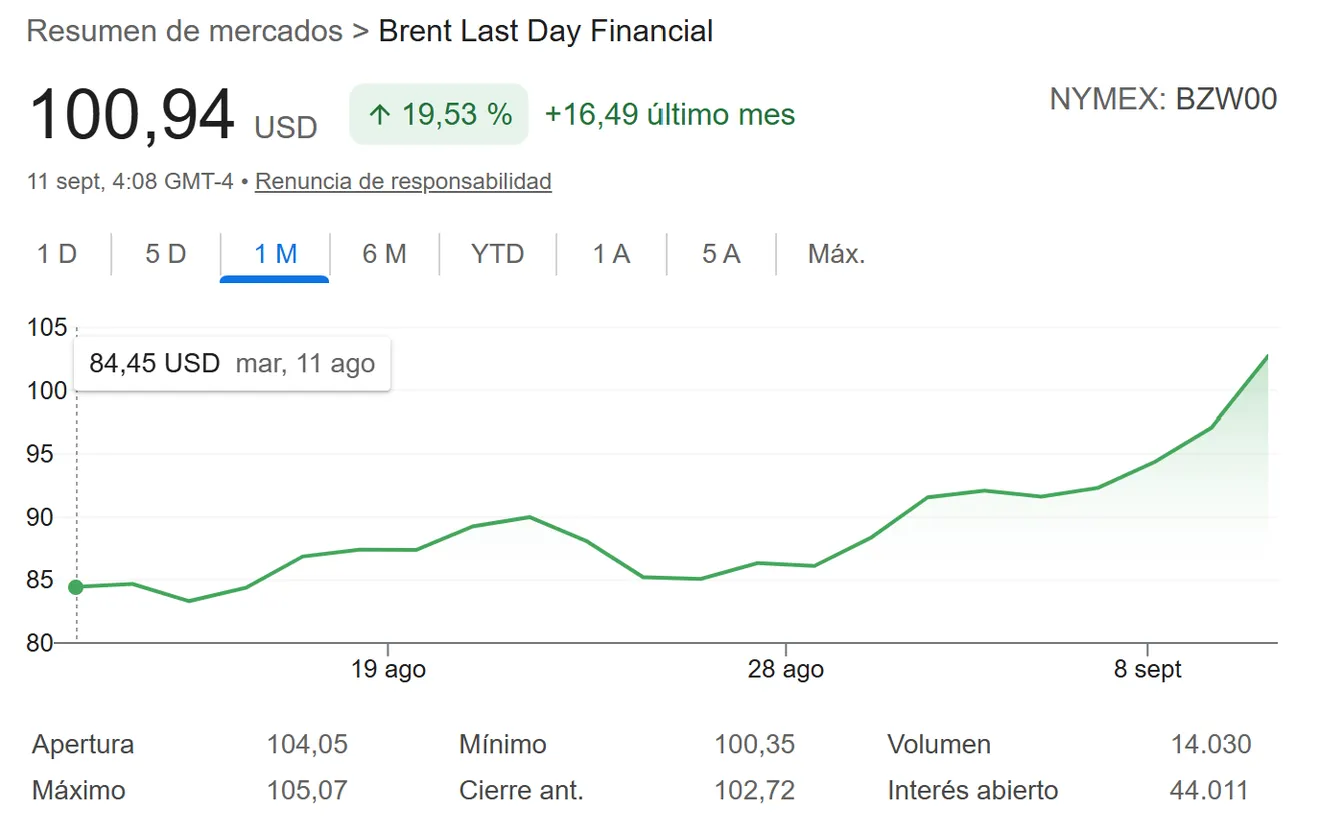
Oil is once again putting European consumers under pressure. The price of a Brent barrel has exceeded $105, continuing an upward trend that is already affecting gas stations and threatening to push fuel costs back to record levels. The situation poses an especially concerning factor for Europe, as crude oil supply becomes increasingly constrained by the conflict in the Middle East.
Brent reached $105.13 per barrel on Thursday, after rising by more than 4% during the trading day. The U.S. crude WTI also approached $100, as the market remains focused on the developments of the war initiated by Donald Trump in Iran, which is increasingly affecting oil supply. Brent’s highest price this year exceeded $126 per barrel at the end of April, though prices have since cooled down slightly.
This rise is already starting to be felt in Spain as well. The national average prices are currently around 1.84 euros per liter for 95 octane gasoline, while diesel is around 1.81 euros per liter, although there are significant differences between regions, provinces, and gas stations. In some areas and at certain stations, gasoline prices exceeding 2 euros per liter are no longer particularly unusual.
The trend over the past few weeks clearly shows this shift. At the end of June, 95 octane gasoline in Spain was around 1.44 euros per liter and diesel was about 1.50 euros, while by the end of August these figures had risen to approximately 1.73 and 1.87 euros respectively, according to available weekly data. In other words, the increase has been especially rapid during the summer.
The problem doesn’t necessarily end here. Much of this price increase stems from the sharp rise in oil prices caused by the conflict in the Middle East, and especially from the difficulties in transporting crude oil through the Strait of Hormuz, one of the planet’s main energy routes. A significant portion of the oil exported from the region passes through this area, so any prolonged disruption can have direct consequences for international markets.
The transport of crude oil by tankers through the strait has been severely affected by the war, and there seems to be no immediate solution at present. The uncertainty about how long this situation will persist is causing markets to include an increasingly large risk premium in oil prices.
For Spanish drivers, the impact is quite easy to understand: when oil prices rise and fuel costs increase, refueling once again becomes one of the major expenses associated with owning a car. And this comes at a time when many families have already had to bear high prices for gasoline and diesel for years.
In June, the Ministry for Ecological Transition estimated that driving 100 kilometers in a gasoline car would cost 9.68 euros, compared to 8.56 euros for a diesel car. For an electric car charged at home, the same estimate was only 2.75 euros per 100 kilometers, though this figure naturally varies depending on each model’s consumption and the electricity price paid by the user.
The comparison becomes even more important now. A driver who travels 15,000 kilometers per year in a car that consumes 7 liters of gasoline every 100 kilometers would need approximately 1,050 liters of fuel. With gasoline priced at around 1.84 euros per liter, the annual cost would be close to 1,930 euros, not to mention that prices could keep rising.
But the key point is that today, fuels power almost everything we consume. That’s why even if we have an electric car, it still affects us. This serves as a reminder of the urgent need to advance as quickly as possible in electrifying transportation, especially road transport, to reduce Europe’s exposure to disruptions caused by external factors thousands of kilometers away.
It won’t be easy, it won’t be cheap, but the other option—continuing to move forward slowly—is extremely dangerous and much more costly in the long run, keeping Europe on its knees before gas and oil-producing countries.