
The world’s largest electric ship is 130 meters long, powered by over 5,000 batteries, and capable of carrying 2,100 passengers and 225 vehicles.
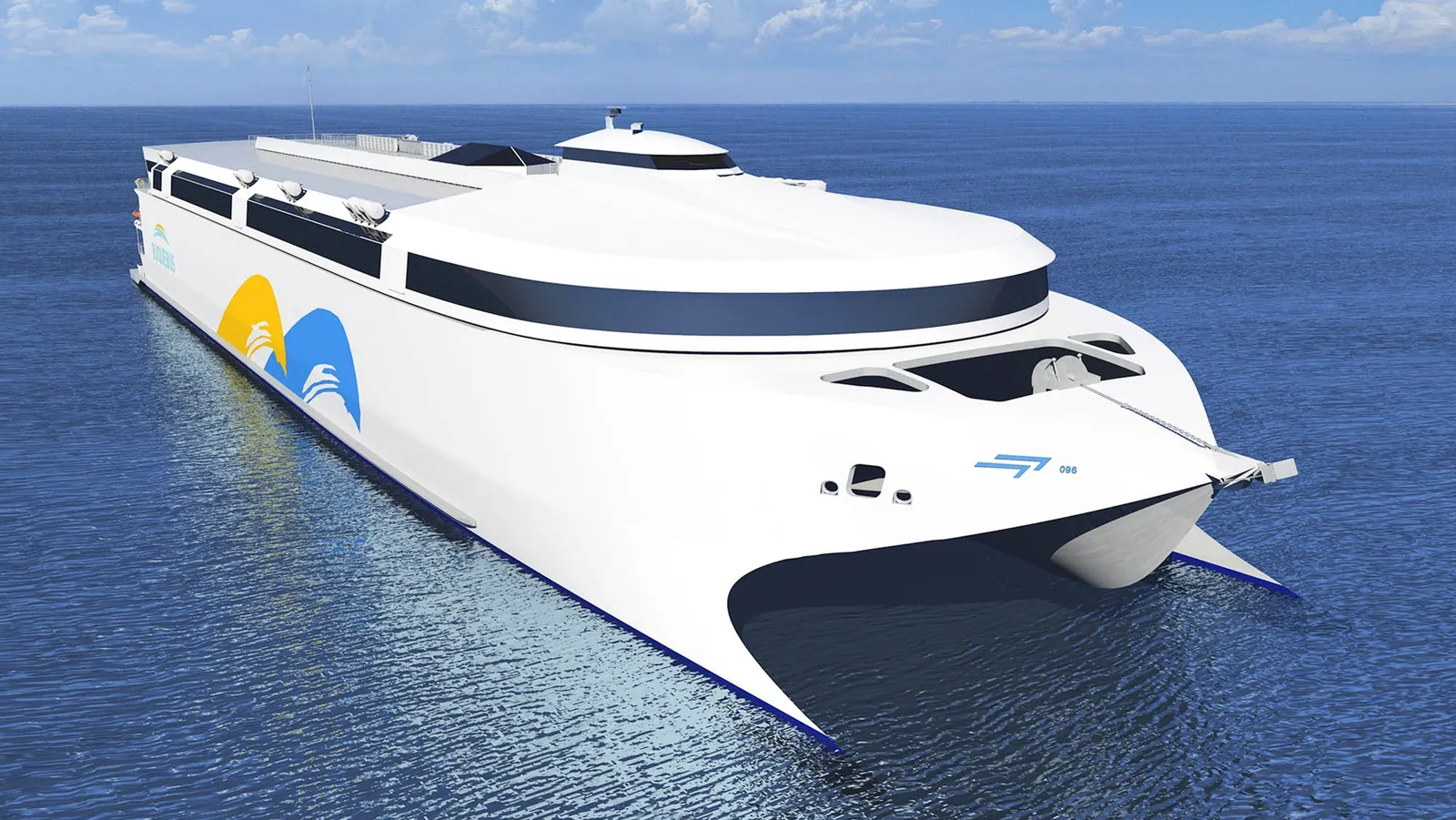
The electrification of maritime transport is advancing on a large scale with the development of what will be the world’s largest electric ship. It is the Hull 096, a 130-meter-long ferry designed to carry up to 2,100 passengers and 225 vehicles on regular routes across the Río de la Plata estuary.
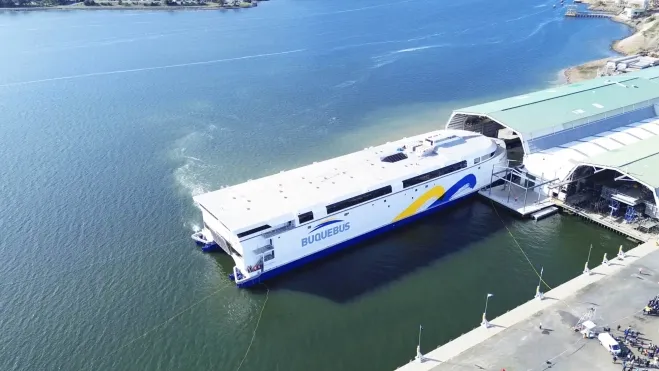
The vessel, built by the Australian shipyard Incat Tasmania, is in its final preparation phase and is expected to begin sea trials at the end of 2026.
An electrical challenge involving batteries, motors, and charging
The project addresses one of the major challenges in this sector: reducing emissions from transportation, which accounts for nearly 3% of global greenhouse gases, a figure comparable to that of industrialized countries. Improvements in battery energy density, the development of more efficient engines, and the expansion of port charging infrastructure are driving the transition to electric solutions, especially on short and high-frequency routes where ferries are particularly suitable.
The energy system of the Hull 096 is what sets it apart. Its Energy Storage System (ESS) has a capacity of over 40 MWh, a figure that is four times that of any existing electric vessel.
The system consists of 5,016 lithium ion cells organized into 12 battery banks, with 418 modules in each bank, supplied by the Norwegian company Corvus Energy.
To minimize weight, engineers removed the mounting frames, although the four battery rooms together weigh around 250 tons. The system includes redundant safety measures and air cooling via independent fans for each module. This design allows any cell that overheats to be isolated, preventing the problem from spreading to the rest of the system.
The stored energy powers a propulsion system developed by the Finnish company Wärtsilä, based on eight axial thrusters driven by permanent magnet electric motors. Thanks to this configuration, the ferry will be able to cover the 60 kilometers separating Buenos Aires (Argentina) and Colonia del Sacramento (Uruguay) in approximately 90 minutes.
The ship’s operations will require specific refueling infrastructure at both ports. The system will enable a full charge in just 40 minutes using DC charging stations, allowing for high daily turnover without relying on fossil fuels. The goal is to have most of the electricity come from renewable sources: Uruguay already generates over 92% of its electricity from clean energy, while in Argentina the proportion is around 42%.
During its testing phase, Hull 096 will be powered by Tasmania’s electricity grid, which has been 100% renewable since 2020, to ensure that initial operations do not produce CO₂ emissions or other pollutants.
The project reflects a global trend. Norway currently leads in marine electrification, with nearly 80 electric ferries in service, largely powered by hydroelectric energy. China is experimenting with swapable battery systems on the Yangtze River, while Amsterdam plans to electrify transportation in its canals within the next few months.
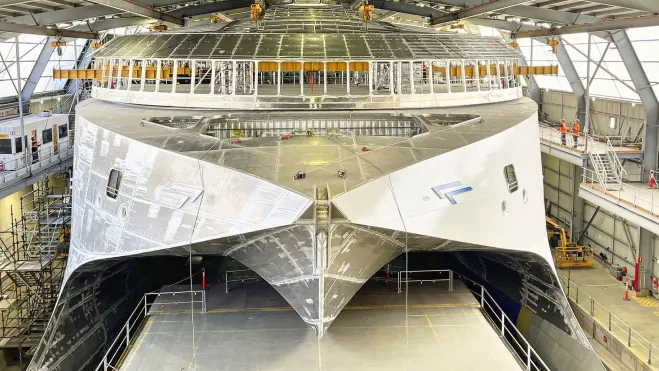
Reducing weight through aluminum hulls and lightweight structures, as seen in the Hull 096, is one of the key factors in lowering energy consumption and making this transition feasible.
However, the technological race does not stop. On the horizon is Helios, a conceptual project by the Finnish ferry company Viking Line that, at 195 meters in length, could surpass the Hull 096. This ferry would be capable of carrying 2,000 passengers and 650 vehicles, with an estimated battery capacity of between 85 and 100 MWh, allowing it to cover the 80-kilometer route between Helsinki and Tallinn in two hours starting from early 2030.
If the scheduled deadlines are met, the Hull 096, which will operate for Buquebus under the name China Zorrilla, will become the first major example that large-scale electrification of maritime transport is not only technically possible but also operationally viable. Its entry into service will mark a turning point for an industry seeking to reduce its climate impact without sacrificing capacity or profitability.