
EICMA 2026. Yamaha XENTER E and NMAX E: two new electric scooters for 2027
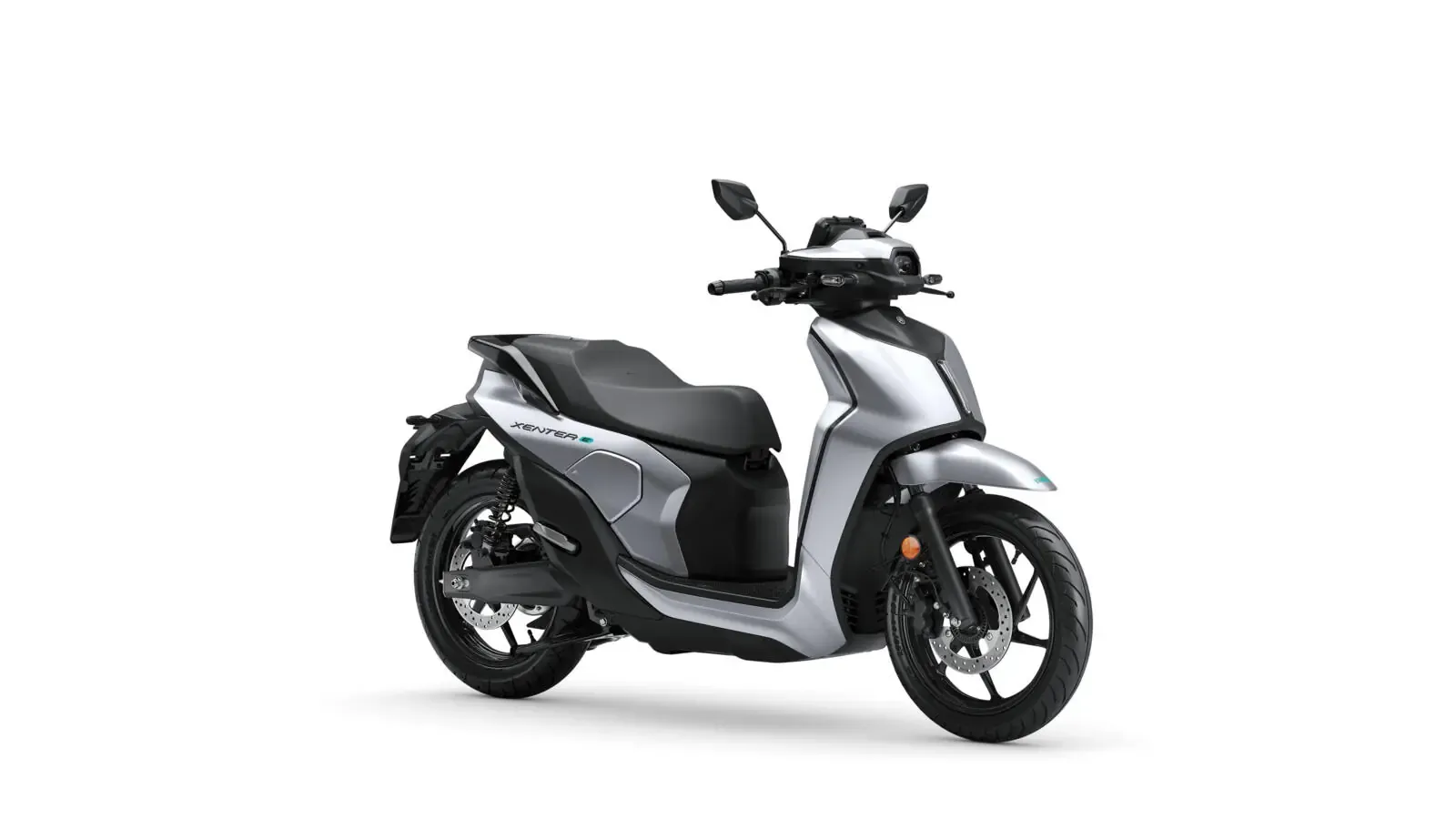
The return of large wheels and the evolution of the MAX family: Yamaha introduces two models with a 3.5 kWh battery, a claimed range of over 100 km, set to arrive in spring 2027.
Yamaha is serious at EICMA 2026, expanding its electric lineup with two scooters that offer different approaches to urban mobility. On one side is the new XENTER E, marking the brand’s return to the large-wheel segment; on the other is the NMAX E, bringing electric power to the MAX sports scooter family. These are the iconic names from the brand known for its three-note logo — a significant signal!
Both are scheduled for release in spring 2027 and promise performance comparable to that of a 125 cc combustion engine. The engine and battery are identical; the main differences lie in the setup, wheel size, and ergonomics: The XENTER E focuses on the convenience of a flat footplate and 16-inch wheels, while the NMAX E features 13-inch wheels and a design that reflects the sporty identity of the MAX series.
XENTER E: Tall wheels and flat footplate
The new XENTER E is built around an underbone frame, with the battery and engine positioned low and centered. This layout is designed to concentrate the mass and create space for a wide, flat footplate, which also helps facilitate access to the seat.
The 16-inch wheels are fitted with 100/80 tires at the front and 120/80 tires at the rear. The suspensions offer 100 mm and 97 mm of travel respectively, while the seat is positioned 790 mm above the ground. The wheelbase measures 1,485 mm.
This configuration is designed for commuting between the city center and the outskirts, even on uneven surfaces. The upright riding position and ample legroom complete a design focused on everyday use.
The 3.5 kWh battery provides a claimed range of 108 km in the WMTC1 cycle.
NMAX E: Electric power meets MAX style
The new NMAX E is built on the dedicated A1 EV platform and inherits the features of the MAX family, from the body shape to the distinctive boomerang-shaped side elements. The minimalist-looking headlights and compact rear end define its appearance.
Compared to the XENTER E, its design is more compact: the wheelbase is 1,425 mm, the seat height is 770 mm, and the wheels are 13 inches in diameter, with 110/70 tires at the front and 130/70 tires at the back. The extended footpegs allow for adjusting the foot position, while the narrow space between the seat and footpegs is designed to facilitate grounding.
The suspension includes a fork with 33 mm steerer tubes and two rear shock absorbers. In this model as well, the battery and motor are positioned centrally to improve weight distribution. With a 3.5 kWh battery, the claimed range is 104 km under the WMTC1 cycle, again with the battery at 25 °C.
eAxle Motor and Belt Drive
The two scooters use an eAxle system that combines a permanent magnet synchronous electric motor, a control unit, and a reducer. Cooling is achieved through air, with final drive transmitted via belt.
The engine is mounted to the frame: this design reduces unsuspended mass and allows the use of a motorcycle-style fork. The maximum torque declared for both models is 33.3 Nm at 500 revolutions per minute, with power delivery aimed at providing quick restarts and smooth acceleration.
The driver can choose from three driving modes. Mode S prioritizes sporty response, Mode T makes power delivery more gradual, and Mode E focuses on minimizing consumption to improve range. Traction control and an accelerator with progressive resistance based on handlebar rotation are also available.
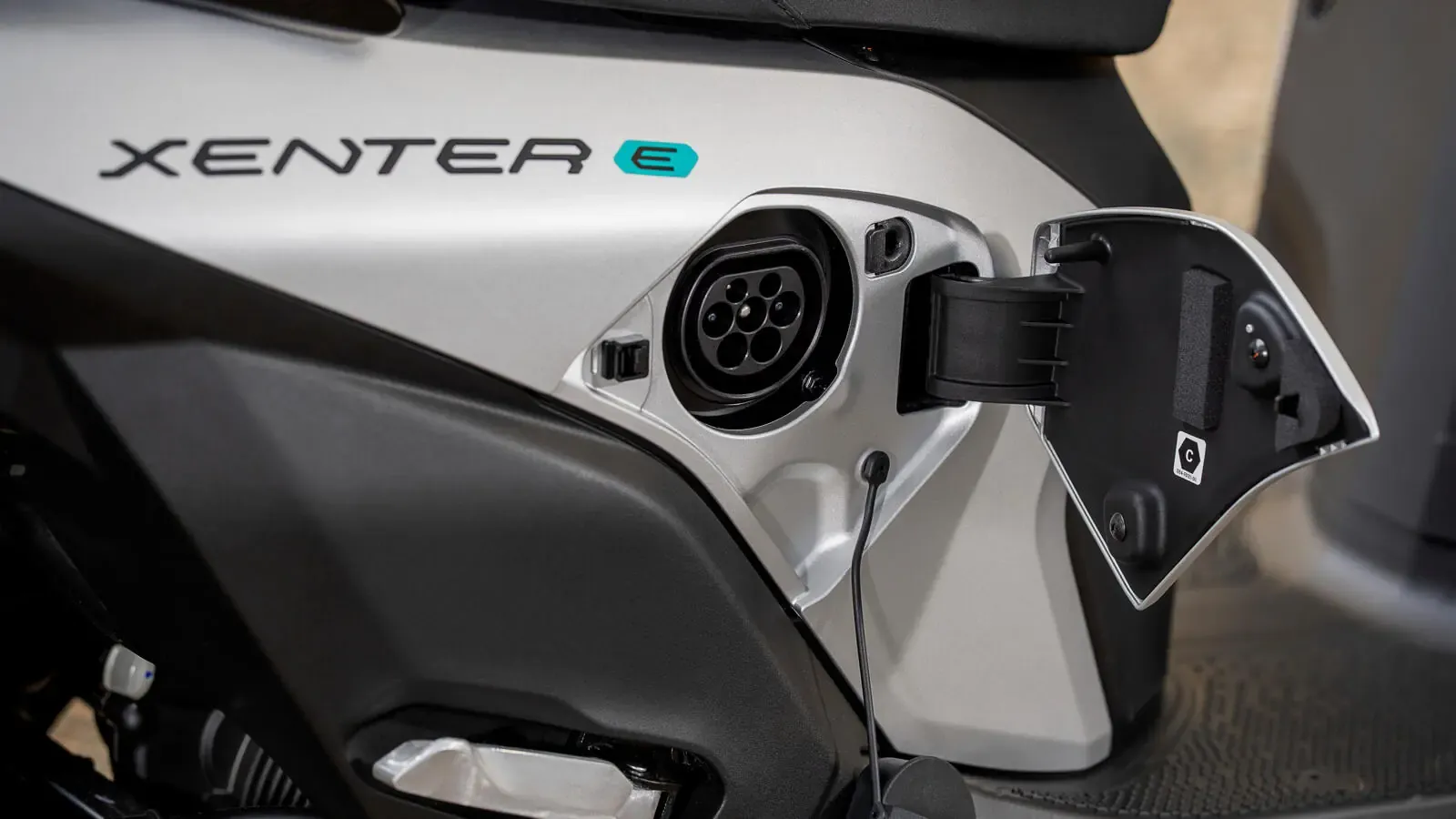
Claimed full charge in five and a half hours
The XENTER E and NMAX E use an L-shaped lithium-ion battery integrated into the frame and protected against water and dust per IP67 standards. The battery is not removable, and both models come equipped with an 800 W built-in charger without fans. They can be connected to AC charging stations using Type 2 connectors or to a household outlet via a dedicated cable. The claimed time to go from 0 to 100% charge is 5.5 hours.
ABS, reverse gear, and connected navigation
The standard equipment includes 245 mm disc brakes on both wheels with ABS and a regenerative braking system that adjusts its response to the selected driving mode.
For parking maneuvers, a low-speed reverse gear is available, which can be activated through the controls on the handlebar without needing to turn the throttle.
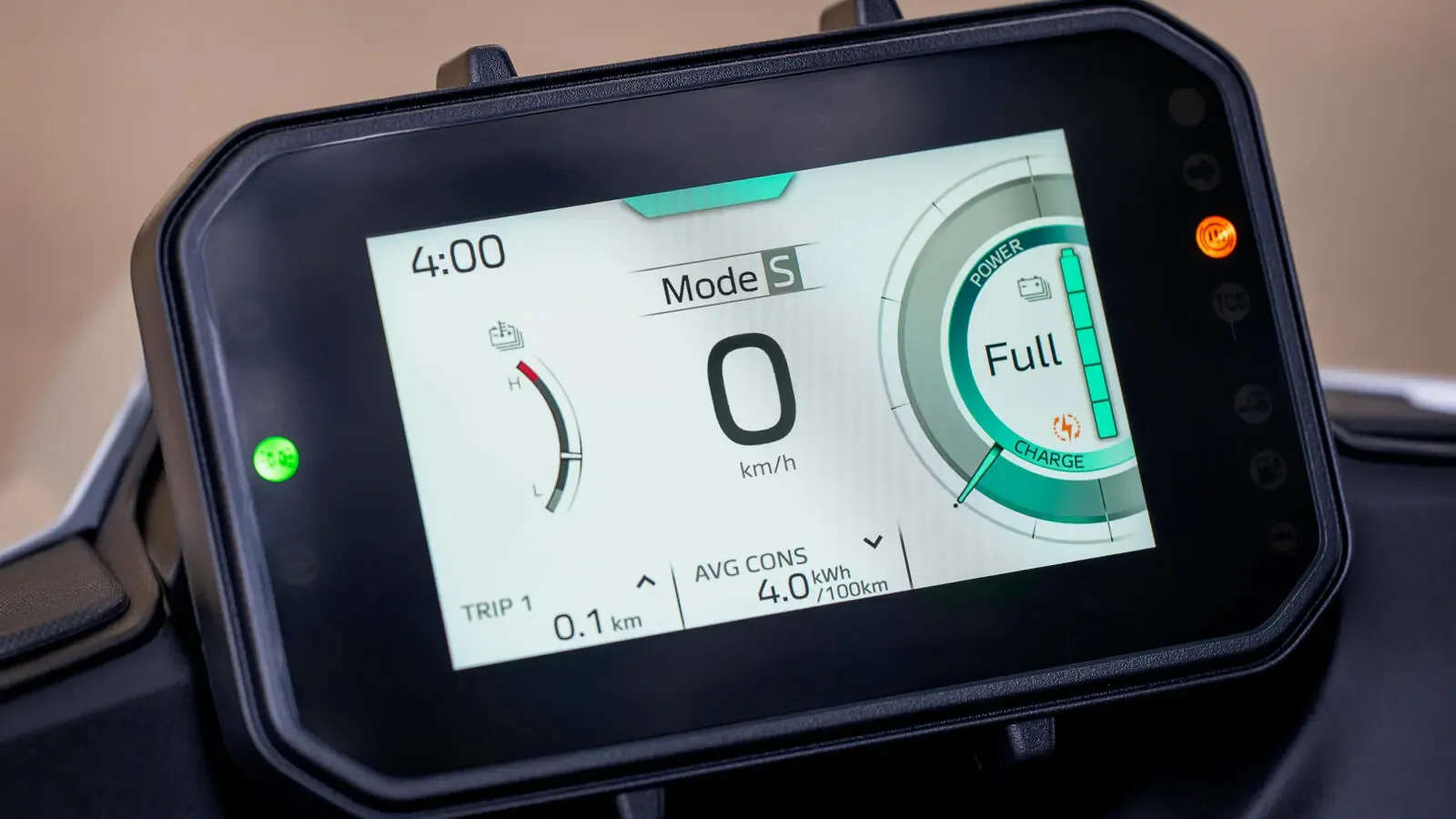
The instrumentation is powered by a 5-inch TFT display with day and night modes. Connection to the Yamaha Motor On app allows for turn-by-turn navigation and access to battery status, trip data, maintenance information, and parking location.
Both models come equipped with Smart Key start, a USB-C port, and a footwell that can accommodate a full-face helmet, depending on its shape and size. The NMAX E features an LED-lit footwell, while the XENTER E adds a foldable hook for bags.
Colors, Accessories, and Availability of Yamaha Scooters
The new XENTER E will be available in Platinum Silver and Midnight Black, both with aqua accents. The NMAX E is offered in Avio Blue and Platinum Silver colors.
The range of accessories includes options to enhance protection and carrying capacity, such as a high windscreen, foot covers, and a 34-liter luggage box. The NMAX E also comes with heated grips.
Yamaha Does Almost Everything Well, But at What Cost?
Both are scheduled to arrive in spring 2027. Prices are not specified in the released materials. Much of the success of these scooters will depend on their price. Their specifications are on par with those of competitors. Yamaha also offers charging at public stations, which is very convenient for those without a charging station at home, though it isn’t fully utilized. Five and a half hours isn’t short. It’s a highly successful compromise if priced reasonably. We’ll see.