
EDF Tempo and electric cars: Is it cost-effective to charge them in 2026?
Driving an electric vehicle encourages people to reconsider their EDF subscription. The Tempo option offers a very low cost per kWh on “blue days,” ideal for charging at night. While often cost-effective, it puts households that rely on electricity for heating at a disadvantage during “red days.”
The cost of electricity affects the budget of electric vehicle owners. Charging at home remains the least expensive way to top up the battery. However, it’s important to choose the right subscription. EDF offers three options: Base, Heures Creuses, and Tempo. The latter is less well-known but deserves attention.
Tempo applies significantly varying prices depending on the day. Calm periods are inexpensive, while winter peak times are costly. Since electric vehicles are mainly charged at night, this factor makes a big difference, as we will see.
What exactly is EDF Tempo?
The Tempo option is part of EDF’s regulated Blue Tariff. It follows the principle of the former EJP offer, which is now discontinued. Its purpose is to limit consumption during peak demand times. In exchange, the cost per kWh becomes very affordable for the rest of the year.
Blue, white, and red days: the principle
Tempo divides the year into three color categories for days. Each color has its own specific tariff. There are also two time periods: peak hours from 6 a.m. to 10 p.m., and off-peak hours from 10 p.m. to 6 a.m.
The calendar includes 300 blue days, 43 white days, and 22 red days. Blue days are the cheapest. Red days, reserved for winter peak times, cost the most.
Day color
Off-peak hours (10 p.m.-6 a.m.)
Peak hours (6 a.m.-10 p.m.)
Blue day (300 days)
0.1356 €/kWh
0.1654 €/kWh
White day (43 days)
0.1536 €/kWh
0.1921 €/kWh
Red day (22 days)
0.1615 €/kWh
0.7295 €/kWh
The Tempo VAT-inclusive tariff schedule is in effect since August 1, 2026. Prices remain the same regardless of the contracted capacity. Source: EDF / CRE tariff schedule.
How to know the day’s color
EDF announces the color 24 hours in advance. Pressing the “+” button on the Linky meter displays it. The EDF website and app also show it. Email or SMS alerts are also available.
Why Tempo changes things for an electric car
Electric cars are usually charged at night, in the garage. Nighttime falls during off-peak hours. The off-peak hours on blue days offer the lowest kWh rate under the regulated tariff. The calculation quickly becomes favorable.
Charging: an usage pattern suited for off-peak hours
Charging after 8 p.m. is second nature for many drivers. Most cars and charging stations handle this scheduling automatically. You plug in at night, and charging starts during off-peak hours, allowing you to refuel at the lowest rate.
Out of 365 nights, most fall under blue days. Red days remain rare—only 22 per year. Even on those nights, the off-peak rate stays low at 0.1615 euros per kWh.
Also read
Electricity provider and electric car: which plan to choose in 2026?
Numbers at a glance: a Renault Mégane E-Tech over one year
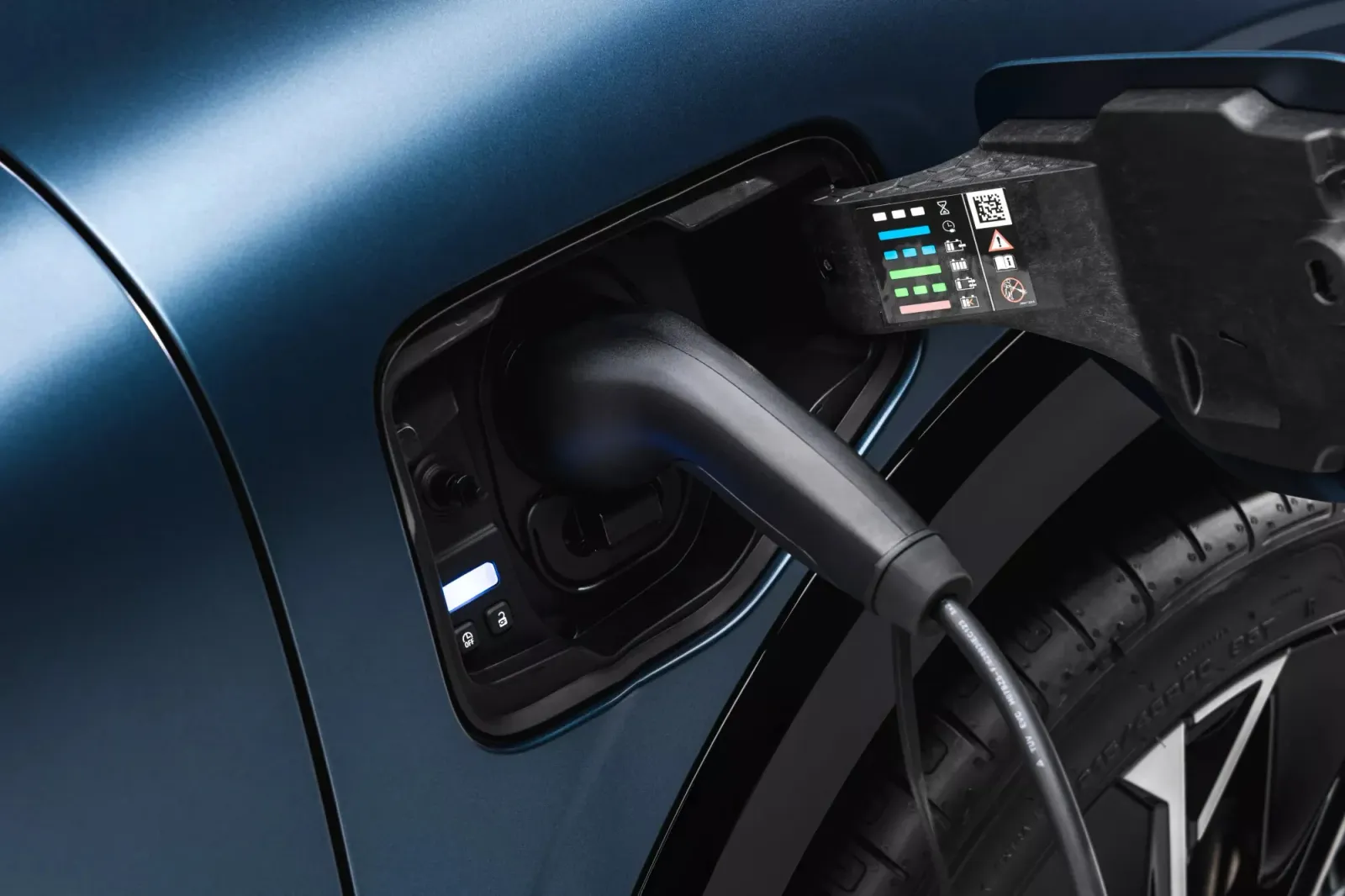
Here is a concrete example. A couple drives a Renault Mégane E-Tech EV60 with a 60 kWh battery. They travel 20,000 kilometers per year and charge at home. This amounts to about 50 full charges, or 3,000 kWh.
These charges are spread throughout the year, all during off-peak hours. The schedule shows 41 charges on blue days, 6 on white days, and 3 on red days. Below are the annual costs based on the chosen option.
EDF Option
Charging price applied
Annual cost (3,000 kWh)
Base
0.2001 €/kWh
600 €
Off-peak hours (night)
0.1589 €/kWh
477 €
Tempo (off-peak hours)
0.1356 to 0.1615 €/kWh
418 €
The results speak for themselves. Tempo costs 418 € per year. The Base option rises to 600 €, an increase of 182 €. The Off-peak hours option amounts to 477 €, 59 € more than Tempo.
These amounts exclude the subscription fee and any additional losses. They compare the three options at equal consumption levels. For a complete breakdown of the cost per charge, see our guide on charging prices.
Also read
Renault Megane Electric EV60 test: what’s the real range on the highway?
Tempo, Base, or Off-Peak: which EDF subscription should you choose?
The choice depends on your consumption pattern. For charging only at night, Tempo offers the best deal. However, your heating usage and habits also play a significant role.
Comparison of the three charging options
Base: a single, simple rate, but it’s the highest for night charging.
Off-Peak: lower kWh rates at night, suitable for regular nighttime charging.
Tempo: very low kWh rates on 343 days out of 365, provided you reduce usage on designated high-cost days.
Note: The Base option is no longer available for subscriptions above 6 kVA. A household with a 9 kVA setup must then opt for Heures Creuses or Tempo.
Another misconception to dispel: the Tempo subscription is not more expensive. At 9 kVA, it costs 19.70 € per month, which is lower than the 19.88 € charged by Heures Creuses.
Who Tempo Is Not Suitable For
One point requires caution. During the 22 red days, the cost per kWh during peak hours is 0.7295 €. This rate has a significant impact if electricity consumption occurs during the day.
A household heated by electricity finds it difficult to turn off the heating on those days. In such cases, Tempo loses its advantage. Other households almost always benefit from it.
As of August 1, 2026, a new pricing structure takes effect. Tempo rates increase by another 2 to 3%. Nevertheless, blue and white days remain competitive for charging.
Charging at Home with a Charger Using Tempo
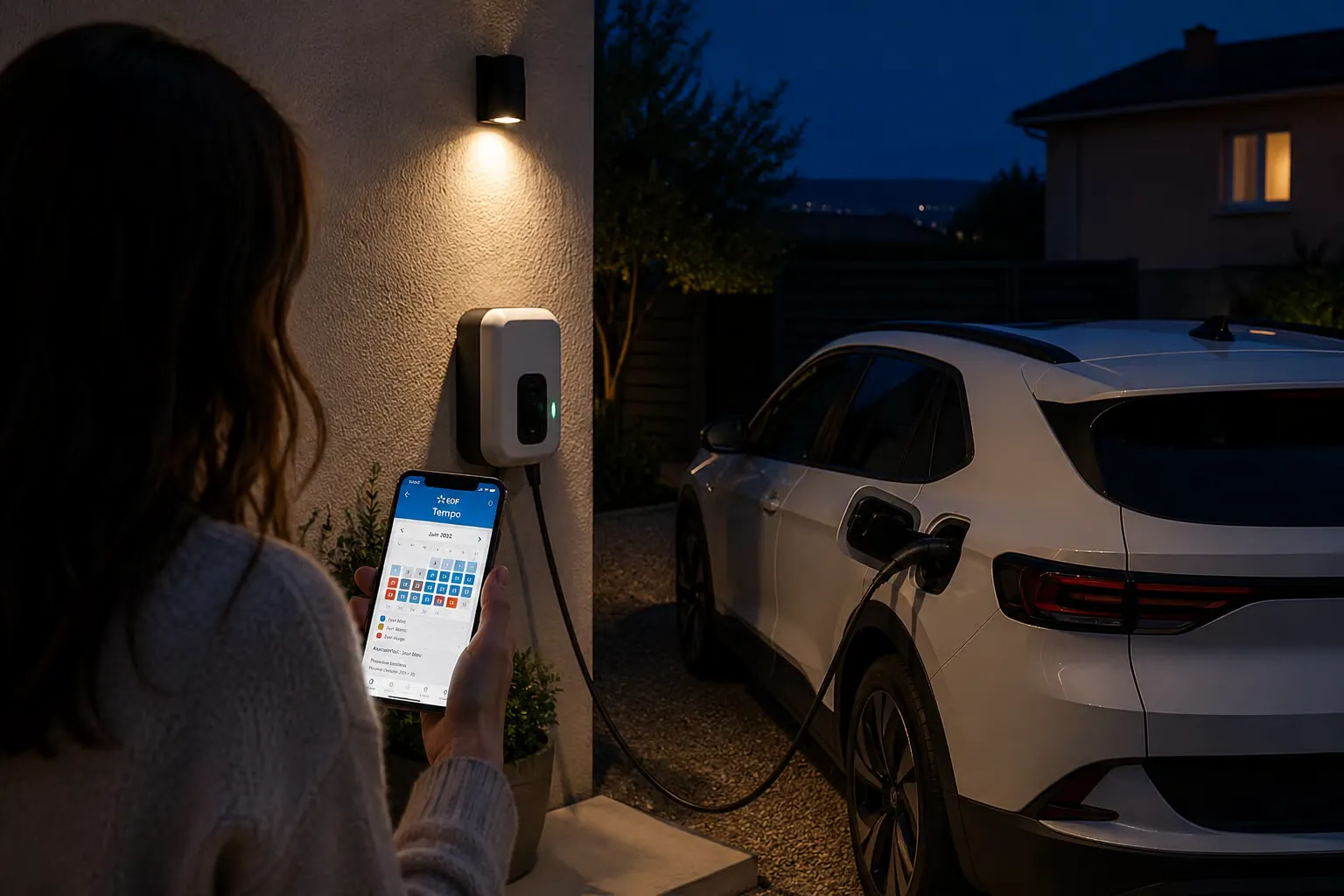
A standard household outlet is sufficient for a small overnight charge. A wall charger significantly speeds up charging. It also enhances electrical safety.
What capacity meter is needed for charging, 6 or 9 kVA?
A 6 kVA capacity handles slow charging without other heavy appliances. To charge and run a washing machine, 9 kVA provides more headroom. Tempo accepts 6 kVA meters since February 2025.
The Linky meter remains essential for signing up. Enrollment is done by phone with EDF, without any online process.
Beyond EDF: Plans Designed for Charging
EDF is not the only player in this area. Several suppliers offer plans specifically for electric vehicles. Some of them provide off-peak rates at night.
These plans deserve to be compared on a case-by-case basis. Our comparison of electricity suppliers details the offerings available on the market. The Révolution Énergétique guide complements this by helping with contract selection at the household level.
FAQ: EDF Subscription and Electric Vehicle Charging
Is it necessary to change one’s subscription when switching to electric vehicles?
Not always. Regular nighttime charging often makes the Off-Peak or Tempo option worthwhile. Lower mileage reduces the potential savings.
Is it cost-effective to charge at night?
Yes, in most cases. Nighttime falls during off-peak hours when the cost per kWh is lower. Tempo takes this advantage even further on blue days.
Have Tempo rates increased in 2026?
Yes. A new tariff schedule has been in effect since August 1, 2026. The increase is around 2 to 3%. The red rate during peak hours rises to 0.7295 € per kWh.
Can one charge on a red day without breaking the bank?
Yes, by targeting off-peak hours. The red nighttime rate remains at 0.1615 €, close to the blue rate. It’s sufficient to schedule charging after 10 p.m.
Final words
For drivers who charge at night, Tempo keeps its promises. Annual savings often exceed 100 euros. The only key is to anticipate the 22 red days. Outside of this period, the option remains a helpful tool for managing electricity costs.
And you, what subscription have you chosen to charge your electric car? Did you know about the Tempo option before reading this article?