
EcoFlow introduces car roof solar power to its lineup. It shows why such a solution is pointless. Up to 2-2.5 kWh of energy per day
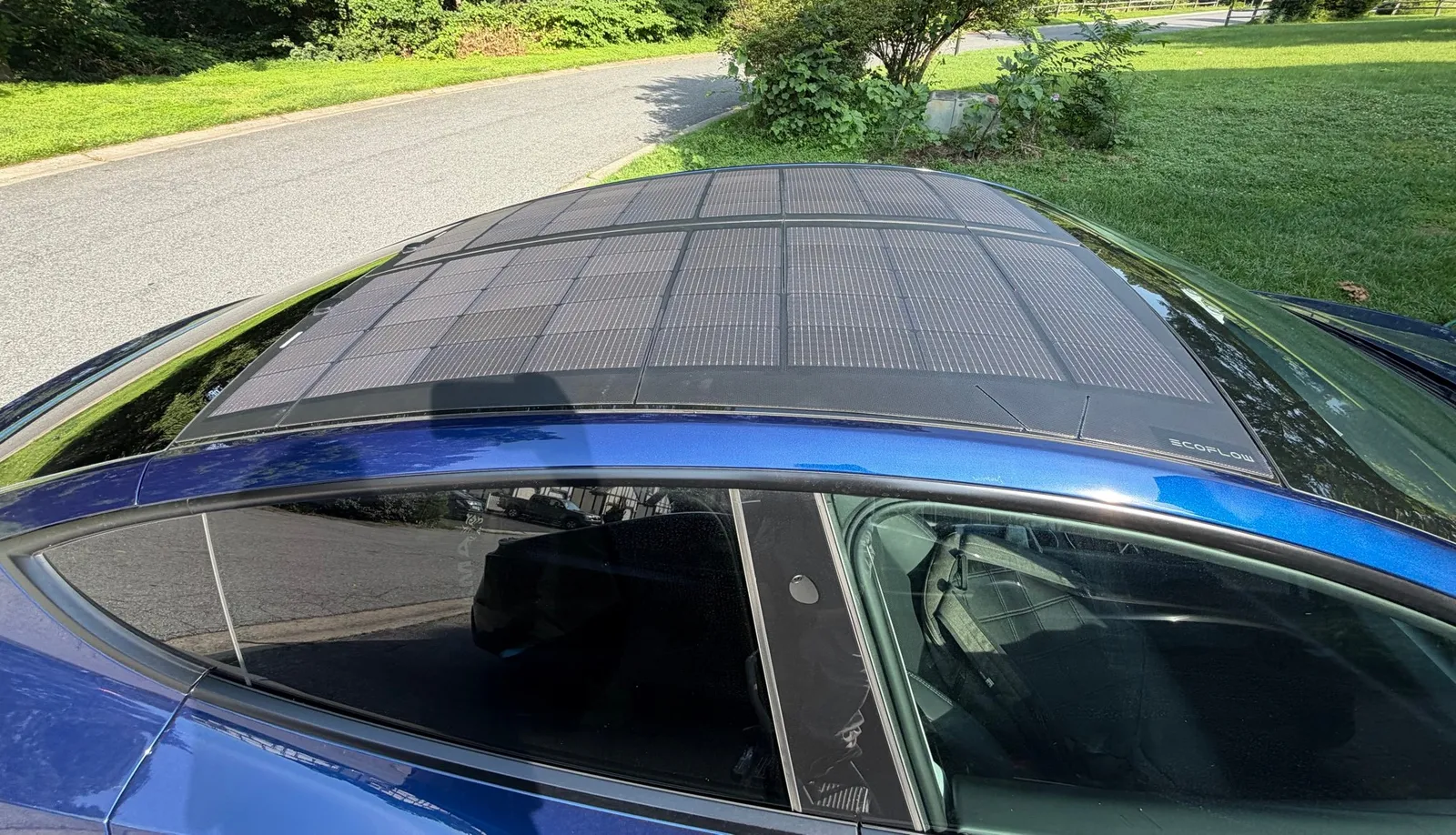
EcoFlow is a Chinese company that produces portable energy generation and storage systems consisting of solar panels and Li-ion batteries. In the United States, the company began selling rooftop photovoltaic systems (more precisely, for Tesla roofs). It can generate up to 2-2.5 kWh per day, which is quite little even considering only the cooling needs of such a vehicle when parked in the sun.
EcoFlow solar roof. For those fascinated by free energy
The company claims the product was designed for various Tesla roofs, and the images show it fits well with the curvature of the windshield above the cabin. It is installed using 3M double-sided tape. The panels are waterproof, with cell efficiency at 25 percent. However, even the manufacturer doesn’t want to create excessive expectations; the device is called “HeatGuard Solar Film,” and the online store can be found HERE. Prices start at $459, which is equivalent to 1,750 złoty net.
EcoFlow Solar Roof (c) Tesly(soft)ware by Jin / X
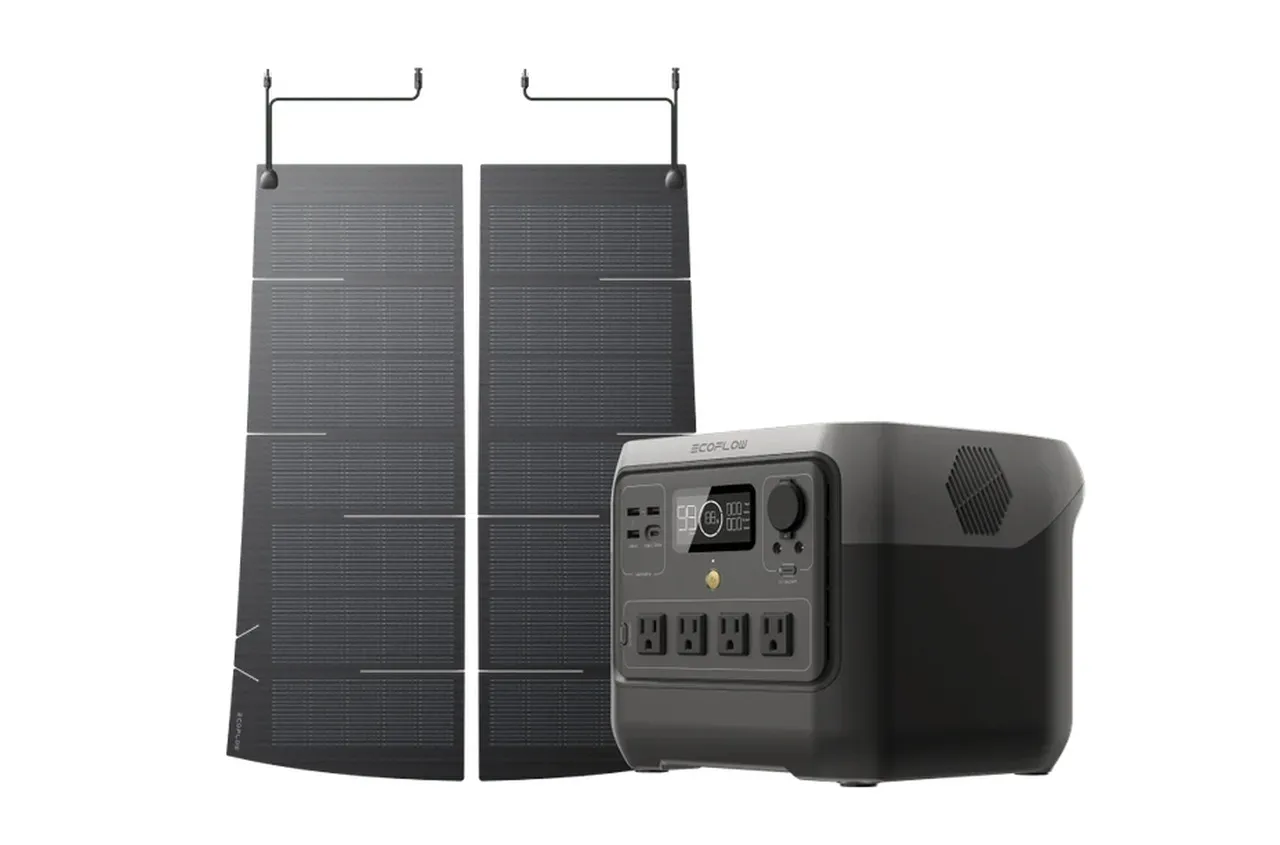
The power of each panel is either 256 or 290 W, and EcoFlow recommends purchasing them along with a portable power bank — in that case, the prices start at $839, equivalent to 3,190 zł net. This isn’t by chance; the panels themselves are difficult to connect to anything specific in a car, as they weren’t designed for charging vehicle batteries. The manufacturer promises that a 1 kWh capacity power bank can be charged in about 4 hours. This results in 2–2.5 kWh of charge per day, depending on the sun’s elevation above the horizon, shadows, and so on.
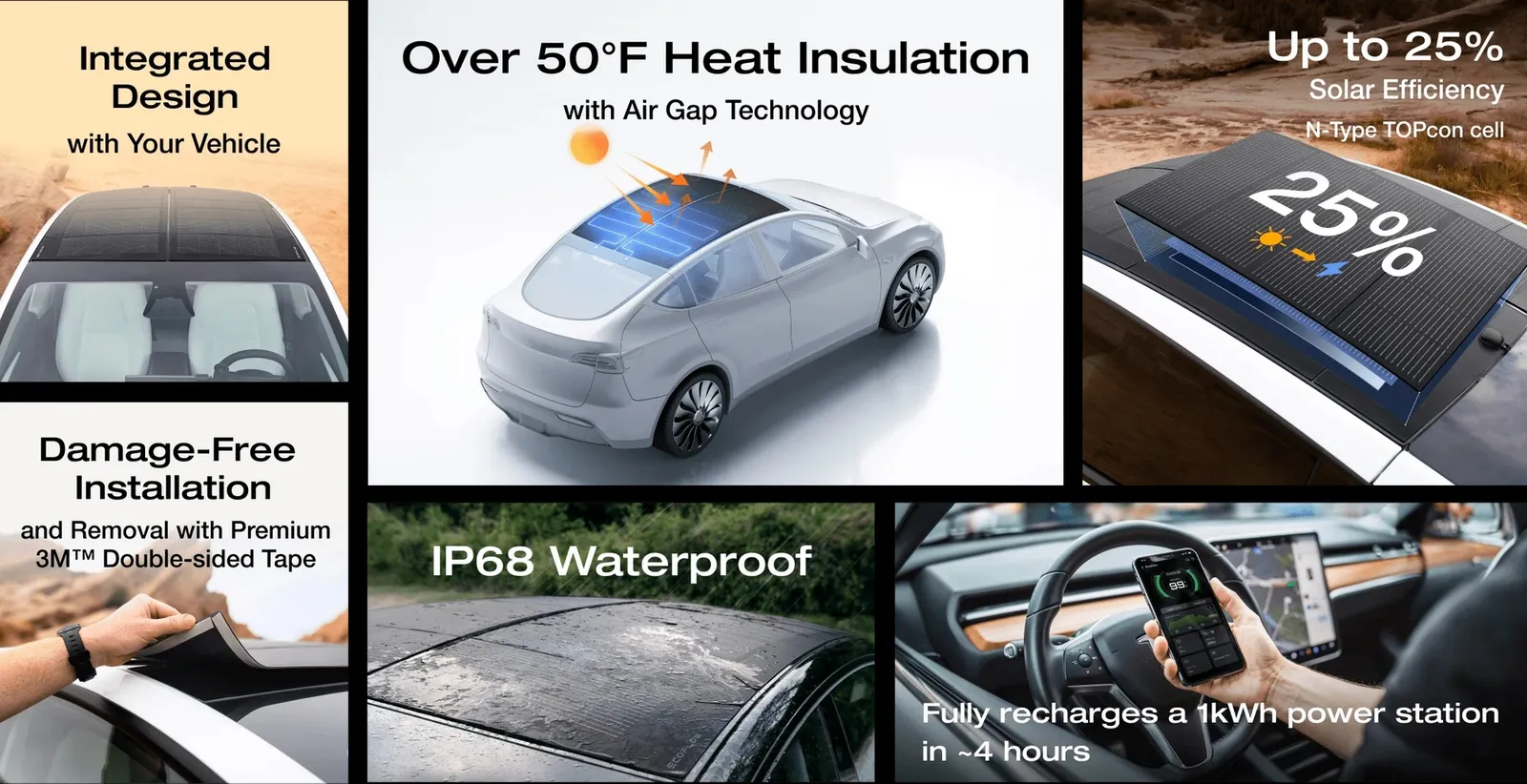
According to Jin’s video, at the time of taking the photos (note the longer shadows), after 5 hours of operation, the panels generated around 135 W of power and charged the battery to 45 percent. During the same period, it was powering some device with a capacity of 30 W, possibly a phone plugged into a socket. Thus, 100 W of excess power reached the cells inside the housing. After 10 hours of such operation, it would have only about 1 kWh of free energy left. After transferring that energy to the car, it could travel at most a few kilometers under favorable conditions, and even then only if the car were willing to accept energy from the battery.
Power pic.twitter.com/ZXoIgpax97
— Tesly(soft)ware by Jin (@jinsyu) July 14, 2026
If we make a realistic assumption that we transfer 1.5 kWh from the roof to the battery per day, we save approximately 1.5 zloty each day. This means it will take over 5.8 years, almost 5 years and 10 months, to reach break-even based on the net price. The issue is that we’re talking about more than 2,100 cycles of operation, a situation in which degradation may become noticeable.
Article Rating
Readers’ Ratings
[Total: 20 votes Average: 3.2]
Don’t miss new content—CLICK and FOLLOW Elektrowoz.pl on Google News. You might also be interested in the following ads: