
DS N°7 review: strong on the road, slow at the charger
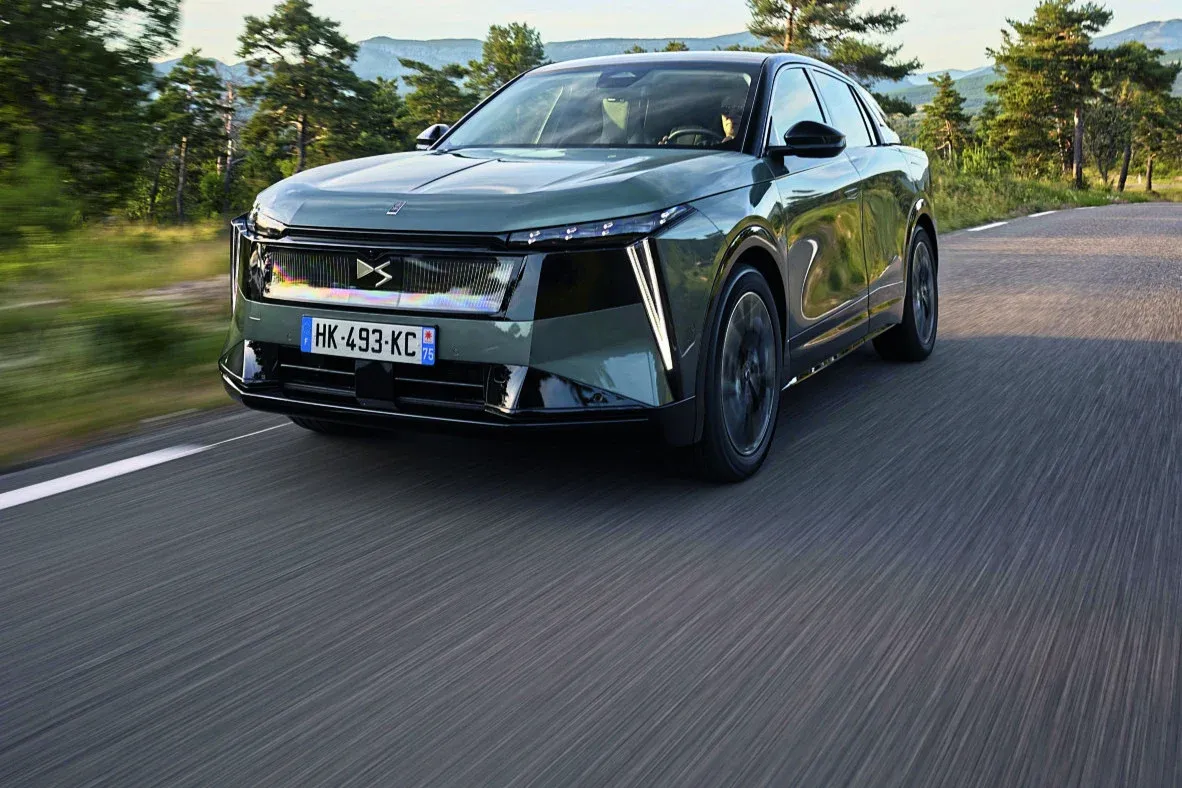
The flush-mounted door handles glide silently out of the bodywork as the driver approaches the DS N°7. The press test drives around Nice with the 4.66-metre premium SUV mark an important milestone for the Paris-based brand. As the direct successor to the DS 7, the new model uses the Stellantis Group’s STLA Medium platform, developed primarily for battery-electric powertrains but also compatible with hybrid models.
DS officially positions the N°7 between the C and D segments. Strictly speaking, it is a compact SUV that has grown slightly beyond the usual dimensions of its segment. However, with high-quality materials and a clear focus on driving comfort, DS is deliberately targeting discerning premium customers in the mid-size segment. Visually, the SUV features an illuminated grille called the ‘DS Lumina Screen’ and vertical daytime running lights in the ‘DS Light Blade’ design.
Three E-TENSE versions with NMC cell chemistry
At launch, DS offers three electric powertrain variants, all using battery cells with nickel-manganese-cobalt (NMC) chemistry. The entry-level E-TENSE FWD features a synchronous electric motor on the front axle with an output of 169 kW (230 PS) and a temporary peak output of 191 kW (260 PS). A 73.7-kWh battery supplies the energy.
The E-TENSE FWD Long Range, tested for this review, is the most compelling option for frequent drivers. Its front-mounted synchronous electric motor delivers 180 kW (245 PS), rising temporarily to 206 kW (280 PS) in boost mode. DS pairs this drivetrain with a 97.2-kWh battery manufactured in Billy-Berclau in northern France.
The E-TENSE AWD Long Range sits at the top of the range. Two synchronous electric motors, one on each axle, provide all-wheel drive and a combined system output of 257 kW (350 PS). In full boost mode, output increases to 276 kW (375 PS). The flagship variant also uses the 97.2-kWh battery.
Driving impressions and proactive suspension
On the winding mountain roads in the hinterland of Nice, the front-wheel-drive SUV surprises with its agility. The steering responds precisely and directly. If the driver enters a corner too aggressively, the electronic stability programme (ESP) intervenes smoothly and safely to correct the vehicle’s trajectory.
Another highlight is the standard ‘DS Active Scan Suspension’ adaptive suspension system. A front-mounted camera continuously scans the road surface, while magnetic valves adjust the oil flow in the shock absorbers within milliseconds. The system noticeably improves comfort: it absorbs small potholes and uneven surfaces almost entirely without making the car feel vague through fast corners.
One-pedal driving and driver assistance systems
Drivers can adjust the regenerative braking performance of the electric motors across four levels using paddles behind the steering wheel. A separate button on the centre console also activates true one-pedal driving. In this mode, the DS N°7 uses regenerative braking exclusively to decelerate to a complete stop. The system works exceptionally well in everyday driving and urban traffic, making the brake pedal largely redundant.
The driver assistance systems also operate unobtrusively. The standard lane-keeping assist works discreetly in the background without interfering unnecessarily with the driver.
Energy consumption and long-distance range
During the test drive, temperatures reached 31 degrees Celsius, keeping the automatic climate control system under continuous load. The route combined steep mountain roads, stop-and-go traffic through narrow village streets and around ten per cent motorway driving. Under these real-world conditions, the onboard computer recorded energy consumption of between 16.8 and just over 20 kWh per 100 kilometres over a total distance of 163 kilometres, depending on driving style.
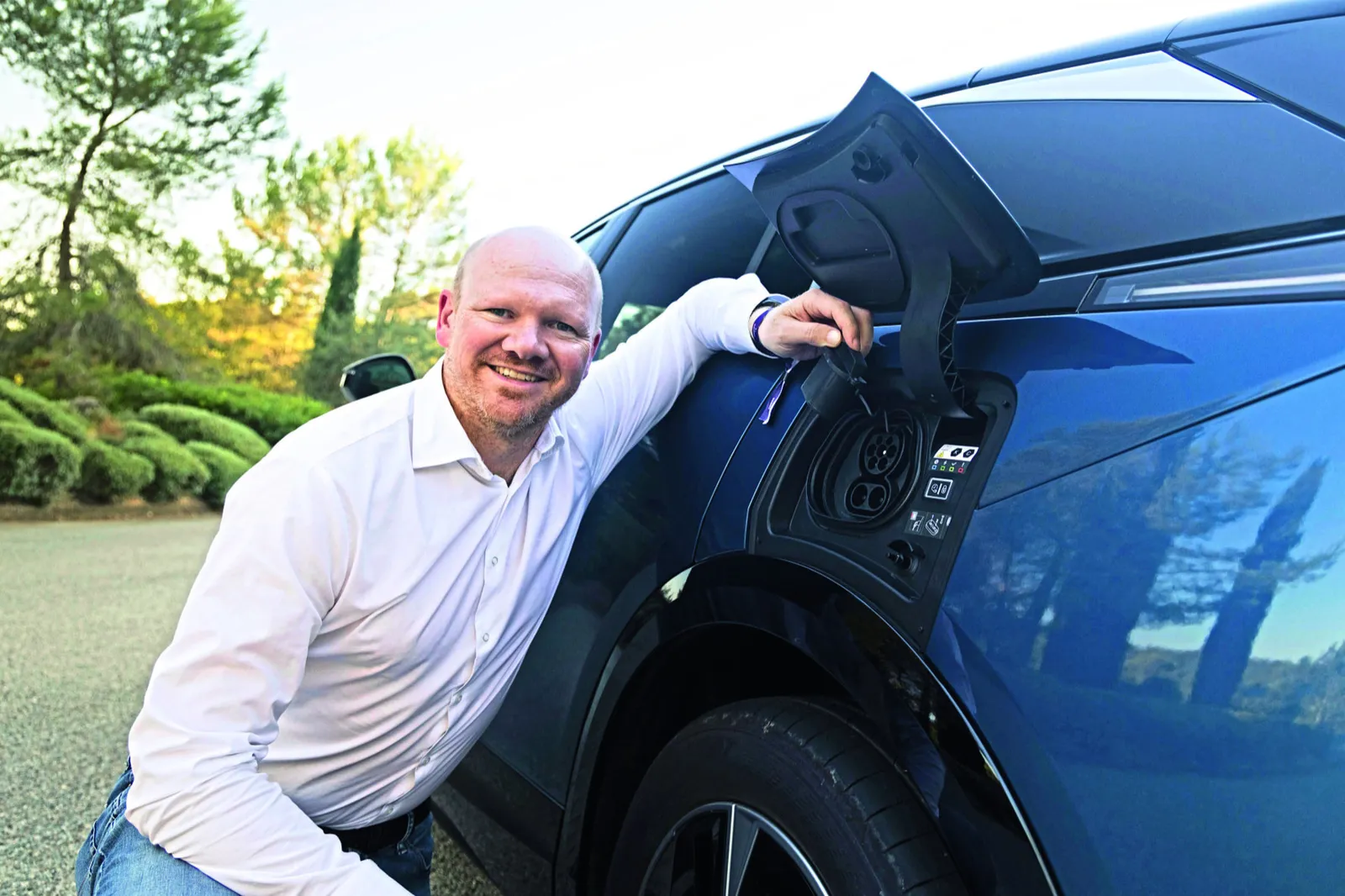
With the full 97.2-kWh battery, these consumption figures suggest a practical range of between 500 and 600 kilometres. While the WLTP-rated range of up to 740 kilometres may only be achievable under ideal conditions, the DS N°7 still offers excellent real-world long-distance capability. A low drag coefficient of 0.26 cW further contributes to the vehicle’s efficiency.
Charging curve of the 400-volt architecture in detail
At DC fast-charging stations, the 400-volt architecture limits the maximum charging power to 160 kW. However, the DS N°7 maintains a well-controlled charging curve. Starting at a state of charge (SoC) of 20 per cent, charging power quickly rises to the maximum of 160 kW and remains at this level on a near-constant plateau. Only at 55 per cent SoC does the charging power fall in stages to around 125 kW.
From there, the charging curve declines steadily and almost linearly, reaching just over 80 kW shortly before the 80 per cent mark, followed by a sharp drop at 80 per cent SoC. Charging from 20 to 80 per cent therefore takes 27 minutes. While the French SUV cannot match the charging speeds of 800-volt competitors such as the Kia EV6 or Hyundai Ioniq 5, it delivers solid everyday charging performance for its battery size.
For AC charging, DS equips the SUV with an 11 kW onboard charger as standard. A 22 kW onboard charger is available for an additional €700.
Interior, infotainment, and ergonomic weaknesses
The interior is one of the DS N°7’s key strengths. Nappa leather with contrast stitching, soft Alcantara and aluminium trim create a luxurious ambience. In the top-of-the-range ‘La Première’ trim, available only at launch, a Focal Electra 3D sound system with 14 speakers provides first-class acoustics. The ‘DS Iris System 2.0’ infotainment system, which features ChatGPT voice control, responds quickly to inputs.
However, the stylish design brings some notable ergonomic compromises. The 16-inch central display impresses with its size but has an extremely narrow format, resulting in unusually small on-screen elements. The navigation map suffers in particular and is significantly less clear than on taller displays. Another drawback is the centre console, which features only a single cup holder.
The front comfort seats offer insufficient lateral support in corners, as the lower side bolsters are too flat and soft. A more significant issue emerges in the rear: DS mounts the front seats so low that most adults in the back cannot tuck their feet underneath them. Even the 2.79-metre wheelbase does little to improve the situation. DS does not offer a sliding rear bench, although it would certainly help.
On the positive side, the boot provides a generous 560 litres of storage space, which expands to 1,570 litres with the rear seats folded.
Conclusion
With the N°7 E-TENSE FWD Long Range, DS offers a long-distance cruiser designed for endurance. The predictive adaptive suspension, exceptional refinement and build quality all impress. However, the model requires compromises when it comes to maximum charging power and rear-seat ergonomics.
The entry-level variant with the 73.7-kWh battery and 169 kW (230 PS) starts at €56,300 in the base Pallas trim. Prices for the tested E-TENSE FWD Long Range with the 97.2-kWh battery start at €61,700. The range-topping E-TENSE AWD Long Range with all-wheel drive and 257 kW (350 PS) starts at €66,600.