
DS No. 7 in testing: Strong on the road, weak at charging
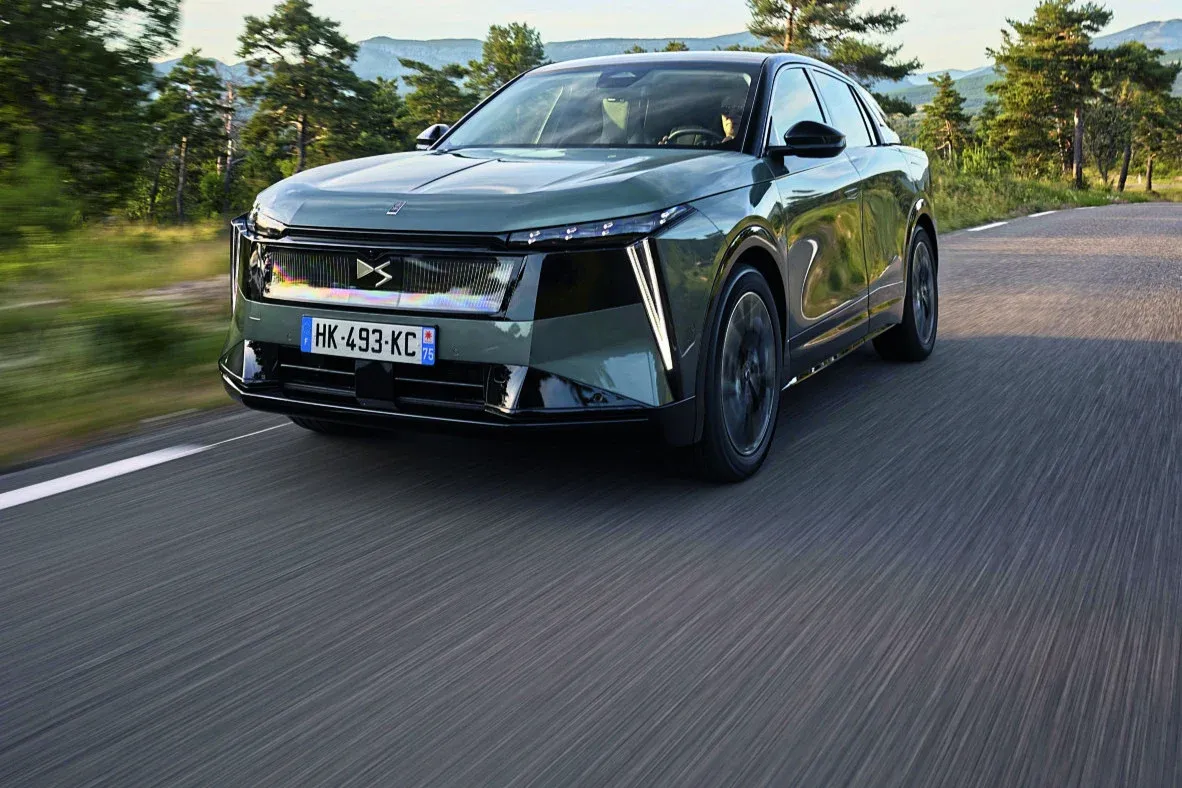
The flush-mounted door handles slide silently out of the body once the driver approaches the DS N°7. The endurance testing drives of this 4.66-meter-long premium SUV around Nice represent a significant milestone for the Paris-based brand. As the direct successor to the DS 7, the new model is now built on Stellantis’ STLA Medium platform. This platform is primarily designed for battery-electric drives, although it is also suitable for hybrids. The manufacturer officially positions this model between the C- and D-segments. Strictly speaking, it is a slightly oversized compact car. However, with its high-quality materials and focus on driving comfort, the DS N°7 is deliberately aimed at the discerning premium customers in the mid-range segment. Visually, the SUV features an illuminated grille called “DS Lumina Screen” as well as vertical daytime running lights in “
DS Light Blade design.Three E-TENSE versions with NMC cell chemistry
The electric lineup is divided into three performance tiers at launch, all relying on battery cells with nickel-manganese-cobalt chemistry (NMC). The entry model is the E-TENSE FWD. Its synchronous electric motor at the front axle delivers 169 kW (230 hp) and a temporary peak of 191 kW (260 hp). A 73.7-kWh battery serves as the energy storage unit here.
The most interesting option for frequent travelers is the E-TENSE FWD Long Range, which we tested. The synchronous electric motor mounted at the front axle provides 180 kW (245 hp) and outputs 206 kW (280 hp) in temporary boost mode. This powertrain is paired with a 97.2-kWh battery manufactured in Billy-Berclau, northern France.
The technological flagship of this series is the E-TENSE AWD Long Range. Two synchronous electric motors – one at the front axle and the other at the rear axle – provide all-wheel drive and deliver a system power output of 257 kW (350 hp). When pushed to its limits in boost mode, this figure rises to 276 kW (375 hp). The top model also uses the 97.2-kWh battery.
Driving Experience and Proactive Suspension
On the winding mountain roads in the hinterlands of Nice, this front-wheel-drive vehicle surprises with unexpected agility. The SUV handles with precision and responsiveness. If the driver takes a turn too aggressively, the electronic stability program (ESP) gently and safely stabilizes the vehicle. Another positive feature is the standard “DS Active Scan Suspension” damping control system. Using a camera at the front of the vehicle, this system continuously scans the road surface. Magnetic valves then adjust the oil flow in the shock absorbers on a millisecond basis. The result is a noticeable improvement in comfort: the N°7 almost completely absorbs small potholes and bumps without becoming unstable in fast turns.
One-Pedal-Driving and Assist Systems
The braking performance of the electric motors can be adjusted in four regenerative levels using levers behind the steering wheel. A separate button on the center console also activates true one-pedal driving, allowing the DS°7 to brake solely through regeneration until it comes to a stop. This works excellently in everyday driving and urban traffic, rendering the brake pedal largely unnecessary. The assistance systems also operate in a pleasantly unobtrusive manner; the standard lane-keeping assistant functions discreetly in the background without unnecessarily controlling the driver.
Fuel Consumption and Range on Long Distances
During our test drive, the thermometer rose to 31 degrees Celsius, putting the climate control system under continuous strain. The route included a challenging mix of steep mountain roads, stop-and-go traffic in narrow town streets, and about 10 percent highway driving. Under these real-world conditions over a total distance of 163 kilometers, the onboard computer showed fuel consumption ranging from 16.8 to just over 20 kWh per 100 kilometers depending on driving style.
With its full 97.2-kWh battery, these figures suggest impressive real-world range of 500 to 600 kilometers. While the optimistic WLTP figure of up to 740 kilometers can only be achieved under ideal conditions in daily use, the actual roadworthiness remains at an excellent level. A low drag coefficient of 0.26 cW further contributes to its notable efficiency.
Detailed look at the charging curve of the 400-Volt architecture
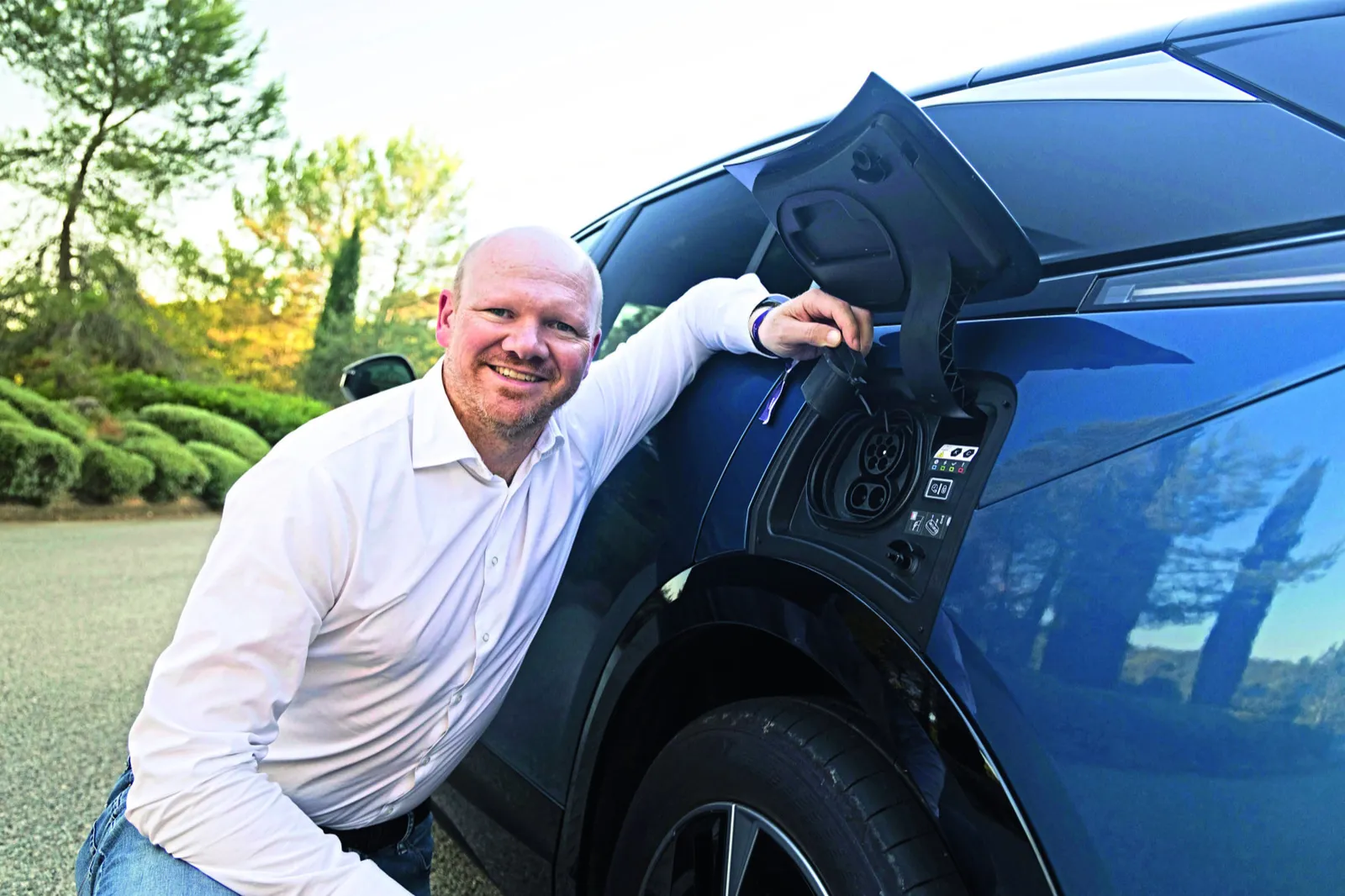
At the DC fast charging station, the company’s 400-volt architecture limits the maximum charging power to 160 kW. However, a look at the charging curve shows a well-modulated pattern. Right after power starts flowing at a 20 percent charge level, the absorbed power surges to the 160-kW maximum and remains there as a nearly constant plateau. It is not until 55 percent SoC that the charging power gradually drops to around 125 kW.
As charging progresses, the charge curve declines linearly and steadily, reaching just over 80 kW shortly before the 80 percent mark before experiencing a sharp drop at exactly 80 percent. Thus, the charge from 20 to 80 percent can be completed in 27 minutes. While this means it cannot compete with 800-volt rivals like the Kia EV6 or Hyundai Ioniq 5, it delivers solid everyday performance for its battery size. The SUV comes standard with a 11 kW AC wall charger; a 22-kW onboard charger costs an additional 700 euros.
Interior, Infotainment, and Ergonomic Weaknesses
The interior design is a clear strength of the brand. Nappa leather with pearl-stitching, soft Alcantara, and aluminum accents create a luxurious atmosphere. In the top-tier “La Première” version, available only at launch, a Focal Electra 3D sound system with 14 speakers delivers exceptional audio quality. The infotainment system, the “DS Iris System 2.0” with ChatGPT voice control, responds quickly to inputs.
However, this stylish design also requires significant ergonomic compromises. The 16-inch central display is enormous in diagonal size but extremely narrow in format. As a result, the system shows many displays in unusually small sizes. The navigation map display is particularly affected by this, becoming much less readable compared to larger screens. Another criticism: there is only a single cup holder in the center console.
The passengers in the front comfort seats lack noticeable side support while turning, as the lower side cushions are too flat and soft. A real drawback is found in the back seat area: the front seats are so deeply mounted to the vehicle floor that the vast majority of adults in the rear seat cannot rest their feet underneath. Even the 2.79-meter wheelbase helps only partially in this regard. A sliding rear seat is not available, but it would certainly be helpful. On the positive side, the trunk volume of 560 liters (expandable to 1,570 liters) is quite generous.
Overall Impression and Conclusion
With the N°7 E-TENSE FWD Long Range, DS offers a durable long-distance vehicle. The tuning of the predictive adaptive suspension, its excellent ride comfort, and build quality are all at an impressive level. However, this model requires compromises in terms of maximum charging capacity and ergonomics for rear passengers.
The starting price for the version with a 73.7-kWh battery (169 kW/230 hp) is 56,300 euros (basic Pallas trim). The E-TENSE FWD Long Range version with a 97.2-kWh battery costs at least 61,700 euros. As the top all-wheel-drive model, the E-TENSE AWD Long Range (257 kW/350 hp) starts at 66,600 euros.