
Donut Lab shows 3.4 ppm of lithium in the cell. The test does not confirm the battery chemistry.
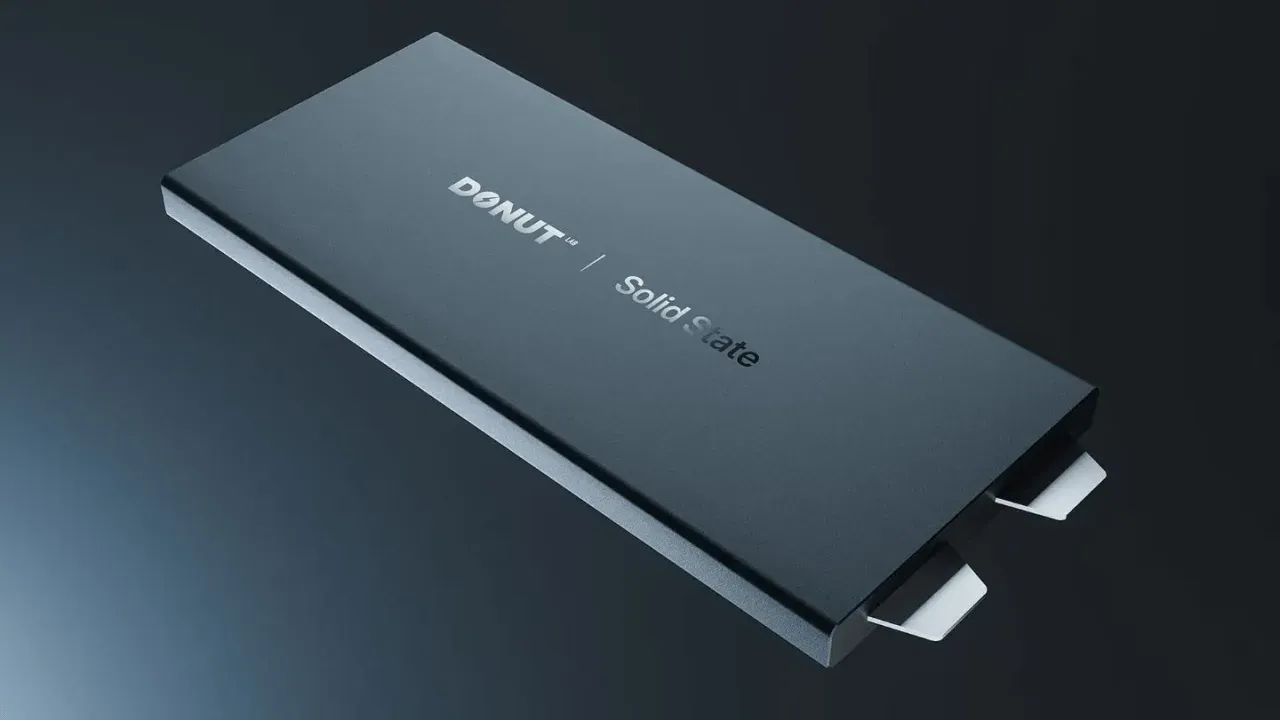
Finland’s Donut Lab released an Intertek analysis showing that a sample of its cell contained 3.4 ppm lithium and 632 ppm sodium. The company claims it is neither a lithium-ion nor a sodium-ion battery, but the lab only tested for these two elements and received disassembled components directly from the startup.
In September, VTT measured 409.3 Wh/kg for the Donut V1.5 cell. Such an energy density without lithium or sodium now seems like a claim that requires much stronger evidence.
Intertek tested only lithium and sodium
Donut Lab CEO Marko Lehtimäki said the independent analysis was meant to put an end to speculation: “We wanted to stop these rumors with an independent test showing it is neither a lithium-ion nor a sodium battery.”
The British Intertek report describes the analysis of about 0.5 g of material from the anodes, cathodes, and fragments of the current collector. The samples were dissolved in nitric acid, diluted to 50 ml, and analyzed using ICP-OES.
The lithium result is indeed very low. In a typical lithium-ion cell, lithium is present in percentage terms, not in individual ppm levels. However, the assignment was titled “Quantification of Li and Na by ICP-OES,” so Intertek did not look for potassium, magnesium, zinc, aluminum, or other components. The report answers the question of what is almost absent in the sample being analyzed. It does not indicate what is present there.
There is also an issue with the costly sample being sent to the laboratory. Intertek states that it received the materials “in a disassembled state” from Donut Lab. The laboratory did not open the complete cell, and the material analyzed was simply described as “Pouchcell – Cell 1.” The name Donut Battery does not appear in the document.
Donut Lab also claimed that the samples included electrolyte between the anode and cathode. However, the report states three times that only the anode, cathode, and current collector were analyzed. In a battery with a solid electrolyte, omitting the electrolyte layer is a rather significant oversight.
The document was revised three times within five days. The version from September 17 received corrections to the description and sample origin on September 21, and the wording in the experimental section was changed on September 22.
409 Wh/kg Still Not Fully Explained
At the beginning of September, VTT tested the Donut V1.5 cell across a voltage range of 2.3–4.25 V and achieved 409.3 Wh/kg. These are voltages well known from lithium-ion cells, and such results are already attained by advanced lithium-ion designs with silicon anodes.
The hypothesis of a supercapacitor or hybrid capacitor would fit the claims of fast charging and long lifespan. It doesn’t fit the 409 Wh/kg figure. No existing, rechargeable chemistry without lithium and sodium has yet shown comparable energy density in a real cell.
CTO Ville Piippo said, “It’s impossible to even build a functional battery with such a small amount of active material.” This is the company’s opinion, not a laboratory conclusion. Intertek explicitly states that such interpretations go beyond the scope of its UKAS accreditation.
The biggest problem for Donut Lab lies elsewhere. At CES in January 2026, the company talked about the first solid-state battery ready for vehicle manufacturers, with Verge motorcycles equipped with this battery set to reach customers in the first quarter of 2026. It’s now late September, and there’s still no production vehicle using this battery, with Lehtimäki admitting that the 409 Wh/kg cell isn’t even a version intended for customers.
The Intertek report doesn’t disprove Donut Lab, but it also doesn’t bring the company any closer to the answer the market needs: which cell will actually reach customers and when? After such a test, will you still believe in the claimed 409 Wh/kg without a full chemical analysis of the finished cell?
LovEV Newsletter
Want more content like this?
Sign up — we’ll send you a weekly summary once the newsletter starts.