
Twice as expensive as you think
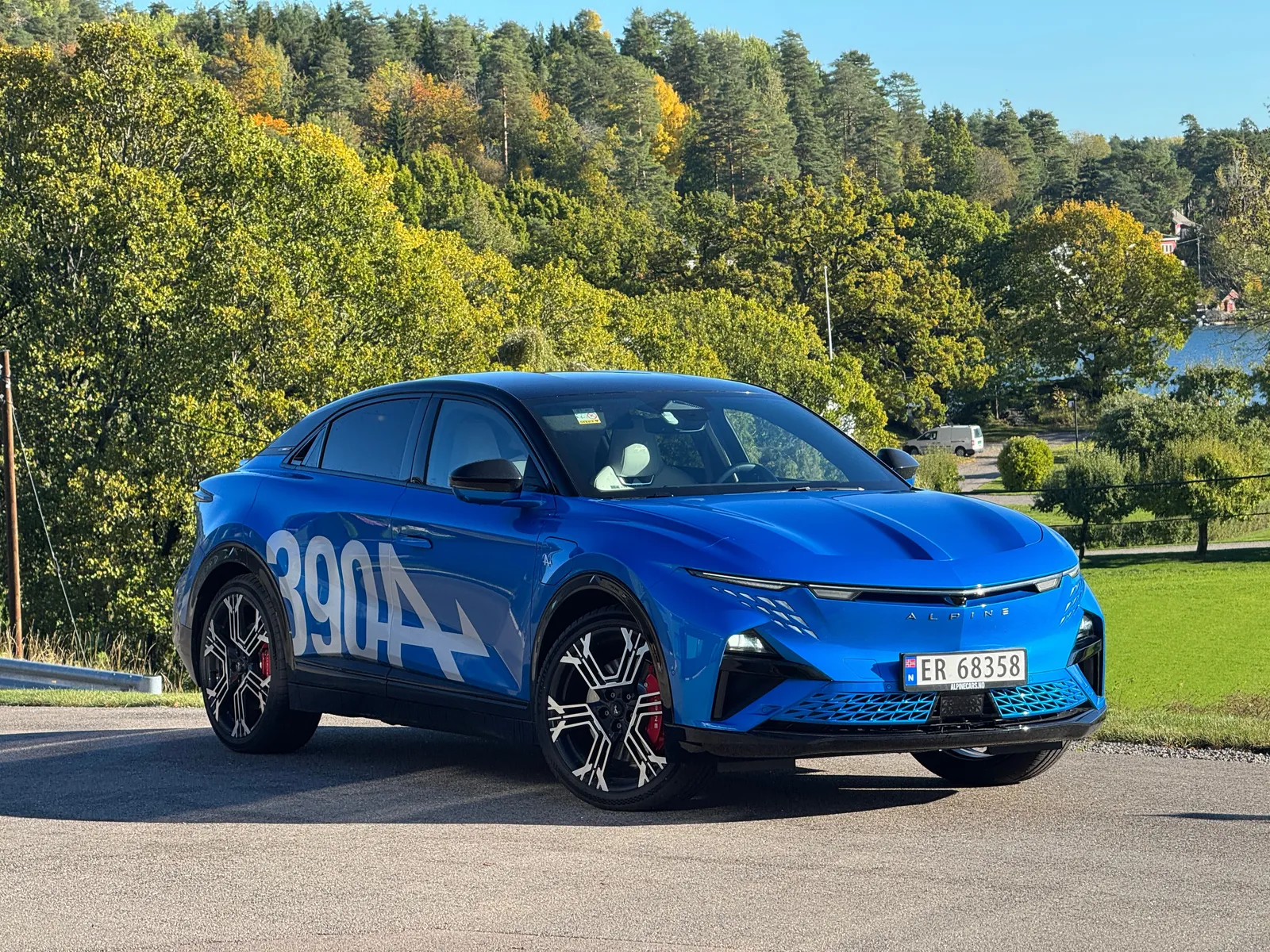
The Alpine A390 has three engines, 400 horsepower, and a striking design. But it consumes a lot of electricity, is expensive, and isn’t as sporty as we hoped.
03.11.2026 10:56
Alpine is the French sports car brand owned and revived by Renault.
The A110 has long been the brand’s flagship model and the one it is best known for. This model is an icon, even the latest version released in 2018, though it never made it to Norway.
Now Alpine aims to be more than just that. They took over Formula 1 from Renault Sport and were positioned as an electric sports car brand, though they have since backed off a bit on that claim.
We take a closer look at:
What kind of car is this?
Pros and cons
Seats – sit too high
Interior – sporty details
Rear seats – too cramped for adults
Trunk space – large and easily accessible
Driving feel – lacks power
Cruise control – disappointing
Range – far too limited
Charging – too slow
Price and competitors
Conclusion
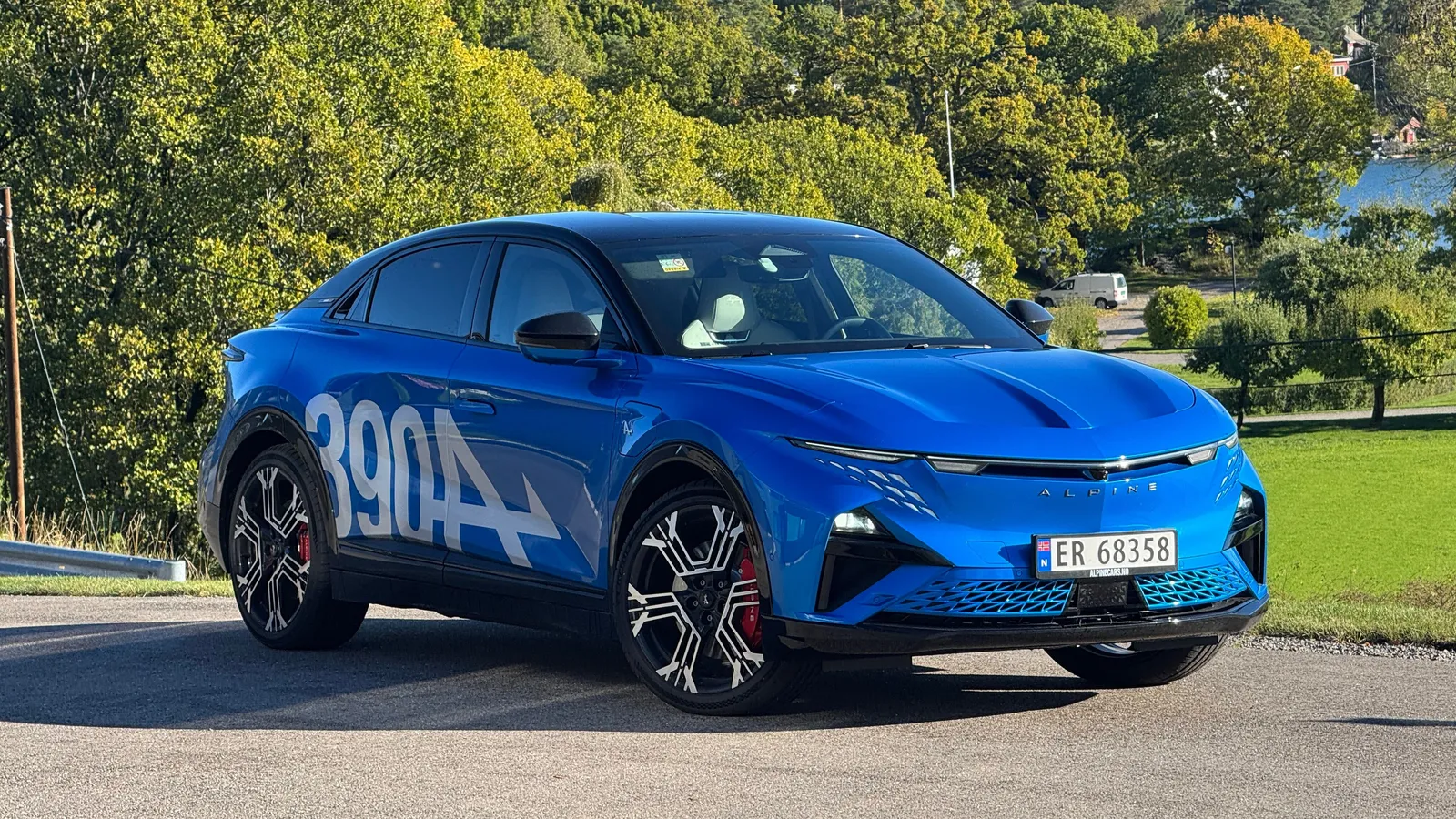
The A290 showcased the first part of the electric car lineup, while the A390 is set to combine sports car performance with space for the family.
The number 90 is used for the more family-oriented models, whereas the 10-series names are reserved for sports cars. The first number indicates the car’s size.
We have already tested the A290.
Now it’s the A390 GT’s turn.
What kind of car is this?
The A390 is a car that’s somewhat difficult to classify into a traditional category. Many describe it as an SUV, but with its low chassis and styling, I think it resembles something closer to the Polestar 2, that is, a tall, sporty coupe.
Alpine A390 GT – Summary
Pros
Exterior design
Interior design
Large trunk space
Cons
Cluttered
Too weak
Expected more driving dynamics
And it needs to be sporty, as it has three electric motors—two at the back and one at the front.
The car clearly has a coupe shape, but Alpine fortunately opted for a large rear door instead of a traditional trunk. This allows it to retain some of the practical features one would expect in a family car.
Design-wise, the A390 also differs significantly from the A290. At the front, the headlights are positioned high, while the main headlights are placed lower. The X-shaped elements in the headlights clearly seem a bit too childish for these buyers.
The profile is low and quite aggressive, and with a bit of imagination, one can find similarities to today’s A110 both along the sides and in the rear lights.
This is in no way intended to be a cheap or affordable electric car. Alpine positions the A390 as an exclusive and sporty alternative, and both the car’s price and its equipment underscore that its ambitions are high.
The A390 might appear a bit confusing in photos, as it is actually quite compact. It is 4.62 meters long, 1.89 meters wide, and 1.53 meters high. The wheelbase is 2.70 meters, with a rear clearance of 15.2 centimeters, which is untypically low for a sporty vehicle.
Seats – Too High
The test car’s Sabelt seats are eight-way electrically adjustable and come with heating and five massage programs for the back, but no cooling function. The two-tone Nappa leather seats cost an additional around 35,000 kroner.
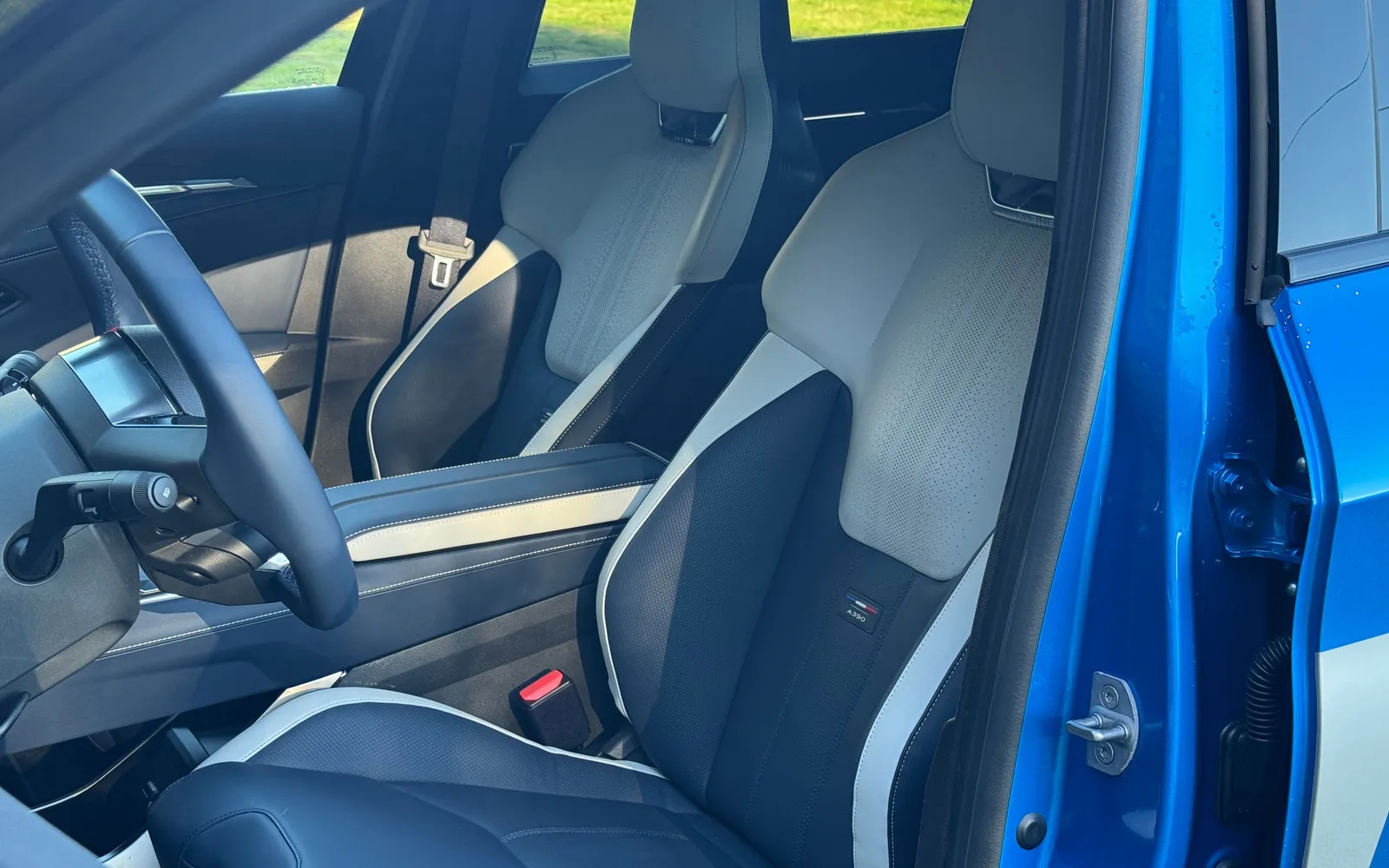
The seats are sporty in design and comfortable to sit in, with the steering wheel fitting well in relation to the body. But here we encounter our first issue. Most people prefer to sit low in sports cars. I sit too high here.
Interior – Sports Features
Many elements are familiar from the A290 and the Renault lineup, but they work well together.
The steering wheel is unique to the Alpine, but it features physical buttons for functions such as cruise control and multimedia controls from Renault.
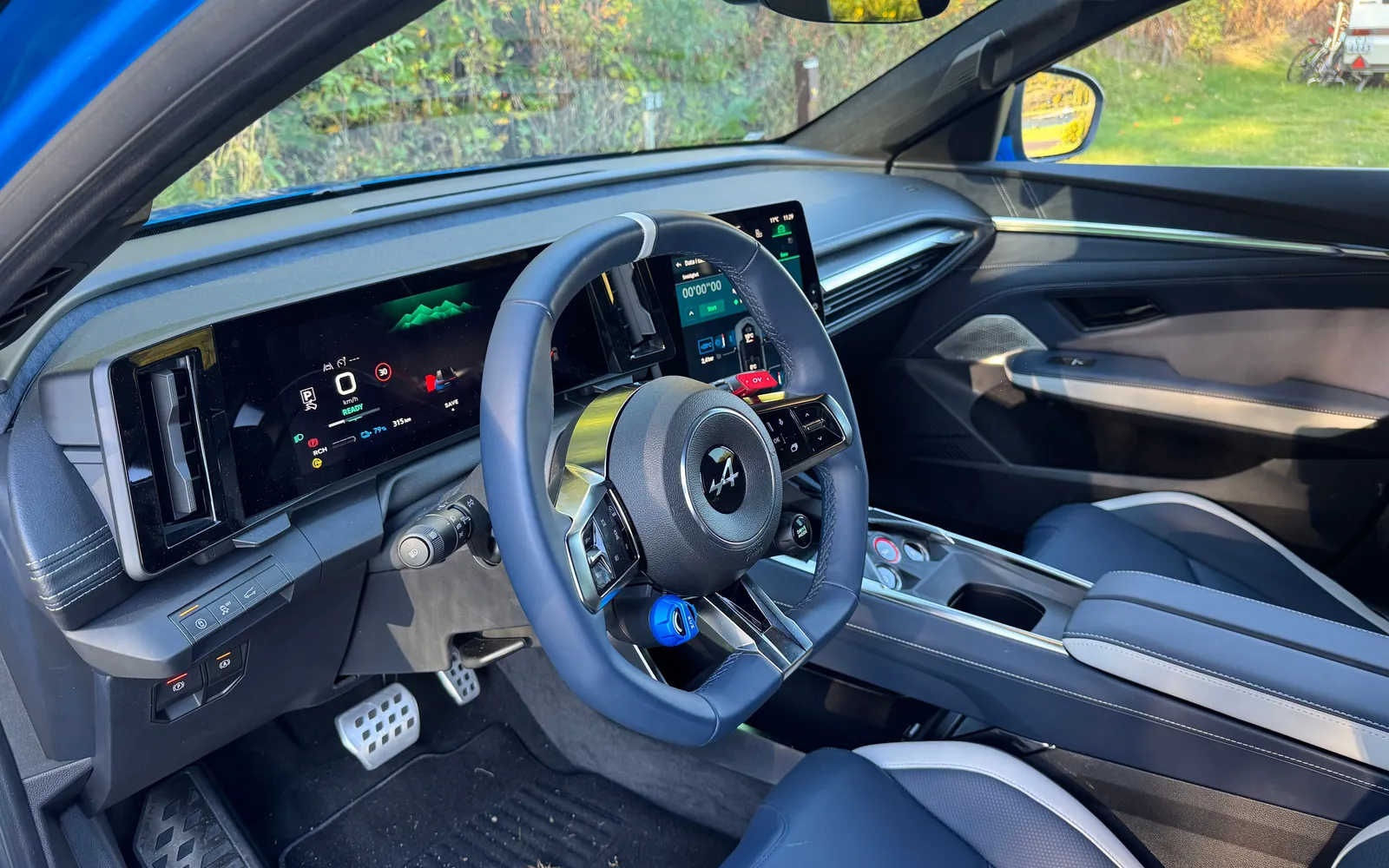
Additionally, there are three dedicated buttons for driving modes. Including the aluminum button that allows you to progress through regeneration in three steps.
Using the Drive Mode button, you can choose between Save, Normal, Sport, Perso, and Track modes.
In addition, the car’s agility control can be adjusted via the screen menu, allowing the power distribution to make the car more or less responsive through the two rear motors.
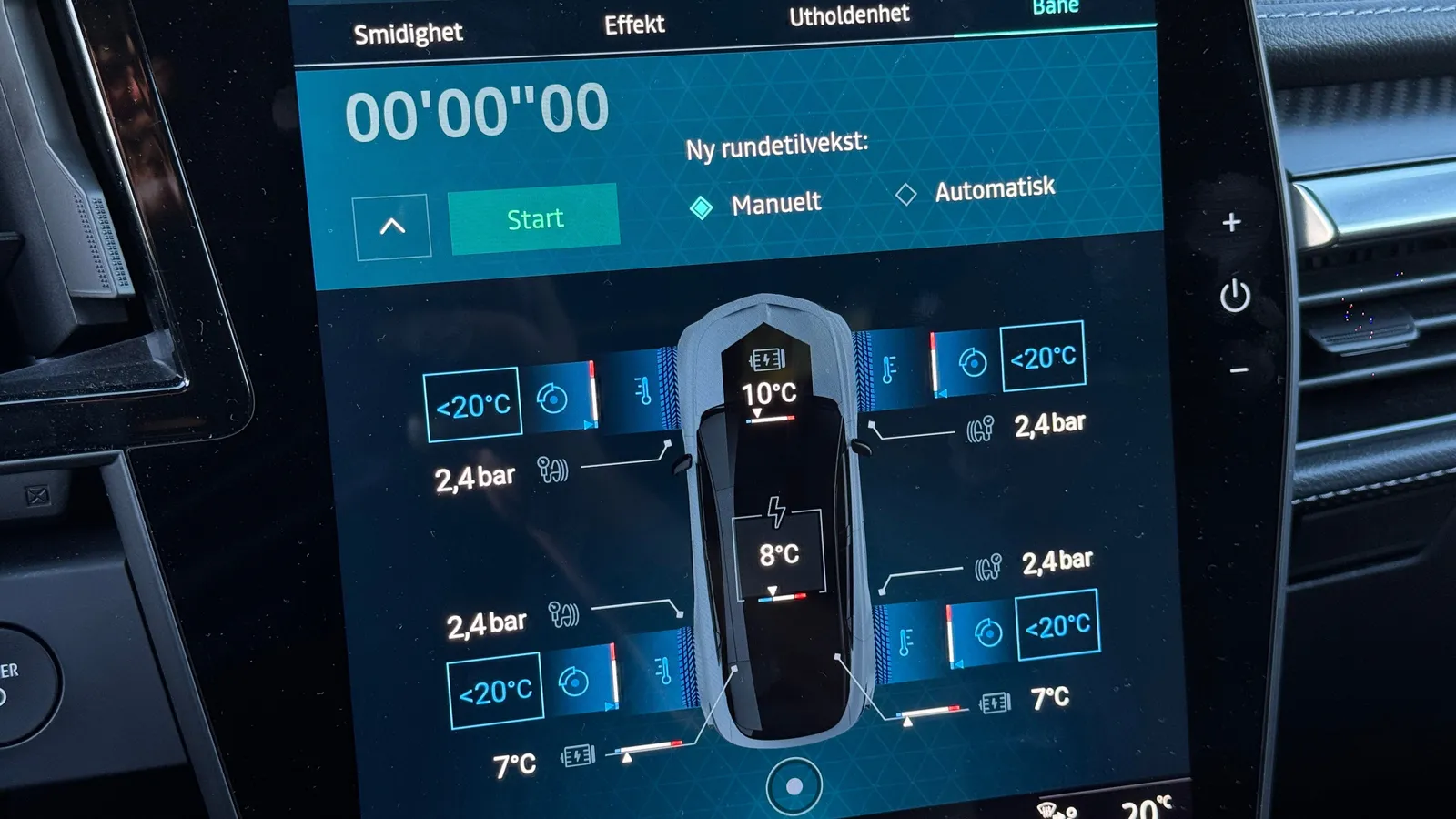
The instrument panel features multiple displays and Alpine-inspired graphics, while the infotainment system uses Google’s services.
Alpine Telemetrics provides information tailored for enthusiasts. Here you can track things like battery and brake temperature, tire pressure, engine data, G-forces, and lap times. It’s truly fantastic.
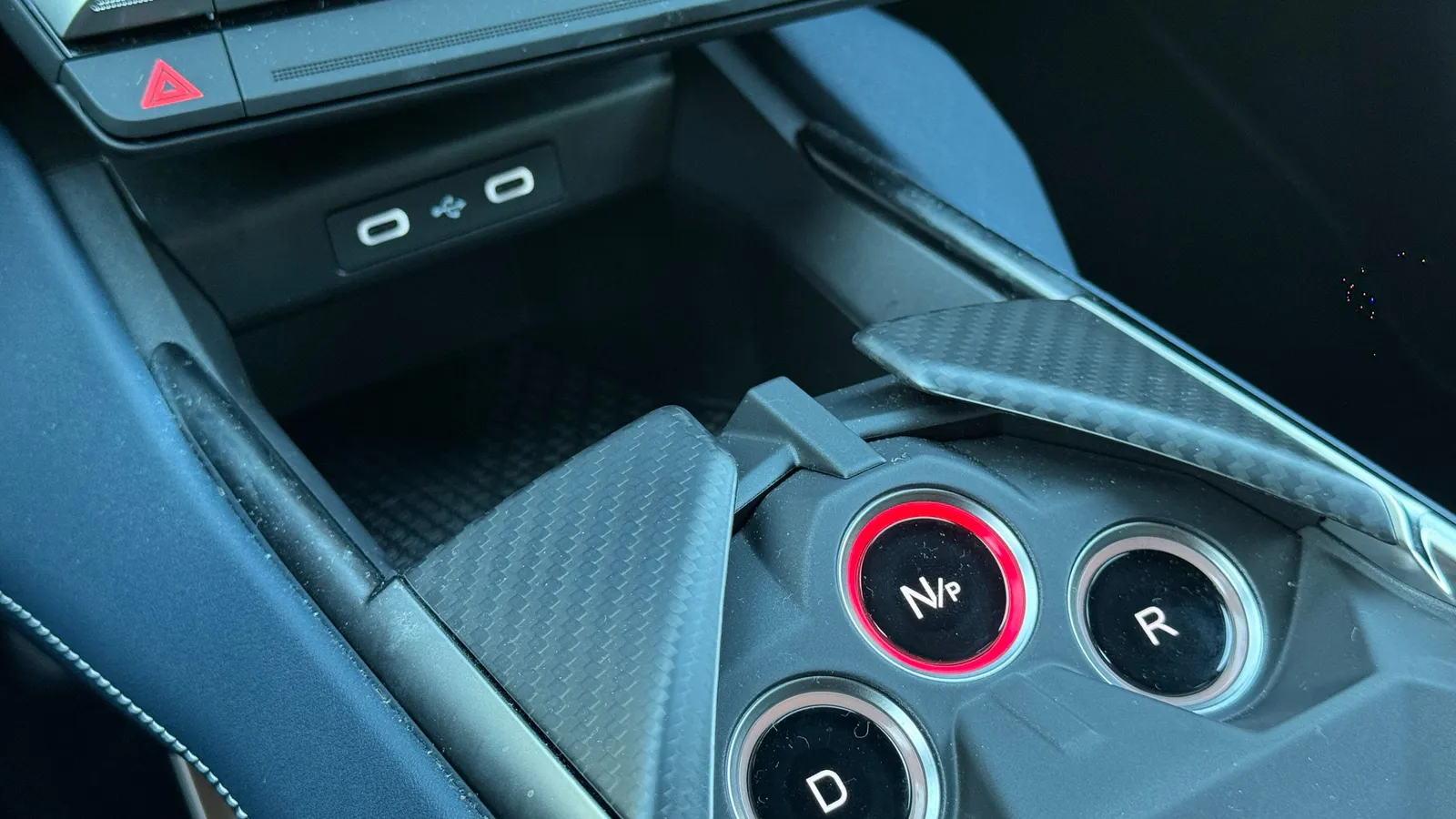
The center console is more of a novelty than a practical feature. It includes one wireless charging pad, two USB-C ports, one headphone jack, and relatively little storage space. The larger area under the console is difficult to reach. But it does look nice.
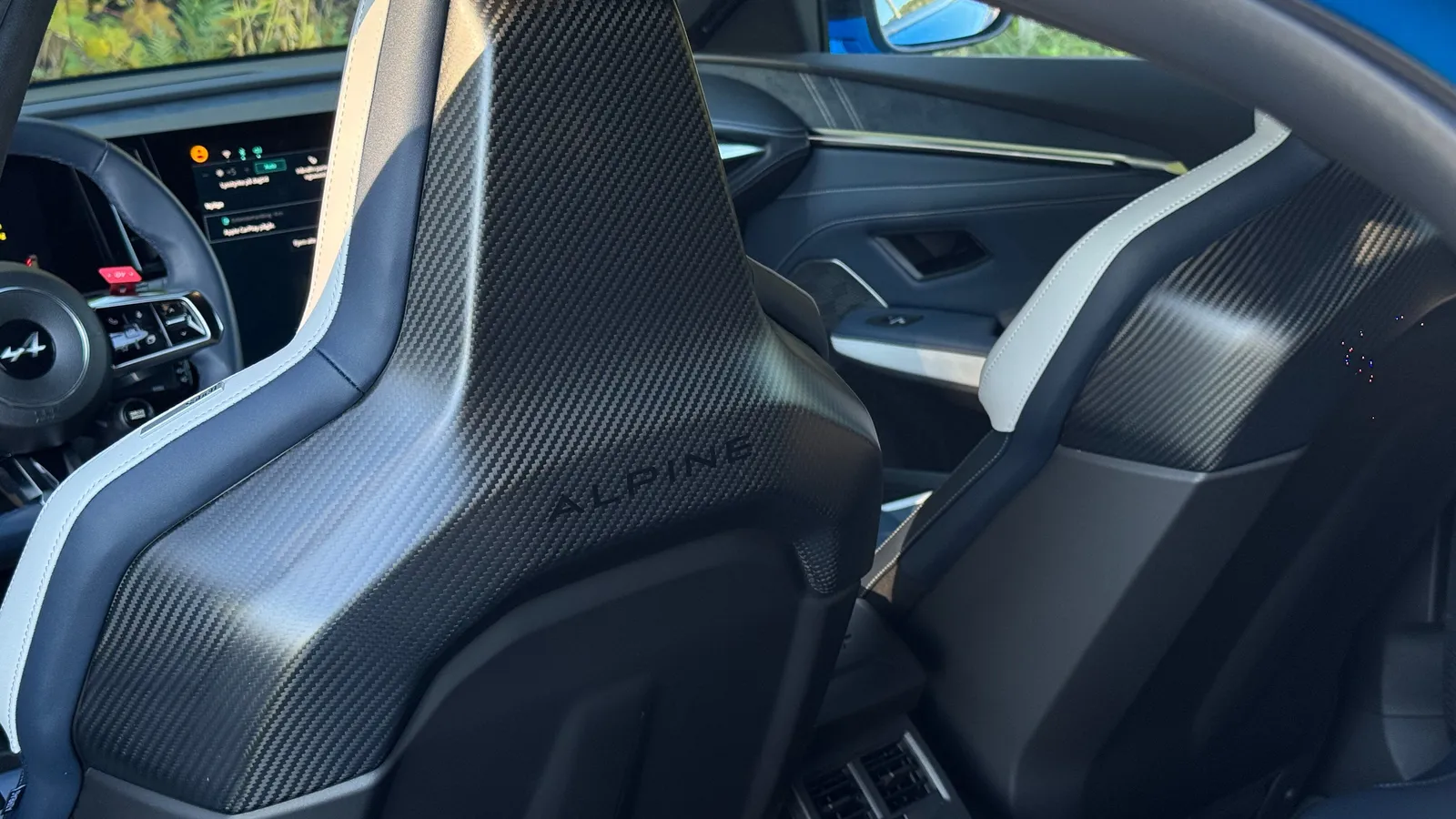
And it’s not just the seats that cost money here. If you want carbon trim around the steering wheel, on the dashboard, and on the seat backs, you’ll need to pay 33,000 kroner. Want a blue center console in the steering wheel, which this car doesn’t have, that will cost an additional 2,000 kroner.
Backseat – too tight for adults
I’m 1.89 meters tall, and even with my seat adjusted fully forward, my feet still dangle under the front seat. My knees don’t have enough space either.
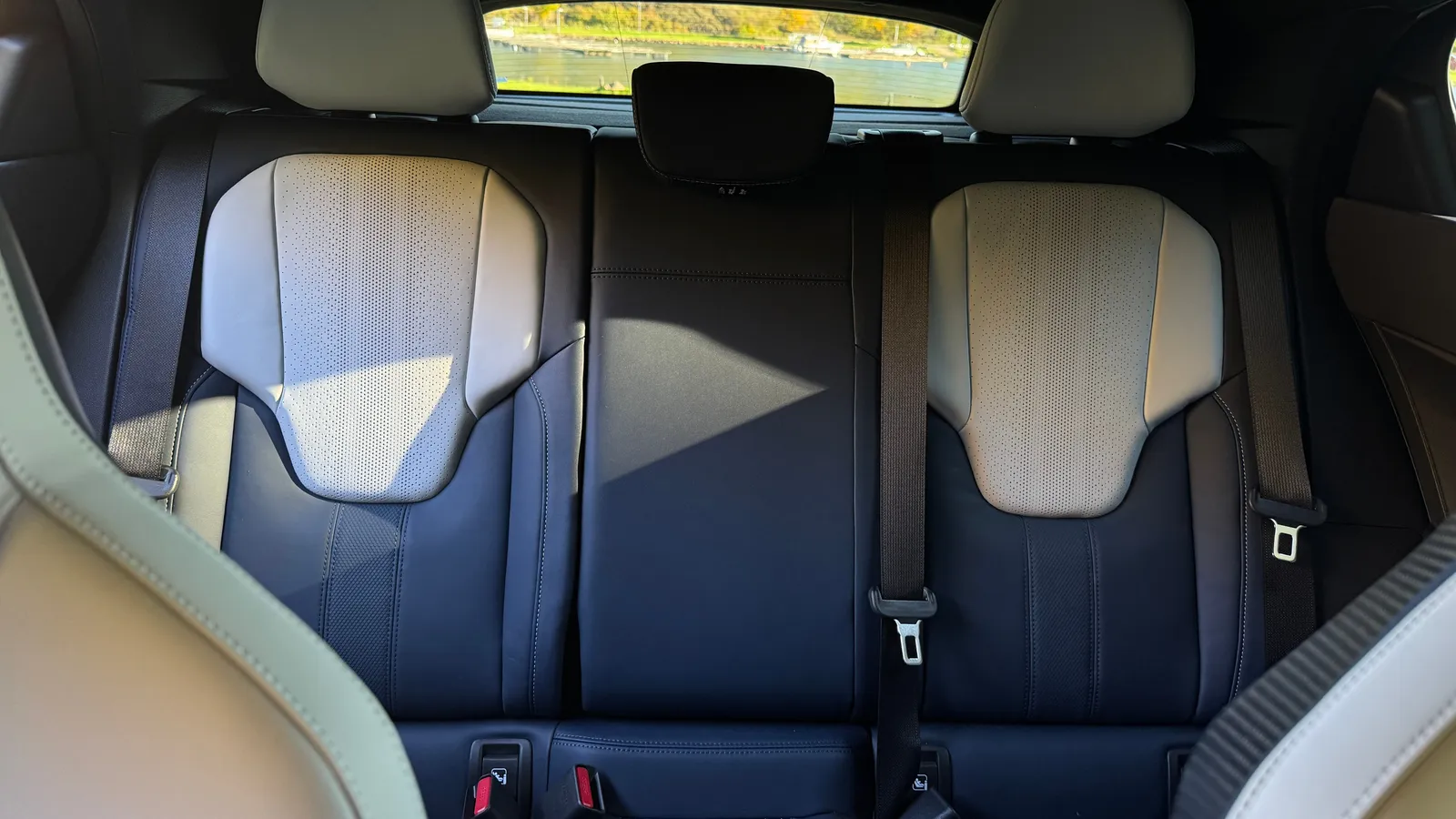
As a compromise, I have about three fingers of space above my head. The steep roofline still makes the back seat quite cramped.
There are three handholds on the roof, but no armrests or a built-in climate control system. However, it has air vents and two USB-C ports.
The floor is flat, and I can actually sit in the middle space. Three adults will naturally be quite crowded in the tightest row.
There are two Isofix anchors at the back. With a rear-facing child seat behind me, the driver’s seat needs to be moved seven centimeters forward. We measured only 17 centimeters between the child seats.
The A390 is hardly the first choice for those who want to use the back seat a lot.
Trunk – large and accessible
A clear advantage is that Alpine designed the A390 as a station wagon. The large rear hatch makes the trunk much more accessible than it would be with a traditional hatchback.
The specified volume is 532 liters with the rear seats up and 1643 liters with the seats folded down. But that’s also what you get, as there’s nothing beneath the floorpan. In our trunk test, we managed 335 liters with the trunk lid down. Very acceptable.
The test vehicle has a double floor. This provides a flatter loading surface but also takes up so much height that I wouldn’t spend around 7000 kroner on it.
The rear seat back is 40/60 split, but the car lacks a split-fold function. Isn’t that a bit small for a car called Alpine that’s primarily designed for fast driving in the mountains?
In that case, you’ll have to use skis on the roof instead. The roof load capacity is 80 kilograms; a roof rack costs around 28,000 kroner and can hold 1350 kilograms, while the usable load is only 396 kilograms. That’s insufficient if the car is to fulfill its role as a family car.
Driving Impressions – Lacks Power
You need to start the car before pressing Drive and driving out of the driveway.
The GT we tested has 400 horsepower and 661 Nm of torque distributed across three electric motors—two at the rear and one at the front. The car is all-wheel drive and weighs 2,134 kilograms without the driver. We measured it at 2,160 kilograms.
It should accelerate from 0 to 100 km/h in 4.8 seconds, with a top speed of 200 km/h.
We had to try several times before achieving the stated acceleration, even with around 75 percent battery charge and a battery temperature of about 20 degrees. It’s disappointing.
400 horsepower sounds impressive, but in an electric car, it’s just acceptable. After all, Chinese manufacturers often offer 600–700 horsepower in regular family cars, such as the Smart #5 and MG IM.
With 245 mm wide Michelin Pilot Sport 4S tires on 21-inch wheels, we have excellent grip, which eliminates any sense of instability.
I wish I knew more about that special two-engine rear setup, but I could barely tell the difference between overdrive and underdrive modes. I think the car would have benefited from having much more powerful engines in the rear rather than the front.
It should be noted that we’re driving the GT version. If you pay an extra 50,000 kroner, you get the GTS with 70 extra horsepower, though I don’t think it makes that much of a difference.
More like this?
Sign up for our newsletter
– get electric vehicle news straight to your inbox!
The red Overtake button, essentially a “overtaking button,” adds extra flair when used with launch control. You get full action on the dashboard along with a kind of countdown sound before you’re sent speeding out of the garage.
But as an overtaking button, as it’s actually called, it’s not very useful, since you can just as easily use the kick down on the pedal.
Comfort – sporty and firm
The suspension setup is firm and sporty, but not uncomfortable. It absorbs rough bumps surprisingly well without harsh vibrations passing through the chassis.
You never doubt that this is a sporty car, but the suspension also handles everyday driving just fine.
The steering is quite heavy, and when I’m just cruising, it can become a bit sluggish. The car can also feel a bit floaty.
The noise level is otherwise acceptable. We measured 64.1 dB at 80 km/h and 67.5 dB at 100 km/h. What you hear is road and wind noise, along with a faint humming from the engine under load.
Cruise Control – Disappointing
The adaptive cruise control doesn’t do a very good job of keeping the car centered in the lane.
It wanders too much between the lanes, so I feel the system fails to provide the smooth highway driving experience that a good adaptive cruise control should offer.
All alerts and unwanted behaviors can fortunately be configured through the My Safety menu.
There you can decide which functions you want to turn off, and you can disable everything with just two quick presses of a physical button on the left side of the steering wheel.
You’ll also find an ESP-off button. It might be amusing to turn that off during winter.
Range – Too Power-Hungry
The A390 GT lists a WLTP range of 557 kilometers with a stated fuel consumption of 1.87 kWt/mile. This consumption seems high for such a small car.
On our fixed test route, we ended up with a consumption of 1.96 kWt/mile under favorable weather conditions. On our fixed highway test, the consumption rose to 2.17 kWt/mile.
During a longer test drive with more variable weather, some highway driving, and speeds just above the limit, my average consumption was around 2.6 kWt/mile. The A390 is quite simply a power-hungry electric car.
Charging – slow progress
The battery in the test car is rated at 89 kWt gross and 87 kWt net.
The GT version can charge fast at up to 150 kW, while the GTS can reach 190 kW. AC charging is 11 kW standard, with 22 kW available for an additional fee.
In our charging test, it took the car 49 minutes to reach 90 percent from 20 percent, while it took 34 minutes to go from 10 percent to 80 percent.
The maximum charging rate remained roughly consistent between 10 and 40 percent. The final 10 percent, from 80 to 90 percent, took 12 minutes. If you don’t need extra range, there’s little reason to wait after reaching 80 percent.
We also found no option to manually warm the battery or activate heating via the navigation before starting to charge. However, the temperature can be monitored through the Telemetrics display. The battery was 29 degrees when started up.
34 minutes to go from 10 to 80 percent charge is too slow for such an expensive electric car in my opinion. Most competitors in this price range charge faster.
Price and Competitors
The A390 GT starts at 759,900 kroner, and that’s the car’s biggest issue. Alpine overestimates customers’ willingness to pay a premium for extra features, but in Norway we have no connection to Alpine at all.
The test car features an expensive leather interior and carbon fiber details, while 21-inch wheels, special paint, colored brake calipers, a stereo system, and a range of other features drive the price significantly higher.
Winter tires alone cost around 54,000 kroner, and other paint colors besides the standard one can cost up to 35,000 kroner. Even some small design elements come at an extra cost.
The test car thus costs 988,897 kroner. As we approach one million kroner, competition becomes fierce.
For almost all natural competitors, the price is several hundred thousand lower.
The Polestar 2 Performance can hardly be mentioned, as they have stopped production of this model, but the Tesla Model 3 Performance, with more power and the interesting Track Mode that allows you to customize many settings, starts at 585,000 kroner.
Conclusion
There are many things to like, but there are too many drawbacks. The biggest one is the price.
And when you consider the high seating position, cramped rear space, extremely high fuel consumption, slow charging speed, and far from impressive performance, it’s difficult to find reasons to spend 760,000 kroner, let alone approach the one million kroner cost of the test car.
Lorem ipsum dolor sit amet
Lorem ipsum dolor sit amet
Lorem ipsum dolor sit amet
Lorem ipsum dolor sit amet
Lorem ipsum dolor sit amet
Lorem ipsum dolor sit amet
Read also
The post Dobbelt så dyr som du tror appeared first on Norsk elbilforening.