
These trains maintain over 90 percent of their capacity.
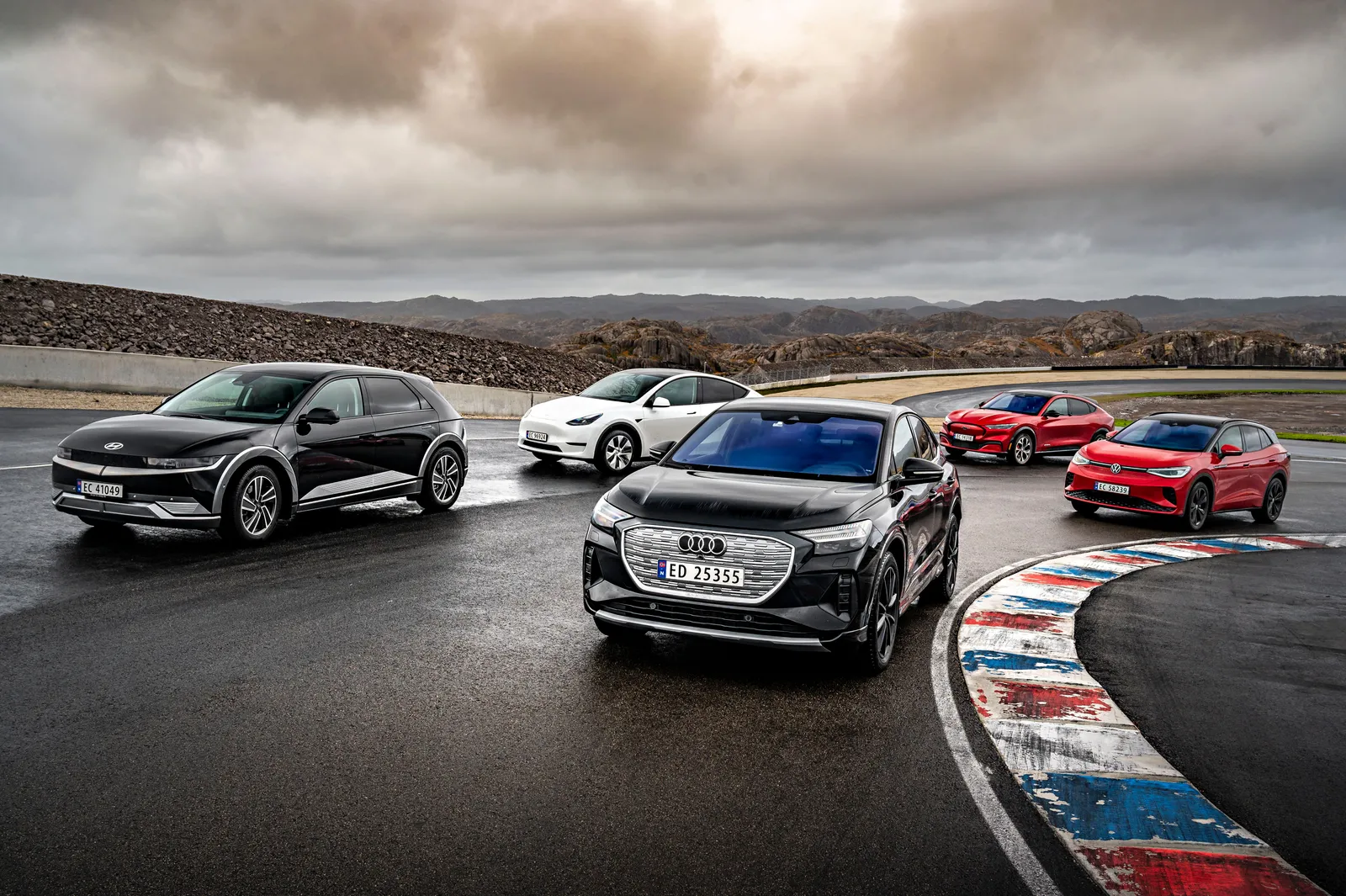
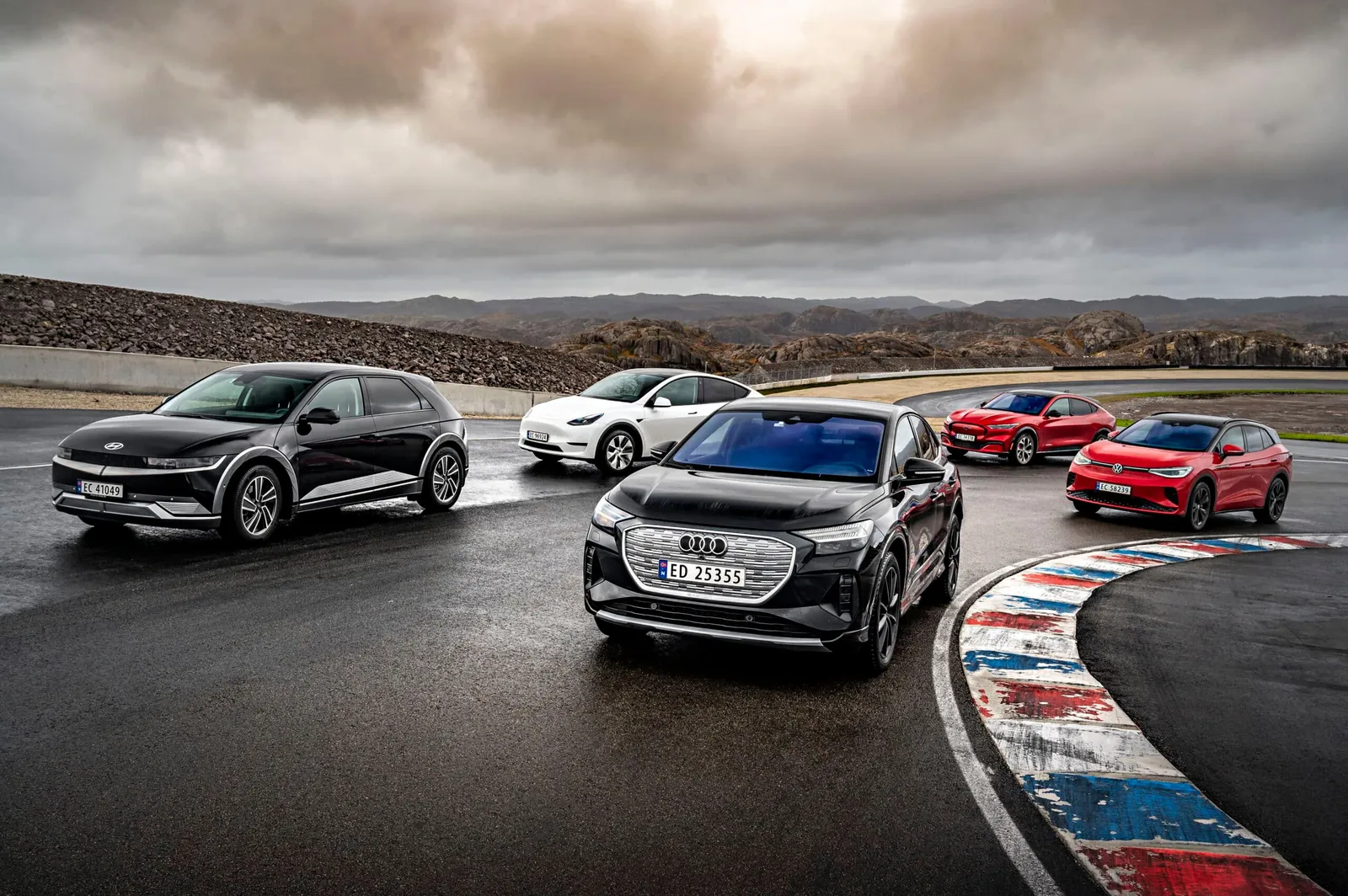
An analysis of over 500,000 battery tests shows that electric vehicle batteries perform well even after many miles. However, differences between cars of the same model can be significant.
09.09.2026 12:18 | Updated 12:18
How much battery life is left when an electric car has traveled 150,000 kilometers?
A lot, according to a new comprehensive report on battery health.
Battery diagnostics company Aviloo states that the analysis is based on over 500,000 test results from used electric vehicles.
The tests were conducted between 2022 and 2026 and include 20 electric vehicle models from various parts of the world.
For each model, the company calculated the median battery health at 50,000, 100,000, and 150,000 kilometers.
All above 90 percent
Battery health indicates what percentage of the battery’s original, usable capacity remains.
The report uses the median: the value that divides the calculated distribution into two equal halves. Half are above it, and half are below.
At 50,000 kilometers, all 20 models have a median battery health of over 90 percent. The Hyundai Ioniq 5 leads with 97.1 percent, followed by the Mercedes-Benz EQA and Hyundai Kona Electric.
The Nissan Leaf and Renault Zoe are at the bottom, but they also have medians above 91 percent.
Still high after 10,000 miles
At 100,000 kilometers, the Hyundai Ioniq 5 remains at the top, with a median of 95.3 percent. The Mercedes-Benz EQA is close behind at 95 percent.
At the other end, the Renault Zoe and Nissan Leaf rank at 88.9% and 88.3%, respectively. They are the only two models with a median below 90% at this mileage range.
The Tesla Model 3 has a median of 90.8%, while the Model Y boasts a median of 91.9%.
EQA highest – Leaf lowest
After 150,000 kilometers, the medians for the 20 models range from around 87% to 94%.
The Mercedes-Benz EQA has the highest median at 94%. The Hyundai Ioniq 5 follows with 93.8%, closely followed by the BMW i4 at 93.6%.
Several other popular models in Norway also perform well. The Volvo XC40 Recharge, Hyundai Kona, Ford Mustang Mach-E, and Polestar 2 all fall between around 92% and 93%.
The Tesla Model Y and Volkswagen ID.4 still remain above 90%. In contrast, the Tesla Model 3 is just below 89%.
The lowest median is for the Nissan Leaf ZE1. It sits at around 87 percent after 150,000 kilometers. The Mini Cooper SE and Renault Zoe are at roughly the same level.
This is not, however, a ranking of which cars have “good” or “bad” batteries. The figures show the median for models in the database—not the condition of each individual car.
Large differences between cars of the same model
What may be most interesting for consumers is not the differences between models, but rather the variation within each model.
According to Aviloo, battery health can vary by up to 13.5 percentage points between two cars of the same model. The range also increases as the cars have been driven for longer.
Thus, two cars with the same model name, age, and mileage can have batteries in quite different conditions. Charging patterns, temperature, usage, and the battery variant of the car can all play a role.
As Ståle Frydenlund, the electric vehicle specialist at Som Elbilforening, has previously noted, the battery pack’s condition can be better or worse regardless of mileage, appearance, or service history.
“First and foremost, it’s about knowing whether the car’s battery is at 80 or 95 percent capacity—considering its lower or higher residual value,” Frydenlund said at the time.
Multiple battery variants collected together
Several different battery sizes can be grouped under the same model name. As a result, vehicles with different battery suppliers, battery chemistries, and model years may end up in the same category.
This makes comparisons rougher than what the model names might suggest.
A Tesla Model 3, for example, can come with several different battery packs that may use varying battery technologies.
No Chinese car brands are included among the 20 models. Therefore, the overview does not provide a complete picture of today’s electric vehicle market.
No Norwegian representation
The test results come from Europe, North and South America, Asia, and Australia. However, the report does not indicate how many tests come from each country or climate region.
As a result, we do not know how many Norwegian cars are included. Although the database covers various climate conditions, it cannot be used as an accurate indication of how Norwegian winters affect batteries.
Not the same as WLTP range
A 90 percent battery health rating does not automatically mean the car has exactly 90 percent of its original WLTP range.
The so-called SoH (State of Health) indicates how much of the original, usable battery capacity remains.
The actual range is also influenced by factors such as temperature, speed, weather, road conditions, heating use, and the vehicle’s efficiency.
Test the car you actually want to buy
This comprehensive analysis primarily provides encouraging news about how electric car batteries perform over time. However, it cannot tell you how the battery in a specific used vehicle is doing.
Members of the Norwegian Electric Car Association can get battery checks at a member price. The check takes about five minutes and provides an overall assessment of the battery’s condition on a scale from 0 to 100.
This is a quick check, not as thorough an analysis as a full battery health test. The result is also just a snapshot, not a guarantee of how the battery will perform in the future.
But when buying or selling a used electric car, this check can offer more information than just the model name and mileage.

Join as a member!
Get the Norwegian Electric Vehicle Association’s charging badge, which gives you access to charging stations in Norway and Europe, expert assistance with charging, and excellent road assistance offers. Join 120,000 other electric vehicle owners!
Read more
The post Disse elbilene beholder over 90 prosent av kapasiteten appeared first on Norsk elbilforening.