
Two Days at Mercedes in Stuttgart to Understand How AI Will Transform Our Cars
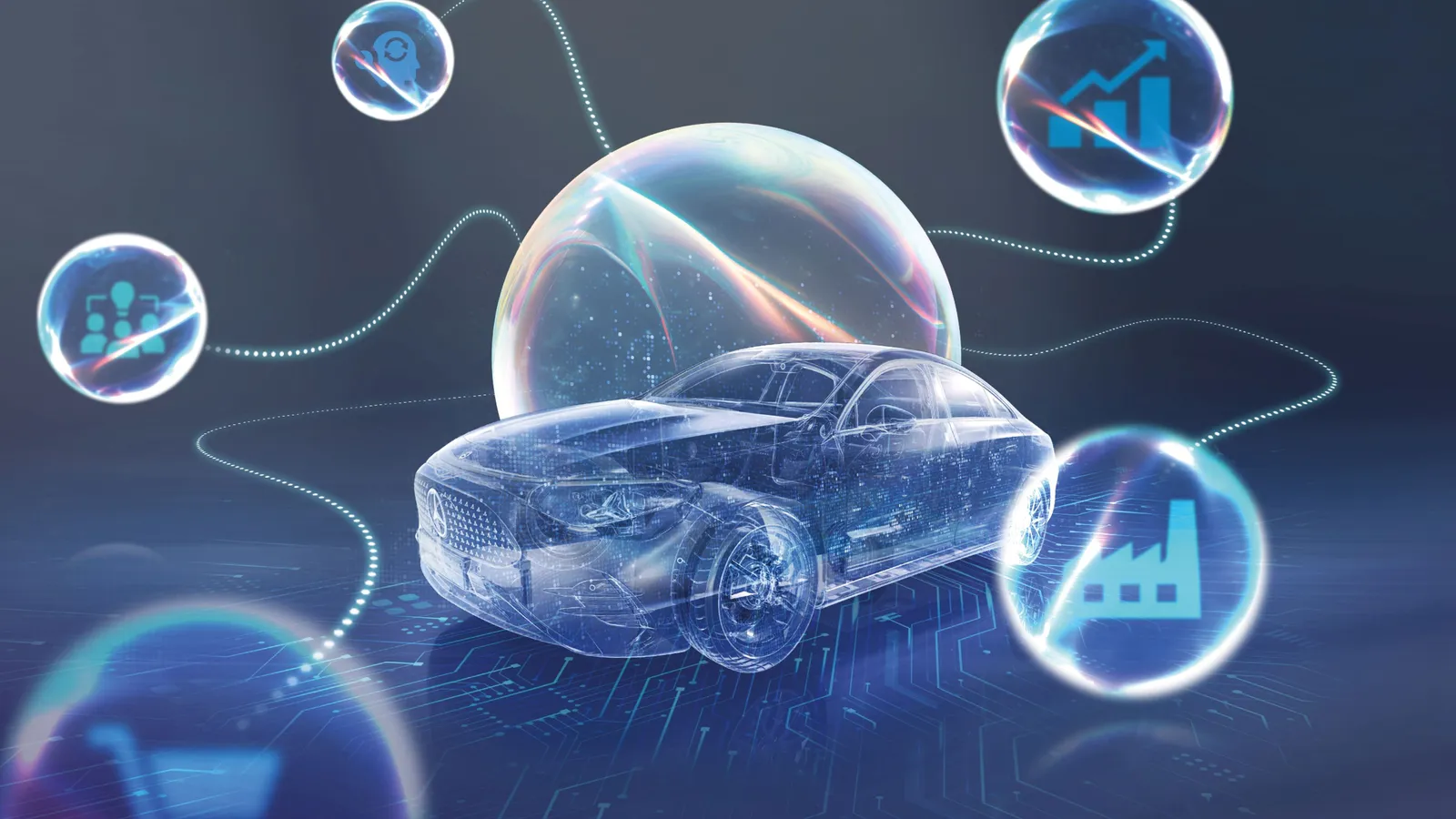
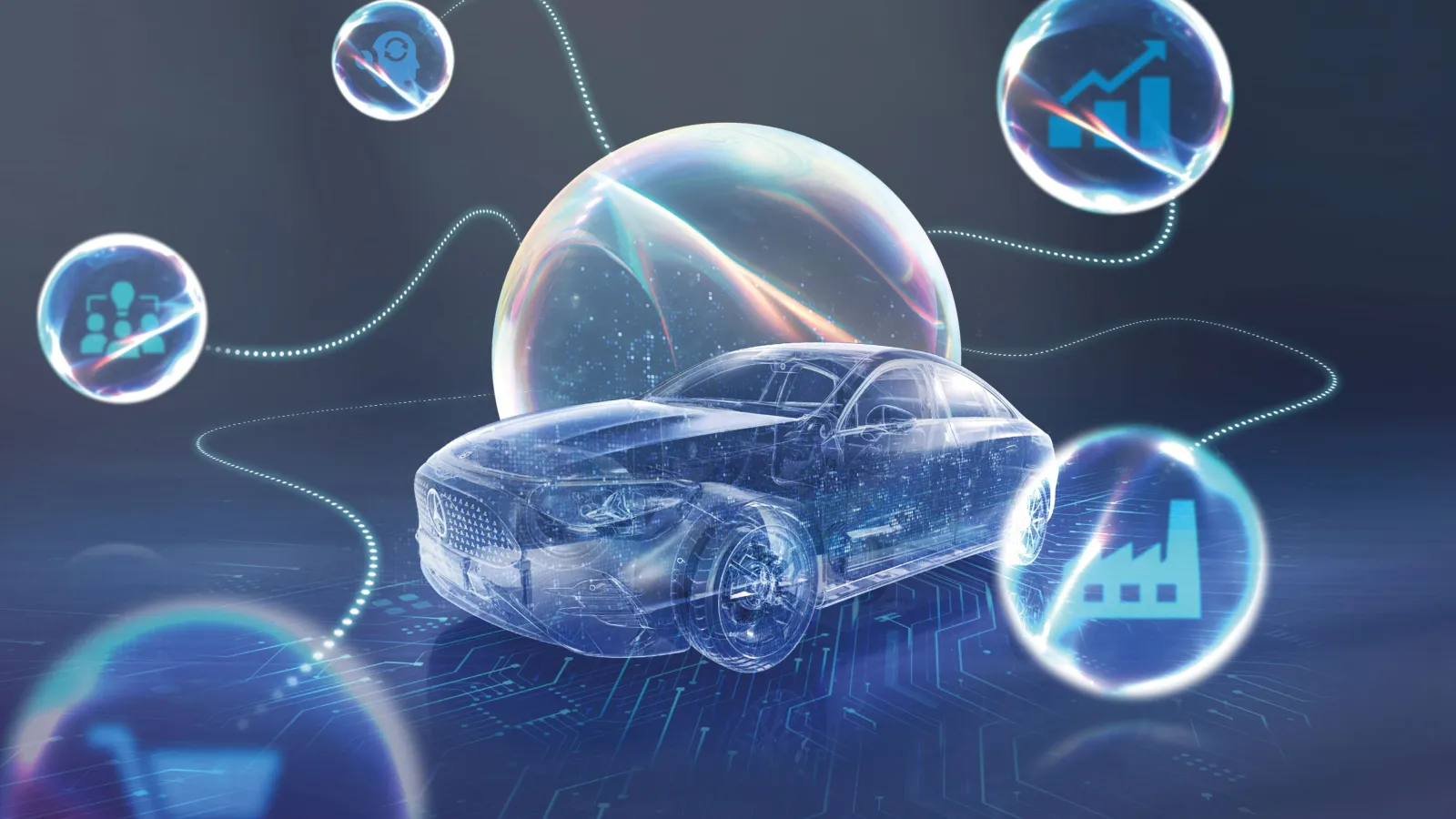
Mercedes aims to make AI a core component of its strategy. At the Tech Experiences held in Stuttgart, the automaker announced an enhanced partnership with NVIDIA for autonomous driving, as well as a 500 million euro investment in PLM.AI, a platform designed to accelerate the development of its future vehicles. Here is what we learned from these two days in the heart of this German company.
As you’ve likely noticed, artificial intelligence is everywhere! It’s also transforming the automotive industry, and Mercedes plans to take advantage of this trend. At the Tech Experiences, two days held on October 15 and 16, 2026, in Stuttgart that we attended, the German automaker unveiled several advancements reflecting its ambitions in this field.
Beyond voice assistants and embedded technologies, Mercedes aims to integrate AI into every stage of a car’s life, from design to driving. Two initiatives illustrate this strategy: extending its partnership with NVIDIA and deploying PLM.AI, a highly ambitious digital transformation program. We’ll introduce you to all the upcoming innovations.
Mercedes and NVIDIA Strengthen Their Collaboration
On October 16, 2026, Mercedes officially announced a new phase in its strategic partnership with NVIDIA. The two companies have been working together for several years on autonomous driving technologies. They now aim to accelerate the development of next-generation driver assistance systems. Behind this new agreement is the goal of enabling cars to handle increasingly complex traffic situations, especially in urban areas.
Also Read
Axial Flow Engine: Mercedes’ Revolutionary Technology for Its Sports Electric Cars
To achieve this, Mercedes will rely on its proprietary operating system, MB.OS, combined with several technologies developed by NVIDIA. The first of these, named Hyperion, integrates an embedded computing architecture with sensors. It is designed to enable the vehicle to collect and process information necessary to understand its surroundings. Additionally, there is the Alpamayo Stack, a software solution based on artificial intelligence. Its feature lies in incorporating reasoning capabilities to better interpret certain driving situations. This system is intended to help develop functions that allow movement from one point to another in urban areas, as well as to enhance active safety and automated parking.
Finally, NVIDIA offers its Halos technology, focused on security. This includes mechanisms for monitoring and redundancy. The goal is to provide additional safeguards when an automated system encounters difficulties.
Mercedes cars that can drive themselves?
Mercedes does not hide its ambitions in the field of autonomous driving. The manufacturer mentions developing future Level 4 applications according to the SAE classification, including high-end robotaxis.
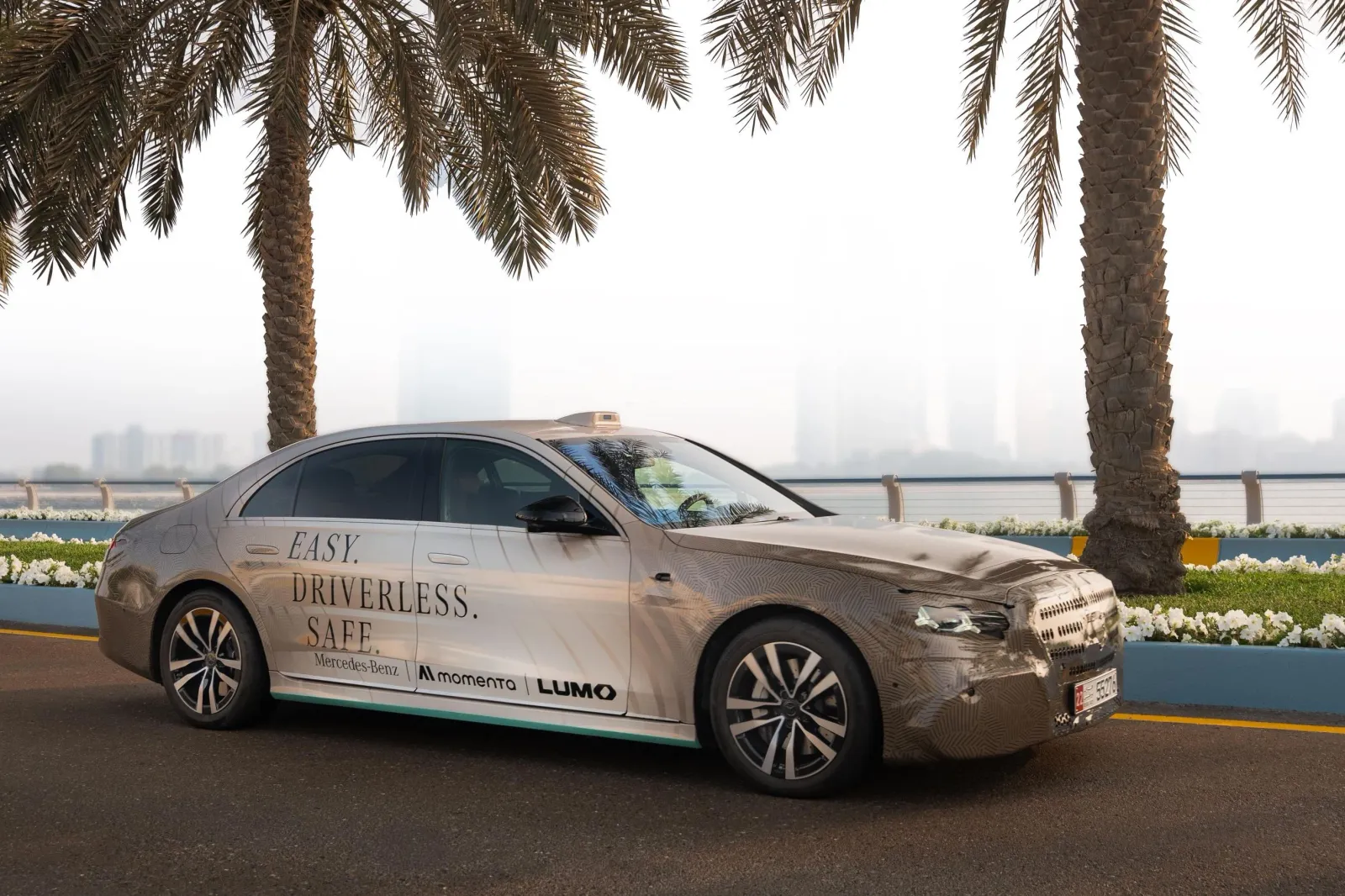
At this level of automation, a car can handle all driving tasks on its own, but only under defined conditions and within a specified range. The driver no longer needs to constantly monitor the system as long as it operates within its authorized operational domain. However, it’s important to distinguish this approach from assistance systems that still require human oversight. Mercedes hasn’t provided a specific timeline for launching these future Level 4 applications, but the German company is making good progress.
For Jörg Burzer, Mercedes’ head of technology, NVIDIA is now the automaker’s most important strategic partner in the field of autonomous driving. This collaboration also extends to automotive simulation and MO360, the digital ecosystem used in the group’s factories.
PLM.AI: Developing cars faster
But artificial intelligence won’t be used solely to make cars more autonomous. Mercedes also aims to leverage it to fundamentally transform its development methods. This is the entire goal of PLM.AI, a program in which the automaker plans to invest around 500 million euros. Behind this name lies a new product lifecycle management platform. Its role is to connect data from all areas of the company: development, procurement, production, sales, and after-sales service.
Also read
Google’s artificial intelligence is making its way into Renault vehicles
Today, designing a car requires many specialists to work together and involves managing a vast amount of information. A technical change can affect multiple components, as well as costs, safety, or manufacturing methods. With PLM.AI, Mercedes aims to centralize and make better use of this data to facilitate decision-making. The goal is especially to enable teams to identify the consequences of a technical choice much earlier. And the reported benefits are far from minor.
Mercedes claims it wants to reduce the development time for its new vehicles by about 17 months, or up to 30%. In some engineering tasks, efficiency gains could even reach 50%. These are ambitious goals that will obviously need to be verified on a larger scale.
AI Agents to Assist Engineers
To achieve these results, Mercedes relies heavily on AI agents. These tools are already being used in certain stages of automotive development, such as optimizing material costs, streamlining approval processes, detecting defects, and supporting software development. With PLM.AI, the manufacturer aims to go further by connecting these various applications. Instead of working on isolated tasks, artificial intelligence will be able to utilize data from multiple areas to analyze much more complex problems.
Mercedes serves as a prime example of optimizing a vehicle’s weight. Changing a component may seem simple, but this decision can affect its cost, performance in accidents, electronic functions, or even its assembly process in the factory. Specialized AI agents can analyze these various parameters simultaneously and present engineers with several possible solutions. The goal is not to let artificial intelligence design cars on its own, but to provide teams with a more comprehensive view of the consequences of their decisions.
The manufacturer emphasizes that decisions related to products will remain under the responsibility of human teams.
Half as many physical tests in the future?
The other major development relates to digital simulations. Thanks to artificial intelligence and better data utilization, Mercedes hopes to validate more technical choices even before manufacturing prototypes.
The manufacturer believes that the number of physical tests could eventually be reduced by half. This is an interesting prospect, as such operations often require significant resources, especially when multiple prototypes need to be produced or particularly long testing campaigns are undertaken. Of course, this does not mean the disappearance of real-world tests. They will remain essential for verifying vehicle safety, reliability, and performance. However, simulations could help focus testing efforts more effectively and reduce certain repetitive tasks.
To develop this new platform, Mercedes relies on two technology partners. CONTACT Software provides the core system foundation, called CONTACT Elements, while Siemens contributes its expertise in automotive design, simulation, and digital validation through digital twins. Mercedes retains control over the overall architecture, the data used, and the artificial intelligence models developed from it.
A transformation that is just beginning
With NVIDIA and PLM.AI, Mercedes aims to achieve two complementary goals. The first is to make its vehicles increasingly intelligent, particularly to advance toward more automated driving. The second aims to transform the way these same vehicles are conceived, developed, and brought to market.
Also worth reading
This AI is capable of extending battery life by 23%: how does it work?
These two projects are not at the same stage of development, and their promises still need to be tested in reality. The gains claimed for PLM.AI mostly appear to be targets rather than actual outcomes. As for future level 4 autonomous driving applications, there is no specific commercial timeline yet. But Mercedes’ direction is clear. Artificial intelligence will not merely be an additional technology in cars; it will also profoundly transform the way they are designed. In the long run, it will even reduce the time needed to bring an innovation from the design office to the road. We will be keeping a close eye on all of this.