
Germany exceeds the mark of 212,000 public charging points
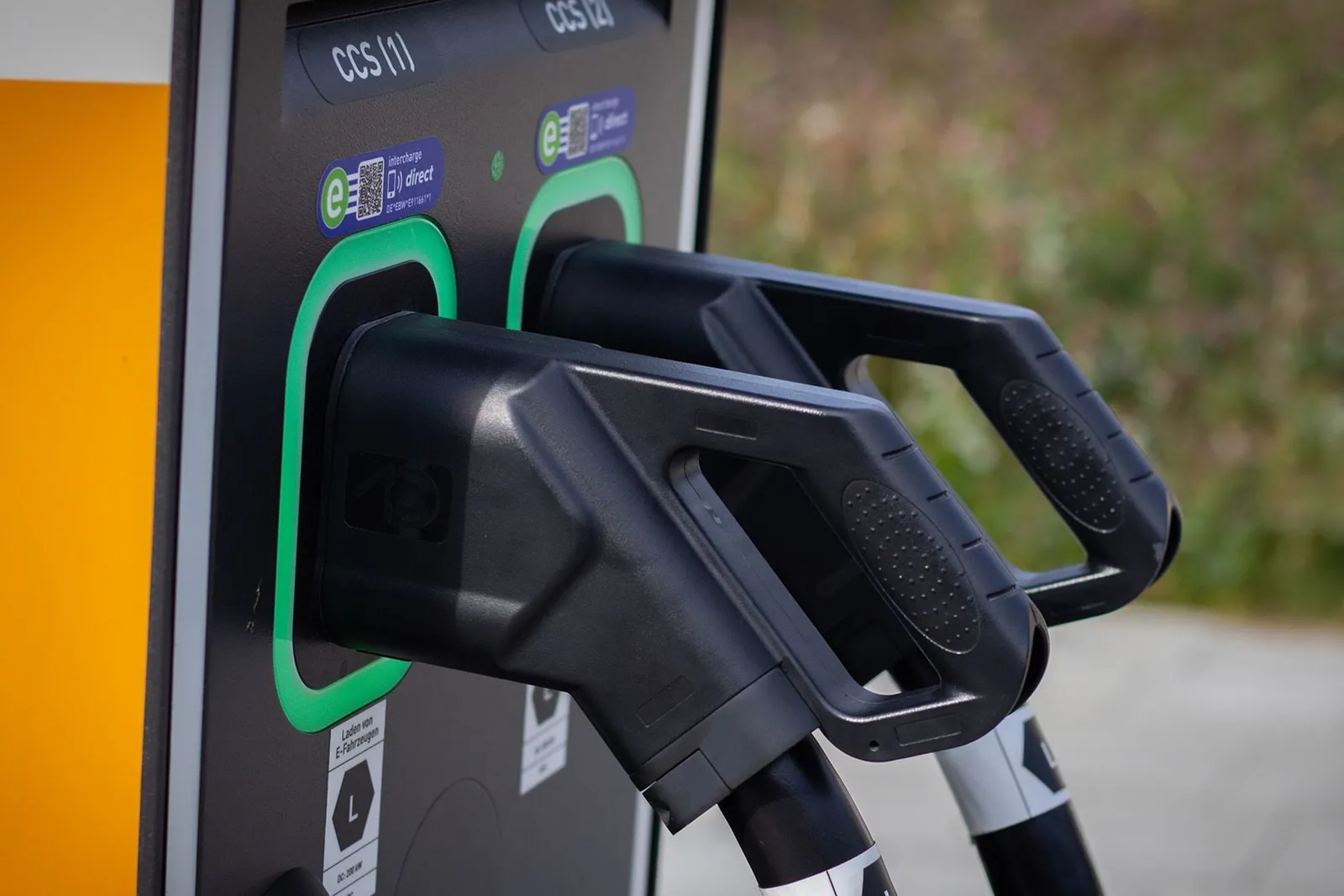
The Federal Network Agency has released new figures on the expansion of public charging infrastructure. As of August 1, 2026, 212,064 publicly accessible charging points were reported nationwide. This represents an increase of 28,663 charging points or 15.6 percent compared to the previous year.
Compared to the figure from July 1, which the Federal Network Agency listed at 210,611 charging points in its latest report, there was an increase of 1,453 charging points within a month. However, the actual number may change again later on.
The extent to which the authority raises its figures retrospectively through updates from operators is evident when looking at April: By June, the Bundesnetzagentur had already revised the count as of April 1 from the original 200,255 to 202,118 charging points – and now it lists 204,266 charging points for that date. The May figure of 203,951 charging points reported in June is likely also outdated by now. A direct comparison with it is therefore not very informative.
Back to the current analysis by the Federal Network Agency: The number of charging stations rose from 102,097 to 118,062 within a year, an increase of around 15.6 percent as well. The majority of this infrastructure still consists of standard charging points: As of August 1, 156,399 charging points with a capacity of up to 22 kW were registered, 16,652 more than a year earlier. This represents a 11.9 percent increase. The number of fast charging points with over 22 kW increased by 12,011 to 55,665, an even stronger rise of 27.5 percent.
The installed charging capacity continued to grow at a much faster rate than the simple count of charging stations. Overall, the Bundesnetzagentur reports around 9.22 gigawatts, up from 7.35 gigawatts at the same time last year. This represents a 25.5 percent increase. This figure refers to the cumulative rated capacity of charging installations, not the sum of the maximum capacities of all individual stations.
Charging stations over 299 kW are growing the fastest
Among standard charging stations, the power range of more than 15 to 22 kW still dominates. There are 114,589 such stations, which is 12.3 percent higher than the previous year’s figure. In the range of more than 3.7 to 15 kW, the Bundesnetzagentur counts 38,899 stations, representing an increase of 11 percent. The range up to 3.7 kW remains less significant with 2,911 stations (+9 %).
In terms of fast charging stations, the strongest growth is once again seen in the highest power categories. Stations with over 299 kW increased by 36.4 percent to 19,566 within a year. In the category of 149–299 kW, the number rose by 25.1 percent to 21,277 stations. Together, these two power categories now account for 40,843 fast charging stations.
The lower DC power categories are also growing, though to a lesser extent. There were 4,469 stations in the 59–149 kW range, 28.9 percent more than the previous year. The 49–59 kW category had 8,583 stations (+19.6%), while the 22–49 kW category saw an increase of 6.2 percent to 1,770 stations.
Nordrhein-Westfalen remains at the top
Nordrhein-Westfalen remains at the top of the state ranking. As of August 1, 41,646 publicly accessible charging stations were reported there. Bavaria follows with 40,421, and Baden-Württemberg with 35,791 charging stations. Lower Saxony ranks fourth with 21,075 charging stations.
On an annual basis, Nordrhein-Westfalen saw a 16.1 percent increase, Bavaria an 14.4 percent increase, and Baden-Württemberg a 13.5 percent increase. The percentage growth was particularly significant in Hamburg, where the number of charging stations rose by 38.6 percent to 5,939. Mecklenburg-Vorpommern also experienced above-average growth at 26.3 percent, reaching 3,285 charging stations.
After accounting for installed charging capacity, Bavaria leads with around 1.80 gigawatts, ahead of North Rhine-Westphalia at 1.71 gigawatts and Baden-Württemberg at 1.22 gigawatts. The different order compared to the charging station rankings shows that the number of connections alone only reflects part of the infrastructure available.
EnBW tops the operator rankings
As of August 1, the Federal Network Agency lists 12,914 operators of publicly accessible charging facilities. As of June 1, 2025, there were 11,669 operators — meaning the number increased by 1,245 or just over eleven percent in 14 months. The market remains highly fragmented, even though a few large providers supply a significant portion of the infrastructure.
Among the operators, EnBW mobility+ still leads significantly in terms of the number of charging stations. As of August 1, the company had 12,464 charging stations under its management. Followed by E.ON Drive with 4,942, Tesla with 3,951, EWE Go with 3,595, and BP, which includes Aral, with 3,149 charging stations.
In terms of installed capacity, EnBW mobility+ also takes the lead with around 1.13 gigawatts. Behind it are Tesla Germany with around 980 MW and BP with around 486 MW. Ionity ranks next with 461.5 MW, followed by Shell Germany with around 344 MW.