
Germany’s automotive industry: Since 2019, one in six jobs has disappeared
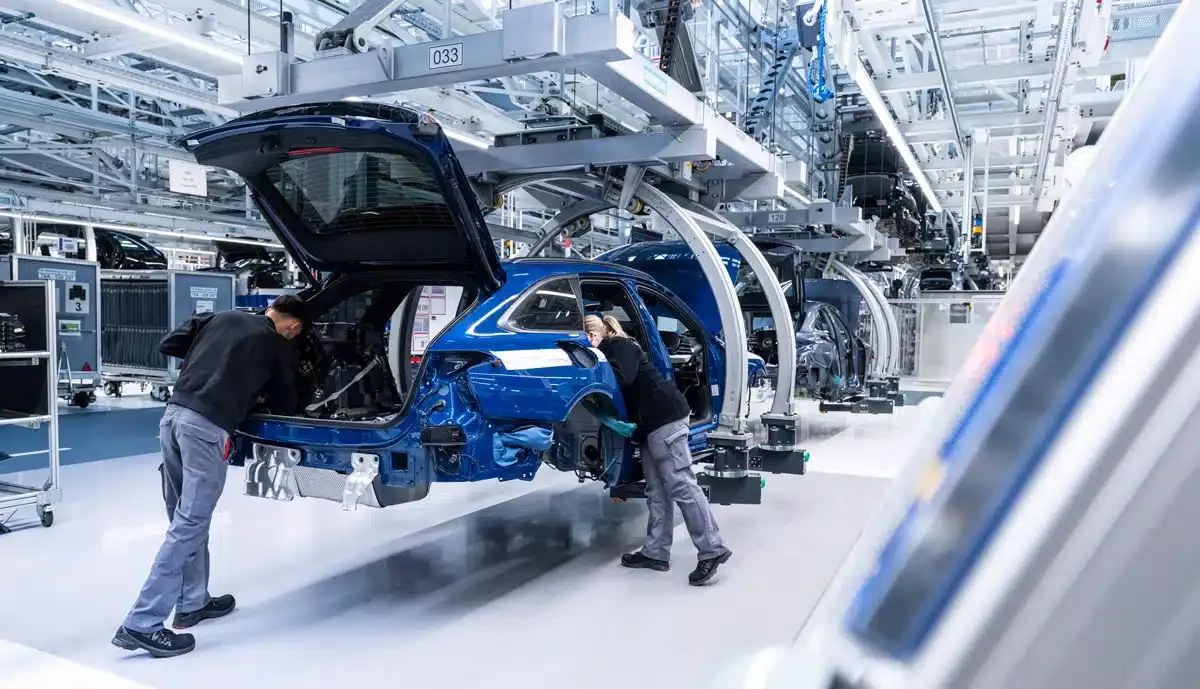
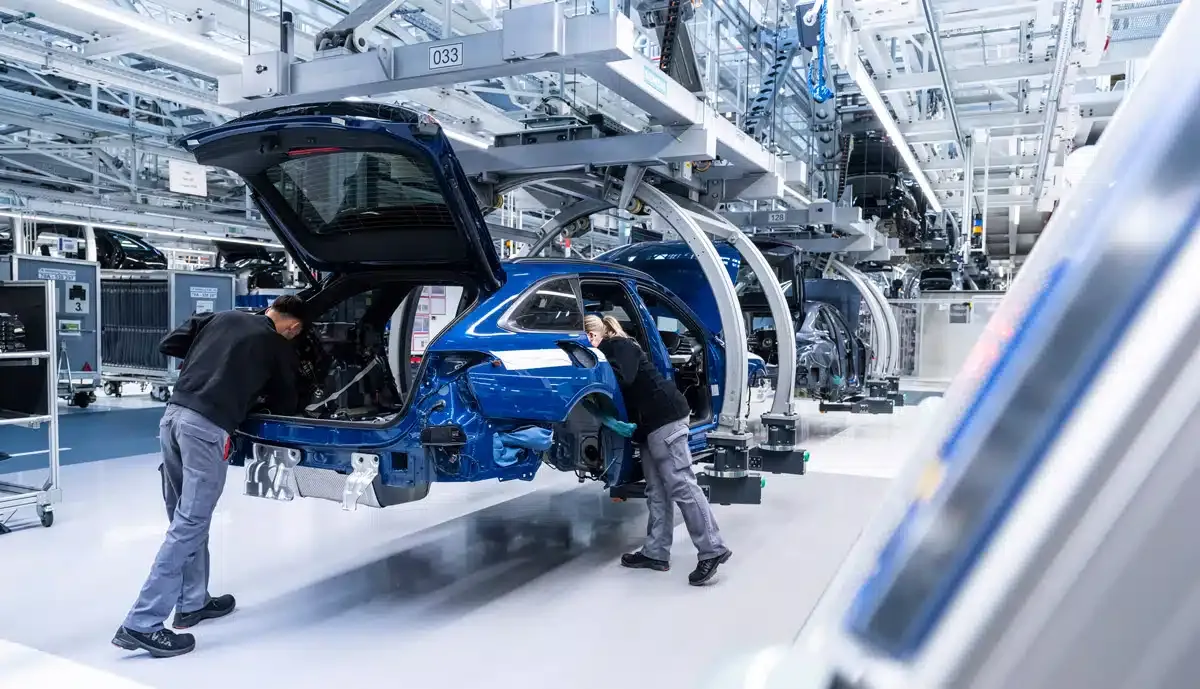
Image: Audi (illustrative)
According to an analysis by EY consultants, Germany’s industry continued to stabilize its sales in the second quarter of 2026: After a 1.7 percent increase in the first quarter, industrial sales from April to June rose by 4.7 percent compared to the previous year. In absolute terms, the industry generated 556.4 billion euros. However, it still falls short of the record level set in 2023, when sales in the second quarter reached 557.4 billion euros — by 0.2 percent.
The negative trend in employment continues unabated and has even intensified: By the end of the second quarter, the number of workers in industry was 2.7 percent below the previous year’s level. This meant that around 144,000 industrial jobs were lost within a year. Since the pre-COVID year of 2019, the total reduction in employment has amounted to about 379,150 positions—a decline of 7.0 percent. As a result, roughly one in fourteen industrial jobs in Germany has disappeared since 2019.
The automotive industry is under particularly strong pressure. Although sales dropped only slightly by 0.1 percent in the second quarter, indicating that the decline has nearly come to a halt, the number of employees decreased by 5.8 percent compared to the previous quarter. This means that almost one in seventeen jobs in Germany’s auto industry vanished within a year. Since 2019, around 142,400 jobs have been lost in this sector, a decline of about 16 percent.
The various industries showed very different performance in the second quarter. The metals industry was able to increase its sales significantly by 16 percent, partly due to rising raw material prices. At the other end of the spectrum, the textile industry experienced a 6 percent decline in sales, followed by the paper industry with a drop of just over 2 percent, and the machinery industry with a decline of 0.5 percent. The automotive industry stabilized at almost no change, with a slight decrease of 0.1 percent. In terms of employment, all the industries analyzed were below their levels from the previous year.
"Germany's industry is no longer in freefall terms of sales. After two consecutive quarters of growth, one can speak of stabilization at a low level," says Jan Brorhilker from EY in Germany. "But this stabilization is fragile and unevenly distributed. Some sectors benefit from more stable demand from Europe, while others remain under significant pressure. The industry is still a long way from a broad-based recovery."
In addition, job cuts continue unabated. Brorhilker said, “There is no sign of improvement when it comes to jobs—on the contrary. Many companies are still far from completing their restructuring processes. Given high labor costs, weak productivity growth, and increasing international competition, many companies plan to further intensify job cuts in Germany. Even if sales stabilize, we will see more job losses in the industry.”
The automotive industry remains a concern
According to Brorhilker, the persistent weakness of the automotive industry is particularly problematic. “The auto industry remains of central importance to Germany’s industrial landscape. When this sector struggles, it affects not only manufacturers but also numerous suppliers and many other industries. Therefore, the ongoing weak performance of the auto industry can act like a brake on the entire German industrial sector.”
Layoffs in the automotive industry are especially severe in this context. “The fact that one in six jobs in Germany’s auto industry has disappeared since 2019 shows just how substantial the structural changes are,” says the consultant. “The industry is simultaneously under pressure to cut costs, undergo transformation, and face increasing competition—especially from Chinese suppliers.”
The eurozone provides the key drivers of growth
In the second quarter, positive momentum mainly came from nearby foreign markets. Overall, German industry’s exports rose by 4.0 percent to around 296 billion euros. However, the performance of major export markets varied: sales to customers in the eurozone increased by 5.6 percent, making it the main driver of growth. Business with other non-European markets also grew by 2.9 percent but remained weaker, hindered by slower demand and trade policy pressures, including U.S. tariffs.
"Europe is currently providing significantly stronger growth impulses than many non-European markets," observes Brorhilker. "This is an important relief, but it isn't enough to resolve the structural problems of this region. The German industry must reduce costs in the short term and adjust its capacity to meet weak demand; at the same time, it must invest heavily in its competitiveness. It is precisely this simultaneity that makes the situation so difficult."
Brorhilker does not expect a rapid recovery in the coming months. “The pressure on German industry is likely to increase rather than decrease. The economic situation remains weak, geopolitical tensions persist, an impending energy crisis remains a serious risk, and competition from Chinese rivals is growing significantly. Two quarters of slight growth is a start, but not yet a turning point. Unfortunately, it still holds true: without a noticeable improvement in competitiveness and a clear economic upturn, job cuts will continue.”
Also interesting
About the author
Thomas Langenbucher is an expert in electromobility with professional experience in the automotive industry and finance sector. Since 2011, he has been covering electric vehicles, sustainable technologies, and mobility solutions for ecomento.de. Learn more.
Reader interactions