
Starting at 4,654 €: China's cheapest electric car has already produced 2,000,000 units in 76 months.
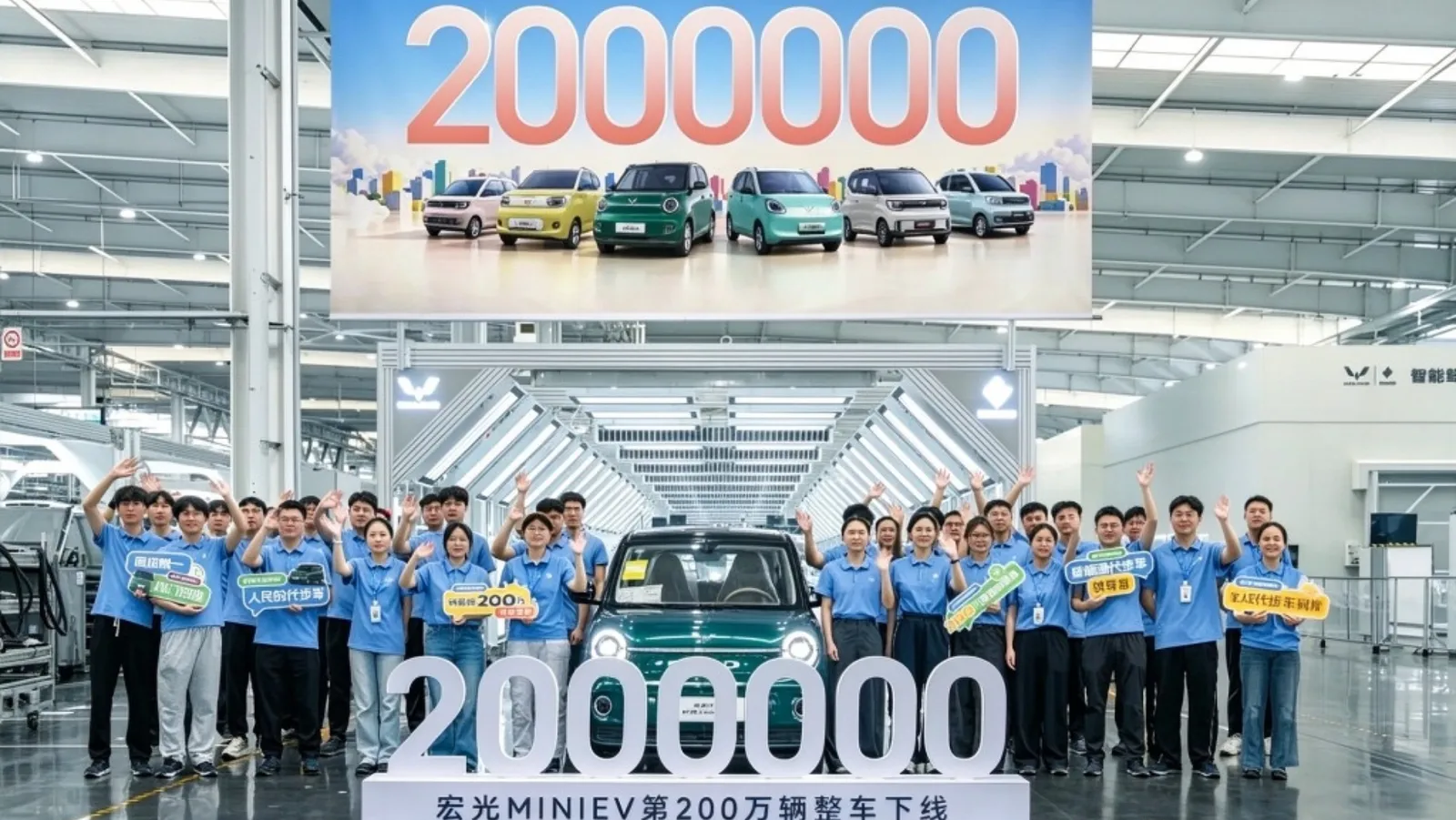
In July 2020, a small urban electric vehicle priced at 28,800 yuan, roughly 3,744 euros at the exchange rate, arrived at Chinese dealerships. It was the Wuling Hongguang Mini EV, manufactured by SAIC-GM-Wuling, a joint venture between China’s SAIC group and General Motors. Now, 76 months later, the brand has just announced that its cumulative sales have exceeded two million units.
However, this figure comes at the worst possible time for its category. Electric microcars, classified as A00 segment in China (one tier below our A segment urban vehicles), have suddenly lost a large portion of their buyers, and the Mini EV itself sells less than half of what it did a year ago. Still, it remains the best-selling vehicle in its class by a significant margin.
A best-seller that created its own market
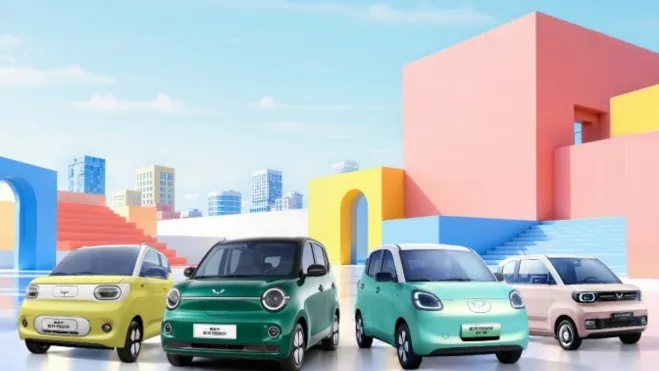
The Mini EV not only sold in large numbers but also drove growth across the entire category of affordable urban electric vehicles. According to the brand, it led A00 segment sales for 74 consecutive months, exceeded 55,000 units in a single month, and for several months was the best-selling electric vehicle in the world.
To maintain interest, Wuling expanded its lineup with Macaron, Gameboy, convertible, and four-door versions, each tailored more toward younger consumers who want cars to their liking. In fact, according to the company, 78% of owners have customized their vehicles. Today, the price range starts at 35,800 yuan and goes up to 55,800 yuan, which is equivalent to 4,654 to 7,254 euros.
China’s Best-Selling Electric Microcars
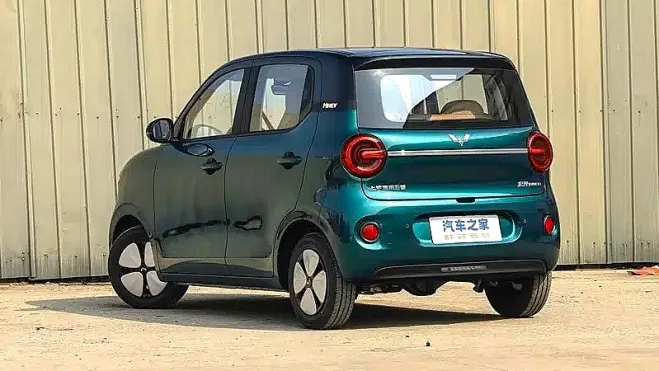
The dominance of Mini EVs is evident in microcar sales from April to September 2026:
Wuling Hongguang Mini EV: 79,115 units
Bestune Xiaoma: 38,596 units
Changan Lumin: 32,587 units
Geely Panda: 20,962 units
Kaiyi Shiyue: 5,558 units
Chery QQ Ice Cream: 5,210 units
Over those six months, Wuling’s vehicle sold more than twice as many units as its closest competitor, though the gap is narrowing. In September, it sold 13,630 units, compared to 12,473 for Bestune Xiaoma and 9,704 for Changan Lumin.
Why Fewer Electric Microcars Are Being Sold
According to the China Passenger Vehicle Association (CPCA), the A00 segment sold 1.08 million cars in 2022, 950,700 in 2023, 1.248 million in 2024, and around 1.036 million in 2025. In the first half of 2026, the decline accelerated, with only about 240,000 units sold, a 63% drop. The Mini EV followed a similar trend: after selling 435,598 units in China in 2025, sales from January to September this year were only 107,920, more than 60% lower.
There are several reasons. Starting from January 1, electric vehicles are no longer fully exempt from the purchase tax; instead, they pay half of it. For a car priced at 50,000 yuan, this means an additional cost of around 2,200 yuan, or about 286 euros. Moreover, the subsidies for trading in an old car are now calculated as a percentage of the new car’s price, which reduces the advantage of cheaper models. Customers also demand more space, longer range, and more features—things that electric vehicles in the A0 segment, one tier above, already offer at increasingly competitive prices.
The Bingo family takes over
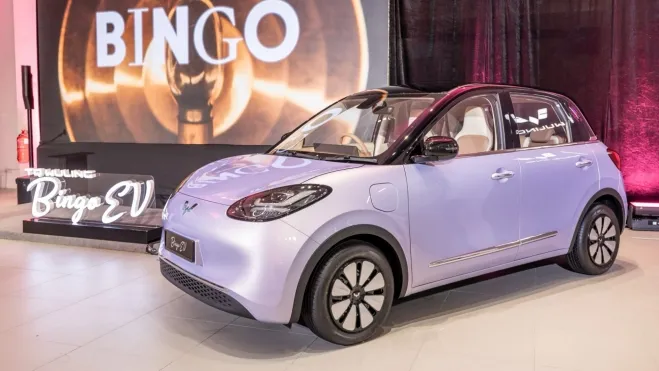
Wuling anticipated this trend and has been expanding its electric vehicle lineup to reduce its reliance on microcars. By September, its best-selling electric vehicle was no longer the Mini EV but the Bingo Pro, a slightly larger utility vehicle that sold 14,002 units. Following it were the Mini EV itself (13,630 units), the Starlight L (6,659 units), the Bingo S (6,028 units), and the Starlight 730 New Energy (2,875 units).