
Hidden charging stations in the sidewalk? That’s what we saw in Germany
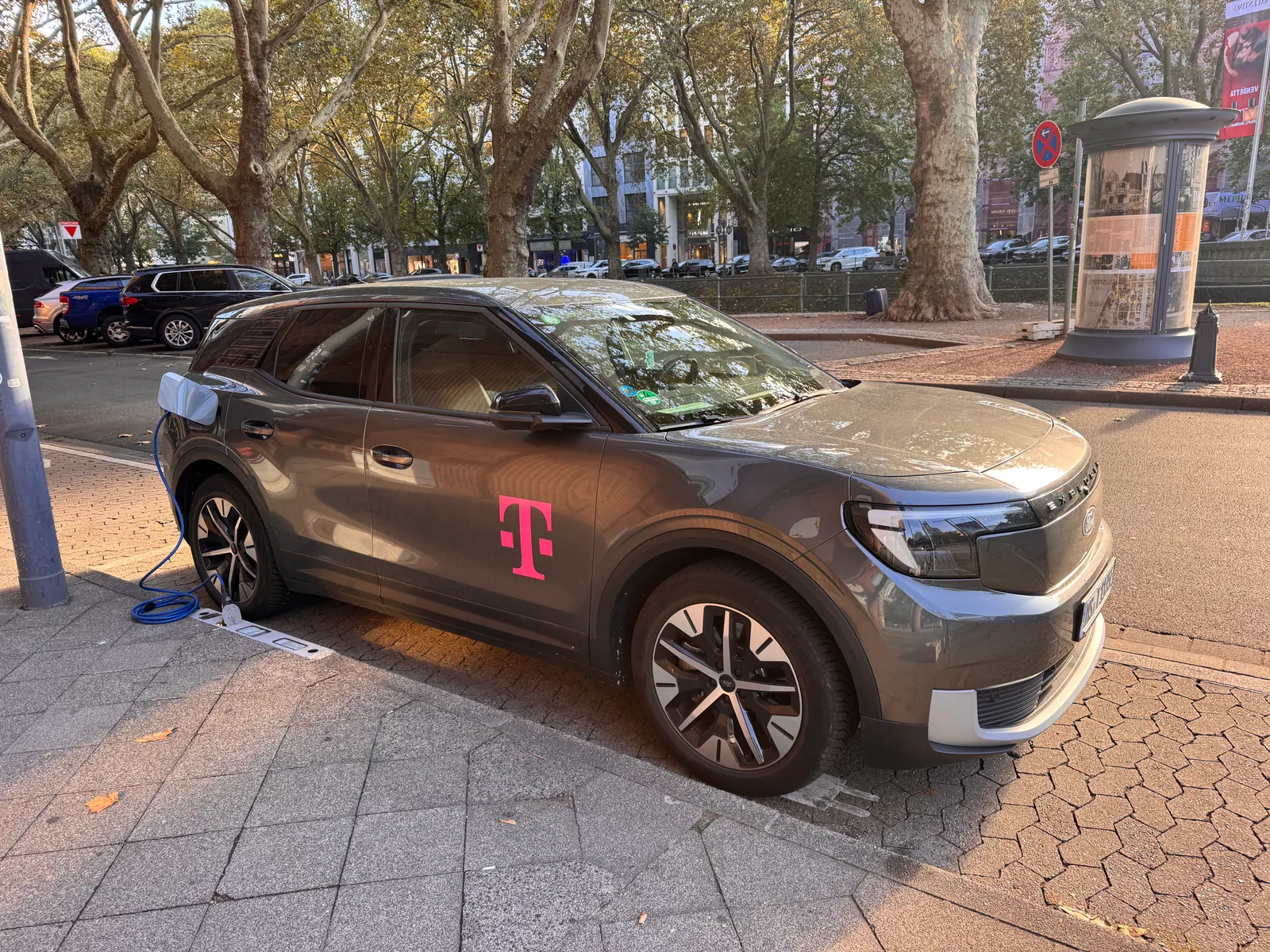
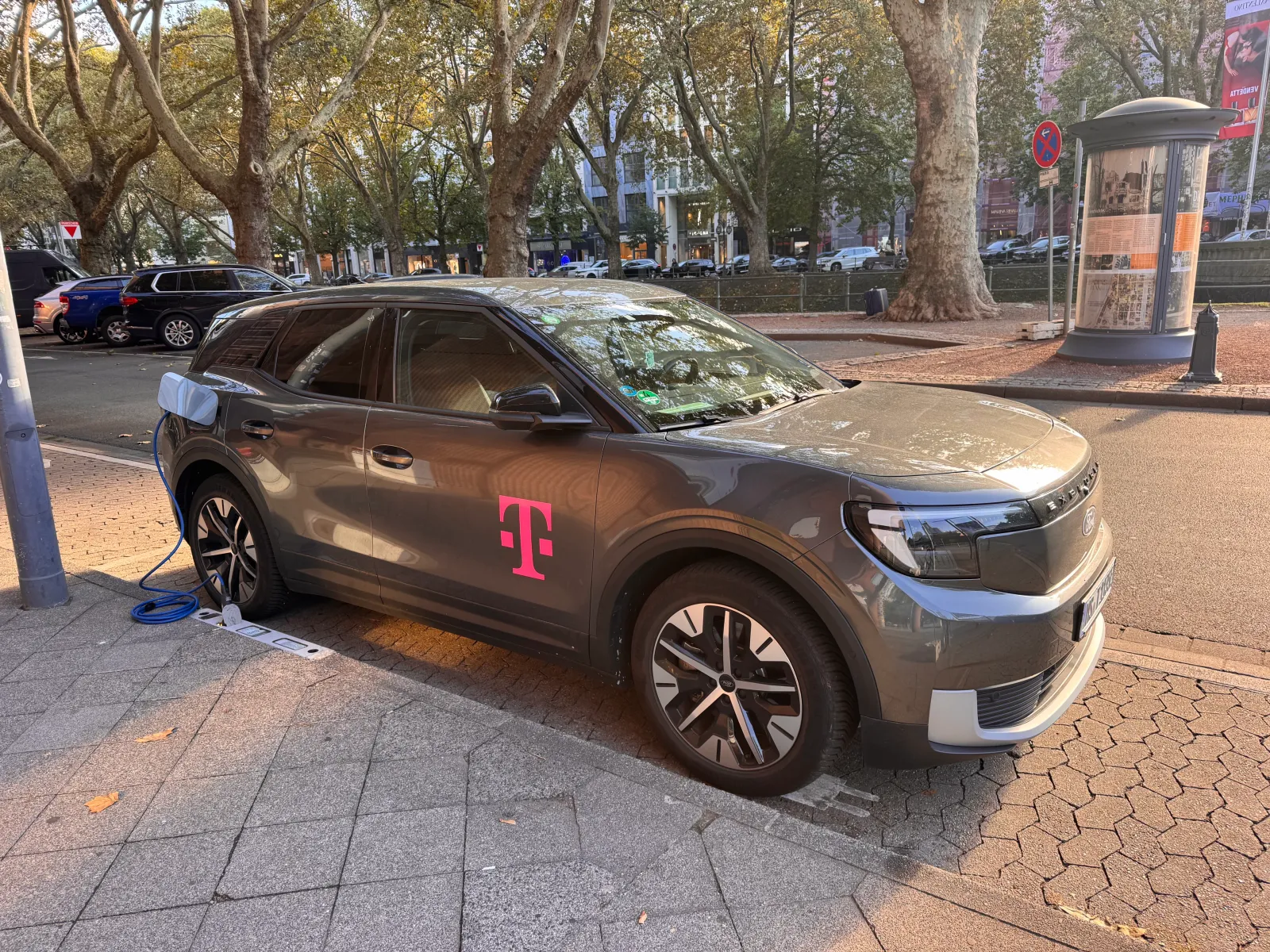
In Düsseldorf, charging stations are becoming increasingly discreet. The city is testing a solution integrated directly into the sidewalk: a simple hatch provides access to a charging port. It’s an amazing system we were able to observe on site that could also inspire French municipalities.
In urban areas, the growth of electric vehicles raises many questions. The increase in charging stations is one of the issues that requires careful consideration. In Düsseldorf, a rather original solution is emerging right at ground level. During a visit there to test the Mazda CX-6e, we saw these charging points integrated directly into the sidewalk edges.
A Hidden Charging Station in the Sidewalk
The system is developed by Rheinmetall, a German company best known for its industrial and defense activities. There is no vertical column or bulky enclosure here; all the electronics are housed in a specially designed border for this purpose. A small hatch allows access to a Type 2 socket, as you can see in these photos.
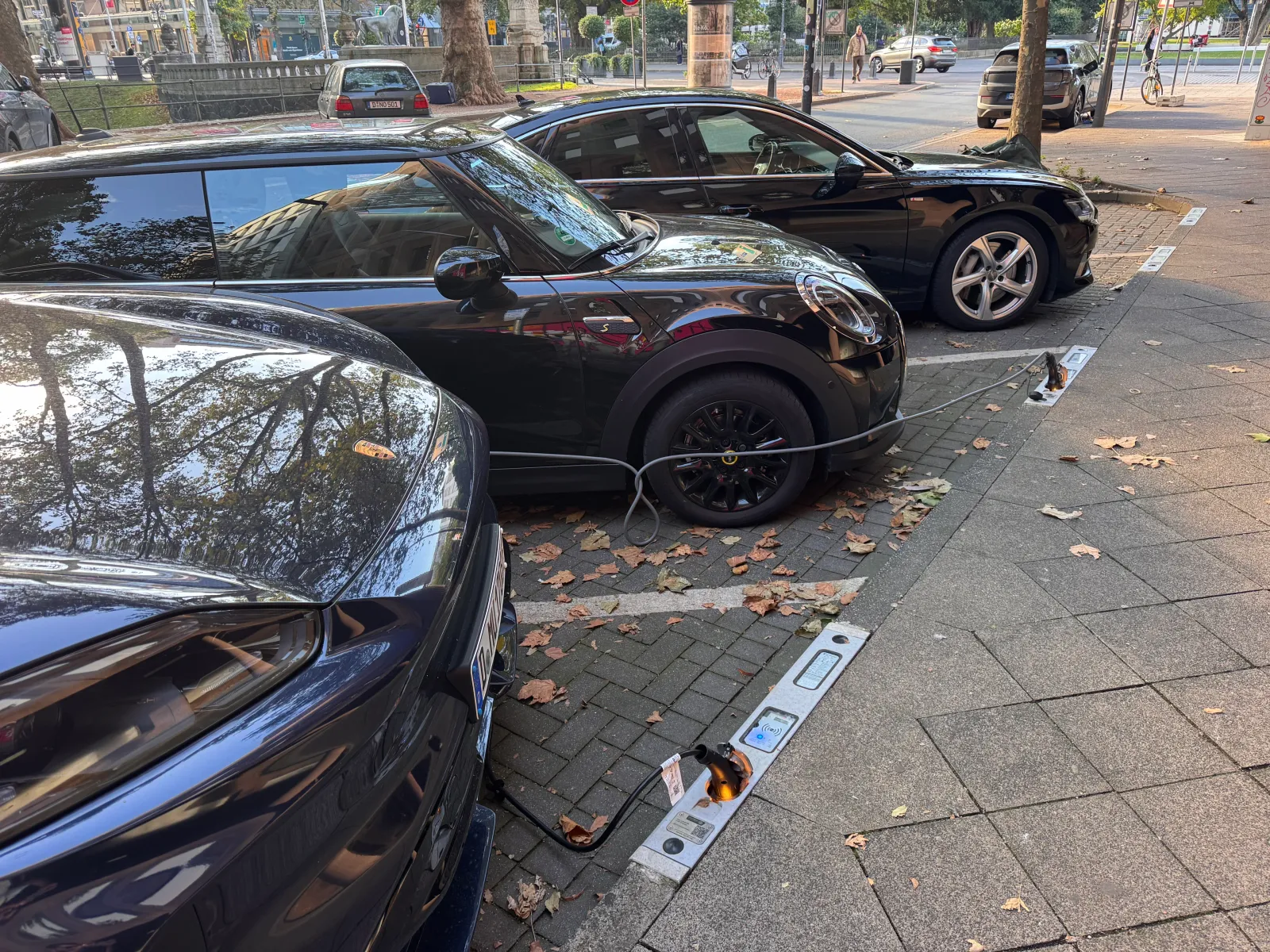
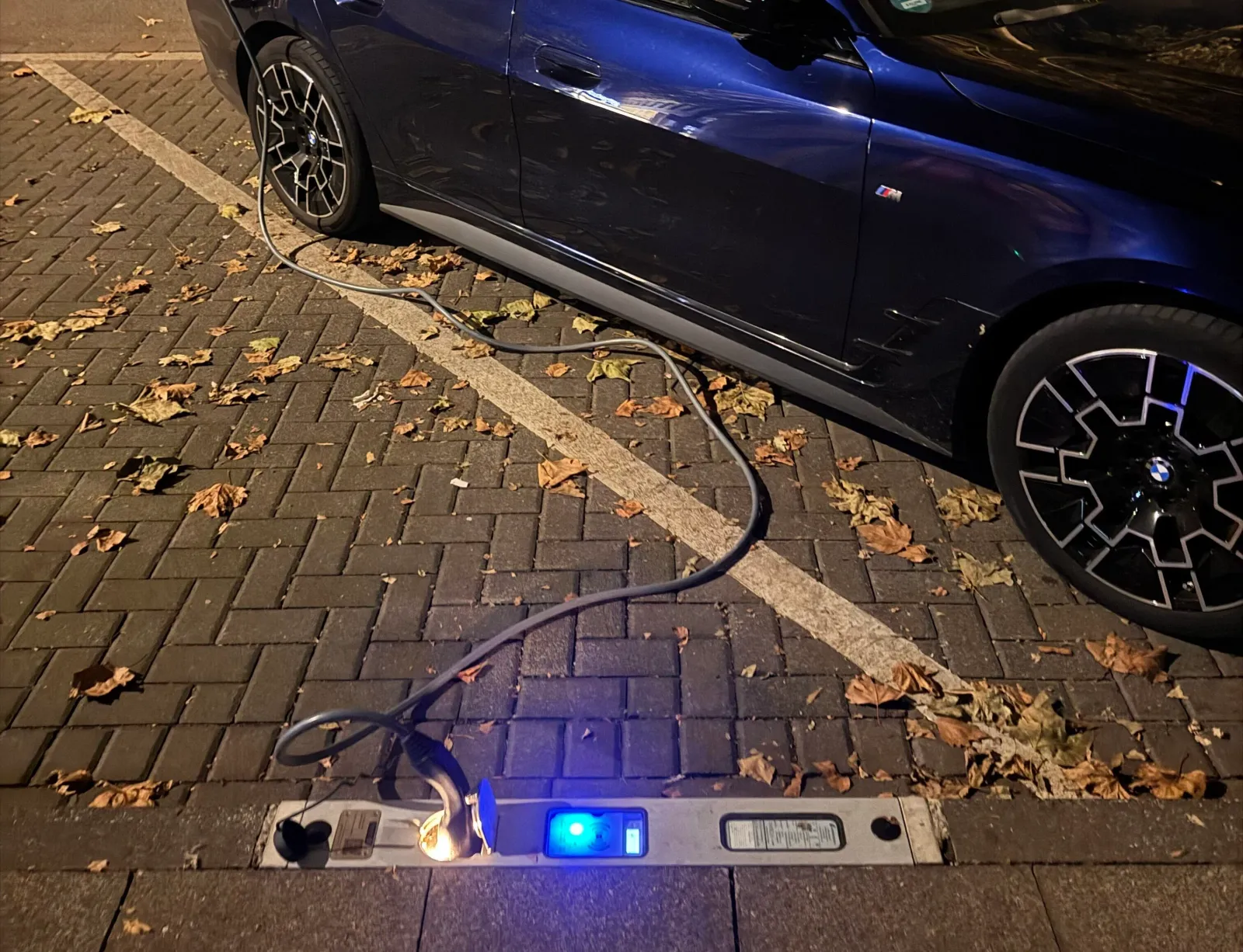
Contrary to what one might assume given its very compact design, this “pedestrian charger” is not limited to such a slow charging speed. The label indicates three-phase power of 400 V at 32 A. Rheinmetall claims a maximum power output of 22 kW in alternating current, although the actual capacity depends naturally on the car’s built-in charger.
Also read
This European capital will install street lights capable of charging electric vehicles
In essence, using this charger is similar to using a conventional charger. The driver connects their own cable and can authenticate themselves via RFID, QR code, or directly through the operator’s app. The module also has a 4G connection and can communicate with monitoring platforms using the OCPP protocol.
Less furniture on the sidewalks
There is clearly a visual and practical advantage. A traditional charging station takes up space. It can reduce the width available for pedestrians, and it must be admitted that it sometimes struggles to fit into old streets or those protected by urban planning regulations. Here, once the car leaves, there is hardly anything left to see.
The trade-off for this discretion is precisely... its discretion. Rheinmetall acknowledges that the lack of visibility of charging points was one of the issues identified during testing. They are difficult to spot. But thanks to ground markings and integration into apps, electric vehicle users should be able to find them.
The issue of weather resistance also arises when installing electronics just a few centimeters above the gutter. The module is certified IP68 (dust and water resistant) and features water drainage systems as well as a sensor that can stop charging in case of excessive liquid accumulation.
Why not in France?
Düsseldorf began installing the first series units in 2025. Several are now in use, particularly on Derendorfer Allee. It’s hard not to imagine such devices in French cities as well. Paris, Lyon, Bordeaux, and Strasbourg are also seeking to expand charging options...
Also read
What are these charging stations placed at a height of 3 meters?
The benefit is also (and especially) very practical for those who live in apartment buildings and do not have access to a home outlet. Currently, these drivers often have to rely on public charging stations, which are sometimes far from their homes or already in use. By increasing the number of charging points along streets, this type of system could allow them to plug in their cars at night and pick them up fully charged the next morning.
The charging station of the future may therefore not be faster or more impressive. It might simply become almost invisible.