
The Denza Z9 GT e3 has dropped to 329,800 yuan. Its 1,140 HP power output now rivals that of the Zeekra 001 AWD.
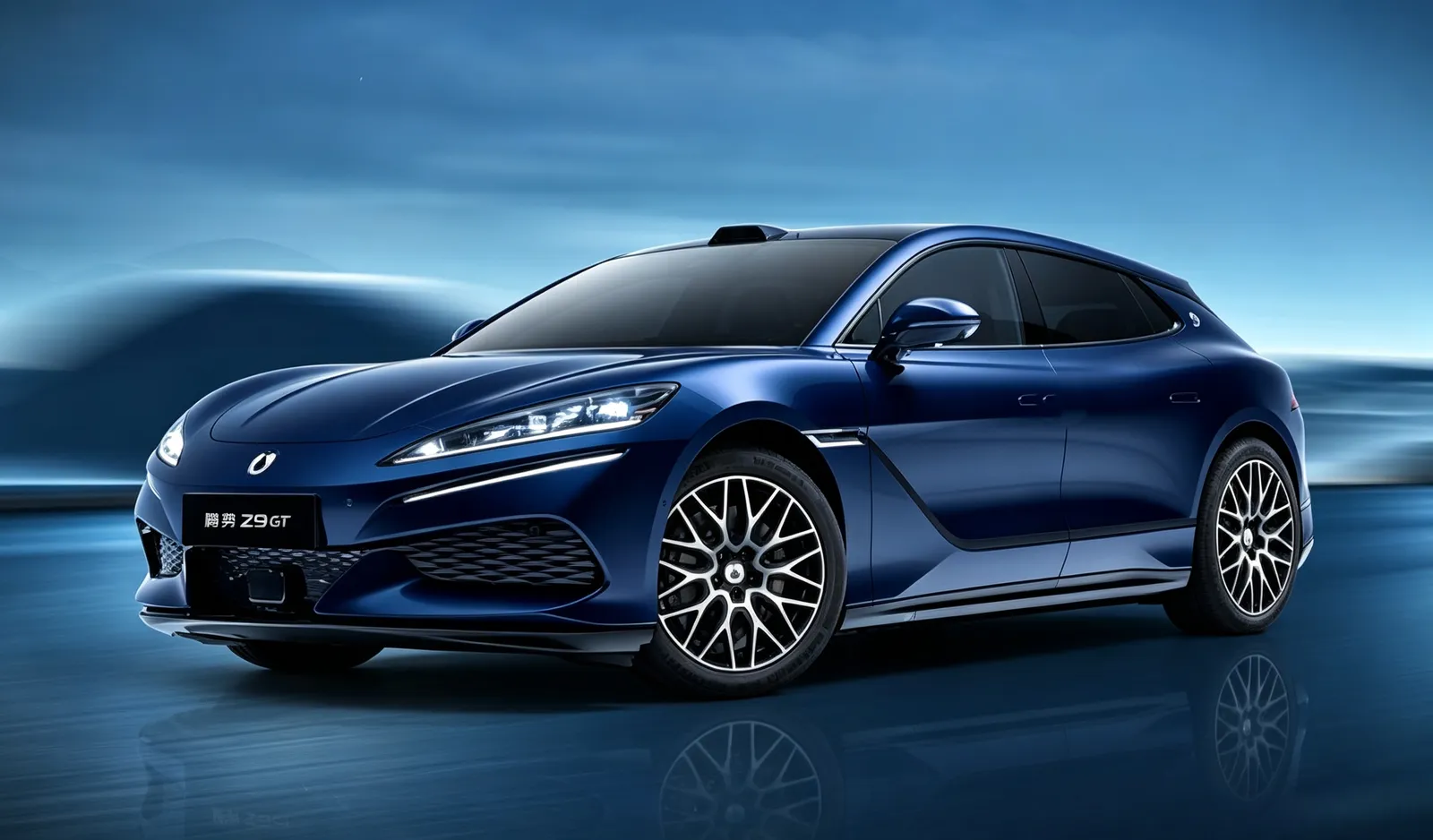
Denza has introduced a new version of the Z9 GT in China with an e3 powertrain, lowering the entry price to 329,800 yuan, or about $49,200. The car retains its three-motor setup, rear-wheel steering, and ultra-fast charging capabilities, but the manufacturer removed several expensive components, mainly the brakes.
Table of Contents
Show
Hide
For buyers, it’s a simple message: all the advanced driving technologies remain, while cuts were made in areas where they are easier to accept than sacrificing performance.
Same Platform, Lower Price
The new version is called the Denza Z9 GT e3 Flash Charge Premium and costs 329,800 yuan. This is 40,000 yuan less than the previous e3 Flash Charge Performance model, which was priced at 369,800 yuan. The difference represents 10.82 percent.
The most important thing is that Denza did not alter the car’s core design. It retains the same e3 layout with three engines: 230 kW at the front and 2 x 310 kW at the rear. This results in a total of 850 kW, or around 1140 horsepower, along with 1210 Nm of torque.
A 0-100 km/h acceleration time of 2.8 seconds seems extremely powerful, even though the Performance version is slightly faster at 2.7 seconds. In practice, this represents a difference that most drivers will not notice beyond the spec sheet.
Denza also kept elements that define this model’s character. Standard features include swivel rear wheels, the DiSus-A suspension system, and the God’s Eye 5.0 driver assistance system, also referred to as DiPilot 5.0 in some transmissions. The minimum turning radius is 4.62 meters, and the car also supports low-speed maneuvering and automatic parking.
It’s still a massive car. The Z9 GT is 5195 mm long, has a wheelbase of 3125 mm, features a shooting brake body style, and its size is closer to that of the Porsche Panamera Sport Turismo than most electric cars sold in Europe.
Where Denza cut costs
The price reduction didn’t come out of nowhere. The manufacturer simplified the interior components without touching the battery, drive system, or charging capabilities.
The most significant change relates to the brakes. The Performance version comes with carbon-ceramic discs, while the new variant features ventilated steel discs. According to Chinese specifications, the calipers and wheels also differ: the cheaper version uses 4-piston front calipers and 255/45 R20 tires, whereas the Performance version employs 6-piston calipers, carbon-ceramic discs, and 255/40 R21 tires.
A little of the cabin equipment was also missing, though Denza isn’t making a big deal out of it. And rightly so, because for most customers, what wasn’t taken is likely more important. The drive system, battery, charging architecture, and onboard electronics remained intact.
There’s one more catch. The cheaper version has a lower top speed of 240 km/h instead of 270 km/h. That doesn’t sound bad, considering it’s an electric car that probably weighs well over 2 tons, but it’s worth noting that the Performance version isn’t just a package for showing off in the showroom.
122.5 kWh and charging claims that need careful reading
The new version uses a BYD Blade Battery 2.0 battery with a capacity of 122.5 kWh. The manufacturer claims a CLTC range of 860 km, which is more than the Performance version’s 820 km as listed in the catalog.
In European terms, this should correspond to around 600 km WLTP, while Denza claims a maximum of 599 km WLTP for the Z9 GT in European markets. As usual, CLTC doesn’t reflect real-world range, and WLTP isn’t a guarantee for highway driving at 140 km/h either. With such power and size, miracles won’t happen.
The charging claims are more interesting. Denza mentions 10-70% charge in 5 minutes and 10-97% charge in 9 minutes. In another statement, the company even talks about a “full charge” in 9 minutes, which sounds like marketing gimmickry. It’s best to rely on the percentage figures since they are more concrete.
We must also keep in mind the weather conditions. Such results require the manufacturer’s appropriate infrastructure and very favorable conditions. Denza states that in extreme cold, charging time might increase by 3 minutes. As of the end of August, BYD Flash Charge’s network included over 10,000 stations in 332 cities across China.
At this stage, it’s a local advantage, not a European one. In China, it sounds impressive. In Europe and Poland, this argument isn’t as strong yet.
Denza cuts prices where Zeekr stands
The most interesting development is market-related. The new Z9 GT e3 has a price point around that of the Zeekr 001 AWD, which costs 329,800 yuan in China. The problem for Zeekr is that its most powerful “regular” AWD version offers 580 kW, while Denza delivers 850 kW.
The difference is 270 kW, which translates to about a 362 HP advantage for Denza. Of course, power alone doesn’t solve everything, as weight, performance consistency, software, and behavior at high speeds also matter. But on paper, BYD has indeed put forward a very aggressive offer.
This isn’t movement in a vacuum. Sales of the Z9 GT in China have clearly risen in recent months. Retail deliveries increased from 712 units in March 2026 to 3,969 in April, then to 6,025 in June, before dropping by 11.3% month-on-month to 5,344 units in July. Despite this, the model accounted for 29.6% of Denza’s domestic sales of passenger cars.
In short: Denza isn’t saving a weak product here; it’s trying to push harder on a model that has already started eating into market share.
What about Europe?
Denza is already selling the Z9 GT in Europe. In Germany, the electric version starts at around 115,000 euros, while in the UK it begins at 105,000 pounds. The plug-in hybrid is cheaper in the UK, starting at 95,000 pounds.
There is no confirmation yet as to whether the new cheaper version of the e3 Premium will reach foreign markets. This becomes interesting because the price gap between China and Europe is enormous. In China, it’s priced at around 50 thousand dollars, while in Germany it’s around 115 thousand euros.
Of course, there are tariffs, homologation, equipment, logistics, and profit margins to consider. But even after accounting for these costs, the difference remains staggering. If Denza does not bring more competitively priced variants to Europe, the Z9 GT will remain an exotic showcase of BYD’s capabilities rather than a real volume player.
And this seems to be the core of the whole situation. In China, Denza is making its e3 drive technology more accessible. In Europe, it still sells more as a brand image than as a product with a competitive price.
On paper, the new version of the Z9 GT seems like a very clever cost-cutting measure, as the customer loses mainly the track-specific equipment while keeping what can impress them in everyday use. If such a configuration were to arrive in Europe at a reasonable price, several German premium brands would have less peaceful sleep. What do you think? At what price in euros or zlotys would the Denza Z9 GT become genuinely appealing in Europe?