
More charging stations without expanding the power grid? Ionity has a solution!
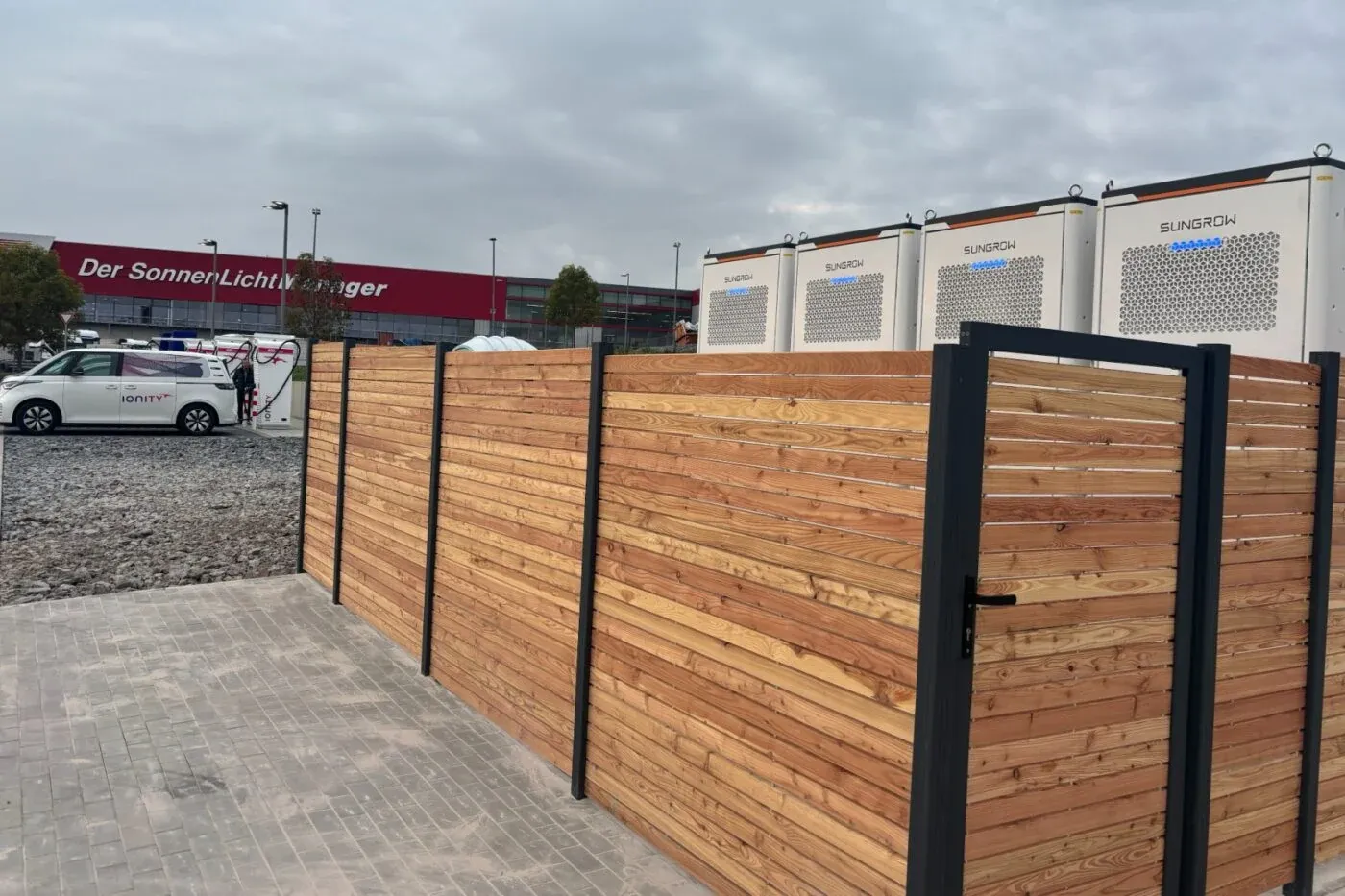
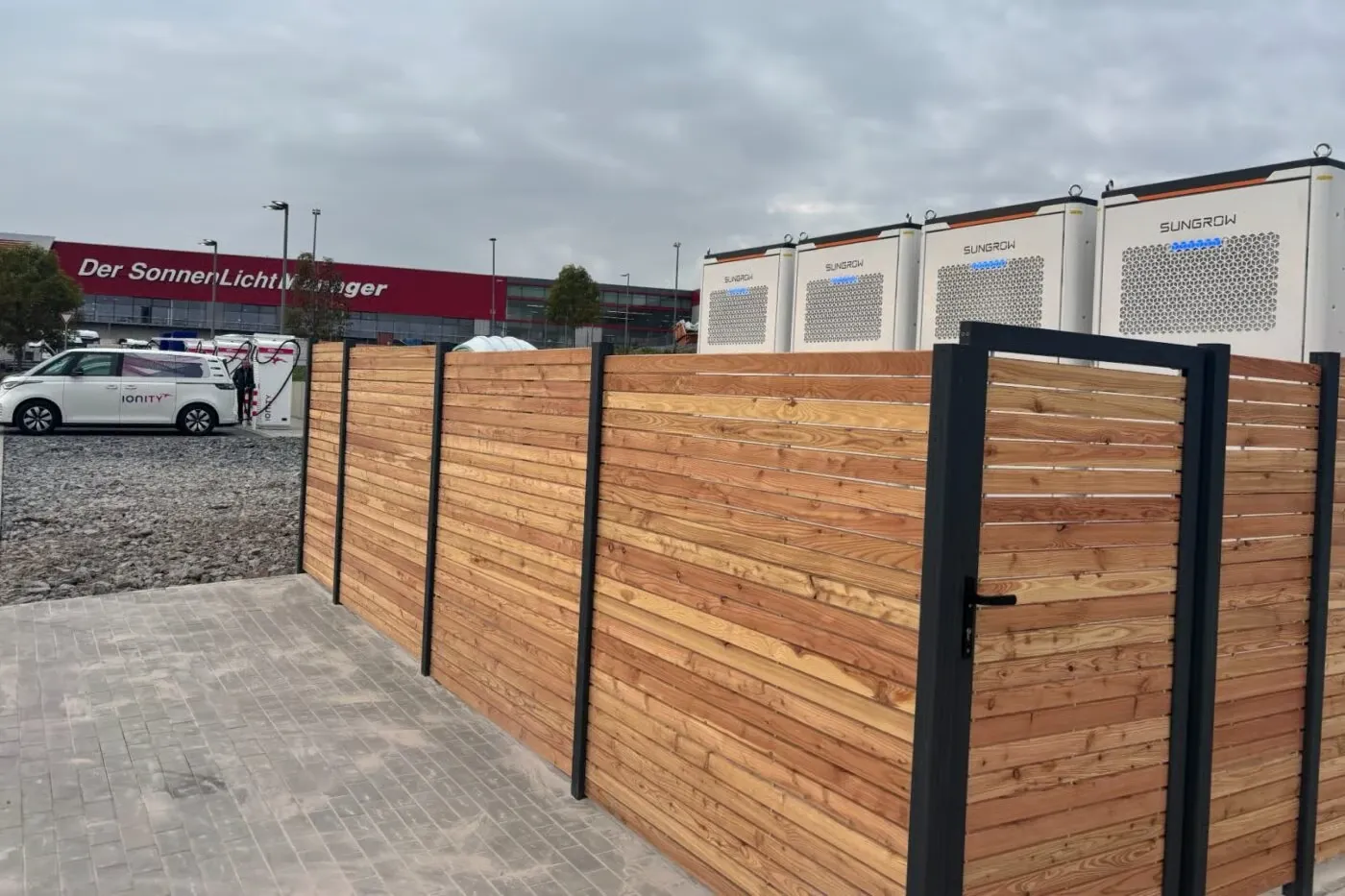
Ionity aims to accelerate the development of its fast-charging network in Europe. To overcome the limitations of the electrical grid, the company plans to install battery storage systems at around fifty stations starting in 2027. This approach could allow for an increase in charging stations without having to wait years to improve electrical infrastructure.
Installing new fast-charging stations does not always suffice to increase a charging station’s capacity. The electrical grid must also be able to supply enough power to power multiple vehicles simultaneously. And that is precisely where things get complicated. The work required to strengthen the connections can take several years. To avoid such delays, Ionity has chosen to rely on another solution: installing large batteries directly at its stations.
Giant batteries for more charging stations
The first example detailed by Electrive is located in Wertheim, Germany. At this station near the A3 highway, Ionity has recently installed a storage system supplied by the Chinese company Sungrow. With a capacity of 1,028 kWh, it helps supplement the electricity coming from the grid. The number of charging points has increased from four to six, with two more locations planned to be added soon.
This development is possible without waiting for improvements to the existing electrical connections, a process that could take up to three years. The principle is relatively simple: batteries store electricity when demand is low and release it when vehicles are charging simultaneously. This helps reduce the peak power demands on the grid and increases the station’s capacity.
About Fifty Stations by 2027
Ionity does not plan to stop at this initial installation. The company aims to deploy around 50 charging systems across Europe by 2027, with a combined capacity exceeding 20 MWh. Another project is already in preparation in Hemsbach, still in Germany. This future station will feature twelve charging points, a photovoltaic installation of over 223 kWc, and a battery with a capacity greater than 2 MWh.
The solar electricity generated on site can thus be stored to power the charging stations later. In the long term, Ionity envisions using these installations to provide services to the power grid and even participate in electricity markets.
Advancing a Circular Economy
This strategy comes at a time when another market is emerging: the used automotive battery market. According to Felix Wagner, head of the German company Circunomics, which specializes in battery refurbishment, this sector could experience strong growth over the next five years. Batteries intended for replacement, repair, or reuse could then represent a market worth 10 to 20% of the market for new electric vehicle batteries.
Also read
Batteries: Volkswagen expands its electric strategy to energy storage
This development is related to the aging of the first generations of Renault Zoé and Nissan Leaf, some of which are nearing the end of their lifespan or have their battery warranties expired. However, not all of these batteries will necessarily be reusable in facilities like Ionity’s. Stationary storage requires large quantities of identical modules in comparable condition. Yet, the batteries sourced from the used car market come from different vehicles.
Still according to Felix Wagner, as cited by Automotive News Europe, approximately 50 to 60% of batteries that are still reusable could be used for stationary storage, while some would be reintegrated into vehicles. Around 30% of the collected batteries would be sent directly to recycling. This sector could therefore grow in importance over the coming years, even though Ionity has not announced plans to use second-hand automotive batteries in its stations.