
More autonomy for the electric Renault Kangoo E-Tech
Since its launch in 1997, whether as a utility vehicle or a gasoline or diesel ludospace, the Renault Kangoo has continued to evolve. Its electric version, introduced as early as 2002, has seen significant technological advancements in battery technology. This is evident from the increase in range, which rose from around 80 km with nickel-cadmium cells to over 350 km with the lithium-ion NMC (nickel manganese cobalt) chemistry. And all this while it remains manufactured in France.
52 kWh for 354 km of range
In electric vehicles, among all the improvements made from one model year to another, greater range and better charging capabilities are particularly anticipated. The Renault Kangoo E-Tech, available as a van or utility vehicle, now features an NMC battery with an energy capacity of 52 kWh, the same type used in the Renault 4 and 5 E-Tech models.
Thanks to this new battery, depending on the version and equipment options, the WLTP mixed-cycle range (still under approval) is expected to reach up to 354 km, enhancing its versatility. Previously, it was limited to 285 km with the 45 kWh battery pack.
The charging curve has also improved, with the maximum power rising from 80 to 100 kW. As a result, 30 minutes will be sufficient to charge the battery from 15% to 80%, restoring up to 240 km of range, compared to 179 km with the previous battery pack.
This significant improvement is largely due to the addition of preconditioning, which prepares the battery before reaching a charging station. It can be activated manually via a control on the dashboard or automatically by the system if the route has been entered in the EV Route Planner.
AC Charging at 11 or 22 kW
For alternating current, the option is either 11 or 22 kW. Using a compatible charger, the same 15% to 80% charge will take 3 hours and 30 minutes or 1 hour and 45 minutes. Users who want to top up their battery during lunch breaks should opt for the higher power option. With 22 kW, it’s possible to gain enough range to travel about 70 km in just thirty minutes.
With the smartphone app, charging can be managed remotely. Thanks to the V2L function, which allows energy to be supplied from the traction battery, a professional can power their electric tools, and a family can use electricity for a party or camping trip, for example.
It should be noted that the heat pump equipped in the new Renault Kangoo E-Tech will also contribute to improving the efficiency of the powertrain.
New Engines
The electric Kangoo also features new engines: 100 kW (135 hp) with 270 Nm of torque, or 115 kW (155 hp) with 300 Nm. These replace the previous 90 kW (120 hp) engine with 245 Nm of torque. “This increase in power and torque provides better responsiveness while enhancing driving pleasure during acceleration and overtaking,” explains Renault.
In addition to the Eco and Normal driving modes that can be activated with a simple button on the dashboard, the higher-end version offers a Perfo mode “useful especially when the vehicle is fully loaded.”
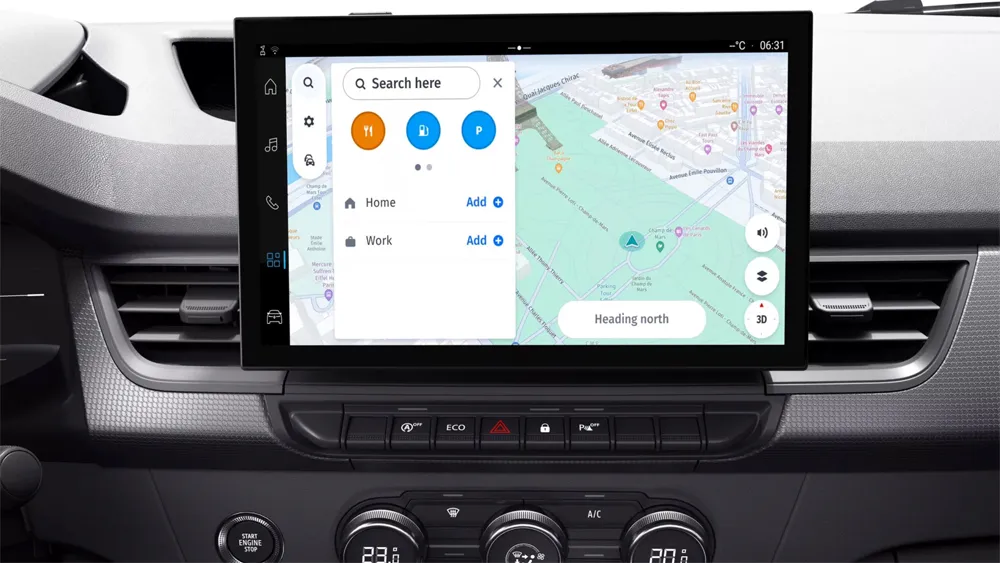
With two levers behind the steering wheel, the driver can adjust the regenerative power. Thanks to this new feature, especially when using the free-wheel mode, the most experienced users can achieve lower fuel consumption, which is displayed on the new 10-inch OpenR Link screen (up from 8 previously) that is “of better quality and more responsive.” The system will also support smartphone integration via Apple CarPlay and Android Auto.
Made in France
Approximately 4.3 million Renault Kangoo vehicles of all power types have been produced at the Maubeuge plant. Last year, the milestone of 100,000 electric models was reached. New models will continue to be assembled at this facility in the north, using batteries produced in Douai (59) as part of the Electricity production hub, electric motors manufactured in Cléon (76), and chassis and suspension components sourced from Le Mans (72).
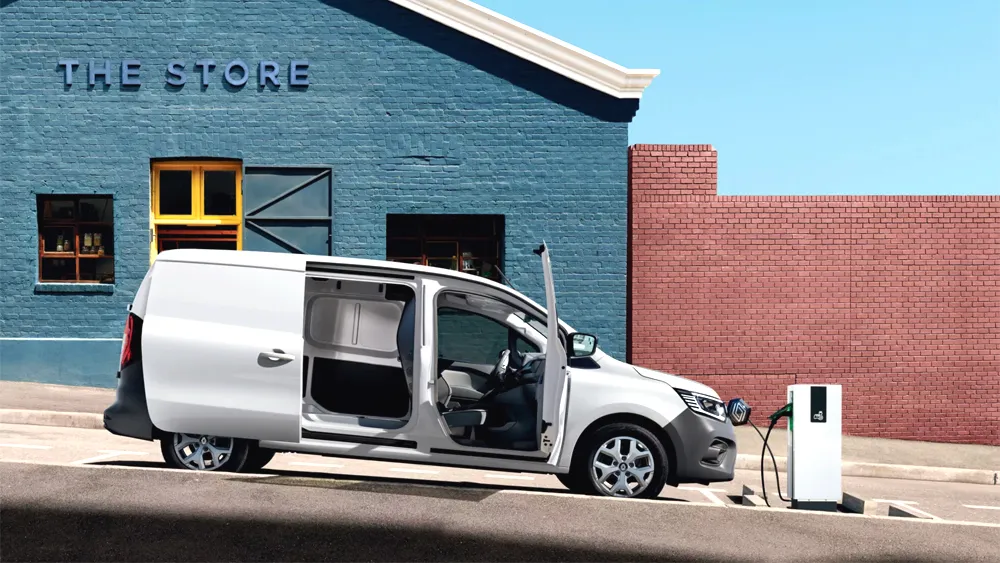
The new Renault Kangoo will also be available in gasoline and diesel versions, offering two lengths: L1 at 4.49 meters and L2 at 4.91 meters. In the longer version, both the passenger and cargo configurations will provide users with “the widest sliding side doors in their class,” making it easier to load long items or for passengers to access the rear area. Up to seven passengers can fit in a version designed for this purpose.
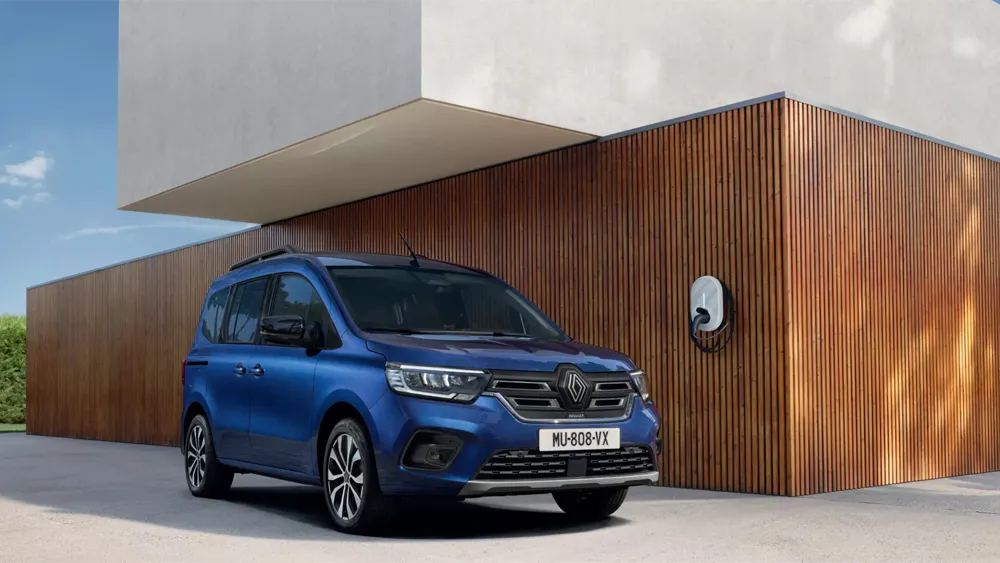
For the utility versions, professionals can choose between configurations with 2 or 3 seats in the front, and even a version with seating for 5 passengers using the extended cabin layout.
The pricing schedule will be released by the manufacturer soon.