
Daimler-Truck survey: Many fleet decision-makers consider electric trucks to be more cost-effective than diesel trucks
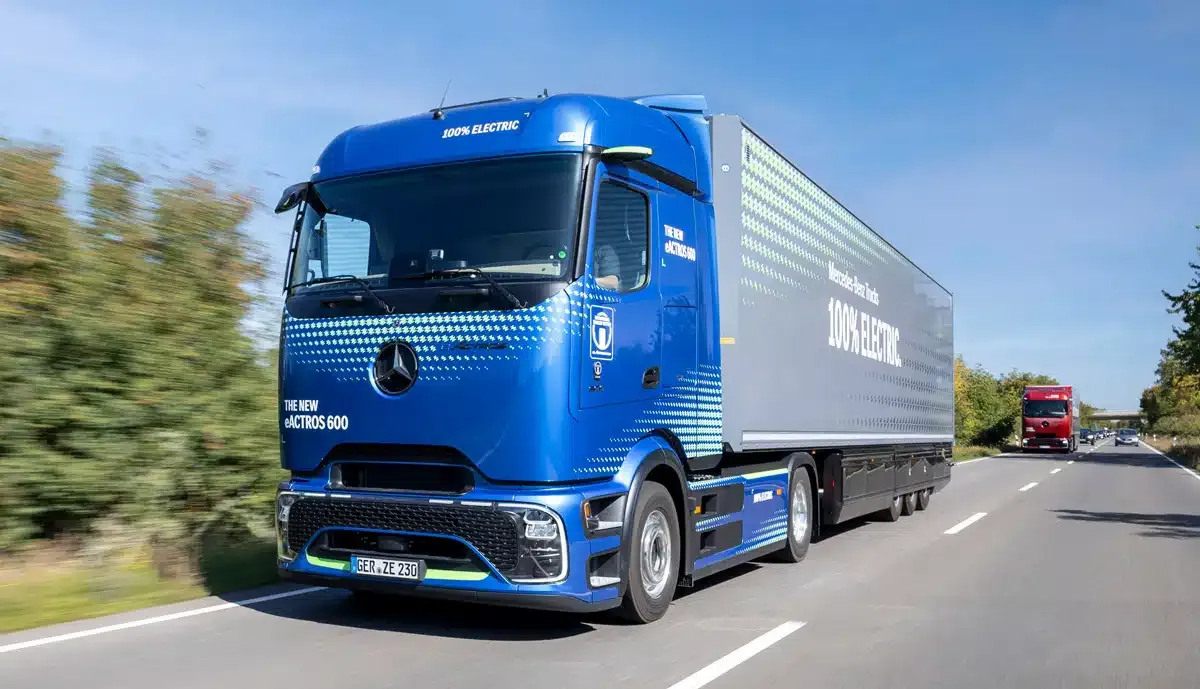
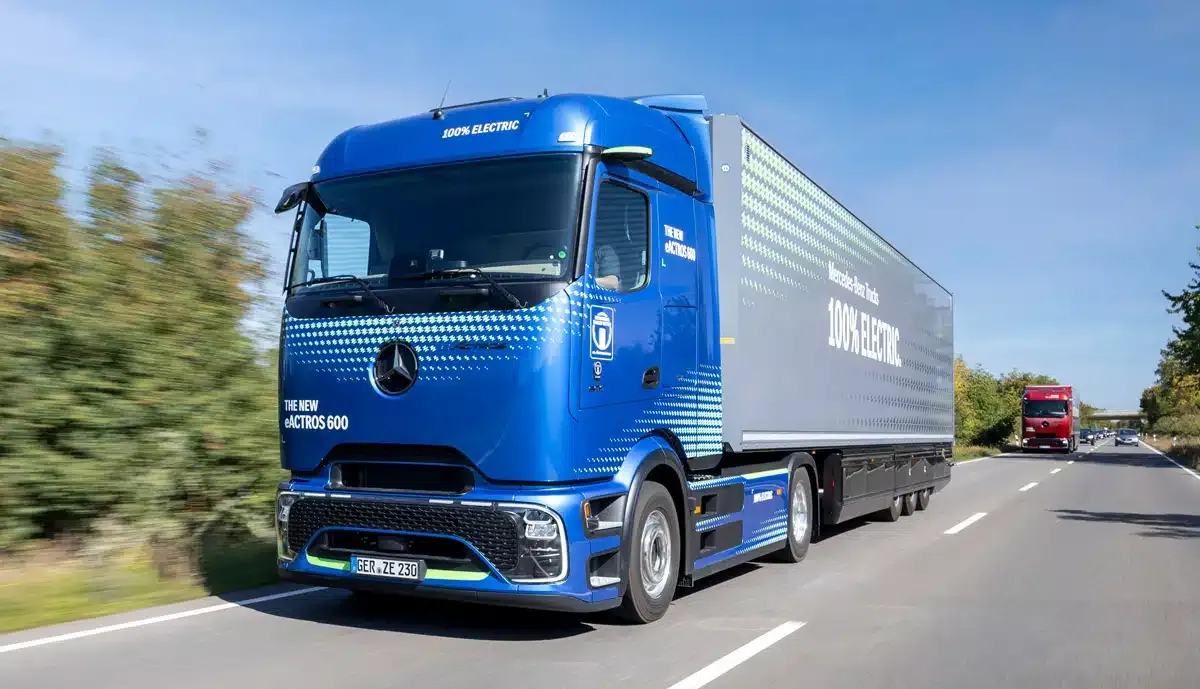
Image: Daimler Truck
According to the company, Mercedes-Benz Trucks, part of Daimler Truck, remains the market leader in Europe for heavy and medium-duty locally zero-CO₂ trucks in the first half of 2026, holding around 38 percent of the market share. According to a survey by the truck manufacturer, many fleet managers already consider electric trucks to be a more cost-effective alternative to diesel trucks.
According to the analysis, over 40 percent believe electric trucks offer a more cost-effective solution from a total cost of ownership perspective. 16 percent think both technologies are roughly on par. Only about a quarter of respondents see economic advantages with diesel trucks.
Almost a quarter of the fleet operators surveyed are already using battery-electric trucks. At the same time, the survey shows that further growth depends heavily on the development of charging infrastructure. As a result, market penetration remains low: in 2025, heavy battery-electric trucks accounted for only 2 percent of new vehicle registrations in Europe.
Daimler Truck conducted this non-representative survey among around 200 fleet decision-makers in Germany, France, and the UK—three of Europe’s largest truck markets—on various propulsion technologies. Achim Puchert, CEO of Mercedes-Benz Trucks, said, “Our customers are already using battery-electric trucks economically in many applications, including long-haul transport. To accelerate this transformation, we need to strengthen the entire ecosystem—and above all, advance the development of charging infrastructure. This way, we can create the conditions for individual success stories to become a new standard in transportation.”
Electricity costs are predictable, but charging infrastructure remains uncertain
Approximately two-thirds of those surveyed consider electricity costs to be at least as predictable as diesel costs. However, when it comes to the predictability of electricity access, that is, the availability of charging infrastructure, the majority—specifically 61 percent—see electric mobility at a disadvantage.
“We gain valuable practical experience daily with our battery-electric trucks. The technology works,” says Stefan Hohm from Dachser, one of Europe’s leading logistics providers. “The next challenge is to identify the right use cases and scale up this transformation across a wider range. For this, our transport partners need investment certainty, along with reliable development of energy and charging infrastructure, in addition to economic and legal frameworks such as toll exemptions.”
Regarding charging infrastructure, Hohm emphasizes the need for a combination of depot chargers—meaning chargers located at outlets—semi-public offerings, which are publicly accessible charging services on private premises—and public charging infrastructure.
Have you found any errors? Please let us know
by email
about them. Thank you!
Also interesting
About the author
Thomas Langenbucher is an expert in electromobility with professional experience in the automotive industry and finance sector. Since 2011, he has been covering electric vehicles, sustainable technologies, and mobility solutions on ecomento.de. Learn more.
Reader interactions