
Daimler Truck CEO: “It’s not about batteries or hydrogen”
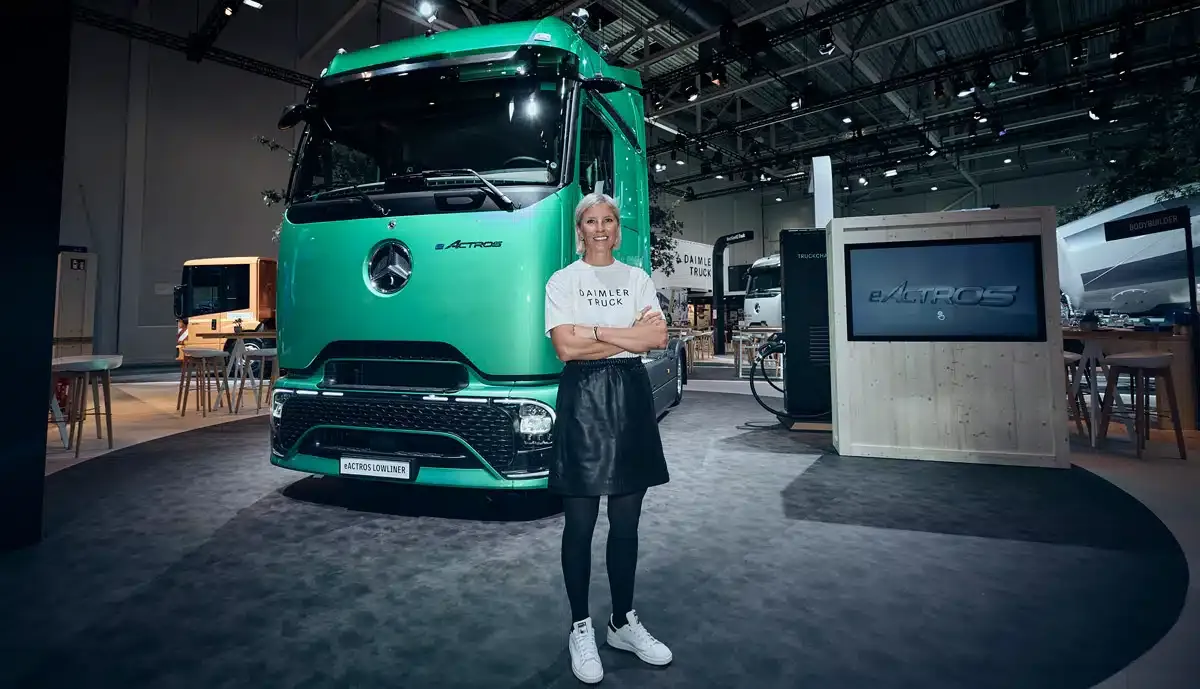
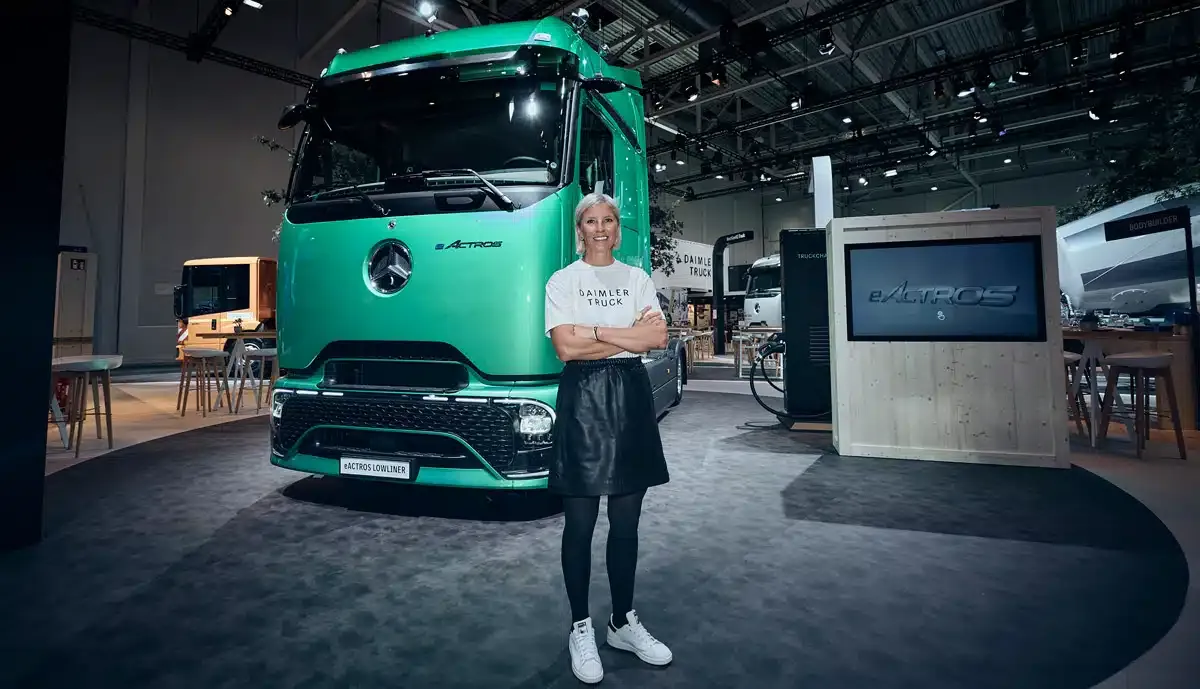
Image: Daimler Truck
Daimler Truck CEO Karin Rådström views the lack of charging infrastructure as the main obstacle to greater use of battery-electric trucks. In the first half of the year, 1.4 percent of trucks sold by Daimler Truck had electric powertrains. At the same time, there are already more than 60 electric truck models in Europe, she said in an interview with Handelsblatt. For electrification, in addition to suitable vehicles, competitive costs and sufficient charging options are necessary.
Regarding costs, Rådström points to varying toll regulations across Europe. Thirteen EU countries differentiate between electric and diesel trucks in terms of tolls, though the exemptions are only substantial enough in about half of these countries. She sees a significant need for improvement in infrastructure: By 2030, Europe will require around 35,000 public fast-charging stations specifically for trucks, compared to less than 2,000 currently.
Diesel trucks are cheaper than electric trucks in 70 percent of cases when considering total costs, according to the head of Daimler Truck. She describes logistics companies as rationally acting customers with often narrow profit margins who choose vehicles based on their cost-effectiveness. The EU’s climate targets for 2030 are unattainable for the industry under current conditions. A delay to 2033 would help, in her view, especially with regard to infrastructure.
“Strict CO2 regulations help drive innovation.”
Rådström does not call for weakening CO2 targets. “Strict CO2 rules help drive innovation. They are one of the reasons why we are so successful globally,” she said. However, regulation must be better linked to infrastructure development and the cost-effectiveness of CO2-free trucks, especially since the European industry has invested billions in electric trucks and adjusted its production accordingly.
For Daimler Truck, failing to meet targets could mean heavy fines. Approximately 120 million euros would be due for each percentage point missed. At ten percentage points, that would amount to 1.2 billion euros—roughly the entire global annual profit of the Mercedes-Benz Trucks division, according to Rådström. Adhering to these rules could have “existential consequences” for Daimler Truck, she said.
In addition to purely battery-powered vehicles, Daimler Truck is focusing on hydrogen trucks. The factories have already been converted for battery trucks, and corresponding vehicles are available in series, while hydrogen technology is not yet at that stage. “It’s not about batteries or hydrogen,” explained Rådström. “We are absolutely convinced that we need both to fully decarbonize Europe.”
For hydrogen, the manager cites ranges of 1000 kilometers or more, a lower battery weight, and fast refueling as advantages. Both batteries and hydrogen are expected to play a significant role in the future, with the exact split also depending on regional differences in electricity and hydrogen prices. In competing with Chinese manufacturers, the head of Daimler Truck points to their cost-effective production, from which lessons must be learned, as well as to the company’s extensive service network in Europe.
Also interesting
About the author
Thomas Langenbucher is an expert in electromobility with experience in the automotive and financial industries. Since 2011, he has been covering electric vehicles, sustainable technologies, and mobility solutions for ecomento.de. Learn more.
Reader interactions