
The Dacia Spring is no longer made in China. The new generation is being produced in Slovenia — will the price remain unchanged?
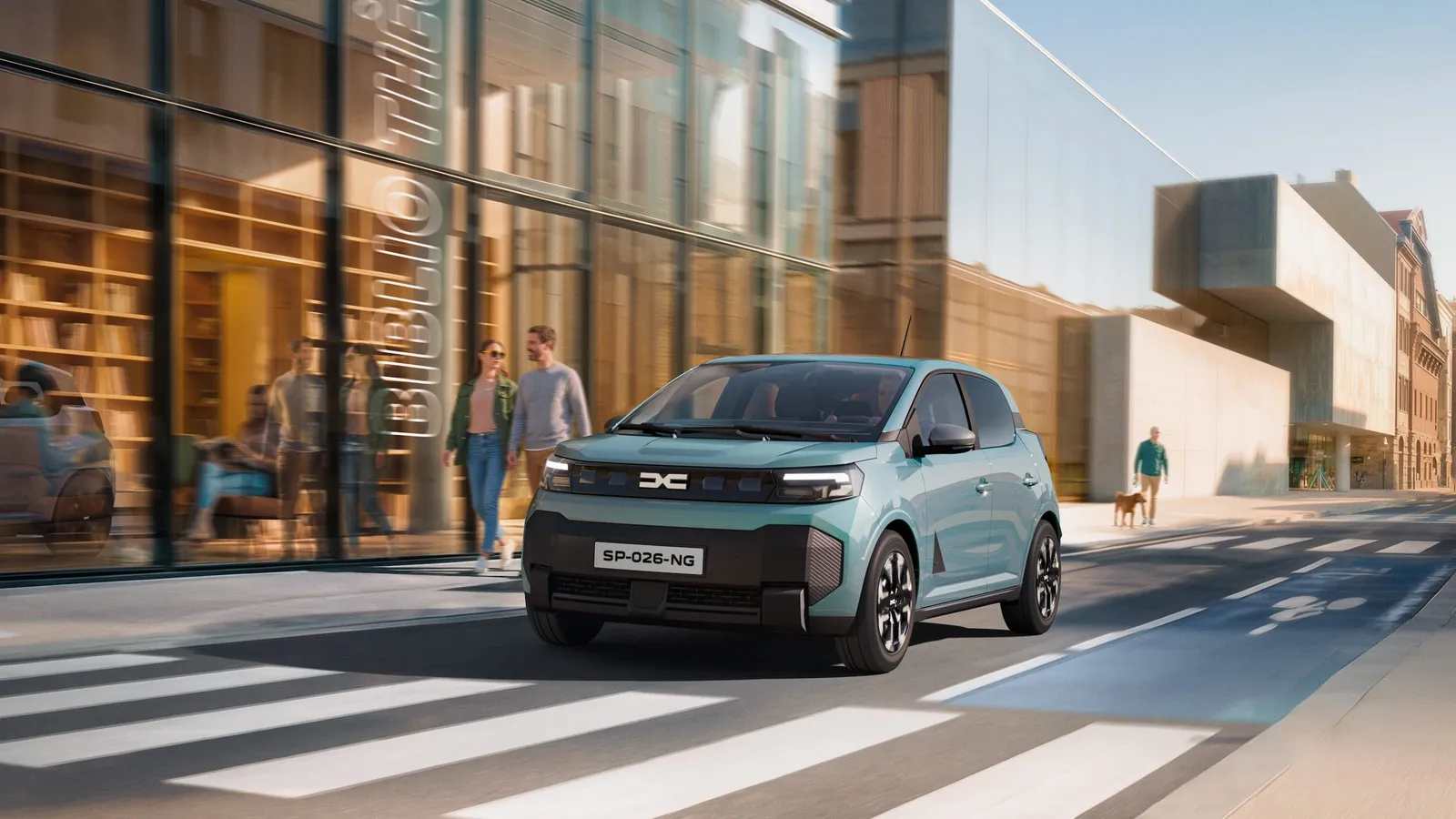
Dacia unveiled a completely new Spring, with production set to move from China to Slovenia. The price in Italy has been set at 17,900 euros, while in Poland the previous version started at 73,500 zł.
Table of Contents
Show
Hide
This is a more significant change than just another facelift. The Spring was an inexpensive electric car with a European brand name but Chinese origins. Now Dacia wants to leverage the “made in Europe” advantage without paying a fortune for it.
Larger car, same philosophy
The new Spring has little in common with the old Renault Kwid, which was an inexpensive gasoline car for India and served as the basis for the previous generation. Now it shares its platform with the Renault Twingo E-Tech and is designed from the start as a small electric vehicle.
There is one engine in the front under the hood, producing around 80 horsepower and 175 Nm of torque. The battery has a usable capacity of 27.5 kWh with LFP chemistry. According to WLTP, the range is up to 250 km, which is slightly less than the Twingo’s 263 km WLTP range.
Dacia claims a consumption level of 12.7 kWh/100 km. On paper, this seems good, but as usual, WLTP figures should be adjusted, especially in winter and outside the city.
The performance is modest. The 0-100 km/h sprint takes 12.1 seconds, with a top speed of 130 km/h. Is that poor? It’s sufficient for city driving. Dacia itself states that current Spring users average only 34 km per day, with 75 percent of charging occurring at home.
The vehicle is now 3.85 meters long, an increase of 15 cm compared to the previous model. It is also 18 cm wider, so it should look and drive more securely than the old Spring, which was simply narrow and tall.
Charging Still Top-Tier with DC Fast Charging
The standard onboard charger has 6.6 kW, so with a 7 kW wallbox, charging from 15% to 80% should take 2 hours and 55 minutes. The optional 11 kW charger reduces this time to 1 hour and 55 minutes, assuming we have a three-phase wallbox with sufficient power.
DC fast charging is still not standard. It comes bundled with a more powerful AC charger and reaches up to 50 kW. In such a setup, charging from 15% to 80% should take 28 minutes. It’s acceptable, but “fast charging” in 2027 sounds a bit misleading here.
In the base Expression version, the driver gets manual climate control, rear parking sensors, 7-inch digital dashboards, and a smartphone-based multimedia system without a central screen. The Journey version adds a 10.1-inch screen, wireless Apple CarPlay and Android Auto, a rear camera, and keyless entry.
Dacia claims it developed the new Spring in less than 2 years. It’s clear why: a small European electric car priced at under 80,000 zł is meant to compete with cheap cars from China, only this time without a Chinese brand. The question is whether, at this price point and with 50 kW charging, it’s sufficient for today’s market.
LovEV Newsletter
Want more content like this?
Sign up — we’ll send you a weekly summary once the newsletter starts.