
The Dacia Hipster is set to launch in 2027 as an electric Kei-car.
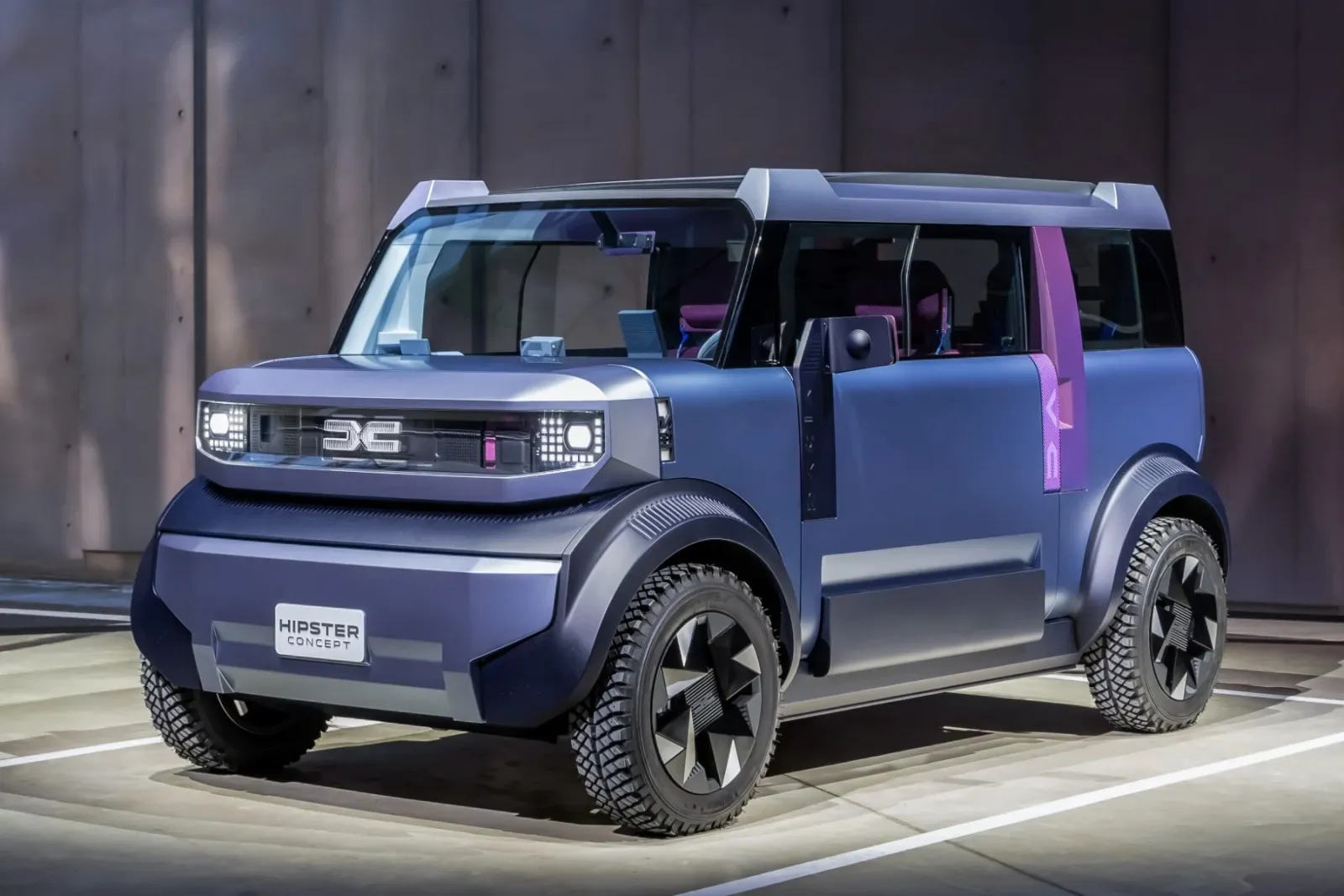
According to a British media report, Dacia will offer an electric microcar named Hipster in Europe starting in 2027. This L7e class vehicle was introduced as a concept model about a year ago and is expected to be produced in China, specifically at the same facility where the first generation was manufactured.
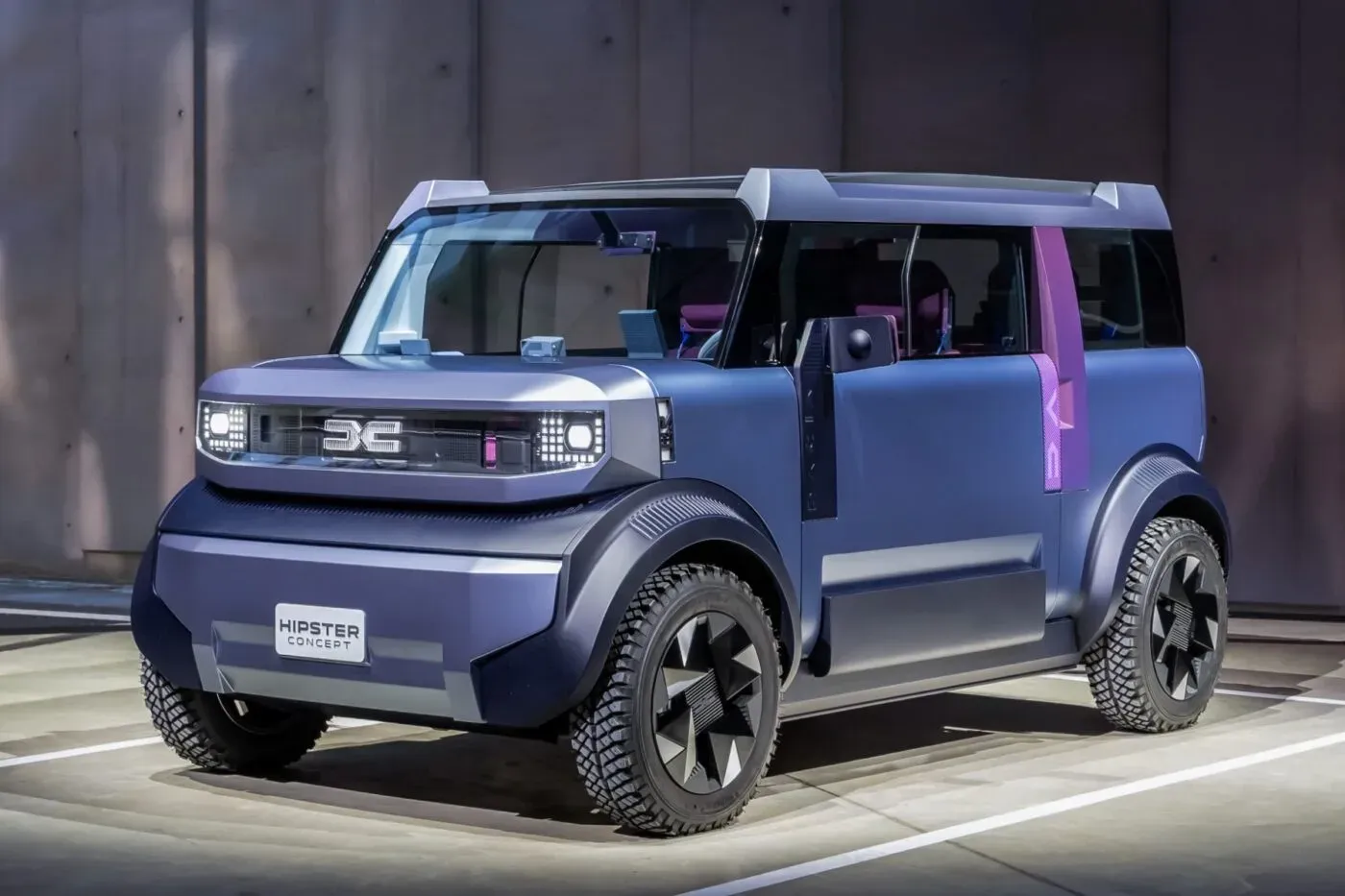
Image: Dacia
Dacia unveiled the Hipster as an electric concept in October 2025 — though without any plans for series production at that time. According to a recent report by “Autocar,” launch plans have now advanced: the Hipster will go into production next year and be available in the UK at a price of around 9,500 pounds, according to the website citing an “insider source close to the project.” This price is equivalent to roughly 11,000 euros.
The Hipster is set to be manufactured at that Chinese plant where the first generation of Spring was also produced. This will be carried out under the responsibility of the local joint venture eGT New Energy Automotive, a partnership between Renault, Nissan, and Dongfeng. This fits the pattern: as early as February 2026, the French website “Auto Infos” reported on a possible mass production of the Dacia Hipster in China, pending final production approval. That approval appears to have now been given. This is an important signal for the plant in Shiyan, as the recently introduced second generation of Spring is known to come from Slovenia rather than China.
About the Hipster itself: Essentially, this cube-shaped city car is a European interpretation of the popular Kei-cars in Japan. It is designed to fit under the Spring category. Tight regulations arise from its aim to compete in Europe’s L7e class: the model must not weigh more than 450 kg (without battery), have a maximum power output of 15 kW, and a top speed of 90 km/h. Conversely, the Hipster as an L7e electric vehicle would likely be exempt from EU special tariffs on cars produced in China. This rule applies to M1-class vehicles but not to those in the L7e category.
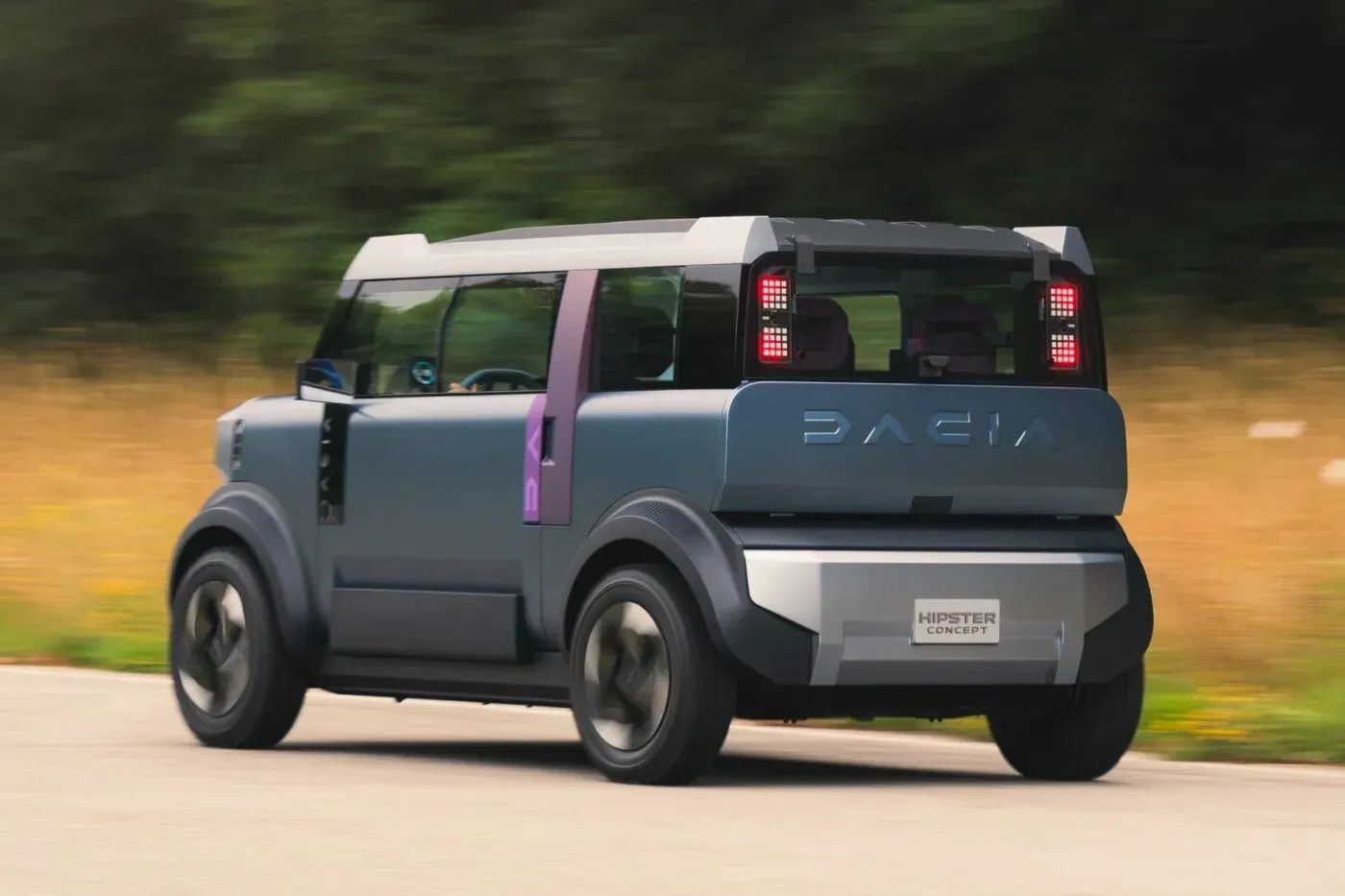
Image: Dacia
- 1/13
According to “Autocar,” the production model is set to remain relatively close to the concept car. At the time of its unveiling, it was three meters long, 1.53 meters high, and 1.55 meters wide. With its boxy proportions, virtually no overhangs, and vertically positioned windows, the Hipster offers four full-sized seats plus space for luggage on this relatively small footprint. Depending on the configuration, the trunk capacity is said to range from 70 to 500 liters, with the higher figure available when the rear seats are flat.
The study also shows a split rear door (the lower part folds downward like on a pickup, supposedly to make loading easier). However, according to “Autocar,” this design won’t make it to production: the standard model is likely to have a rear door that swings open sideways.
As the portal further reports, the position of the smallest model in Dacia’s product lineup has evolved dynamically even before its market launch: Under former Dacia CEO Denis Le Vot, the vehicle was reportedly supposed to succeed the Spring. However, the Renault Group decided instead that a Spring-derived model based on the revived Renault Twingo should be created. Both are now ready for production and set to enter the market soon. As an indirect successor to Le Vot, Fabrice Cambolive, Renault and Dacia’s new Chief Growth Officer, ordered that the hipster product concept be revised again to further reduce costs. For this purpose, the manufacturer plans to seek significant development support from China.
According to Autocar, the final version of the Hipster will be unveiled next year. It’s already clear, however, that the new E-Dacia is intended to be a contrast to today’s heavy and overly equipped electric vehicles. By avoiding unnecessary features, Dacia aims to keep both costs and CO2 emissions low. Take the cockpit for example: the Romanian automaker adopts a “bring your own device” approach here, with the owner’s smartphone serving not only as a key to the vehicle but also functioning as a navigation screen and infotainment display via a docking station. The concept model uses a simple Bluetooth speaker as its sound system, while the side windows are operated by sliding mechanisms rather than electric controls. Additionally, traditional door handles have been replaced with loops.