
Four months without work and a waiting list across Spain: The Tesla with BYD battery reveals a problem not covered by the warranty
01/11/2026 13:00
Updated to
01/11/2026 13:00
Having a vehicle immobilized for several weeks can result in significant financial losses for those working in passenger transportation. This is the situation reported by several taxi drivers and ride-hailing drivers who own Tesla Model Y vehicles, some of whom claim they have been waiting months for a replacement battery. The affected individuals point to a component supplied by BYD and demand solutions due to the lack of specific timelines for recovering their vehicles.
The conflict has prompted the BYD Tesla Battery Affected Platform to organize a rally this Thursday, October 29th, at 12:00 p.m., in front of the brand’s service center in Fuenlabrada (Madrid). According to Fuenlabrada Noticias, the group is demanding technical explanations, greater transparency, and a communication channel that allows for individual resolution of reported issues.
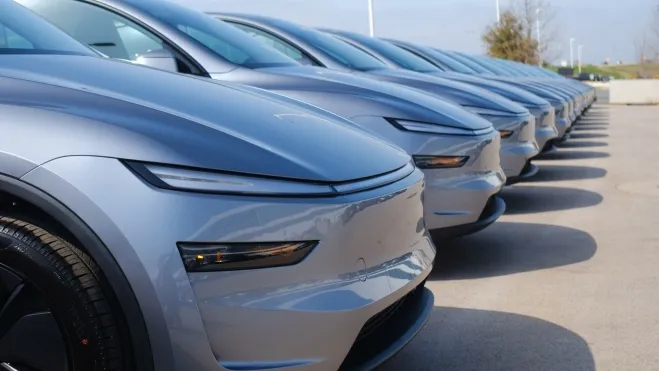
Over 230 vehicles reportedly on a waiting list to have their batteries replaced
The complaints focus on certain rear-wheel-drive Tesla Model Y units manufactured at the company’s plant in Berlin, Germany. These vehicles use a lithium-iron-phosphate (LFP) structural battery developed by BYD, and its integration into the chassis makes it difficult to repair its internal components.
Among the testimonies published is that of a Seville taxi driver who purchased his Model Y in November 2024 and experienced a malfunction when the vehicle had accumulated approximately 74,000 kilometers. The car has been unusable since August 20, and according to its owner, Tesla informed him that there were over 230 other vehicles ahead of him on a waiting list for batteries across Spain. This figure comes from the affected driver’s account and has not been independently verified.
Drivers surveyed by various media estimate that issues occur between 75,000 and 200,000 kilometers, though the actual frequency has not yet been determined. Some link the problems to fast charging sessions in high temperatures, although there is no official technical confirmation of this possible cause. The complaints specifically pertain to units equipped with BYD batteries, with no similar issues reported in versions using CATL cells or other Model Y configurations.
Tesla’s warranty and the financial cost of having a car unusable
The coverage provided by the manufacturer has also become one of the main points of conflict. According to Tesla’s official warranty terms in Spain, the battery and drive unit of the rear-wheel-drive Model Y are covered for eight years or 160,000 kilometers, whichever comes first. For the long-range and Performance variants, this limit increases to 192,000 kilometers. In both cases, a minimum retention of 70% of capacity is required during the coverage period.
However, warranty repairs do not necessarily entail compensation for the time the car is out of service. The contractual terms include exclusions related to lost use and unearned income, a factor particularly important for professionals. One of the affected taxi drivers estimates that having his vehicle unavailable could result in a monthly loss of earnings of 5,000 to 6,000 euros, while other owners mention repair costs exceeding 16,000 euros when the battery is no longer covered by warranty.
Adding to this situation is a legal distinction between private individuals and professionals. The General Law for the Defense of Consumers and Users provides specific protection for purchases made outside of a business or professional activity. Therefore, vehicles purchased to provide taxi or VTC services do not automatically benefit from the same consumer protection regulations, although there may be other avenues for recourse depending on the contract and the circumstances of each malfunction.
So far, neither Tesla nor BYD has released an official explanation to determine the origin of the reported failures, nor has there been confirmation of any recall campaign related to these cases. There is also no verified public record indicating how many vehicles are actually affected. The Fuenlabrada group aims to secure commitments regarding repair timelines, battery supply, and potential solutions for owners who have been unable to use their cars for weeks or months.