
How much lithium is in the battery of an electric car?
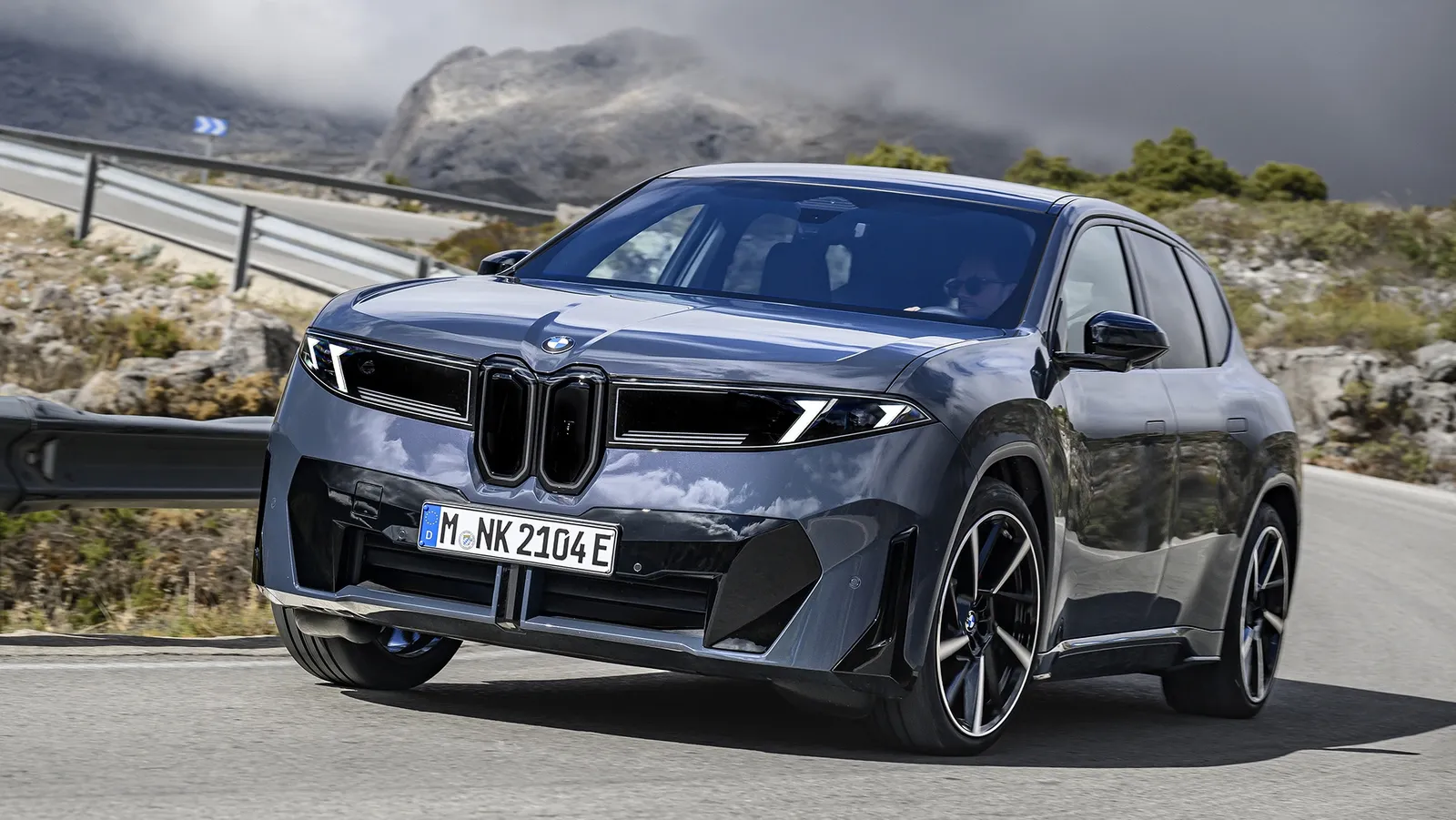
The battery is by far the component that most significantly influences the price, range, weight, and much of the industrial impact of an electric car. However, when discussing the materials needed to manufacture it, figures that can be confusing often appear: tons of lithium required to produce vehicles, dozens of kilograms of lithium carbonate per battery, or generic references to metals such as nickel, cobalt, manganese, or iron.
In reality, a conventional electric car does not carry dozens of kilograms of pure lithium. A battery with a capacity of around 60 kWh may contain approximately 5 to 6 kilograms of elemental lithium, though the amount varies depending on the chemistry used, the battery’s capacity, and technological advancements in the cells themselves.
To understand where this figure comes from, one must first know what type of batteries electric cars currently use, because under the generic term “lithium-ion battery” there are quite different compositions.
Almost all use lithium, but not all use the same materials
The vast majority of current electric cars employ lithium-ion batteries. This does not mean, however, that they are all identical. The main difference lies in the materials used primarily in the cathode of the cells, which is one of the factors determining how much energy the battery can store, how much it costs to manufacture, or what raw materials it requires.
For years, batteries known as NMC have played a major role. The acronym stands for nickel, manganese, and cobalt, which together with lithium make up their cathode. There are also batteries called NCA, used especially by some manufacturers in the early years of electric vehicle development; these rely on nickel, cobalt, and aluminum.
These chemistries have a significant advantage: they allow storing a large amount of energy in relatively low weight and volume. This is why they were particularly attractive for vehicles that needed to offer long ranges without using excessively large and heavy batteries.
The evolution within this family has also sought to gradually reduce the amount of cobalt. Different generations of NMC have increased the proportion of nickel while reducing the use of other materials, precisely because cobalt has traditionally been one of the most expensive and problematic components in its supply chain.
But over the past few years, another even more significant change has occurred.
LFP batteries have changed the market balance
Lithium iron phosphate batteries, known as LFP, also belong to the lithium-ion battery family, but they do without nickel and cobalt used in other chemistries. Instead, they rely mainly on iron and phosphate, two abundant and relatively inexpensive materials.
Their main drawback has traditionally been a lower energy density, meaning that to store the same amount of energy they require more weight or volume than NMC batteries. However, this difference has been narrowing thanks to improvements in cell technology and, especially, new designs that allow for much better utilization of the available space within the battery pack.
At the same time, LFP batteries offer significant advantages in cost, lifespan, and thermal stability. The combination of these factors explains why they have moved beyond being a solution reserved mainly for budget vehicles to being increasingly used in more and more models.
The shift has been particularly rapid in China. According to the International Energy Agency (IEA), by 2025 LFP batteries accounted for over 55% of all battery capacity installed in electric vehicles worldwide, up from less than half a year earlier. In Europe, their use remains much lower, at just over 10% of demand in 2025.
There is also a very important economic reason behind this expansion. The IEA estimates that in 2025 LFP packs were, on average, more than 40% cheaper per kWh than their NMC counterparts, although part of this difference depends on the applications and markets in which each technology is used.
Therefore, one of the major trends in the battery industry today is not to abandon lithium, but rather to reduce the use of nickel and especially cobalt, replacing them with iron and phosphate where the vehicle’s specifications allow it.
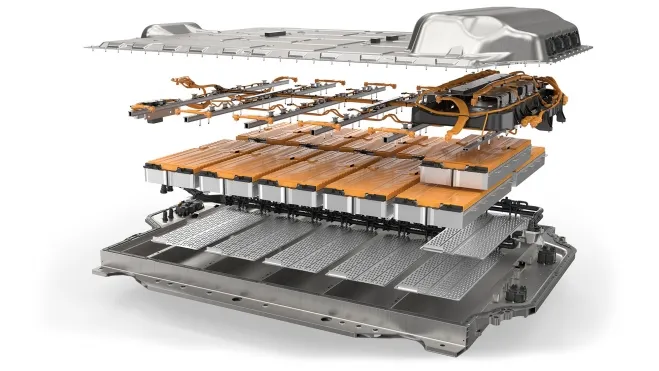
So, how much lithium does a battery really need?
Here lies one of the most interesting questions. Although LFP batteries completely eliminate nickel and cobalt from their cathodes, they still require lithium, and the difference compared to some modern NMC chemistries is not as significant as it might seem.
The calculations used by the International Council on Clean Transportation (ICCT) estimate approximately 0.08 kg of lithium per kWh of capacity in an LFP battery, while modern NMC batteries range from 0.09 to 0.10 kg/kWh, depending on their composition.
Applying these values to typical electric vehicle batteries gives the following approximate figures:
Battery Capacity
LFP
Modern NMC
40 kWh
about 3.2 kg
about 3.6–4 kg
60 kWh
about 4.8 kg
about 5.4–6 kg
80 kWh
about 6.4 kg
about 7.2–8 kg
100 kWh
about 8 kg
about 9–10 kg
These are not exact figures applicable to any model, as the specific composition of the cells and their energy density vary among manufacturers and generations. However, they help determine accurately how much lithium is involved.
An electric car with a 60 kWh battery does not require 20 or 30 kilograms of elemental lithium. The typical amount is around five to six kilograms.
Why then are much larger figures cited when discussing lithium
Part of the confusion stems from using different concepts interchangeably. Lithium is not added to a battery in the form of several kilograms of pure metal extracted directly from a mine, but rather as part of various chemical compounds used in the production of its active materials.
For this reason, the mining industry often uses units such as equivalent lithium carbonate or LCE, which allow for comparing different compounds and production methods. The amount of lithium carbonate required to obtain a certain quantity of elemental lithium is significantly greater than the weight of lithium itself.
Therefore, when an estimate cites several dozen kilograms of “lithium” for an electric car, it is essential to determine exactly what is being measured. It could refer to equivalent lithium carbonate, another compound, or processed raw materials—not the amount of elemental lithium ultimately contained in the battery.
This difference explains much of the seemingly contradictory figures found when comparing different studies.
Replacing NMC with LFP only slightly reduces lithium demand
The comparison between the two technologies helps illustrate another important aspect of the transition underway in the industry. Replacing NMC batteries with LFP ones can drastically reduce nickel and cobalt consumption, but it has a relatively small impact on lithium demand.
ICCT estimates that a scenario with much higher adoption of LFP batteries would reduce global lithium demand by only 2% in 2030 and 1% in 2040 compared to its baseline scenario. The reason is that LFP batteries require about 0.08 kg of lithium per kWh, compared to approximately 0.09–0.10 kg for the analyzed NMC batteries.
The difference would be much greater for other materials. The same scenario would significantly reduce the need for nickel and cobalt, as neither is used in the cathode of LFP batteries.
This helps us better understand the current direction of the industry: batteries are changing materials, but lithium remains the common element in the technologies that dominate electric cars today.
The next step could be a battery that no longer needs lithium
To truly eliminate lithium, it’s necessary to switch to a different chemical family. One of the technologies making the most progress in this area is sodium-ion batteries, which operate similarly to lithium batteries but use sodium instead of lithium.
Its main appeal isn’t just economic. Sodium is extremely abundant and could diversify a supply chain that is currently highly concentrated around lithium, in addition to offering certain advantages in performance at low temperatures.
The technology has already moved beyond the purely experimental stage. Manufacturers such as CATL and BYD are increasing their production, and the first vehicles equipped with sodium batteries have begun to hit the market. However, there is still a significant difference in energy density compared to more advanced lithium technologies.
This means that storing the same amount of energy may still require a larger or heavier battery, a drawback that is particularly important in vehicles that need long range.
For this reason, their initial applications can focus on small cars, urban commercial vehicles, two- and three-wheeled vehicles, or stationary storage systems, where weight and volume are less critical. Batteries that combine sodium and lithium cells are also being explored to leverage the advantages of both technologies.
Solid-state batteries do not necessarily mean abandoning lithium
Another technology that frequently comes up when discussing future batteries is the so-called solid-state batteries. It is important to distinguish this from the shift toward sodium, as they do not address exactly the same problem.
A solid-state battery can still use lithium. Its main difference from a conventional battery lies in the electrolyte, which is the medium through which ions move between the electrodes. Current batteries typically use a liquid electrolyte, while solid-state technologies aim to replace it entirely or partially with solid materials.
The goal is to create batteries with higher energy density, better performance, and potentially greater safety, but significant industrial challenges remain. Although cells for testing are already being produced and semi-solid solutions are available on the market, fully solid-state batteries still need to prove that they can be manufactured competitively at scale.
Therefore, talking about solid-state does not mean talking about a lithium-free battery. They are two different developments: one aims to fundamentally change how the cell is constructed and functions; the other, as with sodium, can replace one of its basic materials.
Lithium will remain crucial, even as batteries become increasingly different
The evolution of electric vehicle batteries is not moving in just one direction. In the early years of market expansion, the focus was especially on achieving maximum range through chemistries with high energy density, such as NMC or NCA. Now, as production volume increases, cost, the availability of raw materials, and supply security are becoming increasingly important.
This explains the extraordinary growth of LFP batteries. Their expansion allows for the elimination of nickel and cobalt in favor of more abundant materials such as iron and phosphorus, although lithium remains essential.
Sodium batteries represent a different approach because they can completely eliminate the need for lithium, but they still must overcome their lower energy density and develop an industrial ecosystem comparable to that built by lithium-ion batteries over decades.
While this is happening, the amount of lithium actually contained in an electric car remains considerably lower than what some commonly cited figures might suggest. In a battery with a capacity of 60 to 80 kWh, we are talking about approximately five to eight kilograms of elemental lithium, enough to store the energy required to power a car for hundreds of kilometers and to be reused over thousands of charge and discharge cycles.
