
CREED project: how EVs can become power grid assets
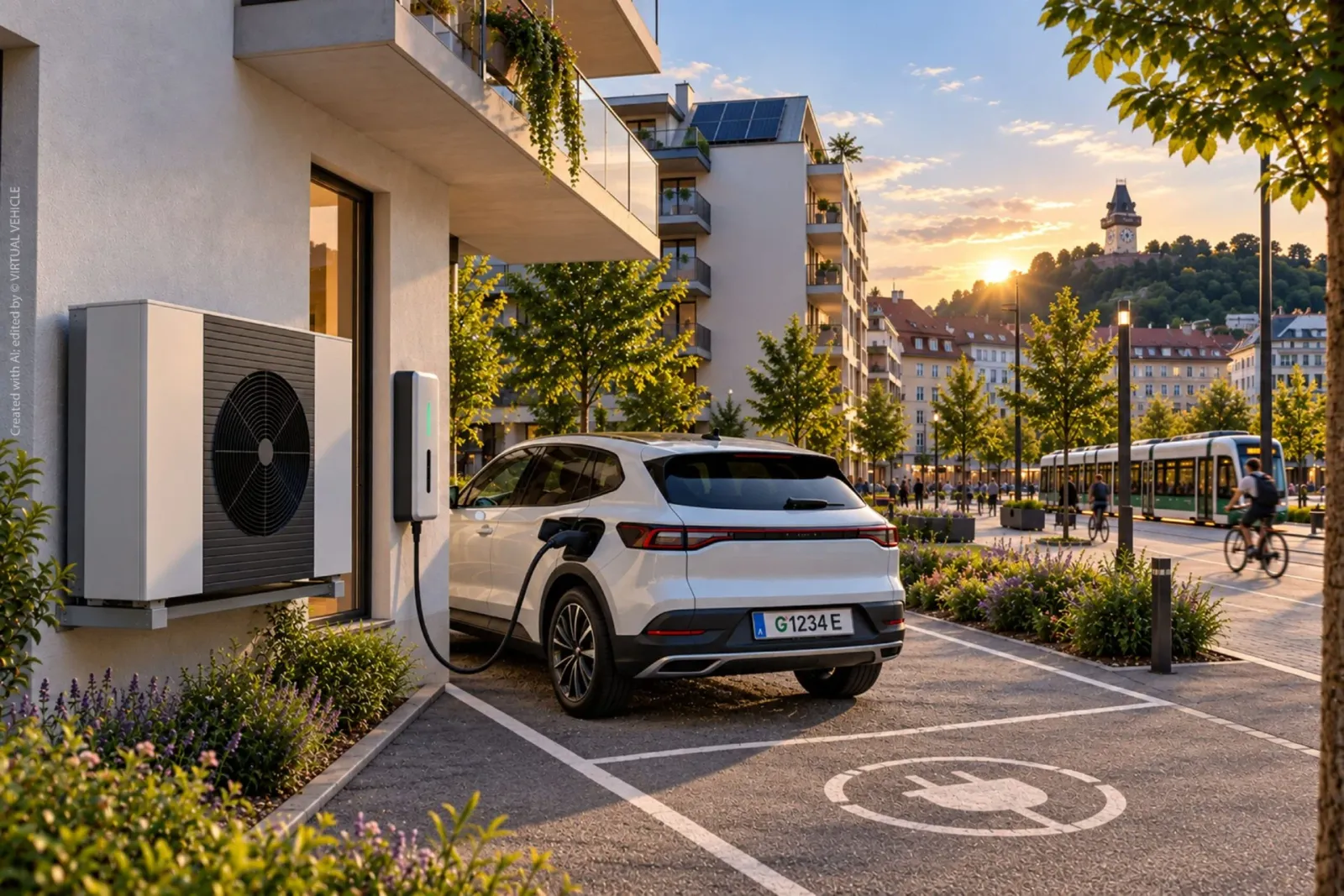
Nine European partners are exploring approaches to intelligently integrate EVs, heat pumps, batteries, and other flexible technologies into the energy system. A central component of the project is the practical testing of these approaches.
Image: Virtual Vehicle (KI-generiert)
The CREED project name stands for “Cross-sectoral Renewable Energy-Enabled Demand Management”. This European initiative, led by Austrian Virtual Vehicle Research GmbH, aims to strengthen integration between the mobility and energy sectors – with the goal of stabilising the power grid and optimising the use of renewable energy. The solutions developed within the project will be demonstrated and validated at seven pilot sites across Austria, Germany, Portugal, and the Czech Republic.
Launched on 1 October, the project runs for two and a half years with a budget of €1.29 million. A key focus for participants is shifting the perception of electric vehicles and heat pumps as mere electricity consumers. CREED seeks to explore how their energy consumption can be intelligently coordinated. “Charging an electric vehicle, for example, can potentially be shifted to a period when plenty of renewable electricity is available. Batteries can store energy for later use, while heat pumps and thermal storage offer additional possibilities to adjust when electricity is consumed,” states an accompanying press release.
The overarching goal, as cited by project leaders, is to make electricity demand more flexible without compromising consumer needs – and thus “help distribution grids accommodate a growing share of renewable energy.”
To achieve this, the CREED team combines expertise from the energy, mobility, construction, and digital technology sectors. For example, researchers aim to develop forecasting methods to better predict energy generation, consumption, and available flexibility. Digital twins – virtual representations of physical systems – will model ecosystems incorporating EVs, heat pumps, and thermal storage systems. The project will also integrate various optimisation approaches, including the use of AI.
Project initiators describe practical testing of the developed approaches as a central component of CREED. The pilot projects will enable researchers to “investigate the approaches under varying technical and regulatory conditions and examine how solutions can be transferred between countries and applications”.
Dr. Alois Steiner, CREED Project Coordinator at Virtual Vehicle, commented: “The energy transition is not only about producing more renewable electricity. We also have to become smarter about when and how we use it. Electric vehicles, heat pumps, and storage systems offer enormous potential for flexibility. With CREED, we want to find ways of using this potential intelligently while placing the needs of citizens at the centre.”
In addition to Virtual Vehicle Research GmbH, which is based in Graz and is serving as the consortium leader, the CREED project involves the University of West Bohemia in Pilsen, SEnerCon GmbH, Grazer Energieagentur, Reduxi DACH GmbH, École Centrale Lille, the Instituto Superior de Engenharia do Porto (ISEP), AEE – Institute for Sustainable Technologies, and Burgenland University of Applied Sciences.