
CPN 2 will lower VAT on fuels starting August 17. The government is helping those who are already cheaper to operate than EVs (ironically).
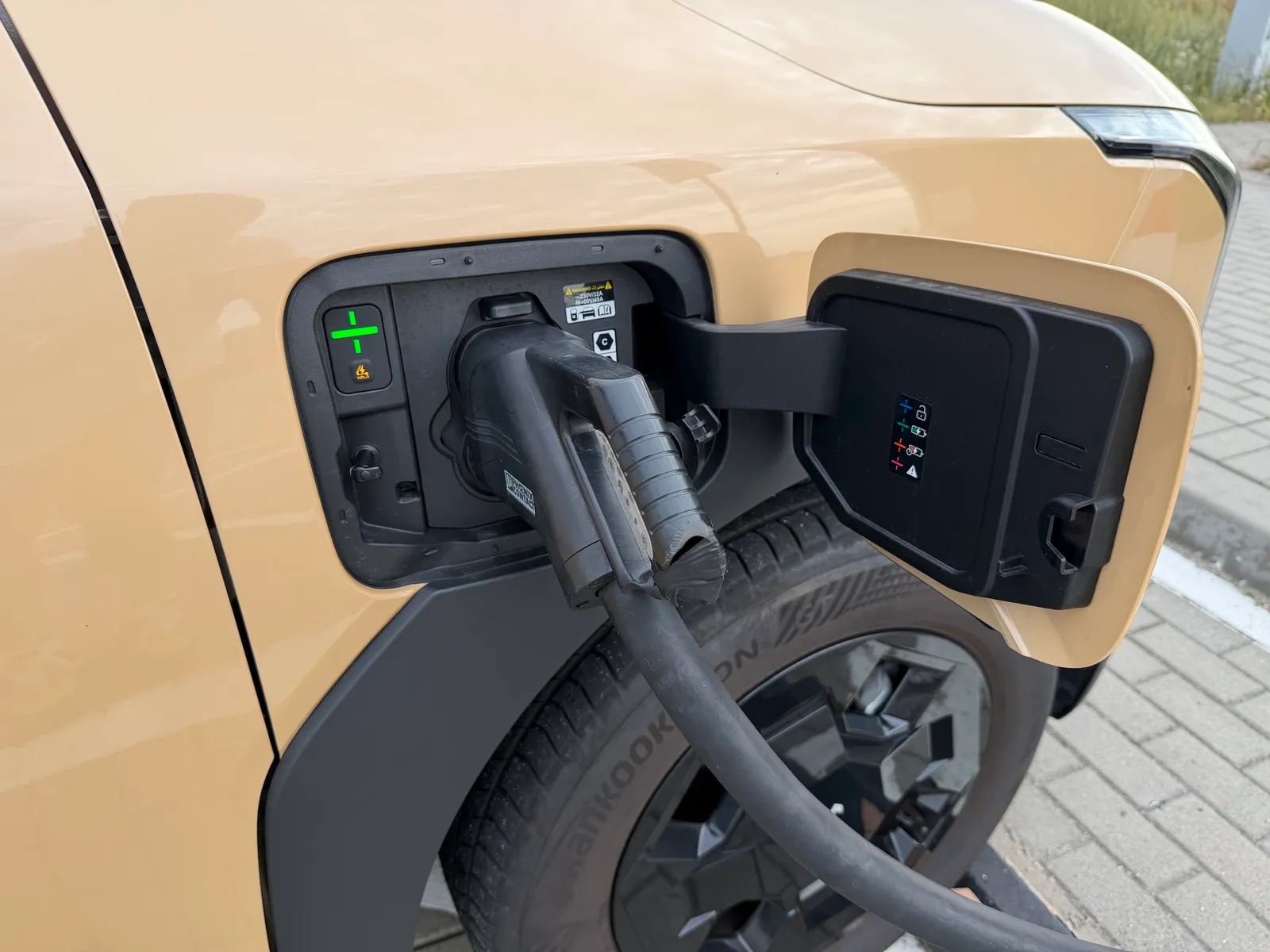
Starting Monday, August 17, the CPN 2 package announced by Prime Minister Donald Tusk is set to take effect. The government aims to reduce VAT on fuels to 8 percent and introduce maximum prices: 6.41 zł/l for 95 octane gasoline, 7.20 zł/l for 98 octane gasoline, and 7.37 zł/l for diesel fuel.
Table of Contents
Show
Hide
The problem is that according to data from the government itself, it is not drivers of gasoline-powered cars who currently face the highest energy costs. According to the Ministry of Energy’s comparison, electricity is more expensive than gasoline, diesel, and LPG, as high costs for public charging are assumed for electric vehicles.
The government’s table shows the opposite of CPN 2
In the data for Q2 2026, the cost to travel 100 km in the C segment is as follows: LPG at 28.55 PLN, diesel at 32.16 PLN, 95 octane gasoline at 34.16 PLN, electricity at 41.87 PLN, and CNG at 44.49 PLN. Among mid-size SUVs and crossovers, the order is similar: diesel at 38.19 PLN, EVs at 42.14 PLN, gasoline at 43.92 PLN, with hydrogen costing 62.10 PLN per 100 km.
This is not a small difference. Among compact vehicles, the electric options in this table are 9.71 PLN/100 km more expensive than diesel and 13.32 PLN/100 km more expensive than LPG. So if the government justifies support by protecting drivers from high energy costs, the figures show something exactly opposite.
The assumptions are even more interesting. For electric cars, an average energy cost of 2.65 PLN/kWh has been assumed. This rate is similar to that of more expensive public DC charging, rather than home outlets or wallboxes, where the cost per kWh is usually significantly lower. And that’s where the whole problem begins.
Table 1: Cost to travel 100 km
Fuel type
Segment C (compact cars)
Average SUVs and crossovers
95 octane gasoline
34.16 PLN
43.92 PLN
Transmission oil
32.16 PLN
38.19 PLN
LPG
28.55 PLN
No data/models available
CNG
44.49 PLN
No models available
Electric energy
41.87 PLN
42.14 PLN
Hydrogen
No models available
62.10 PLN
Table 2: Average fuel consumption per 100 km and average fuel prices (Q2 2026)
Fuel type
Average consumption: Segment C
Average consumption: SUVs and crossovers
Average fuel price
Petrol engine 95
5.6 l / 100 km
7.2 l / 100 km
6.10 PLN / l
Transmission oil
4.8 l / 100 km
5.7 l / 100 km
6.70 PLN / l
LPG
7.8 l / 100 km (average model)
—
3.66 PLN / l
CNG
5.9 m³ / 100 km
—
7.54 PLN / m³
Electric energy
15.8 kWh / 100 km
15.9 kWh / 100 km
2.65 PLN / kWh
Hydrogen
—
0.9 kg / 100 km
69.00 PLN / kg
EV calculated using expensive electricity; emissions not necessarily from expensive fuel
The ministry has set an average energy consumption of 15.8 kWh/100 km for segment C vehicles and 15.9 kWh/100 km for SUVs. These figures don’t seem absurd on their own. Especially since Tesla Model 3 or Model Y can achieve similar levels in real-world conditions, and some compact electric cars don’t perform any better. However, the energy cost is a concern.
If someone charges at home, at night, or using a dynamic tariff, the actual cost to travel 100 km is often closer to 15-25 zł rather than over 40 zł. Even with the standard G11 tariff, the bill is frequently much lower than what’s shown in the government’s table. In short: for EVs, a high-end scenario with fast chargers, typically those along highways, was chosen, while for liquid fuels, an average value was used that doesn’t always reflect what drivers experience on highways or at stations during holiday weekends.
The fuel table shows average prices from the Energy Market Agency: 6.10 PLN/l for 95 octane gasoline, 6.70 PLN/l for diesel, and 3.66 PLN/l for LPG. These are figures for an averaged report, but if you want to use them to justify intervention, it would be better to use one method for all types of engines. Either we compare costs based on affordability or the cost most readily available to average users.
Hydrogen, as usual, loses effortlessly. 69 PLN/kg and 62.10 PLN/100 km for an SUV says it all. It remains a propulsion option only for those who are very patient or very wealthy.
In the end, there is a simple conclusion. If the government indirectly subsidizes a cheaper propulsion system while making the more expensive one appear even pricier through its calculation method, then it is no longer the numbers themselves that are the problem, but rather the methodology. Will the ministry start counting electric cars including home charging, in line with AFIR’s logic, or will it continue to compare fast-charging electricity to fuel based on average prices?
LovEV Newsletter
Want more content like this?
Sign up — we’ll send you a weekly summary once the newsletter starts.