
The Corvette will be electric. The manufacturer confirms this, but doesn’t intend to rush.
In short:
A electric Corvette is still on General Motors’ agenda
The American manufacturer believes the market isn’t yet ready for a powertrain revolution
In the supercar segment, electrification is progressing slower than expected
Rimac and Ferrari have proven that electric sports cars can be sold successfully
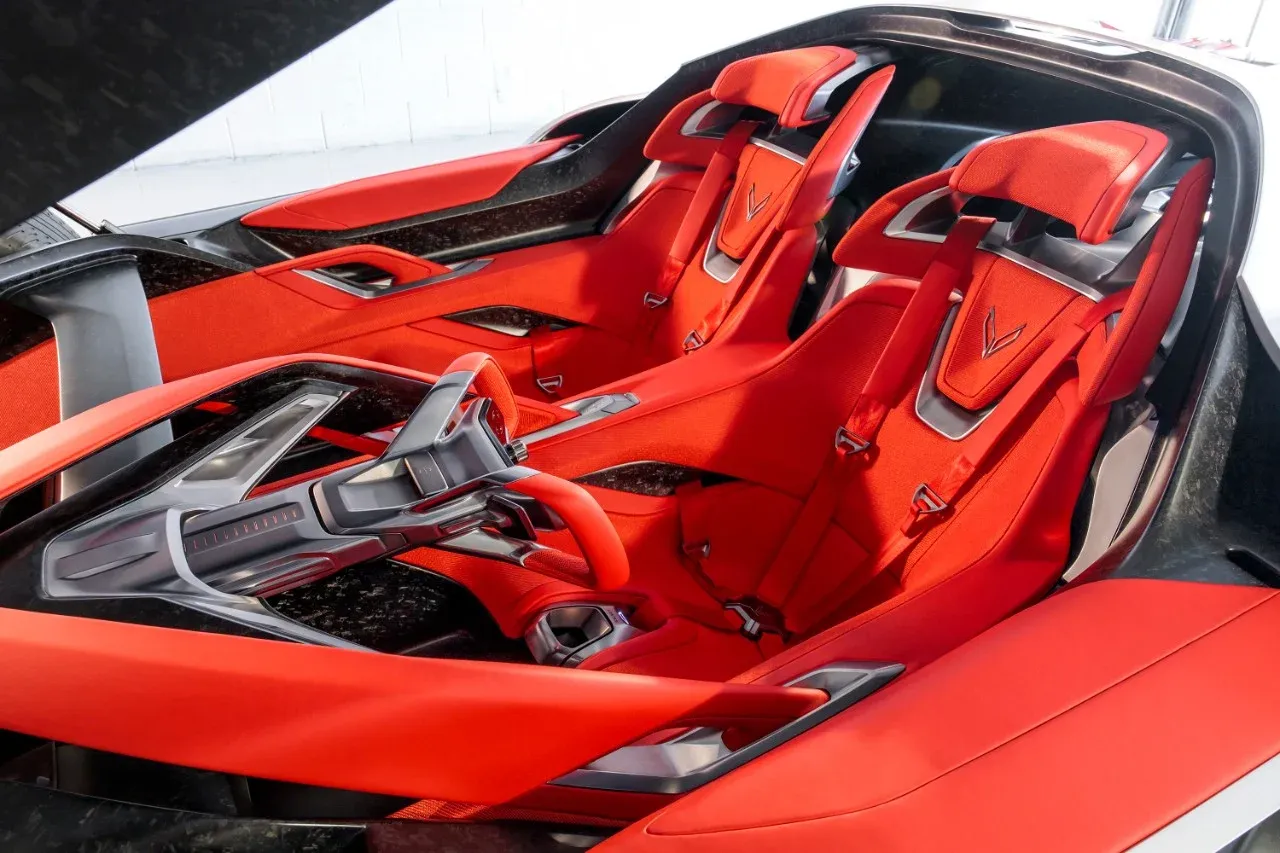
The Corvette CX was the most extreme vision of an electric hypercar from GM
The Corvette is changing
Over the past few years, the Corvette has undergone a revolution. The engine was moved behind the driver, the hybrid E-Ray with AWD appeared, and subsequent C8 versions achieved performance levels comparable to much more expensive European supercars.
One thing Chevrolet still hasn’t done, however, is introduce a Corvette without an internal combustion engine.
This doesn’t mean they’ve given up on the idea. Tony Roma, Executive Chief Engineer for Corvette and General Motors’ sports cars, confirmed in an interview with The Drive that full electrification of the model is still planned in the long term.
A electric Corvette will be created. Just not yet.
The first concrete announcement came in 2022. GM President Mark Reuss initially spoke of a “electrified” Corvette, then of a fully electric version.
The first promise was fulfilled quickly. The Corvette E-Ray combined a V8 with an electric motor and all-wheel drive. However, a full BEV has not been unveiled to date.
Roma confirmed that the direction hasn’t changed. General Motors still views electrification as a long-term goal, but it sees no reason to accelerate the launch of an electric Corvette.
This is a significant change compared to the attitudes just a few years ago. Back then, the industry assumed that customers would switch to BEVs much more quickly. Today, sports car manufacturers see that their clients remain very attached to internal combustion engines, the sound, and the character of traditional powertrains.
Chevrolet, in particular, has little reason to rush. The current C8 is still under development, and its lineup includes increasingly powerful gasoline and electrified versions.
The first electric model only as a C9?
Chevrolet has not given a timeline, so it’s possible that a fully electric version will arrive only with the next generation of Corvette.
The C8 debuted in 2019, so the time when attention shifts to the C9 is getting closer. General Motors has already shown several futuristic concepts that give some insight into the direction of this model’s development.
The most extreme version of the Corvette CX was envisioned as an electric hypercar with four engines, AWD drive, and a power output exceeding 2000 horsepower. However, Chevrolet emphasized that this is not an immediate preview of a production model.
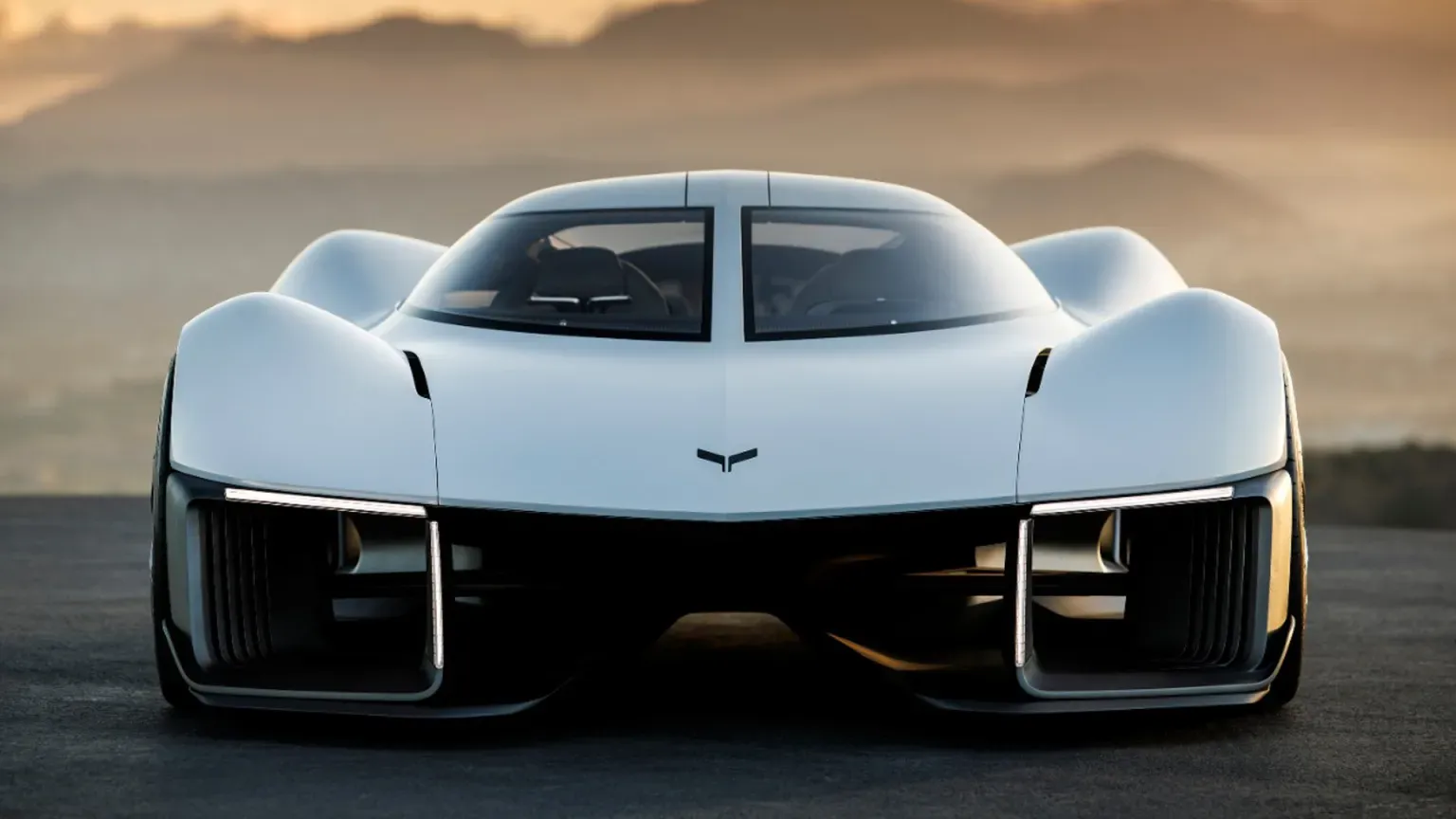
For now, it’s easier to say what the future Corvette might look like technologically than when it will actually arrive in showrooms.
Rimac showed that an electric car can be a hypercar
Chevrolet has plenty of time to observe its competitors, as electric supercars already exist.
The most obvious example is the Rimac Nevera. This Croatian hypercar features four engines, 1914 horsepower, and accelerates from 0 to 100 km/h in 1.81 seconds. Its top speed is 412 km/h.
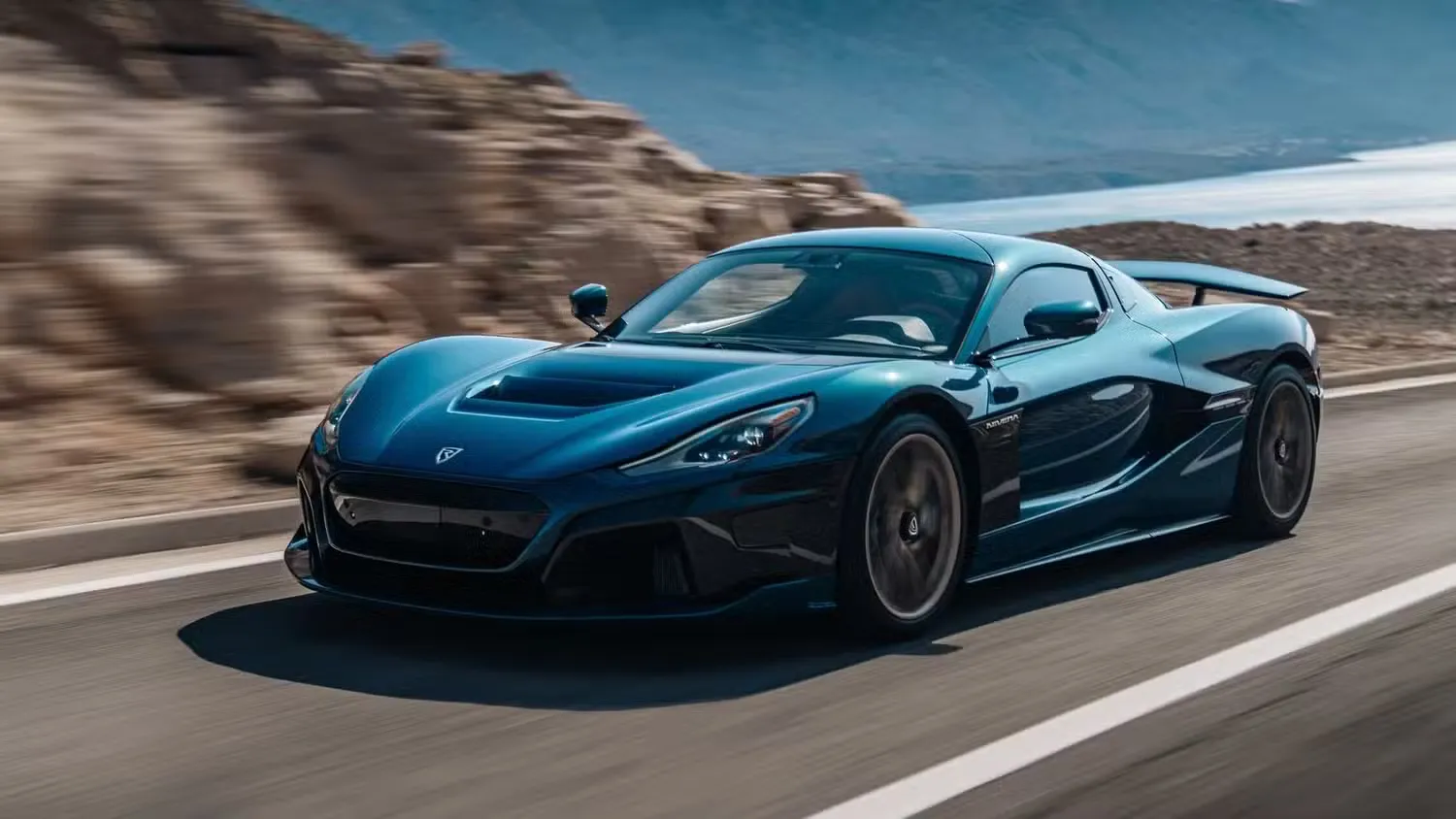
The even more powerful Nevera R delivers 2107 horsepower, accelerates from 0 to 100 km/h in 1.72 seconds, and can reach 430 km/h.
Technically related to the Rimac is the Pininfarina Battista. It also uses four engines and a 120 kWh battery, has around 1900 horsepower, and accelerates to 100 km/h in less than two seconds.
The Lotus Evija also belongs to this group, delivering around 2000 horsepower and being produced in a very limited number of units.
The Chinese have also entered the game
Electric supercars are no longer the domain of small European manufacturers.
BYD has created the U9 model for the Yangwang brand, featuring four independent engines and 1306 horsepower. The even more extreme U9 Xtreme version delivers over 3000 horsepower.
The car reached 496.22 km/h during a test in Papenburg and completed the Nürburgring Nordschleife in 6:59.157.
This shows that power and acceleration are no longer the biggest challenges for electric supercars. Much more difficult are weight, maintaining performance on the track, temperature management, and delivering the excitement that customers expect from such vehicles.
Ferrari Has Already Taken the First Step
Ferrari has also entered the world of electric cars. In 2026, the brand unveiled its first fully electric vehicle. The model uses four motors, has around 1000 horsepower, and a battery with a capacity of 122 kWh. It accelerates from 0 to 100 km/h in about 2.5 seconds, with a claimed range of over 500 km.
Importantly, Ferrari does not view electric cars as successors to all gasoline-powered models. The BEV is meant to be another type of powertrain alongside V6, V8, V12, and hybrid engines.
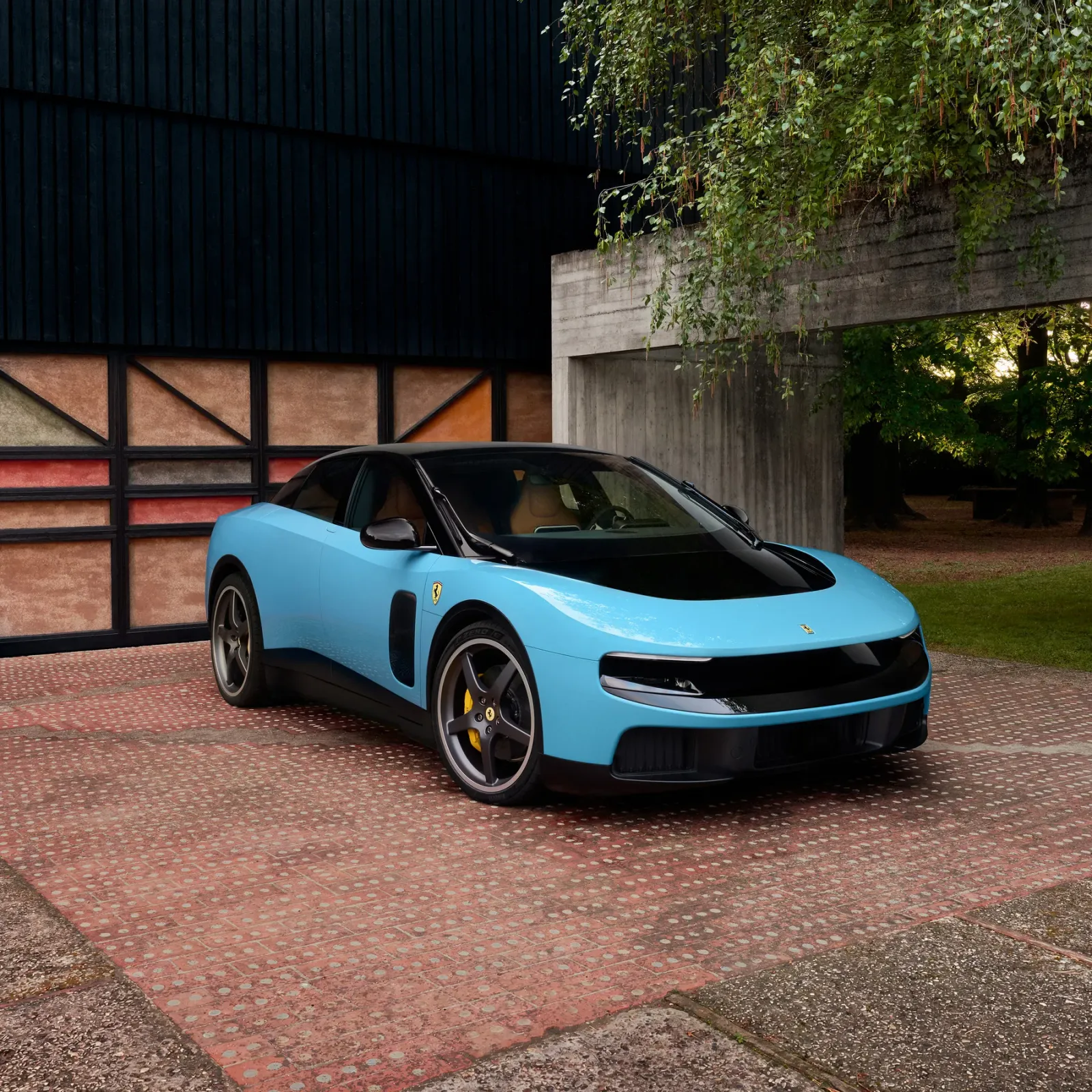
Chevrolet might ultimately choose a similar path. An electric Corvette doesn’t necessarily mean an immediate end to V8 engines.
Porsche is developing an electric 718
Porsche might be a closer reference point to the Corvette. Future generations of the Boxster and Cayman are set to receive electric powertrains. The debut of the new 718 is planned for several years down the line, with full production starting in 2028.
This is more important for the market than hypercars like the Nevera. The Porsche 718 is a much more mass-market sports car, so its reception could reveal a lot about whether consumers are ready for electric vehicles of this type.
Lamborghini and McLaren Slow Down
Not all brands, however, want to follow this path. Lamborghini recently planned for the Lanzador concept to become the brand’s first production electric vehicle. The plans were eventually changed, and the car will now receive a plug-in hybrid powertrain. A release date for a fully electric model remains unspecified.
McLaren is also cautious, as it does not see sufficient customer interest in fully electric vehicles at the moment.
This best illustrates how much the market has changed. Just a few years ago, an electric supercar seemed like the natural next step for almost every brand. Today, Rimac, Pininfarina, and Ferrari are moving in that direction, Porsche is preparing for the next step, while Lamborghini and McLaren prefer to wait.
Chevrolet is somewhere in between. An electric Corvette will be produced — the manufacturer has just confirmed this again. However, there is no pressure to release it right now. As long as customers want V8 engines and the current C8 remains competitive, General Motors can wait patiently for the time when the electric Corvette convinces a larger group of customers.
Piotr Sobczyk