
South Korea manages to produce green hydrogen 99% cheaper through water electrolysis using electrodes that do not require noble metals
29/10/2026 13:30
Updated to
29/10/2026 13:30
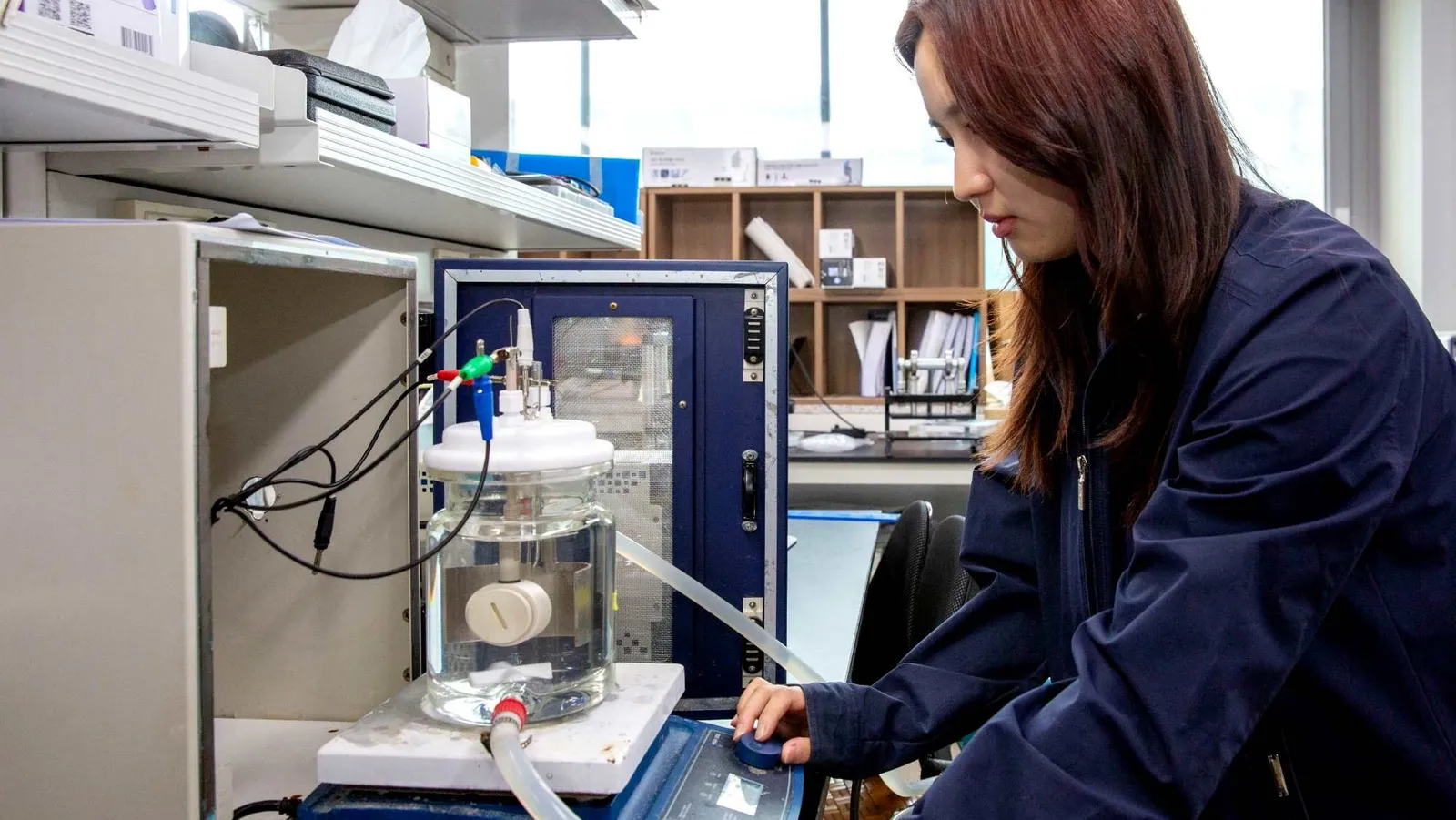
A team of scientists from South Korea has developed electrodes capable of producing green hydrogen more efficiently using materials that are much cheaper than those typically used. This advancement, achieved by researchers at the Korea Institute of Energy Research (KIER), eliminates the need for precious metals such as platinum and ruthenium, whose high prices increase the cost of manufacturing these devices.
According to the researchers, the new electrodes reduce the cost of materials used by 99%, potentially helping to lower the cost of large-scale hydrogen production.
A process using cheaper metals
Green hydrogen is produced by splitting water into hydrogen and oxygen using electricity from renewable sources such as solar or wind energy. This process, known as electrolysis, allows for the creation of a fuel without any carbon dioxide emissions during production, provided renewable electricity is used.
However, producing it this way remains expensive, mainly because the equipment requires materials capable of accelerating the chemical reactions that separate water. To date, one of the most effective solutions has been to use metals like platinum and ruthenium, but their high prices make it difficult to develop more affordable systems, thereby hindering the broader adoption of this technology.
To address this issue, South Korean researchers have developed electrodes made from nickel and cobalt, two much cheaper materials. According to the study’s data, one gram of platinum costs approximately $58, while one gram of ruthenium costs around $54. In comparison, nickel costs about $0.02 per gram and cobalt around $0.05 per gram.
Kyung-Soo Kang, the lead researcher of the study, explains: “This research demonstrates that electrodes without noble metals can achieve world-class performance and durability in alkaline water electrolysis. This technology will pave the way for domestic supply of essential materials for alkaline electrolysis, which has relied heavily on imports, and will ultimately help reduce the production costs of green hydrogen.”
The system is more efficient and uses less energy
Innovation doesn’t just involve replacing one material with another; it’s about combining them so they work together to improve the process. The new electrodes contain nickel oxide, which helps separate water molecules, and a nickel-cobalt alloy, which facilitates hydrogen production. This allows them to accelerate the reaction without relying on precious metals.
The results show that the system can produce hydrogen with performance comparable to platinum electrodes, but it requires much less additional energy to do so. In the tests conducted, the conventional platinum electrode needed a voltage of 56.5 millivolts, while the new material only required 22.7 millivolts to achieve the same level of production. Simply put, this means the new electrode can produce the same results with significantly less additional electrical effort.
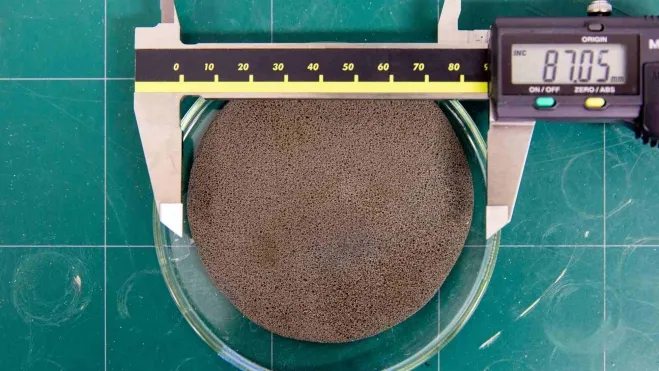
Scientists have also confirmed that the technology works in larger devices, as an electrolysis cell with a diameter of 8.7 centimeters equipped with the new electrodes consumed 11% less electrical voltage than a conventional nickel-based cell. Additionally, it maintained stable performance after 600 cycles of turning on and off.
Hyun-Jun Lee, co-director of the project, said, “We have successfully demonstrated the feasibility of scaling up this technology by manufacturing electrodes with a diameter of 40 centimeters, and we are currently optimizing the process for mass commercial production. Going forward, our research will focus on expanding the electrode surface to 5,000 square centimeters for use in megawatt-scale alkaline electrolysis systems.”