
Amazon's electric deliveries in six more Italian cities
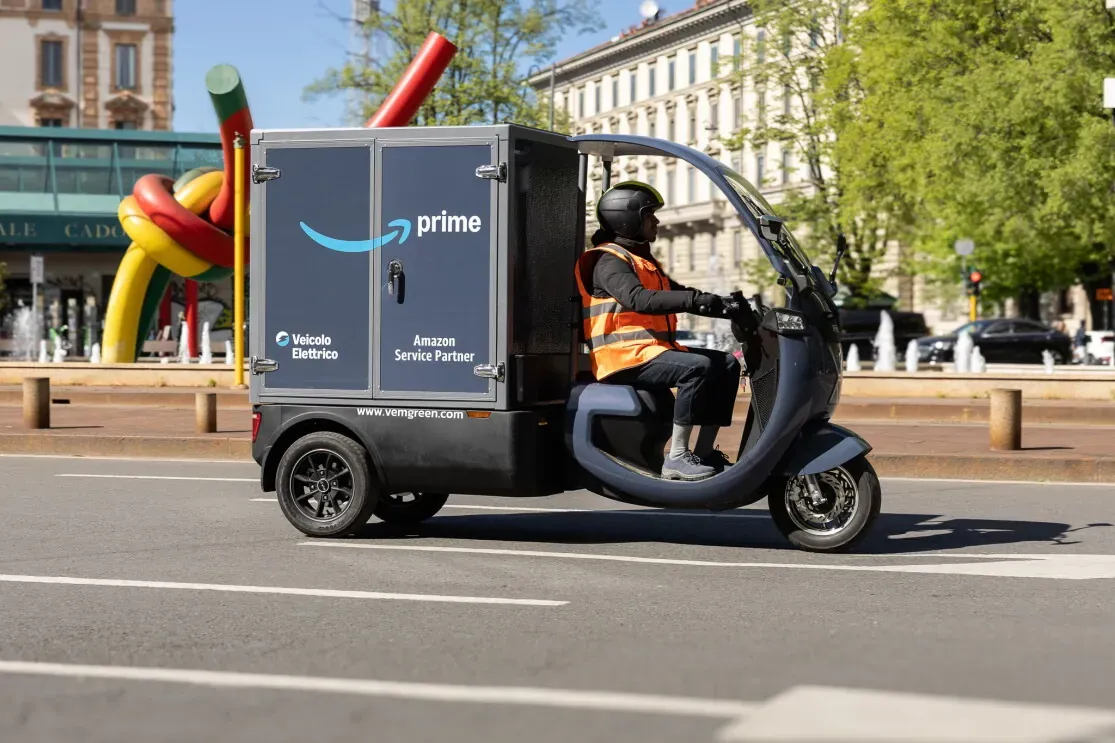
Amazon’s electric delivery service is expanding to six more Italian cities, with corresponding micromobility hubs in Cagliari, Lecce, Lucca, Palermo, Salerno, and Terni. This brings the total number of Italian cities served by this system to 14, using electric scooters and other small-scale vehicles to reach urban centers and areas with traffic restrictions.
In the realm of heavy logistics, a study commissioned by Amazon outlines the conditions necessary to accelerate the adoption of battery-powered trucks in Italy.
Amazon’s Electric Delivery Service in Cagliari, Lecce, Lucca, Palermo, Salerno, and Terni
The new hubs will allow Amazon to deliver using zero-emission electric scooters in selected new urban centers. The service is already available in Milan, Genoa, Bologna, Naples, Rome, Trento, Florence, and Verona.
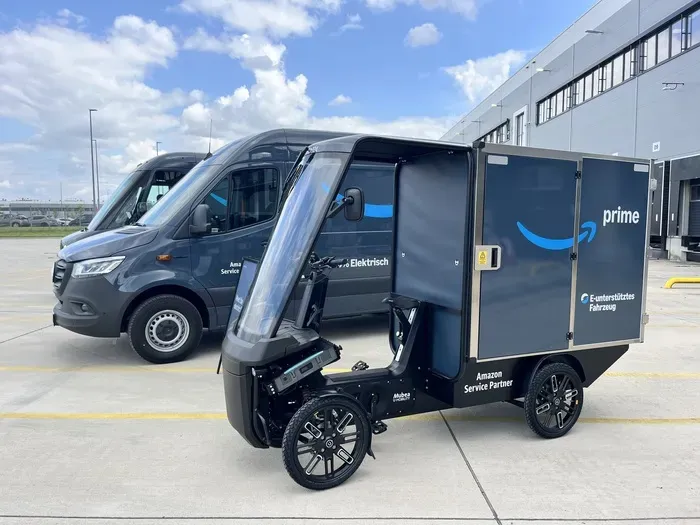
The choice of compact electric vehicles addresses the needs of last-mile delivery. In narrow streets and low-traffic areas, electric scooters, cargo bikes, and push carts can serve as a green alternative to traditional trucks.
Another innovation is the same-day delivery service using small electric vehicles, now extended to Bologna and Verona as well, following its launch in Milan, Rome, and Genoa.
Amazon in Milan: Same Day Deliveries with Electric “Cargo” Scooters
Amazon, Growing Green Fleets
According to data released by the company, Amazon operates over 70 micromobility hubs in more than 50 cities across Europe. By 2025, it delivered 265 million packages through its partners using electric vans, assisted cargo bikes, and electric scooters. In Italy, over 20 million packages were delivered using these vehicles.
Globally, Amazon claims to have more than 50,000 electric vans and aims to reach 100,000 vehicles by 2030.
Electric trucks: prospects for Italy
The expansion of urban hubs shows that electrification can already be applied to some deliveries. However, to extend it to long-distance freight transport, vehicles alone are not sufficient. In this sector, vehicle range is just one factor to consider: high-power charging stations along major logistics corridors are needed, along with stop times that accommodate operational requirements and sustainable energy costs.
On this topic, Amazon supported a study by The European House – Ambrosetti (TEHA) focused on the electrification of heavy freight transport. According to the scenario developed by the research firm, with a favorable regulatory and economic environment, Italy’s fleet of electric trucks could increase from 227 units in 2026 to nearly 3,000 by 2030: an increase of about thirteen times. This is a projection dependent on the policies adopted, not a certain forecast.
Among the measures identified as necessary to achieve this growth are incentives for purchasing electric trucks, competitive electricity prices, an adequate charging network, and road tolls differentiated based on CO₂ emissions.
The study also emphasizes the importance of supporting the rollout of vehicles with infrastructure investments, including temporary public measures to reduce risks in the early stages of the market.
READ ALSO: “Electric refrigerated deliveries begin: Petit Forestier with 300 Iveco” – VIDEO
Previous Article
Volkswagen recalls 720,000 EVs: batteries at fire risk
Next Article
One in three new cars in Europe is electric