
Autonomous Driving: Here is Stellantis’ plan to compete with industry giants
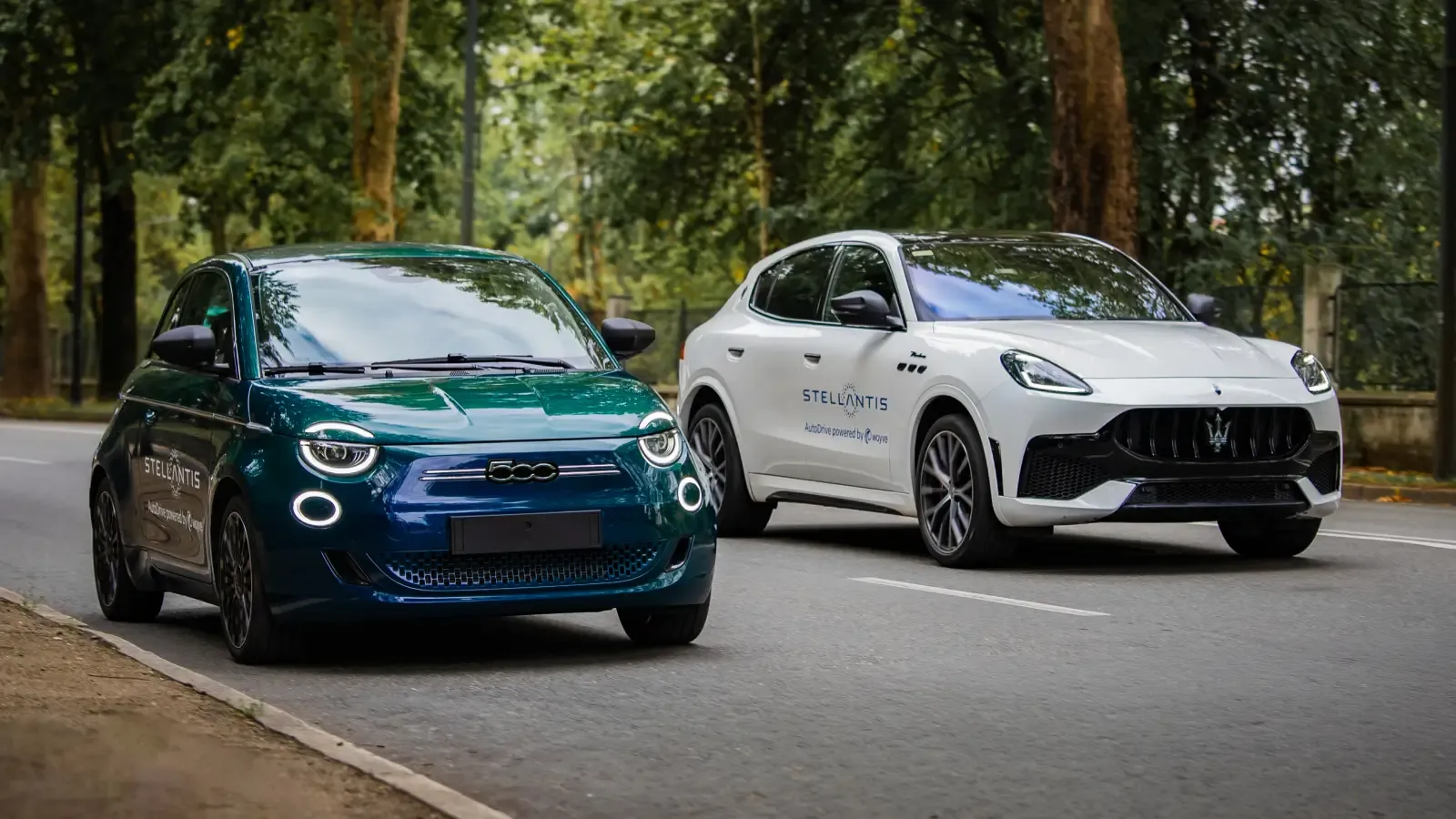
Stellantis aims to accelerate progress in the field of autonomous driving. At the Autonomous Vehicle Summit held on October 23, 2026, in Paris, the automotive group announced a new partnership with NVIDIA and Wayve. The goal is to combine their technologies to develop driverless vehicles, with France serving as the hub for this collaboration.
The development of autonomous cars now relies on alliances between automakers and AI specialists. Stellantis has understood this well.
While Tesla, Waymo, and several Chinese companies are conducting numerous experiments, this Franco-Italian-American group also aims to secure a foothold in this still-emerging market. On October 23, 2026, Stellantis announced a new partnership with two major technology players: NVIDIA, an American company specializing in chips and AI, and Wayve, a British firm focused on autonomous driving.
Also read
Autonomous driving, robotaxis, driverless shuttles: France unveils a plan for 2028
The announcement was made in the presence of the French government, which seeks to accelerate the deployment of these technologies within its territory.
Stellantis wants to put AI behind the wheel
The principle behind this collaboration is the complementarity of their skills. Stellantis will provide its automotive platforms labeled “L4-Ready,” designed to accommodate level 4 autonomous driving systems. The automaker will also contribute its industrial expertise, particularly in vehicle engineering, integration, and production. Meanwhile, Wayve will make its Wayve AI Driver system available.
Unlike traditional approaches that rely on pre-programmed driving rules, this technology uses AI to learn how to interpret situations encountered on the road. With this method, the goal is to enable the vehicle to adapt to different environments without having to program each scenario separately.
NVIDIA will provide a crucial part of the technological infrastructure. Wayve’s system will integrate NVIDIA Halos OS and rely on the Hyperion architecture, which combines computing power with sensors designed to perceive the vehicle’s surroundings. This combination is intended to process the vast amount of information needed for driving decisions. In the long term, the goal is to develop vehicles capable of operating without a driver under specific conditions.
This is precisely what level 4 autonomy enables: the vehicle can handle driving tasks within its designated operating range without human intervention. However, this does not mean it can drive in all conditions.
Technologies already tested on several models
This announcement does not mark the beginning of cooperation between Stellantis and Wayve. The two companies have been working together since May 2026. On October 9, they had already presented the results of their initial joint developments at an event held in Turin. Two prototypes, a Fiat 500e and a Maserati Grecale, demonstrated the capabilities of the Wayve AI Driver system combined with STLA AutoDrive. These vehicles were capable of enabling supervised hands-free driving from door to door, both in urban areas and on highways.
The teams managed to go from integrating the system to conducting the first road tests in less than four weeks. This demonstration was intended to show that the same artificial intelligence architecture can be adapted to various vehicle categories, despite their technical differences.
Also read
Electric cars: French automakers are falling behind in the innovation race!
Be careful not to confuse the technologies being presented. These demonstrators are at level 2++, not level 4. Therefore, the driver must remain alert and ready to take control again. Stellantis plans to launch this advanced assistance in 2028, initially in North America. The partnership announced with NVIDIA relates to the next step, namely driverless driving.
Why is Stellantis betting on France?
Another important aspect of this announcement relates to its geographical scope. The three companies aim to make France a hub for developing an European ecosystem for autonomous mobility, bringing together experts in semiconductors, artificial intelligence, and the automotive industry. For Stellantis, this choice is driven in part by the importance of its engineering and technology development activities in France. The group believes it can leverage its existing industrial expertise to accelerate the integration of these new systems.
France is an interesting market. For Stellantis, the ride-hailing market is one of the most important in Europe, which could facilitate the development of driverless transportation services. Wayve should benefit from this partnership to continue growing in France and then in our neighboring European countries.
Finally, the project also has a social dimension. Local partners responsible for operations will need to engage with local authorities, mobility operators, and unions. This is far from trivial when it comes to vehicles that can replace certain tasks currently performed by professional drivers.
No specific timeline
Stellantis, on the other hand, provides no timeline for the commercialization or deployment of its autonomous vehicles. No specific models, production volumes, or investment amounts for this initiative are either specified. Moreover, there are numerous obstacles. Partners will need to prove the reliability of their systems under real-world conditions, meet approval requirements, and comply with safety and data protection regulations.
This new alliance nonetheless shows that Stellantis intends to enter the autonomous driving market without developing all the necessary technologies on its own. The company relies on its production capabilities and the expertise of specialized partners. But it’s high time to accelerate to avoid missing the opportunity.