
Destined to merge: Tesla and SpaceX will combine their efforts, although the final decision does not depend on Elon Musk.
23/10/2026 09:30
Updated on
23/10/2026 09:30
Elon Musk possesses the largest fortune ever accumulated by an individual in human history. His wealth exceeds the GDP of many countries around the world. Much of his money comes from the tremendous value generated by his two flagship companies: SpaceX and Tesla. As leaders in their respective fields—aviation and automotive—their businesses may seem unrelated, but it is widely believed that they will soon merge into one mega-corporation. However, things are not entirely clear-cut.
How much should someone holding Tesla shares receive if they are exchanged for SpaceX stocks tomorrow? That is the question dividing markets. Many analysts assume the two companies will eventually merge, but estimates for the premium for Tesla investors range from 0% to 35%. Tesla is valued at around 1.34 trillion euros on the stock market, so such a premium could amount to hundreds of billions. Musk himself, who describes himself as “a party in conflict,” has made it clear that the boards of both companies have not yet agreed on any terms.
Cars, Rockets, and Artificial Intelligence
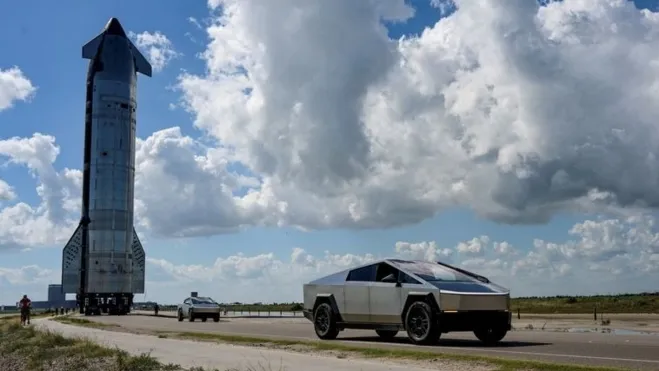
Those who support the merger see two companies moving in the same direction. Tesla and SpaceX are jointly developing the Terafab chip factory, and artificial intelligence already accounts for more than half of SpaceX’s revenue. Additionally, the space company plans to spend between 31 billion and 36 billion euros more in the fourth quarter to continue growing.
This pace of investment in space infrastructure and AI strains SpaceX’s cash flow. Analysts believe a single company could alleviate this by sharing services and taking loans together with Tesla. Legal and administrative costs would also be reduced, as would the time Musk spends traveling between the two companies.
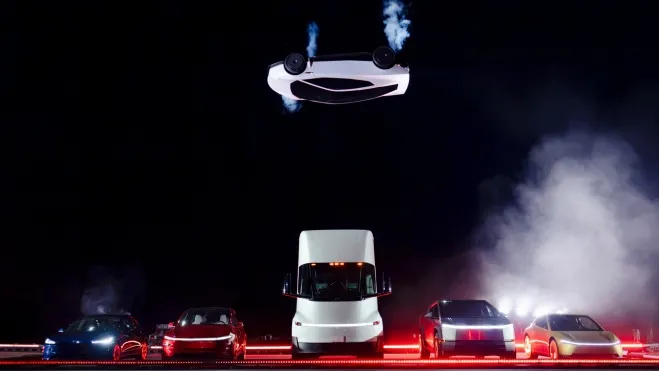
There is even a clearer example of the merger between the two companies: the new Tesla Roadster. Everyone was amazed by the event that went viral around the world. Many already consider it the first flying car in history, though the reality isn’t quite so clear. Thanks to SpaceX’s thrusters, the Roadster performed flips and jumped over other vehicles. It was a small demonstration of what the world might look like if the two companies merged into one.
The Premium: from 0% to 35%
The problem is that much of what underpins the valuations of both companies still isn’t operational on a large scale. Tesla’s shareholders would be trading shares in an independent company, where Musk holds about 20% of the voting rights, for shares in a company he controls. Equity analysts believe they will demand a premium of between 20% and 35%
Others expect little to no premium. Some investors who hold shares in both companies believe any premium would dilute SpaceX’s shareholders at a time when it is spending heavily. Others note that many shareholders own shares in both companies, so they see no reason for a significant overpricing. Still, the stock market is optimistic about it. On Wednesday, Tesla’s shares rose by more than 3% and SpaceX’s by 11%, which would add around 187 billion euros to their value if the upward trend continued.
Tesla’s Vote, the Major Hurdle
Control may also be part of what makes Musk attractive. At SpaceX, he holds around 85% voting power thanks to shares with special rights; at Tesla, it’s about 20%. After a merger, his share would be around 57% or 58%, according to estimates. Getting approval won’t be easy either. Musk has explained that a majority of all Tesla shares is required, not just those up for voting, so every abstention counts as a “no.” Analysts fear low participation, similar to last year’s board meeting where many intermediaries abstained from voting. Even if shareholders approve the merger, governance and regulatory questions will follow.
Sources: Reuters