
With over 900,000,000 users per week and a consumption of 17,300,000,000 kWh, does this technology threaten electric cars?

The unstoppable expansion of artificial intelligence has ushered in a new digital era with impacts that extend beyond technology to directly affect the global energy system. The energy consumption of models like Chat GPT reaches levels comparable to the electricity usage of major cities such as Madrid or New York over extended periods.
This reality, which is already unfolding today, raises concerns about the sustainability of AI growth and its impact on the stability of electrical grids, as well as potentially on clean technologies like electric vehicles.

Artificial Intelligence’s Energy Consumption
According to a recent analysis by the BestBrokers portal, ChatGPT consumes around 17.3 TWh of electricity per year solely to process user queries on a global scale. That amount of energy is equivalent to the annual consumption of large cities. For reference, it would be sufficient to power Madrid or New York for approximately seven and a half months.
This scale has impacts on electrical infrastructure. Data centers that host AI models consume energy not only for computations but also for cooling and maintenance systems, further increasing the load on the grid.
Today, large data centers account for between 2% and 3% of total electricity consumption in countries like the United States, and part of that consumption is due to AI models such as ChatGPT, which use six to ten times more energy per query than a typical internet search.
The exponential growth of AI is also evident in medium-term projections: available data indicates that electricity consumption by data centers could double by 2030, reaching levels near 945 TWh, equivalent to the consumption of entire countries like Japan.
This growing energy demand has direct implications for the operation of the electrical system, which must constantly balance supply and demand to maintain frequency and voltage stability. Excessive load, especially during peak times, can strain the available capacity of power grids, as observed in some states in the United States where infrastructure has had to implement emergency measures to manage the strain caused by high energy demands, including from data centers.
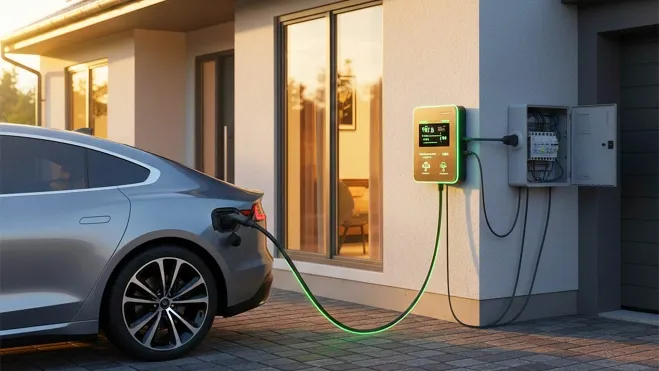
The Electric Vehicle vs. Artificial Intelligence
Under this pressure, a crucial debate has emerged among experts regarding the role that vehicle-to-grid (V2G) electric vehicles could play. These cars not only consume electricity to charge but can also feed energy back into the grid during periods of high demand, acting as mobile stabilizers for the system.
However, if energy consumption by AI systems continues to rise without effective management and flexibility mechanisms, this role of electric vehicles could be compromised or become less valuable in the face of massive demands from large consumers such as data centers.
The potential of electric vehicles to help mitigate demand spikes is not a theoretical hypothesis: smart charging technologies and V2G allow cars to charge during periods of low demand and, in turn, supply energy back to the grid during critical times.
Theoretically, this would enhance the resilience and stability of the electrical system. However, these capabilities require investments in infrastructure, regulation, and coordination among grid operators, charging managers, and automobile manufacturers.
In contrast, data centers that support AI services like ChatGPT operate with intensive and continuous consumption patterns that do not always align with times of lower grid stress.
Technical studies indicate that rapid changes in energy demand from these facilities can cause sudden fluctuations in grid voltage and frequency if not managed properly, forcing operators to rely on costly reserves and auxiliary services to stabilize the system.
The implications are not merely technical but also economic and regulatory. The high energy costs associated with powering AI infrastructure put pressure on electricity prices, investment in generation and transmission, as well as the energy autonomy of towns and cities.
This pressure also adds to the debate over the investments needed to expand renewable energy on a sufficient scale to meet both traditional consumption and the new demands posed by AI.
The rivalry among emerging technologies for a finite resource like electricity reveals deep tensions within the current energy system. The stabilizing role of electric vehicles, seen as a key component of future smart grids, could be partially or entirely overshadowed if flexible demand policies, appropriate infrastructure, and a balance between renewable generation and intensive digital consumption are not implemented.
The analogy that ChatGPT consumes as much energy as entire cities is not just a surprising fact—it is a clear sign that the energy system must transform to accommodate both the digital revolution and the transition toward sustainable mobility.