
With fuel prices soaring, driving an electric car can be 4 times cheaper
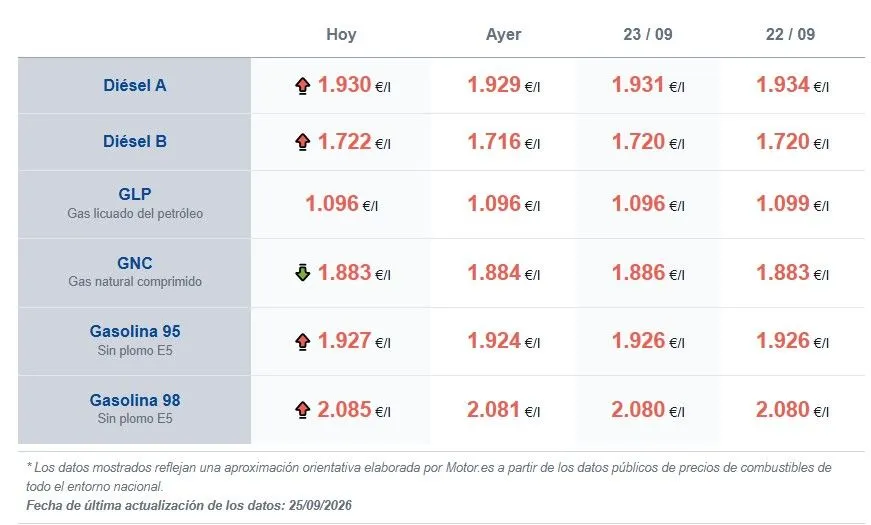
The sharp rise in fuel prices is once again changing the cost calculations for those who use cars daily. In Spain, both gasoline and diesel now cost around 2 euros per liter, while covering the same distance with an electric car charged at home can cost several times less.
The latest available data show the average price of 95 gasoline at around 1.92 euros per liter, with diesel A at a practically identical figure. These prices are once again bringing the cost of using cars with internal combustion engines to the center of discussion, especially for those who drive many kilometers each year.
The situation changes drastically when compared to the cost of electricity. The average price of PVPC in September is around 0.18 euros per kWh, although there is a huge difference between the most expensive and cheapest hours of the day. For drivers who can charge at home and take advantage of lower-priced hours, the bill can be reduced even further.
To make a simple comparison, we can use as a reference a gasoline car with a fuel consumption of 7.2 liters per 100 kilometers, a diesel car that uses about 6.7 liters, and an electric car with an approximate consumption of 17 kWh per 100 kilometers. These are reasonable figures for current medium-sized vehicles and allow us to compare the three technologies under similar conditions.
At current prices, driving 100 kilometers with a gasoline car costs around 13.80 euros in fuel. For a diesel car, the cost is about 12.90 euros, while an electric car charged at home, using the average electricity price, requires roughly 3.10 euros to cover the same 100 kilometers.
The difference is significant. Under these conditions, driving 100 kilometers with an electric car costs about four times less than with a gasoline car and slightly more than four times less than with a diesel car. And we are only talking about the energy cost, without including maintenance, taxes, tires, or any other differences associated with each type of vehicle.
The comparison can be even more favorable for the electric car if the owner manages to charge during the cheapest hours. The PVPC price changes hourly, and there are times when electricity costs are well below the daily average. For example, on September 25th today, the most expensive time is between 8 PM and 9 PM, when the sun sets and gas-powered generation starts, while the cheapest time coincides with peak solar production between 2 PM and 3 PM, at a cost of just 4.8 cents per kWh (before taxes and fees).
Car Type
Consumption Used
Energy/Fuel Price
Cost per 100 km
Difference vs. Electric Car
Gasoline
7.2 l/100 km
1.92 euros/l
13.82 euros
4.5 times more expensive
Diesel
6.7 l/100 km
1.92 euros/l
12.86 euros
4.2 times more expensive
Electric
17 kWh/100 km
0.18 euros/kWh
3.06 euros
—
Obviously, it wouldn’t make sense to use only the cheapest hour of the day to calculate the typical cost of an electric car. Not all drivers can charge at that time, and the price keeps changing. But it does help show the savings available when you have a charger at home and can choose when to charge.
We also won’t include those with solar panels on their homes in the calculation, as we don’t want to be unfair.
In addition, the prices of gasoline and diesel also remain unstable. Over the past few weeks, fuel prices have continued to rise and are approaching the highs we saw at other times in recent years. For those who use cars daily, every increase in price has a direct impact on annual costs.
This has a particularly significant consequence for those who drive long distances. A driver who travels 15,000 kilometers per year would spend approximately 2,070 euros on gasoline, assuming a consumption of 7.2 liters per 100 kilometers and a price of 1.92 euros per liter. With diesel consuming 6.7 liters per 100 kilometers, the annual cost would be around 1,930 euros.
In an electric car with an average consumption of 17 kWh per 100 kilometers and charged at home at the average September price, the energy cost would be around 470 euros per year for those same 15,000 kilometers.
Car type
Annual cost
Gasoline
2,073 euros
Diesel
1,929 euros
Electric
459 euros
The difference is thus around 1,600 euros per year compared to a gasoline car and about 1,500 euros compared to a diesel car. The actual result will depend on each vehicle’s consumption, the electricity price contracted, and especially on how much it is charged at home versus public chargers.
This is one of the key factors in comparison. Not all charges for an electric car are equal. Those who charge at home regularly enjoy a much greater cost advantage than those who rely on public fast chargers. On long trips, the price per kWh can increase significantly, bringing the cost per kilometer close to that of an efficient gasoline car.
That’s why the significant cost advantage of an electric car becomes most apparent when there is the option to charge at home. A driver with a garage, charger, and reasonable electricity rates can take advantage of the cheapest hours to charge and significantly reduce the cost of each trip.
The comparison can also be made by using a full tank as a reference. Refilling with 50 liters of gasoline at 1.92 euros per liter costs around 96 euros. If those 50 liters allow the car to travel about 695 kilometers with a fuel consumption of 7.2 liters per 100 kilometers, an electric car that requires 17 kWh per 100 kilometers would need to consume around 118 kWh to cover the same distance.
At the average electricity price used in this comparison, that amount of energy would cost approximately 22 euros. In other words, the driver of the electric car could travel a distance equivalent to that covered by a tank of gasoline for about 22 euros in electricity, compared to nearly 100 euros needed to fill the tank with gasoline.
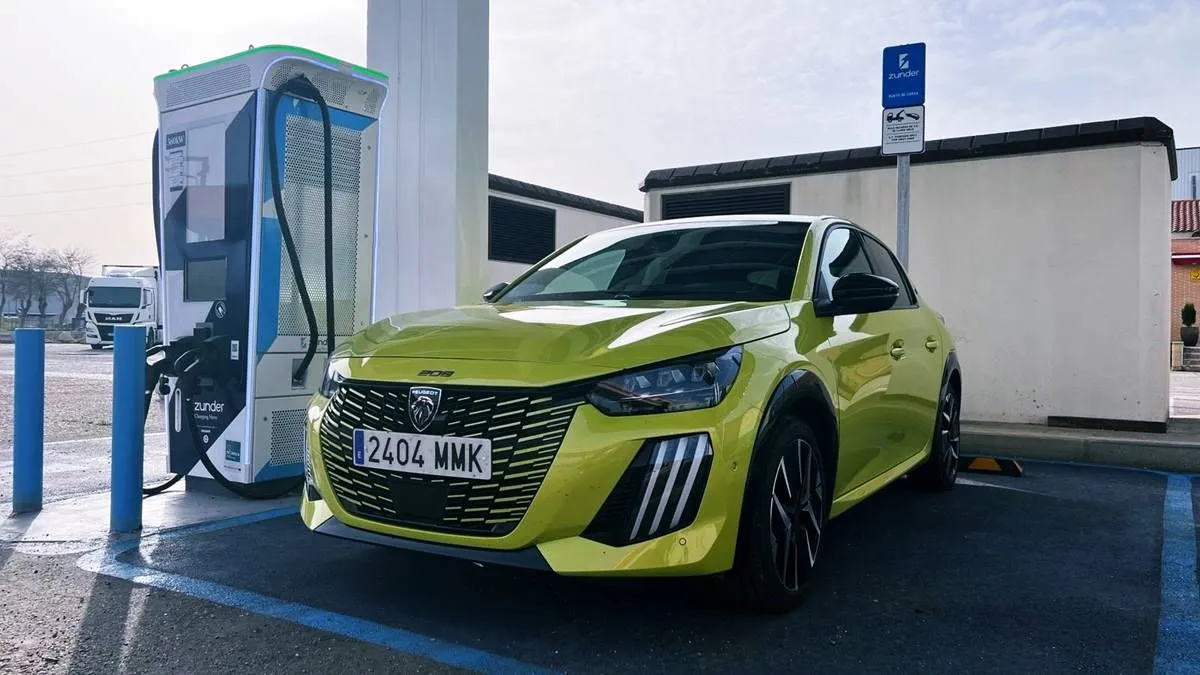
The difference is therefore around 74 euros for an equivalent single charge, though it should be noted that we are comparing a home charging session with refueling at a gas station. If the same charge had to be done using a public fast charger, the difference would be much smaller.
The Spanish market is also changing. Electric cars still account for a minority of the vehicle fleet, but their registrations continue to rise. In August, 10,266 electric cars were registered in Spain, 31.8% more than in the same month of 2025, while the annual total reached 93,508 units, an increase of 33%.
There are still significant barriers. For many drivers, the main one remains the purchase price, and especially for those living in apartments without private parking, the difficulty of having a home charging station. The expansion of public charging networks makes use easier, but it complicates the decision to buy since most people are unaware that it’s possible to live without parking or a charger at home.

But when considering only the cost of driving the car, the picture becomes quite clear. With gasoline and diesel costing around 1.92 euros per liter, and household electricity being well below the equivalent energy cost of fuels, driving kilometers with an electric car can be up to four times cheaper.
The more the car is used, the greater the cumulative difference. For someone who drives 10,000 kilometers per year, it can mean hundreds of euros in savings, while for a driver who exceeds 20,000 or 25,000 kilometers per year, the difference can reach several thousand euros over a few years.
The key, therefore, is not merely that an electric car consumes less energy. It’s the combination of higher efficiency and the ability to purchase that energy at a much lower price, especially when home charging is available and off-peak hours are utilized.
That said, this advantage doesn’t mean that any electric car is automatically cheaper to use under all circumstances. A large and heavy model can consume significantly more than a compact one, while fast charging during a trip can bring the cost per kilometer close to that of an efficient gasoline or diesel car.
The truly significant difference appears when the electric car is used as a regular vehicle, with most of its mileage covered after being charged at home. In that scenario, the cost of energy remains one of the major economic advantages of electric cars in Spain, and with current fuel prices, the advantage over gasoline and diesel has become even more evident.