
With a range of 450 km, the Volkswagen ID. Polo is one of the best electric cars you can buy in Spain.
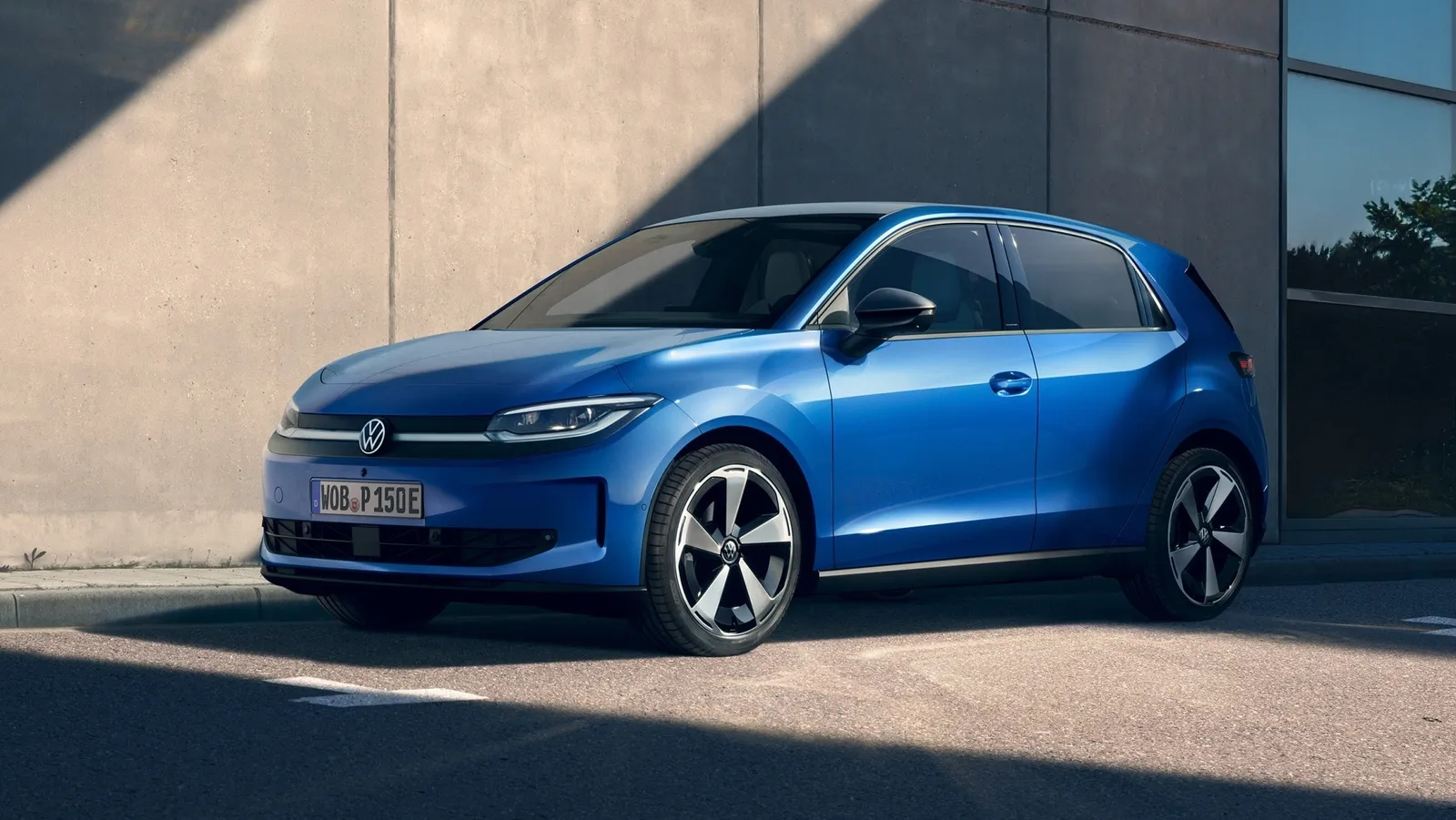
With Europe demanding more electric cars, drivers continue to wait for a type of vehicle that offers them an affordable and versatile battery-powered car. There are increasingly more options available at dealerships, and finally Volkswagen Group has decided to take action. Germans can once again claim to have a small, reasonably priced electric car: the Volkswagen ID. Polo.
Volkswagen’s first attempt to enter the electric vehicle market took place at the end of the previous decade with the Volkswagen e-Up!. Developed in the mid-2010s, the trio consisting of the e-Up!, Skoda Citigo, and SEAT Mii showed that daily use of an electric car was possible. However, none of the three models were allowed to continue despite clear signs of their potential success. Now, the ID. Polo aims to revive this concept with more advanced technology, though at a price several thousand euros higher.
Technical specs
Vehicle type
SUV
Dimensions
4,053 x 1.816 x 1.530 mm
Weight
1,569 - 1,576 Kg
Seats
5
Battery type
LFP / NMC
Battery capacity
37 - 52 kWh (net)
Range
326 - 449 Km
Power/Torque
116 - 211 hp / 267 - 290 Nm
WLTP fuel consumption
13.5 - 14.1 kWh/100 Km
Eco-label
ZERO
CO2 emissions
0 g CO2/Km
Acceleration
7.1 - 10.6 seconds
Trunk volume
441 liters
Driving assistance features
Traffic sign recognition
Parking camera
Blind spot sensors
Cruise control
Infotainment system
Digital dashboard (10 inches)
Multimedia system (13 inches)
Price
Starting at 26,175 euros
Volkswagen ID. Polo prices
The price is and has always been a powerful selling point, especially when it comes to small cars. To reach a broader audience, the Volkswagen ID. Polo is launched in Spain at a starting price of 25,995 euros, without discounts and without any additional incentives or subsidies. Although it is several thousand euros cheaper than its larger sibling, the Volkswagen ID. 3 Neo, it cannot be considered an excessively affordable option. Its advantage lies in the fact that it qualifies for various discounts and/or incentives.
Under the most favorable conditions possible, including promotional discounts and financing savings, as well as government subsidies, the minimum starting price for the small ID. Polo is 26,175 euros. The two expected trim levels should bring the final price below the 21,345 euros mark, though this would mean giving up all the car’s premium features, with reduced performance and a more modest range.
Mechanics and Engines
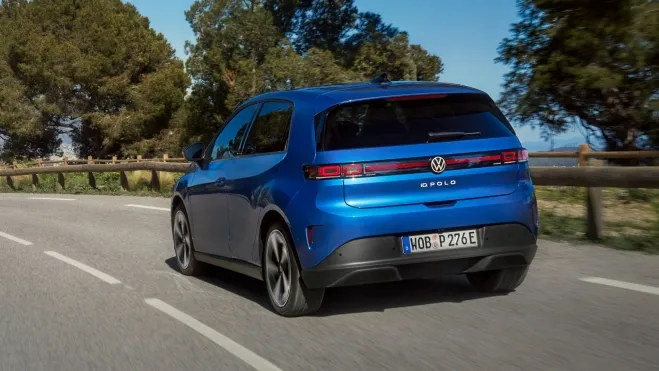
Volkswagen offers various configurations for its smallest electric car—until the arrival of the future ID.1. The entry-level model, the ID. Polo 85 kW, features a single front motor producing 116 horsepower and 267 Nm of torque. It has an energy consumption rating of 13.9 kWh per 100 kilometers traveled and achieves a range of 323 kilometers (WLTP) thanks to a 37 kWh capacity LFP battery. Next is the ID. Polo 99 kW model with 135 horsepower, using the same battery capacity and offering an official range of 326 kilometers. Its DC charging capacity is limited to 88 kW, allowing it to go from 10% to 80% charge in 23 minutes.
The highest-performance version is the Volkswagen ID. Polo with 155 kW power. It is also the most versatile model among them due to its greater certified range. It features a single front-mounted engine producing 211 horsepower and 290 Nm of torque. Powered by a lithium battery with a net capacity of 52 kWh, it achieves a certified range of up to 449 kilometers, with an official fuel consumption of 13.5 kWh/100 kilometers (WLTP). For charging, it is equipped with chargers capable of up to 105 kW in direct current and up to 11 kW in alternating current. Under ideal conditions, it can restore from 10% to 80% of its range in 24 minutes.
Dimensions of the Volkswagen ID. Polo
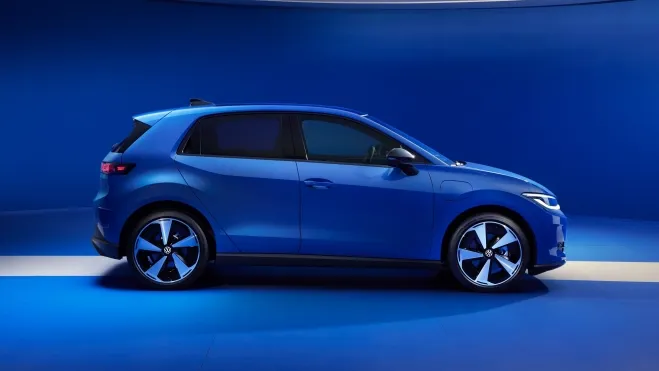
Volkswagen Group has decided to re-enter the electric vehicle market with its unique offensive trio. The ID. Polo brings back the popular essence of the classic gasoline-powered Polo, one of Volkswagen’s most important cars in history. The electric Polo also comes in a crossover version officially known as the Volkswagen ID. Cross. Both models clearly fall within the European B-segment. This positioning puts them up against numerous strong competitors, including the CUPRA Raval, the BYD Dolphin Surf, and the Renault 5, the top leader in this category across Europe.
At first glance, the Volkswagen ID. Polo is deceptive. It’s larger than it appears. With a measuring tape, its length is 4,053 meters, its width is 1,816 meters (without mirrors), and its height is 1,530 meters. To these compact dimensions must be added an axle distance of 2,592 meters and a curb weight ranging from 1,569 to 1,576 kilograms depending on the selected variant. This high weight highlights the issue of electric vehicle heaviness.
Interior
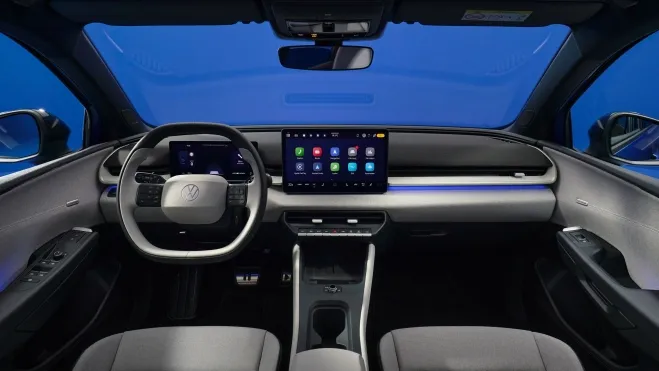
In segments A and B, finish quality has not always been excellent. These are low-priced cars that sacrifice the use of good materials to keep costs down. However, the Volkswagen ID. Polo impresses with its design and better interior construction. It features the usual use of soft materials with a pleasant texture. There are also some hard plastics, but overall its perceived quality is among the highest in its class.
In terms of technology, Volkswagen offers different trim levels: Match, Life, and Style. The main differences between them lie in the interior finishes and equipment. Notable features include keyless entry and start, LED headlights, wireless connectivity for mobile devices, wheels up to 19 inches in diameter, V2L charging, a 10-inch digital dashboard, a 13-inch central multimedia screen, automatic climate control, parking cameras and sensors, along with a comprehensive set of standard driving assistants and active and passive safety systems.
Despite its compact dimensions, the ID. Polo offers a very spacious interior. The rear seating row, while modest in size, provides enough space for two adults up to 1.85 meters tall to sit comfortably. The completely flat floor makes it possible to fit a third passenger, though the width is limited. The rear seat area doesn’t offer many luxuries, but it does stand out for being easy to get in and out of.
Volkswagen ID. Polo trunk
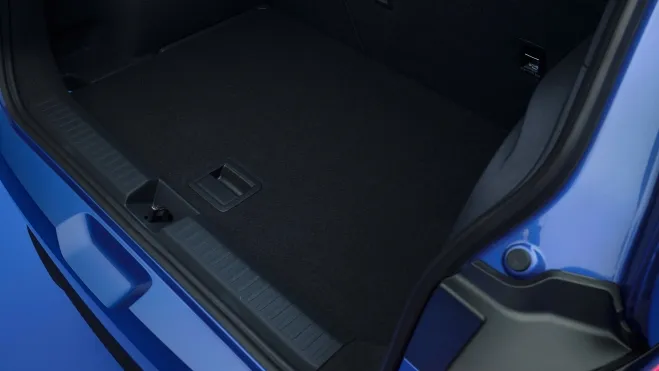
The fact that it’s small doesn’t mean the ID. Polo is only practical in the city. In fact, its urban vehicle status disappears once the trunk lid is opened. What reveals itself then is a vast cargo space with a minimum capacity of 441 liters. This figure can increase to up to 1,240 liters if the second row of seats is folded down in a 60:40 ratio. Unlike other similar electric cars, the ID. Polo doesn’t have a second trunk in the front. On the other hand, the Skoda Epiq does offer that convenient trunk that allows storing small items such as charging cables.
Conclusions
Volkswagen continues to expand its electric lineup with the arrival of a vehicle aimed at becoming a sales leader. The Volkswagen ID. Polo offers an excellent combination featuring high-quality materials, comprehensive equipment, spacious interior, pleasant driving experience, and efficiency. While the base models come at a reasonable price, the more equipped and/or versatile versions push the cost dangerously close to 30,000 euros. Aside from the pricing, the ID. Polo meets all the requirements of European drivers, offering sufficient performance for everyday use and occasional medium-distance trips.