
With a range of 400 km and video recording in 5 minutes, Toyota isn’t giving up on this technology and will incorporate it into another of its cars.
26/09/2026 09:30
Updated to
26/09/2026 09:30
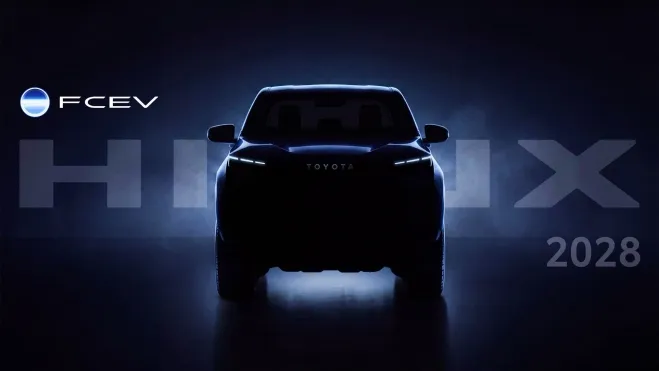
Toyota continues to show that it isn’t willing to bet everything on battery electric vehicles. The Japanese company has confirmed that the next generation of the Hilux will feature a hydrogen-powered version set to hit the European market in 2028, turning the prototypes it has been developing for years into an actual production model.
The future Toyota Hilux FCEV will coexist with diesel mild-hybrid and fully electric variants. The brand still keeps much of its specifications secret, but it has already revealed two key details. Its goal is to achieve a range of over 400 km according to WLTP standards, along with a towing capacity of up to 2,500 kg. In other words, it will be a pickup on par with the model it replaces.
An alternative with greater range than the electric Hilux
Comparing it to the new electric Hilux helps clarify Toyota’s approach. The battery version achieves up to 257 km of range in its European configuration and can tow between 1,600 and 2,000 kg, depending on the version and applicable regulations. The FCEV (hydrogen fuel cell version) aims to exceed 400 km of range and reach the aforementioned 2,500 kg towing capacity. This would place it slightly ahead of its ‘sister’ model.
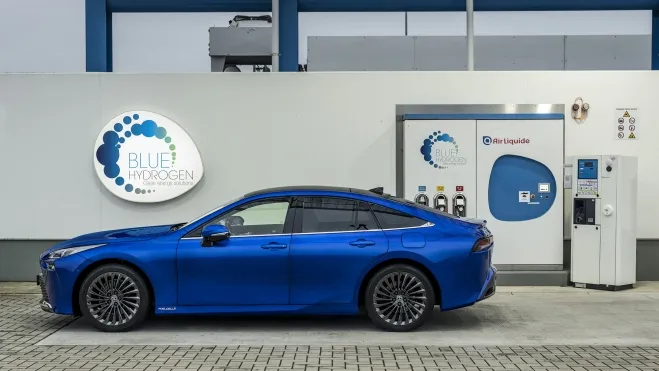
This is compounded by one of the main advantages Toyota still sees in hydrogen for certain commercial vehicles. Refilling the tanks can take about five minutes, a time much closer to that of a combustion engine vehicle than to the time required to charge an electric vehicle’s battery. The issue remains infrastructure. As noted by the European Hydrogen Observatory, there are currently 179 hydrogen refueling stations in operation between Europe and the UK.
Toyota has been preparing this Hilux for years
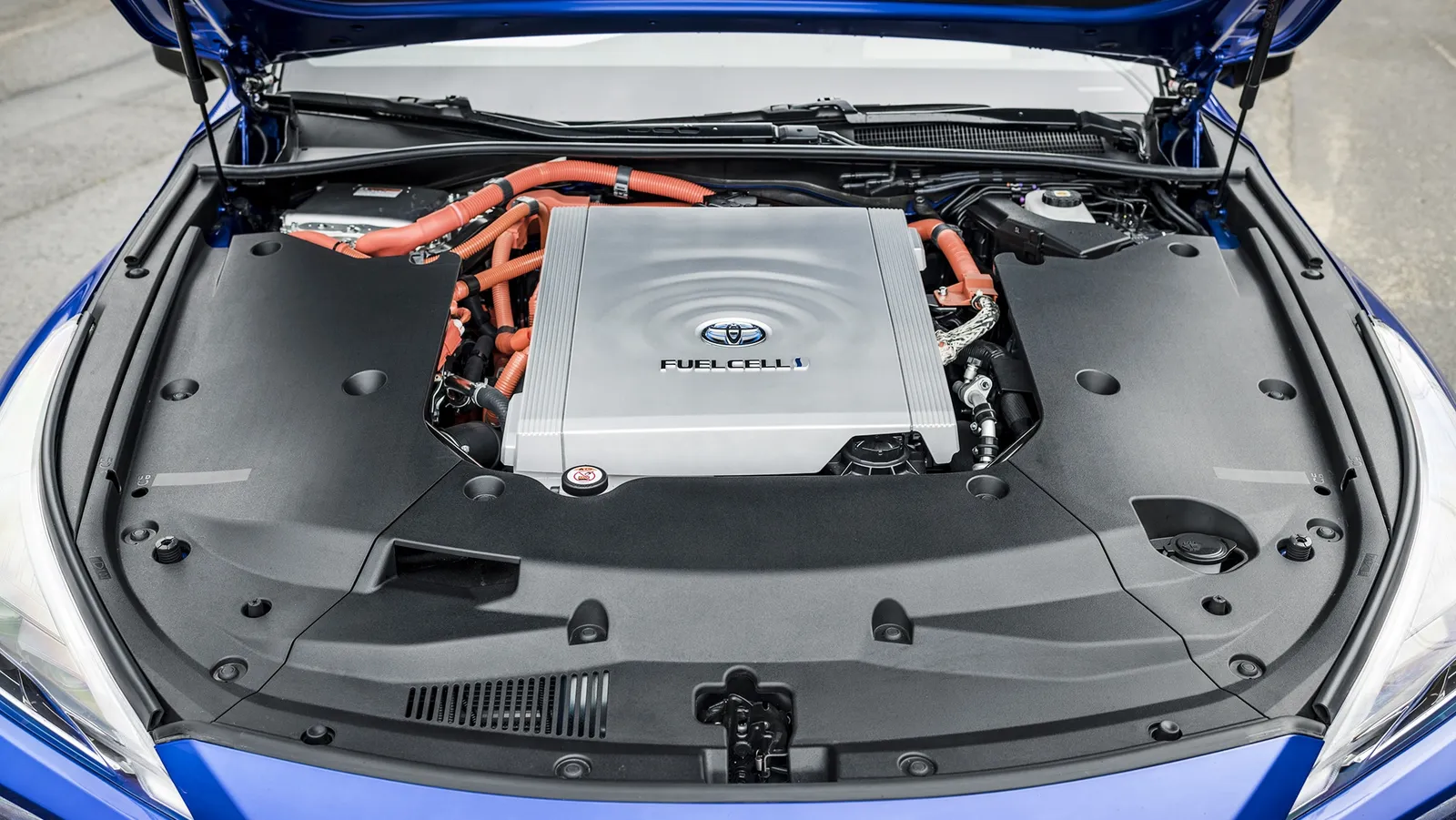
The project also doesn’t start from scratch. Toyota unveiled its first prototype of a Hilux FCEV in 2022 and later produced 10 experimental units in the UK during 2024. Those vehicles used technology from the Toyota Mirai, featuring three hydrogen tanks integrated into the chassis and a small lithium-ion battery located beneath the cargo box.
Those prototypes achieved a range of around 600 km and used an electric rear motor with 182 HP and 300 Nm of torque. This does not mean the Hilux to arrive in 2028 will retain these specifications, as Toyota has not yet revealed the final power output or configuration. In fact, the range announced for the production model is currently over 400 km according to WLTP standards.
The introduction of this version also aligns with the strategy Toyota has been advocating for years. The company believes there is no single technology capable of meeting the needs of all users and has specifically identified commercial vehicles as one of the priority areas for developing hydrogen fuel cells.
The Hilux will be one of the best examples of that strategy. In Europe, it will be available with an electrified diesel engine, battery electric powertrain, or hydrogen fuel cell. The latter will arrive in 2028 and will need to prove whether its range of over 400 km and fast refueling times can overcome what remains the biggest obstacle to hydrogen: a still very limited supply network.